

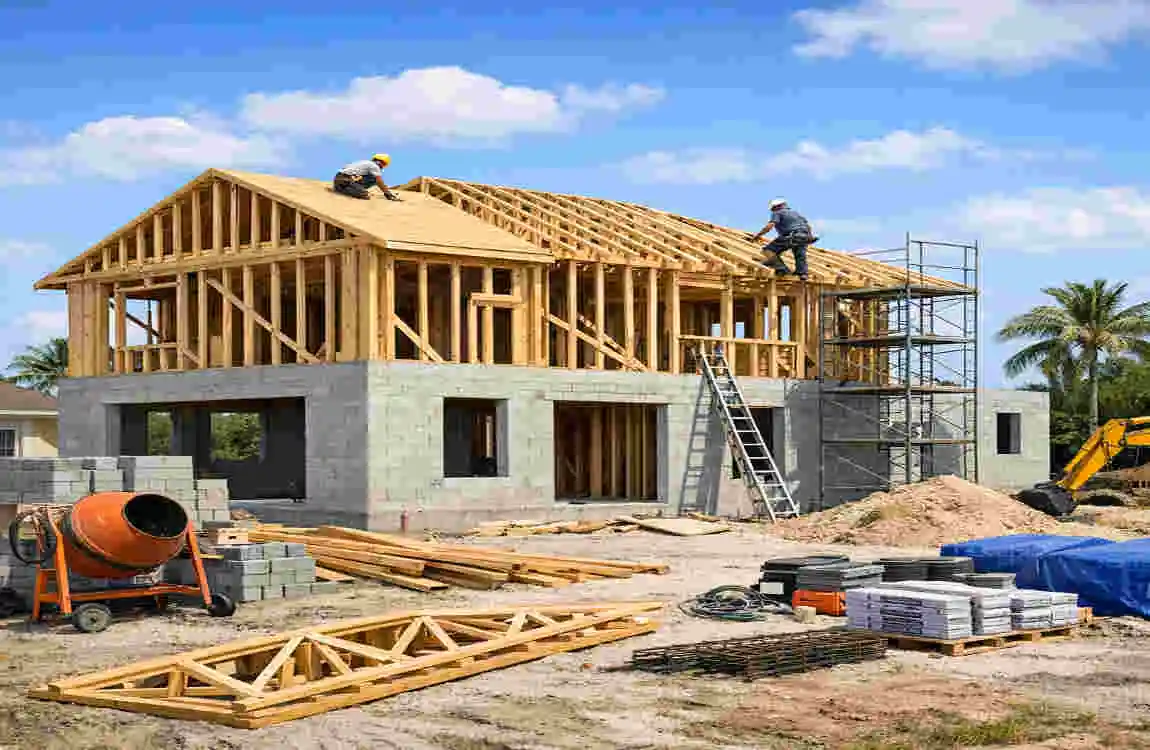
Building a home is exciting, but it also comes with a lot of moving parts. If you are planning to build a house in Florida, you need to consider land, permits, weather, design, and cost before the first wall goes up.
Florida is a great place for new construction homes, but it also has special rules and conditions. Heat, humidity, storms, flood zones, and wind resistance all play a major role in the Florida home building process. That means the steps differ from building in other states.
What Is Involved in Building a House in Florida?
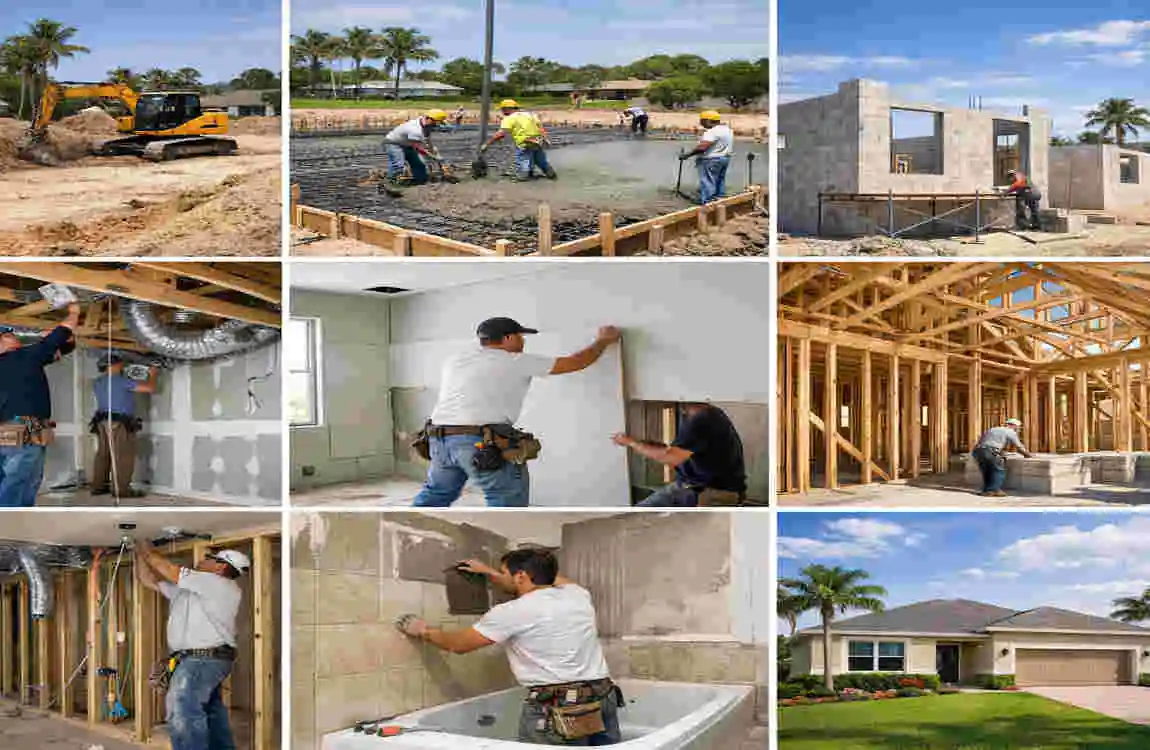
A full process from land to move-in
Building a home in Florida starts long before construction begins. First, you need land. Then you need a design, permits, site work, and a construction team; after that come the build, inspections, and final approval.
The process can feel overwhelming at first, but it becomes easier when you break it into steps. Once you understand the order of things, the whole project feels much more manageable.
Choosing land and planning the budget
One of the first decisions is where you want to build. The land you choose will affect your budget, your home design, and even what kind of foundation or structure you need.
You also need to set a realistic budget early. Land, permits, labor, materials, and weather-related features all add up. A good budget should include a cushion for surprises.
Timeline expectations
The timeline depends on the lot, design, permit process, and construction size. Some homes move quickly. Others take longer because of weather delays, inspections, or approval steps.
In Florida, you should expect the process to take time. Careful planning beats rushing, especially when dealing with Florida building codes and local rules.
What makes Florida construction different
Florida is not a “standard” build market. The state has strict Florida construction requirements because of hurricanes, humidity, flooding, and high heat.
That means your home must handle more than daily living. It must also withstand local weather conditions over the long term.
Choosing Land and Preparing the Site
How to evaluate a Florida building lot
Before you buy land, look at more than the price tag. Ask whether the lot is ready for building a home in Florida or needs heavy prep work.
Consider access, drainage, location, and the lot’s shape. A cheap lot can become expensive if it needs extensive clearing or utility work.
Zoning and land-use rules
Every lot has rules. Zoning tells you how the land can be used, and land-use rules may affect home size, placement, and setbacks.
This is why you should always check the property carefully before you buy. A lot may look perfect, but if the zoning does not allow your type of home, it may not work for your plan.
Soil testing and site surveys
Florida soil can vary from one area to another. Some sites may need more work before construction can begin. Soil testing helps you understand whether the ground can support the home well.
A site survey is also important. It shows the exact property boundaries, slopes, and existing conditions. This helps avoid costly mistakes later.
Clearing, grading, and access
Most lots need some level of clearing and grading. You may need to remove trees, brush, rocks, and uneven ground before construction starts.
You also need to make sure trucks and equipment can reach the site. If access is difficult, that can raise labor and delivery costs.
Utilities, drainage, and flood zones
Always check where water, sewer, electricity, and other utilities will come from. Some lots have service nearby. Others need more setup work.
Drainage matters a lot in Florida. If water does not move away from the home properly, it can create long-term problems. Flood-zone status is another major issue, because it can affect both design and insurance.
Land checklist to review
- Zoning and land-use rules
- Soil and drainage conditions
- Utility access
- Survey boundaries
- Flood-zone risk
- Site clearing needs
Designing and Permitting a Florida Home
Working with an architect or home designer
Once you have land, the next step is design. You can work with an architect, home designer, or builder who offers custom plans. The right choice depends on how unique you want the home to be.
A good design should match the lot, the climate, and your budget. In Florida, design is more than style. It must also support wind resistance, heat control, and moisture management.
Selecting a house plan
You can choose a fully custom plan or a pre-designed one. Many homeowners start with a standard plan and then adjust it to fit the lot and their needs.
Think about room size, storage, outdoor space, and how the home will feel in daily life. It is easier to make design changes before construction starts than after walls are already in place.
Florida building codes and permits
Florida building codes are strict for a reason. The goal is to protect homes from storms, flooding, and other weather risks.
You will also need Florida building permits before construction begins. Permits help make sure the work follows local rules and safety standards. In most cases, inspections are also required at different stages.
Wind-resistant construction requirements
Because storms are a real concern, many homes need stronger structural features. This may include stronger roof tie-downs, impact-rated openings, and better fastening systems.
If you are planning hurricane-resistant homes, design decisions matter even more. These features may raise the cost, but they also improve long-term safety and value.
HOA and local approvals
If your lot is in a neighborhood with a homeowner association, you may need extra approval before building. HOAs can affect home style, paint colors, fence choices, and exterior features.
Local city or county rules may also apply. That is why it helps to work with a builder who understands the local approval process.
Main Stages of Florida House Construction
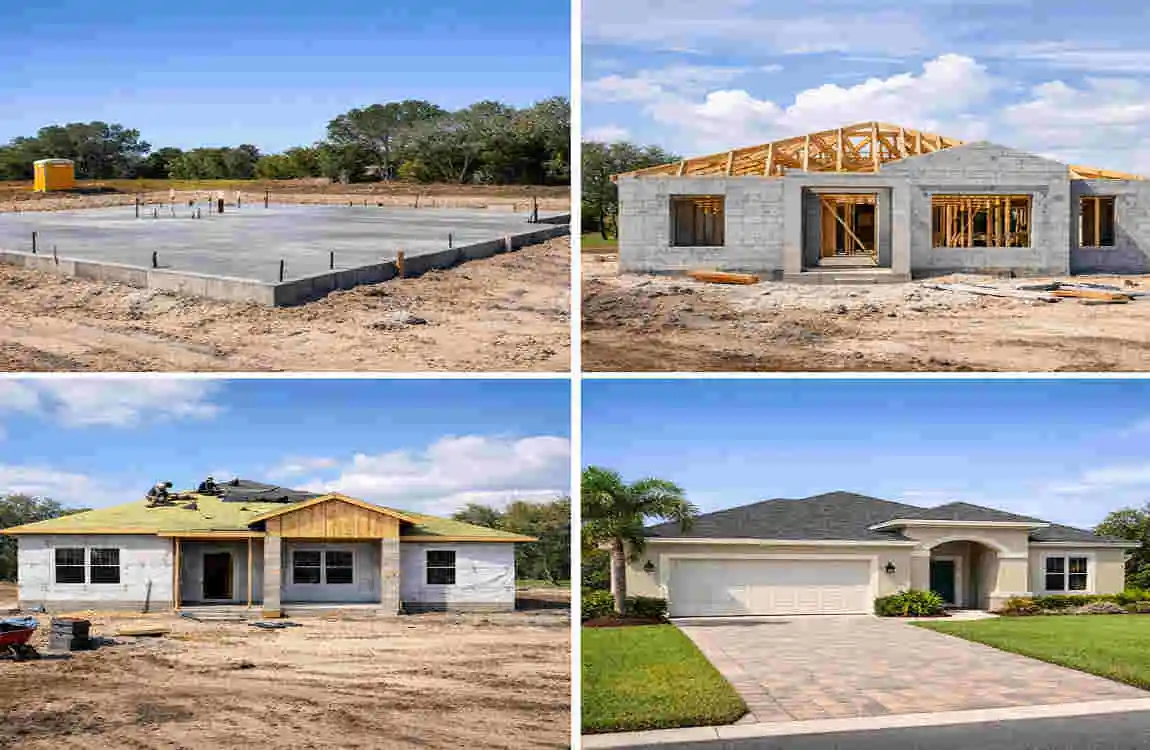
Foundation and slab work
The first major construction step is the foundation. In Florida, many homes use slab foundations because they work well in warm climates and suit local soil conditions.
The foundation must be level and properly reinforced. If this stage is done poorly, problems can show up later in the walls, floors, and structure.
Framing and structural work
Once the foundation is ready, the framing begins. This is when the house starts to take shape. During this phase, builders construct the walls, floors, and roof structure.
Framing is one of the most visible stages of the Florida home building process. It turns the project from an empty lot into a real home footprint.
Roofing, windows, and exterior doors
After framing, builders install the roof and exterior openings. This step protects the home from weather and helps close in the structure.
In Florida, roof design and window choice are especially important. These parts of the home must handle strong sun, heavy rain, and wind.
Plumbing, electrical, and HVAC
Next come the systems that make the home work. Plumbing brings in water and removes waste. Electrical power supports lighting, appliances, and outlets. HVAC handles cooling and airflow.
These systems are usually installed before the walls are fully closed. They need to run through the structure itself.
Insulation and drywall
Once the rough systems are in place, the home gets insulated and drywalled. Insulation helps manage temperature and energy use, which is very important in Florida’s heat.
Drywall then creates the interior walls and ceilings. This stage begins the transition from construction site to finished home.
Interior finishes and flooring
After that, the home starts to look polished. The team adds cabinets, counters, flooring, trim, paint, fixtures, and tile.
This is where style becomes visible. You can finally see how the home will feel once you move in.
Exterior work and final details
The outside work often includes siding, landscaping, driveway work, patios, and other finishing touches. These details affect curb appeal and daily function.
A simple project can still feel complete and attractive when the exterior is finished well.
Florida Construction Costs and Budget Planning
What affects construction cost
The cost to build a house in Florida depends on several things. The biggest ones usually include:
- Land cost
- Home size
- Material quality
- Labor rates
- Permit fees
- Site conditions
- Weather-resistant upgrades
Land versus construction cost
A common mistake is focusing only on the home build cost. The land itself may take a large part of the budget. In some areas, the lot cost can be just as important as the house cost.
So when you plan your project, think about the full picture. You are not just buying a house. You are also paying for the site, the design, and the approvals.
Labor and material pricing
Construction prices can rise depending on labor demand and material costs. If the market is busy, you may pay more for both.
This is one reason new construction homes in Florida can vary so much in price. Two similar homes may still have very different total budgets.
Permits and professional fees
You will likely need to pay for permits, surveys, engineering, design work, and inspections. These fees are part of the real cost of building a home.
They may not be the most exciting part of the project, but they are necessary. Skipping them can cause serious delays and legal trouble.
Hurricane-resistant features
Storm-ready features can add cost, but they also add protection. This may include stronger roofing, impact-resistant windows, better anchoring, and enhanced framing.
For many homeowners, these upgrades are worth it because they improve safety and may help reduce future repair costs.
Sample Florida home budget table.
Budget Category What It Covers Why It Matters
Land Lot purchase and prep Sets the foundation for the project
Design Plans, drawings, engineering Guides the entire build
Permits Local approvals and fees Required for legal construction
Site Work Clearing, grading, utilities Prepares the land for building
Construction Labor and materials Main cost of the house
Weather Upgrades Wind and flood protection Important in Florida
Contingency Extra money for surprises Helps cover unexpected issues
How to stay within budget
The best way to protect your budget is to plan early and ask detailed questions. You should understand exactly what each estimate includes.
Always leave room for unexpected work. In Florida, weather or soil issues can create changes that were not obvious at the start.
Florida Weather, Hurricanes, and Building Considerations
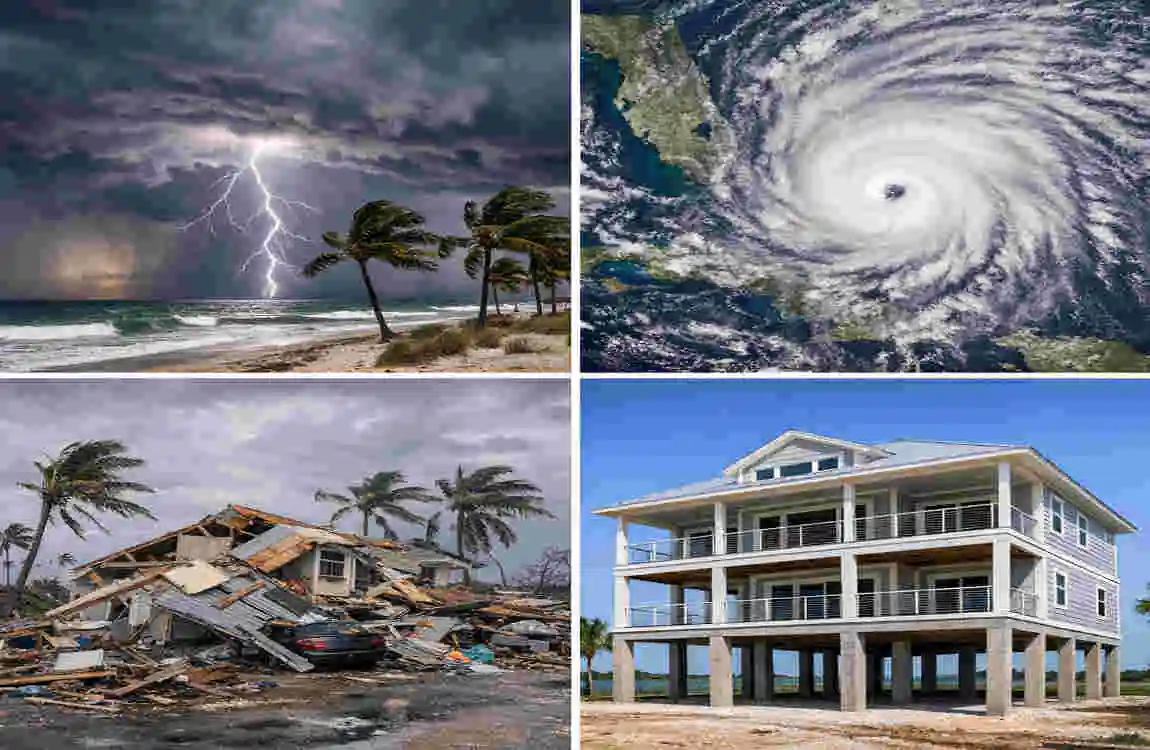
Hurricane and high-wind protection
Florida construction requirements often focus on wind resistance. Storms can test every part of the home.
You may need stronger roof connections, stronger opening protection, and tougher construction methods overall. These details matter more than most people realize.
Impact-resistant windows and doors
Windows and doors are vulnerable points in a storm. Impact-resistant products can improve safety and help protect the home’s interior.
They also add comfort and peace of mind. Many homeowners see this as a smart long-term investment.
Roof design and protection
Roof shape and fastening systems matter a lot in Florida. A well-designed roof can better handle strong winds and heavy rain.
Roofing material also matters. The right system helps protect the structure and may reduce future repair problems.
Flood-resistant construction
If the lot is in a flood-prone area, the home design may need to change. This could include raised floors, improved drainage, or other protective measures.
You should never ignore flood risk. It can affect building cost, insurance, and long-term safety.
Humidity, mold, and energy efficiency
Florida heat and humidity can create moisture problems if the home is not designed well. Good insulation, proper ventilation, and a strong HVAC system help control this.
Energy-efficient materials can also make the home more comfortable and cheaper to run. In a hot climate, that matters every single day.
FAQ: Building a House in Florida
What is involved in building a house in Florida?
It usually includes land selection, design, permits, site preparation, construction, inspections, and final approval.
How long does it take to build a house in Florida?
The timeline varies. It depends on land conditions, design complexity, permit speed, weather, and construction size.
Do you need a permit to build a house in Florida?
Yes, you typically need Florida building permits before you can begin construction.
Is it more expensive to build a hurricane-resistant house in Florida?
Yes, it can cost more upfront. However, those features may improve safety and reduce storm-related damage later.
What are the highest costs when building a house in Florida?
The highest costs usually include land, labor, materials, permits, and weather-related upgrades.
Can you build a house in a Florida flood zone?
Sometimes yes, but there may be extra rules, design changes, and insurance considerations.
| Construction Stage | What to Expect |
|---|---|
| Planning & Design | Choose a location, floor plan, materials, and overall budget. |
| Permits | Local building permits and inspections are required before and during construction. |
| Site Preparation | The lot is cleared, graded, and prepared for the foundation. |
| Foundation | Concrete slab or other approved foundation is installed. |
| Framing | Walls, floors, roof structure, doors, and windows take shape. |
| Florida Building Requirements | Construction must account for hurricanes, high winds, moisture, and local codes. |
| Electrical & Plumbing | Wiring, pipes, HVAC, and other systems are installed and inspected. |
