

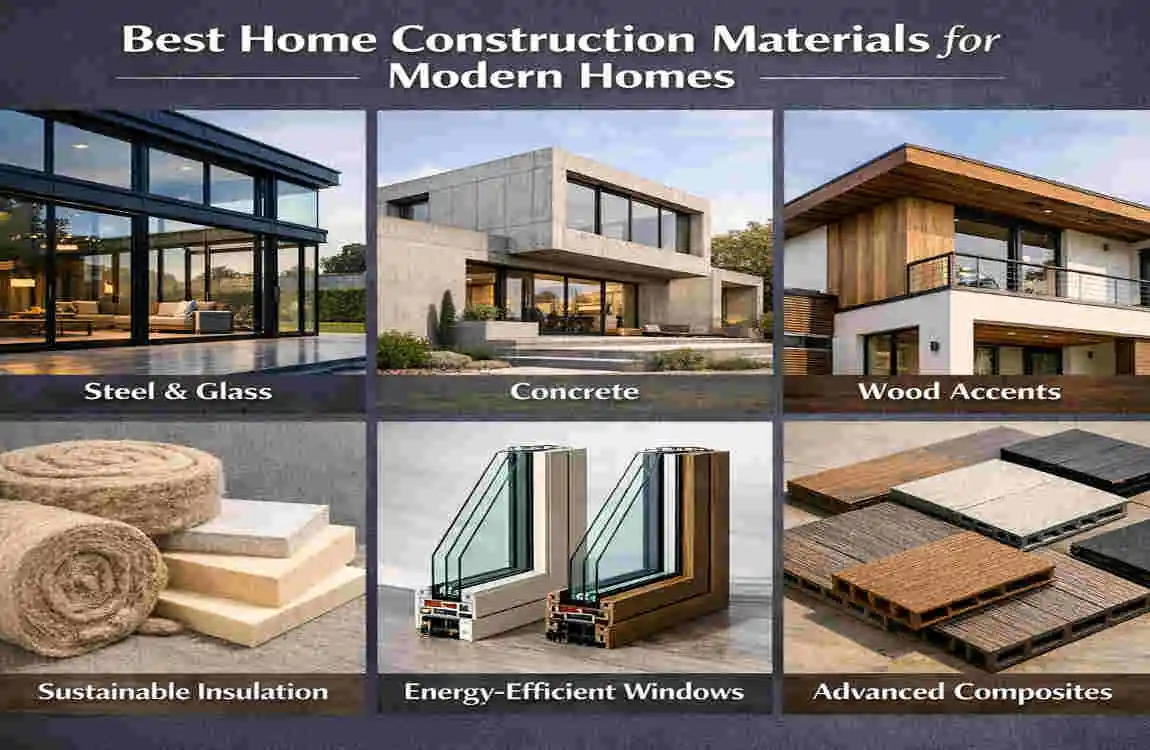
Choosing the right home construction materials is one of the most important steps in building a house. The materials you select affect how strong your home is, how comfortable it feels, how much it costs to maintain, and even how good it looks.
If you are planning a new home, you do not want to choose based on appearance alone. You want materials that fit your climate, your budget, and your long-term needs. The best homes are built with a smart balance of strength, energy efficiency, and style.
What Are Home Construction Materials?
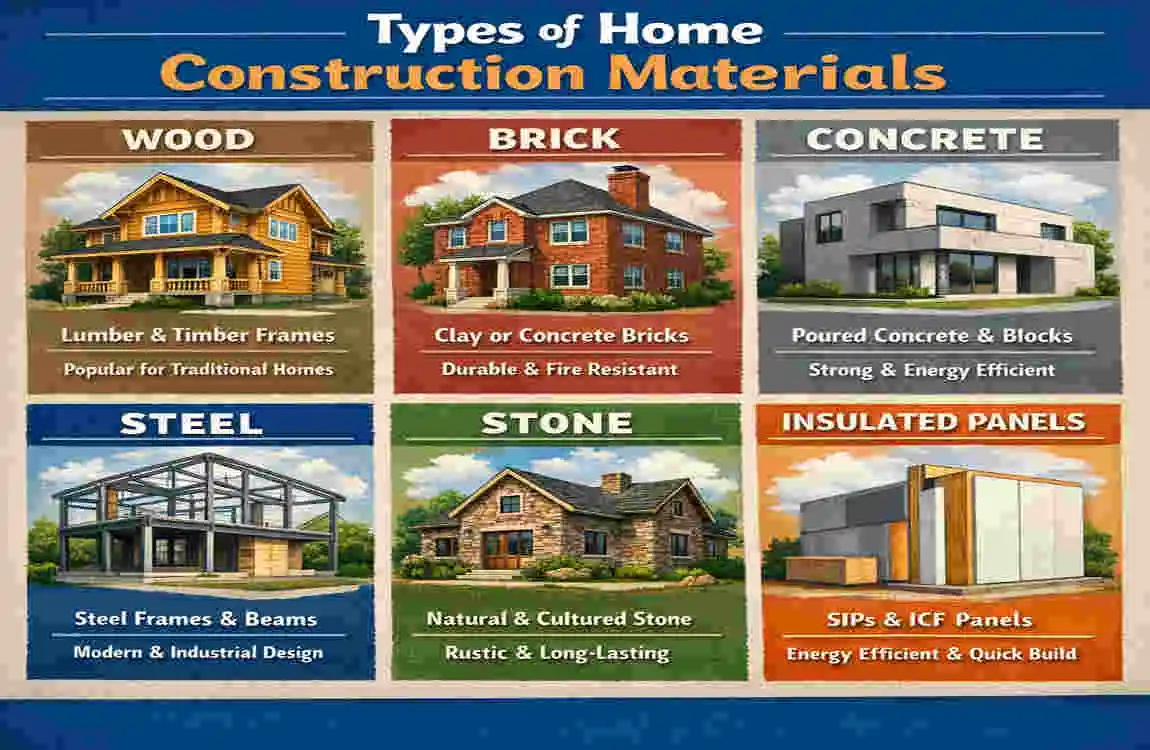
Home construction materials are the basic building products used to create a house. They include the structural components, insulation, roof, walls, windows, and many other areas.
Why Material Choice Matters
The materials you choose shape the whole house. They affect:
- Durability
- Cost
- Comfort
- Appearance
- Energy use
- Maintenance needs
A cheap material may save money at first, but it could cost more later if it wears out quickly or needs frequent repairs. That is why material selection should always be a careful decision.
Traditional vs. Modern Materials
Traditional building materials include things like wood, brick, and stone. These materials have been used for many years because they are reliable and familiar.
Modern materials include steel framing, advanced insulation, energy-efficient glass, and engineered wood. These newer options often improve performance, reduce waste, and support more efficient energy use.
What to Think About Before Choosing
Before you decide on any material, ask yourself:
- Is it strong enough for the structure?
- Will it handle the local weather?
- Does it fit my budget?
- How much maintenance will it need?
- Will it help with energy savings?
- Does it match the home style I want?
These questions help you make smarter choices from the start.
Best Structural Home Construction Materials
Structural materials are the main parts that hold the home together. These are the materials that support the building’s weight and help keep it safe and stable.
Concrete
Concrete is one of the most common home construction materials because it is strong, long-lasting, and widely used in foundations, floors, and walls.
It works well in many types of homes because it can handle heavy loads and harsh weather. It also resists fire better than many other materials.
Common uses of concrete:
- Foundations
- Floor slabs
- Basement walls
- Structural walls
- Driveways and outdoor areas
Concrete is a strong choice, but it must be mixed and installed properly. Poor installation can lead to cracks and long-term problems.
Steel
Steel is known for its high strength and flexibility. It is often used in modern homes where a strong frame is needed.
Steel framing is especially helpful when builders want open layouts or large spaces without many support walls. It is also less likely to warp, shrink, or twist like some other materials.
Why steel is useful:
- Very strong
- Good for long spans
- Resistant to pests
- Works well in modern designs
One thing to remember is that steel may need extra protection against corrosion, especially in areas with moisture or salty air.
Bricks and Concrete Blocks
Bricks and concrete blocks are both popular for walls. They are strong, dependable, and often chosen for their durability and thermal performance.
Bricks
Bricks are often used for exterior walls and decorative surfaces. They can give a house a classic, solid look.
Concrete blocks
Concrete blocks are often used for structural walls and foundations. They are practical and strong, and they can support larger buildings well.
These materials work well in homes that need both strength and a clean, finished appearance.
Wood
Wood remains one of the most widely used residential materials because it is versatile and easy to work with.
It gives homes a warm, natural look and can be used in framing, flooring, ceilings, and interior details. Many people also like wood because it is flexible in design.
Modern wood options
Today, builders often use engineered wood. This includes products made by combining wood fibres or layers to create stronger, more stable pieces.
Engineered wood can be more reliable than solid wood in some uses because it resists warping better and can be made to exact sizes.
Modern Materials for Energy-Efficient Homes
If you want a home that stays comfortable without wasting energy, the materials you choose matter a lot. Energy-efficient materials help keep heat inside during winter and block heat during summer.
Insulation Materials
Insulation helps reduce heat loss and heat gain. It makes the home easier to warm or cool, which can lower energy bills.
Common insulation types:
- Fiberglass
- Mineral wool
- Spray foam
- Rigid foam boards
Fibreglass is often affordable and common. Mineral wool can offer good fire resistance. Spray foam helps seal gaps well. Rigid foam boards work well in walls, roofs, and foundations.
Good insulation is one of the easiest ways to improve home comfort.
Energy-Efficient Windows
Windows are more than just openings in the wall. They have a big effect on comfort and energy use.
Energy-efficient windows often include:
- Double glazing
- Triple glazing
- Low-E coatings
These features help reduce heat transfer. In simple terms, they keep the inside temperature more stable. That means less strain on your heating and cooling system.
If you want a quieter, more comfortable home, better windows are worth serious attention.
Roofing Materials
The roof plays a huge role in how a home handles sun, rain, and heat.
Common energy-efficient roofing options:
- Metal roofing
- Clay tiles
- Concrete tiles
- Reflective roof finishes
Metal roofing is popular because it lasts a long time and reflects heat well. Clay and concrete tiles also perform well in many climates and can help regulate indoor temperature.
A good roof is not only about protection. It also supports energy savings over time.
Sustainable Home Construction Materials
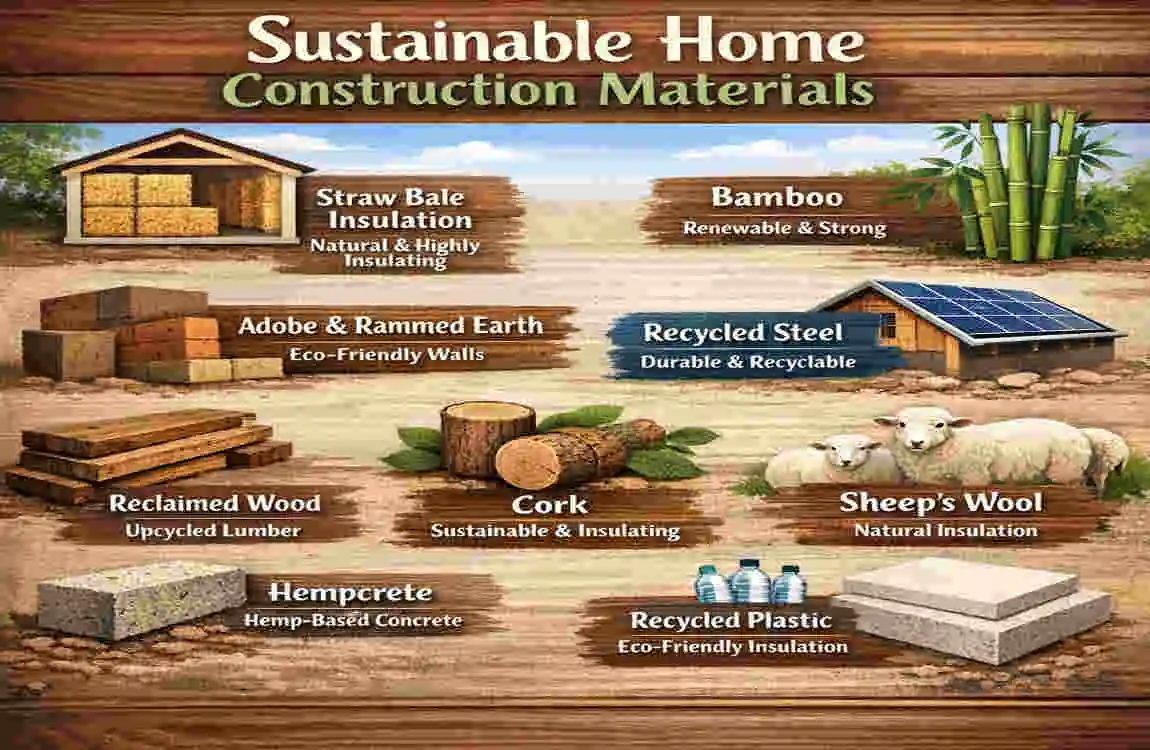
More homeowners are now looking for sustainable construction materials. These are materials that reduce waste, save resources, or have a lower environmental impact.
Recycled and Reclaimed Materials
Recycled materials are made from reused content, while reclaimed materials come from old buildings or structures.
These can include reclaimed wood, recycled steel, or reused bricks. They are often a smart choice if you want character and lower environmental impact.
Bamboo and Responsibly Sourced Wood
Bamboo grows quickly and can be a strong, renewable option in some building applications. Responsibly sourced wood is another good option because it comes from managed forests.
These materials are attractive to homeowners who want a more natural and eco-friendly approach.
Recycled Steel
Recycled steel is widely used in modern construction. It offers strength while reducing the need to produce new raw materials.
That makes it useful for homeowners who want durable framing with a smaller environmental footprint.
Low-Carbon Concrete Alternatives
Some newer concrete products are designed to reduce carbon emissions during production. These may be useful for people who want the strength of concrete with a more environmentally friendly approach.
Eco-Friendly Insulation
Some insulation materials are made from recycled or natural content. These options can support energy efficiency while using fewer resources.
Why Sustainable Materials Matter
Sustainable materials can help reduce waste, save energy, and lower the long-term impact of construction. They are a smart option when you want your home to perform well and also support greener building habits.
How to Choose the Right Home Construction Materials
There is no single best material for every home. The right choice depends on your location, your budget, and the type of house you want.
Think About Climate and Weather
Your local climate should guide your choices. If you live in a hot area, you may need materials that reduce heat gain. If you live in a rainy or humid place, you need materials that resist moisture.
If pests are a concern, choose materials that are less likely to be damaged by insects or rodents. If fire risk is high, choose materials with better fire resistance.
Compare Upfront and Long-Term Costs
Some materials cost more upfront but save money later. Others are cheaper to buy but more expensive to maintain.
That is why it helps to look at the lifecycle cost, not just the initial price. A material that lasts longer and requires fewer repairs can offer better value overall.
Check Durability and Maintenance
Ask how often the material needs repair, cleaning, sealing, or replacement. A low-maintenance material can make homeownership easier and less stressful.
Match Materials to Home Style
Your materials should fit the home’s design. A modern home may look best with steel, glass, and clean finishes. A more traditional home may suit brick, wood, and classic details.
Follow Local Building Codes
Building codes matter. They help make sure your home is safe and legal. A qualified builder or architect can help you choose materials that comply with local regulations.
Helpful checklist when choosing materials:
- Climate suitability
- Budget
- Durability
- Maintenance
- Energy efficiency
- Fire and moisture resistance
- Style match
- Code compliance
Home Construction Materials: Cost, Durability & Maintenance Comparison
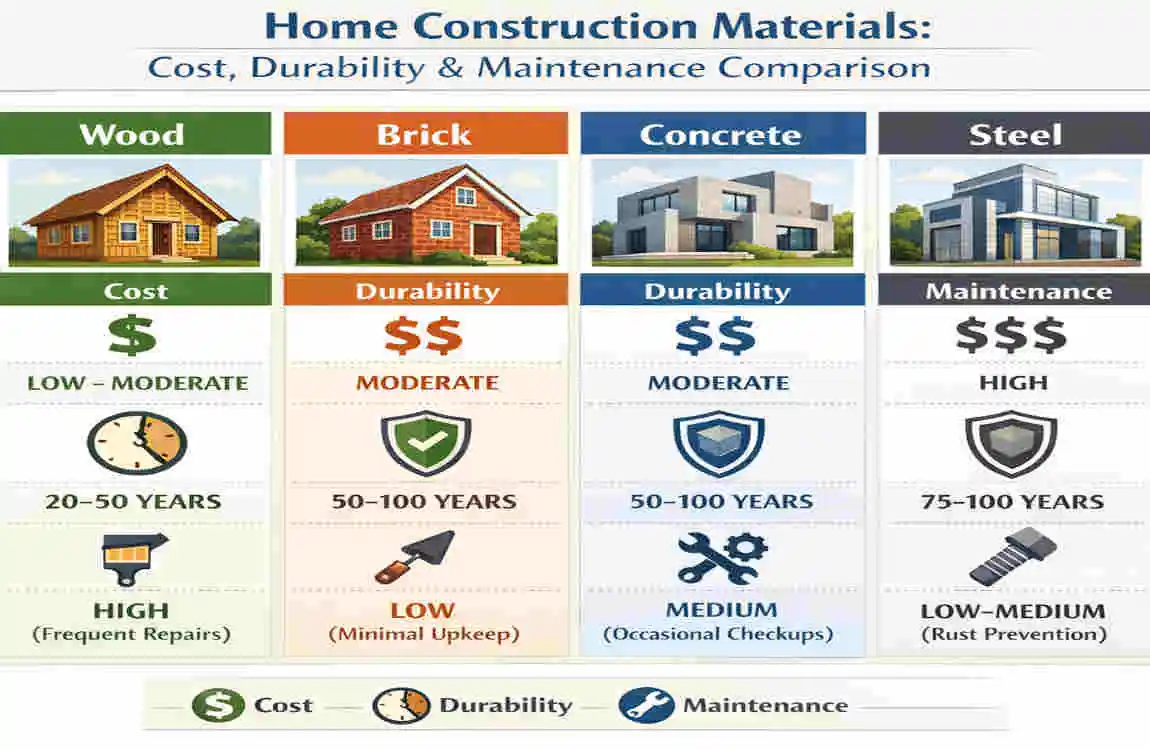
Here is a simple table that shows how some common home construction materials compare.
MaterialDurabilityMaintenanceCost LevelBest Use
Concrete High Low Medium Foundations & walls
Steel Very High Low Medium–High Structural framing
Brick High Low Medium Exterior walls
Wood Medium–High Medium Medium Framing & interiors
Bamboo Medium Medium Low–Medium Sustainable features
Metal Roofing High Low Medium–High Roofing
Fibreglass Insulation Medium Low Low–Medium Insulation
Why the Cheapest Option Is Not Always Best
A low-cost material can seem attractive at first. But if it breaks down quickly, you may spend more later on repairs, replacements, and labour.
That is why the best value is not always the cheapest material. It is usually the one that gives you the best balance of strength, performance, and long-term cost.
Why Professional Installation Matters
Even great materials can perform badly if installed incorrectly. Poor installation can lead to leaks, weak joints, energy loss, or safety issues.
A skilled builder can help make sure the material does its job properly. In home i, good installation is just as important as good product choice.
FAQ About Home Construction Materials
What are the most commonly used home construction materials?
The most common materials include concrete, steel, wood, brick, glass, and insulation. These materials are used in different parts of the home depending on strength, style, and energy needs.
Which material is best for building a modern home?
The best choice depends on your climate, budget, and design goals. Many modern homes use a mix of steel, concrete, glass, engineered wood, and energy-efficient insulation.
What is the most durable construction material?
Concrete, steel, and masonry are among the most durable materials. The right option depends on where and how the material is used.
What are the best eco-friendly home construction materials?
Good eco-friendly options include recycled steel, bamboo, reclaimed wood, low-carbon concrete, and recycled insulation products.
Which construction materials are best for energy efficiency?
The most helpful materials are insulation, energy-efficient windows, reflective roofing, and thermal-mass materials that help regulate indoor temperature.
How can I reduce construction costs without sacrificing quality?
You can reduce costs by choosing smart materials, sourcing locally, avoiding unnecessary upgrades, and focusing on long-term value rather than just the lowest price.
Should I choose materials based on appearance or performance?
Always start with performance, durability, safety, and energy efficiency. After that, choose finishes and styles that match the look you want.
| Material | Best Use | Key Benefit |
|---|---|---|
| Concrete | Foundations & walls | Strong and durable |
| Steel | Frames & structures | High strength with a modern look |
| Brick | Exterior walls | Durable and low-maintenance |
| Wood | Walls, floors & finishes | Warm, natural appearance |
| Glass | Windows & facades | Maximizes natural light |
| Stone | Exterior & feature walls | Premium, timeless style |
| Insulated Panels | Walls & roofs | Better energy efficiency |
