

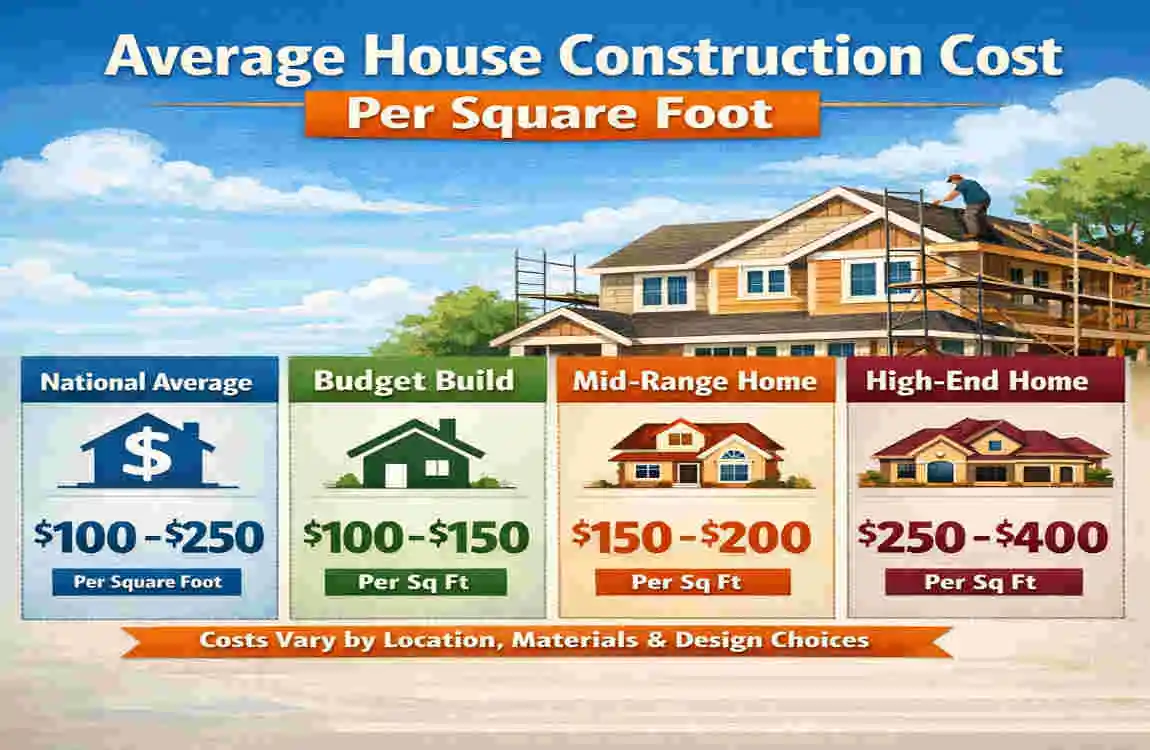
Building a new home is exciting, but it also comes with one big question: how much will it cost? If you are researching the average new home construction cost per square foot, you are already thinking in the right direction.
This number is useful because it gives you a quick way to estimate your budget. Still, it is only a starting point. The real cost depends on your location, the size of the home, the materials you choose, and the complexity of the design.
What Is the Average House Construction Cost Per Square Foot?
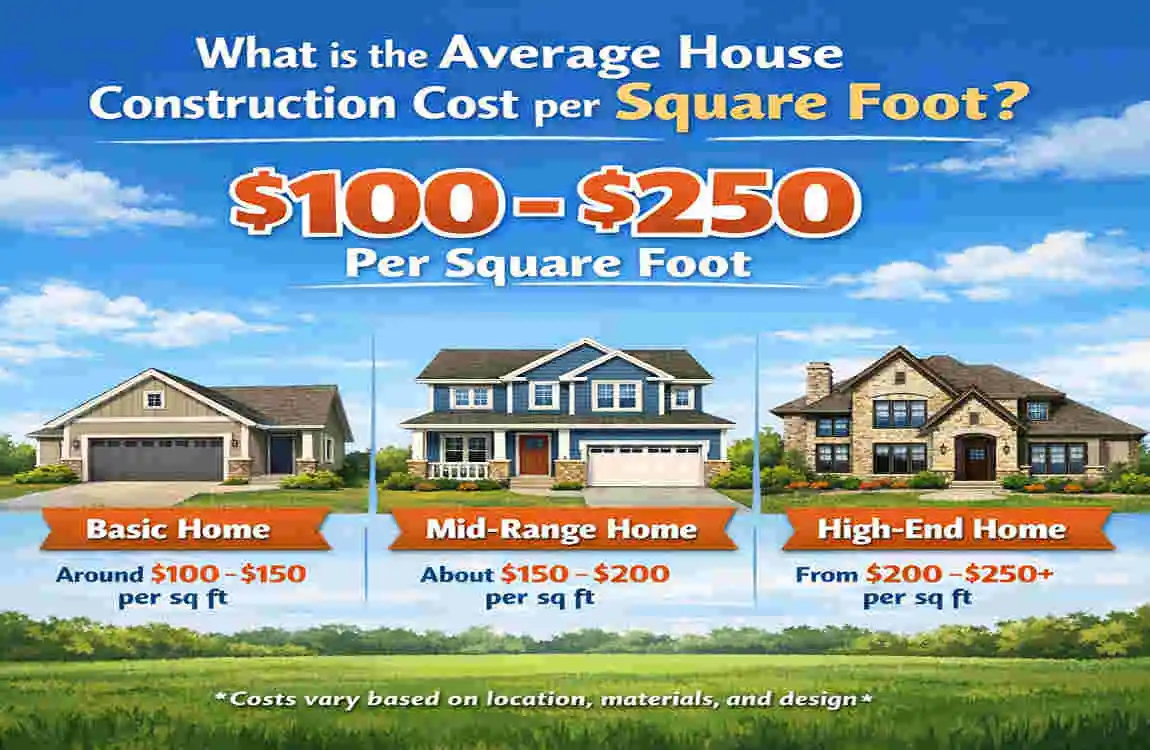
The construction cost per square foot is the amount it takes to build one square foot of living space. It is usually used to compare home-building projects and to create rough budget estimates.
For example, if a home costs $300 per square foot to build and it is 2,000 square feet, the construction cost estimate would be about $600,000.
Why This Number Matters
This figure helps you plan before you start building. It gives you a simple way to compare homes, builders, and finish levels.
But keep in mind that the cost per square foot is not a fixed price. It changes from one project to another.
Why Costs Vary
The average new home construction cost per square foot can change because of:
- Location
- Labor rates
- Material prices
- House size
- Design complexity
- Finish quality
A small, simple home in one area may cost much less than a larger custom home in another area.
Construction Cost vs Total Home Cost
It is also important to understand that construction cost is not the same as total home purchase cost.
The construction cost usually covers the actual building work. The total cost of a finished home may also include:
- Land
- Permits
- Design fees
- Utility connections
- Landscaping
- Financing costs
So when you see a cost per square foot, treat it as part of the full budget, not the whole picture.
Average New Home Construction Cost Per Square Foot
The average cost per square foot can fall into different ranges depending on the quality of the build.
Typical Cost Ranges
Here is a simple breakdown:
Construction Level Approx. Cost/Sq. Ft. Typical Features
Basic $150–$250 Standard materials and finishes
Mid-Range $250–$400 Better finishes and fixtures
High-End $400+ Luxury materials and custom design
What These Ranges Mean
A basic build usually uses standard materials and simple finishes. It is often more practical than fancy.
A mid-range home may include better flooring, upgraded cabinets, improved fixtures, and more design choices.
A high-end home often includes custom features, premium finishes, and more detailed architecture.
A Simple Example
Let’s say you want to build a 2,000-square-foot home.
If the cost is:
- $200 per square foot, the build may cost about $400,000
- $300 per square foot, the build may cost about $600,000
- $450 per square foot, the build may cost about $900,000
That is why the square footage estimate is useful. It gives you a fast way to compare budgets at different quality levels.
Why Bigger Homes Can Change the Number
A larger home does not always cost the same per square foot as a smaller home. Sometimes the price per square foot goes down slightly because some costs, like permits or design work, do not grow as fast as the house size.
Still, a bigger home almost always means a bigger total budget.
Main Factors That Affect Construction Cost
Many things affect the final price of a new build. If you understand these factors early, you can make better choices.
Location and Labour
Where you build matters a lot; local labour costs, building codes, and material prices can affect the total budget.
In some areas, labour is more expensive because skilled workers are in high demand. Building codes can also add cost if they require stronger materials or special features.
Regional material prices matter too. Lumber, concrete, roofing, and fixtures may cost more in one place than another.
House Design and Size
A simple floor plan usually costs less than a complicated one. Straight walls, fewer corners, and a simple roof are often easier and cheaper to build.
More floors can also change the cost. A two-story home may use less foundation and roof area than a one-story house of the same size, but it can also need more structural work.
Custom features can quickly raise the price. For example:
- Large windows
- Vaulted ceilings
- Complex roof lines
- Built-in features
- Custom architectural details
These look great, but they often add labour and material costs.
Materials and Finishes
Material choices make a big difference in the final cost.
Some of the most important finish choices include:
- Flooring
- Cabinets
- Windows and doors
- Countertops
- Roofing materials
A home with basic finishes will cost less than one with premium tile, quartz counters, high-end windows, and designer fixtures.
Simple vs Premium Choices
A simple laminate countertop may fit a tighter budget. A stone countertop may cost more, but it may also look better and last longer.
This is where many homeowners make trade-offs. You may save money in one area so you can upgrade another area that matters more to you.
Construction Costs by Major Home Component
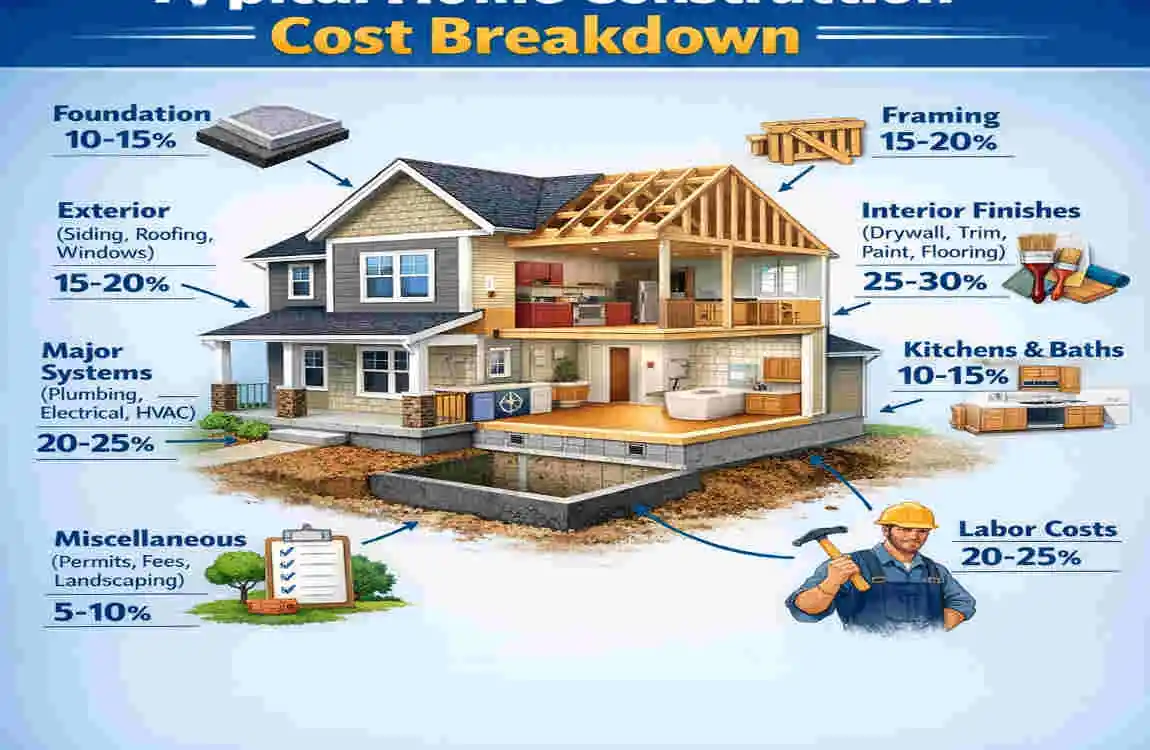
It helps to think of a new home as a group of smaller projects. Each part of the house adds to the total cost.
Foundation and Site Preparation
Before the house goes up, the land has to be prepared. This may include clearing, grading, excavation, and laying the foundation.
This can become expensive if the site is uneven, rocky, or difficult to access.
Framing and Structural Work
Framing creates the shape of the house. It includes the walls, floors, and roof structure.
This is one of the largest parts of the budget because it defines the home’s structure.
Roofing
Roofing costs depend on the roof’s shape, the material used, and the house’s size. A simple roof costs less than a roof with lots of angles and details.
Plumbing, Electrical, and HVAC
These systems are essential. They bring water, power, heat, cooling, and air movement into the house.
These systems often take a large share of the budget because they require skilled labour and careful installation.
Insulation and Drywall
Insulation improves energy efficiency, while drywall creates finished interior walls. These are important steps that prepare the home for paint and final finishes.
Interior Finishes
Interior finishes can take a big bite out of the budget. This includes:
- Paint
- Flooring
- Cabinets
- Countertops
- Trim
- Fixtures
This is also where personal taste can have the greatest effect on cost.
Exterior Work
Outside work may include siding, paint, gutters, porches, and landscaping. These details help the house look complete and protect it from weather.
Which Parts Usually Cost the Most?
In many builds, the largest budget areas are:
- Foundation and structure
- Mechanical systems
- Interior finishes
- Roofing and exterior work
The exact breakdown depends on the type of home you are building.
How to Calculate Your Home Construction Budget
A simple budget estimate can help you understand whether your plan is realistic.
Start With Square Footage
First, decide how large the home will be.
For example, if your planned home is 2,000 square feet, that gives you the base size for your estimate.
Multiply by Cost Per Square Foot
Next, multiply the square footage by your expected cost per square foot.
For example:
- 2,000 sq. ft. × $250 = $500,000
- 2,000 sq. ft. × $350 = $700,000
This gives you a rough construction estimate.
Add Extra Costs
Do not stop there. You also need to include other common expenses such as:
- Architectural and engineering fees
- Permits and inspections
- Site preparation
- Utility connections
- Driveway or access work
Add a Contingency
Always set aside extra money for unexpected costs. A contingency fund helps if material prices rise or the project hits a problem.
A good rule is to plan a buffer rather than budgeting to the exact dollar.
Why This Estimate Is Only a Starting Point
The average new home construction cost per square foot is useful, but it should not be treated as a guaranteed final price. Real projects often shift because of weather, market prices, change orders, and site conditions.
A budget estimate is a planning tool. It helps you prepare, compare options, and avoid surprises.
Ways to Reduce New Home Construction Costs
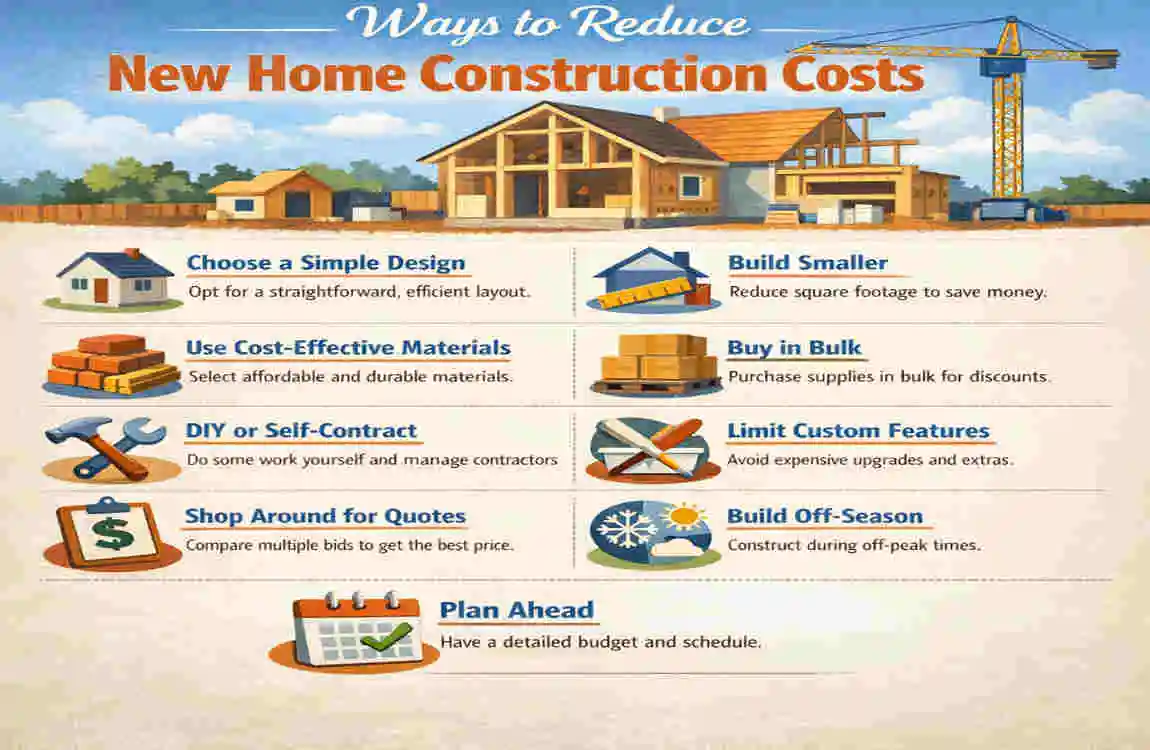
You do not have to overspend to build a good home. Smart planning can keep the budget under control.
Choose a Simple Floor Plan
A straightforward layout usually costs less than a highly customised one. Simple shapes are easier to build and often use materials more efficiently.
Compare Contractors
Never rely on just one estimate. Get several quotes and compare not only price but also what each contractor includes.
The cheapest quote is not always the best value. Look at quality, timeline, and experience too.
Select Durable but Affordable Materials
You do not need luxury materials everywhere. In many cases, mid-range materials offer the best balance of cost and durability.
A practical approach is to spend more on the parts you touch and use every day, like cabinets or flooring, and save in less visible areas.
Avoid Unnecessary Structural Changes
Changing the structure later can be expensive. Try to finalise the layout before building starts.
It is much cheaper to make planning decisions early than to change them once work has begun.
Plan Plumbing and Electrical Carefully
Plumbing and electrical changes can become costly if they are moved around too much.
A smart layout helps reduce wasted labour and keeps the project moving smoothly.
Keep Flexibility in Finishes
You can save money by choosing finishes that look good without being overly expensive. Simple designs often age well and feel timeless.
Do Not Cut Corners on Safety
Saving money is important, but never reduce quality in structural or safety-related work. Poor framing, weak wiring, or low-grade plumbing can create expensive problems later.
FAQ
What is the average new home construction cost per square foot?
It usually falls between $150 and $400+ per square foot, depending on quality, location, and project details.
Is it cheaper to build a house or buy one?
It depends on the market. In some areas, buying an existing home is cheaper. In others, building may make more sense if you want a specific layout or modern features.
Does a larger house cost less per square foot to build?
Sometimes, yes. Larger homes can benefit from scale, but the total cost will still be higher.
What is usually included in the construction cost per square foot?
It usually includes labour and materials for the build itself, but land, permits, design fees, and some site costs may be billed separately.
How can I estimate the cost of building a 2,000-square-foot house?
Multiply the square footage by your estimated cost per square foot. For example, 2,000 × $300 = $600,000.
What can increase new home construction costs?
Difficult land, premium materials, custom design, labour rates, permit fees, and material price changes can all raise costs.
Should I add a contingency to my construction budget?
Yes. A contingency is a smart way to handle unexpected costs without disrupting the entire project.
| Construction Level | Average Cost per Sq. Ft. | Best For |
|---|---|---|
| Basic | $100–$180 | Simple, budget-friendly homes |
| Standard | $180–$300 | Comfortable family homes |
| High-End | $300–$500+ | Premium materials and finishes |
| Luxury | $500–$1,000+ | Custom luxury homes |
| Key Cost Factors | Location, materials, labor, design & finishes | Overall project budget |
