


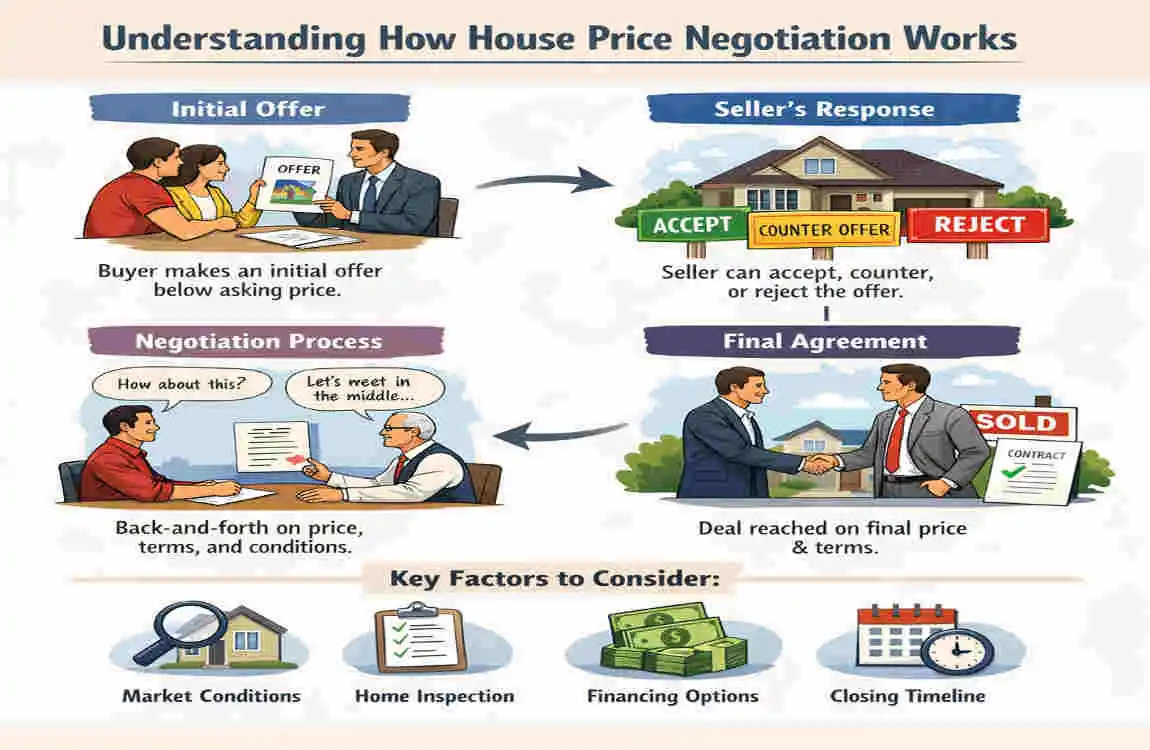
House price negotiation is simply the process of discussing a lower or fairer price before you buy. As a buyer, your goal is not just to pay less for its own sake. Your goal is to pay a price that matches the home’s value, condition, and market demand.
Sellers may accept a lower offer for many reasons. They may want a fast sale, they may already have another home lined up, or the property may have been listed for a long time. Sometimes the home needs repairs, which gives you room to negotiate.
Negotiation works best when you understand the difference between asking price, market value, and final sale price. The asking price is what the seller wants. Market value is what the home is realistically worth. The final sale price is what both sides agree on.
A common mistake is making an offer based only on emotion. If you love the house, it is easy to overpay. That is why research matters so much when learning how to negotiate house prices as a buyer.
Research the Property Before Making an Offer
Check Recent Comparable Sales
Look at similar homes in the same area that sold recently. These are often called comparable sales or “comps.” They help you see what buyers are actually paying, not just what sellers are asking.
Focus on homes with similar size, age, layout, and condition. A house with a bigger yard or a renovated kitchen may justify a higher price, while an older home may support a lower offer.
Study the Local Market
A strong offer depends on the market you are buying in. In a busy seller’s market, homes may sell quickly and at higher prices. In a slower buyer’s market, sellers may be more open to negotiation.
If homes in the area sit on the market for weeks or months, that usually gives you more room to negotiate. If homes are selling fast, you may need to move carefully.
Check How Long the Property Has Been Listed
The longer a home stays on the market, the more likely the seller may become flexible. A property that has been listed for a long time can create pressure for the seller to accept a lower offer.
Also check whether the price has already been reduced. A price drop can signal that the seller is adjusting expectations.
Review the Home’s Condition
A home in excellent condition may leave less room for negotiation. But if the property needs repairs, has outdated systems, or looks neglected, you may have a stronger case.
You should use these findings to shape a fair and reasonable offer. Do not guess. Let the facts guide your number.
How to Make a Strong but Lower Offer
Decide Your Maximum Budget First
Before making any offer, know the highest amount you are willing to pay. This keeps you from getting pushed beyond your comfort zone during negotiations.
Your budget should include not just the purchase price, but also closing costs, repairs, moving expenses, and future maintenance.
Start With a Realistic Opening Offer
A low offer can work, but only if it still makes sense. If your offer is too low, the seller may reject it without a counteroffer.
The best opening offer is usually one that is lower than the asking price yet supported by research. It shows that you are serious.
Explain Your Offer With Facts
Do not just say you want a lower price. Show why. Use recent sales, property condition, and market data to support your offer.
This makes your position stronger and more professional. Sellers are often more open when they see you are being fair, not just trying to bargain hard.
Consider Seller Motivation
Try to understand what the seller wants most. Some care most about a quick closing. Others want fewer repair requests. Some prefer a clean, simple deal.
If you know their priorities, you can shape your offer to better fit them. A slightly higher price with better terms may beat a lower price with complications.
Know When to Increase Your Offer
Sometimes the seller counters and asks for more. If the house is still within your budget and the value still makes sense, you may decide to improve your offer.
The key is to stay calm and stick to your limits. A deal should still feel right financially.
Common Offer Factors to Review
Factor Why It Matters
Comparable sales Shows fair market value
Days on market Suggests seller flexibility
Home condition May justify lower pricing
Seller motivation Helps shape stronger terms
Your budget Keeps you from overpaying
Use the Home Inspection to Negotiate
Why Inspection Findings Matter
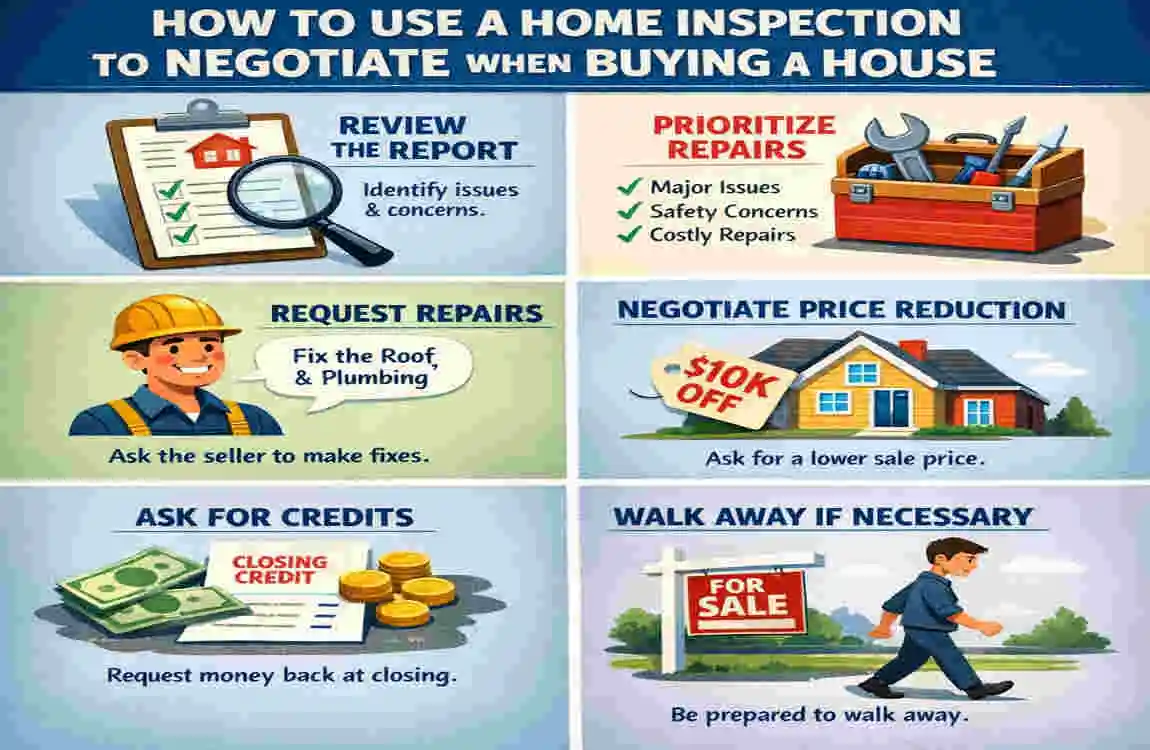
A dream home inspection can reveal issues that were not obvious during the showing. These findings can give you a strong reason to negotiate a better price or request repairs.
Major problems with the roof, plumbing, electrical system, or foundation matter more than small cosmetic issues. Focus on what affects safety, function, and long-term cost.
Negotiate Repairs, Credits, or a Price Reduction
You do not always need to ask for a lower price. Sometimes, it is better to request repairs or ask for a credit at closing.
A price reduction lowers the total cost of the home. A repair request fixes the issue before you move in. A closing credit can help you cover the cost yourself later.
Avoid Over-Negotiating
Not every small problem should become a point of negotiation. If you ask for too much, the seller may feel frustrated and pull back.
Try to be fair. A good rule is to focus on the bigger issues that truly affect value or safety.
When a Repair Request Is Better Than a Lower Price
If a problem needs immediate attention, repairs may be more useful than a small discount. For example, a broken water heater or a roof leak may be more valuable to fix before closing than to slightly reduce the price.
Always think about what will help you most after you buy the home.
Negotiation Strategies That Can Save Buyers Money
Stay Calm and Use Facts
The strongest buyers are not emotional buyers. They make decisions based on research and logic.
If you sound respectful and informed, the seller is more likely to take your offer seriously.
Ask What Matters Most to the Seller
Sometimes the best negotiation move is a simple question. If the seller wants a fast close, you can offer that. If they want fewer delays, you can keep your terms clean.
This can save you money without creating unnecessary conflict.
Use Timing to Your Advantage
Timing can make a difference. Sellers may be more open to negotiation if the home has been listed for a while, if the market is slower, or if they need to move quickly.
Even the time of year can affect flexibility. Some seasons bring more buyer activity, while others are quieter.
Negotiate Closing Costs Too
You do not always need to reduce the sale price. Sometimes you can ask the seller to help with closing costs instead.
This can lower the amount of cash you need upfront and make the deal easier to manage.
Know When to Walk Away
Sometimes the smartest move is to stop negotiating. If the price is too high, the repairs are too serious, or the terms do not fit your budget, walking away may be the right choice.
A house should work for your finances, not just your emotions.
Common House Price Negotiation Mistakes to Avoid

One of the biggest mistakes is making an offer without research. If you do not know the market value, you may offer too much or too little.
Another common mistake is falling in love with a property too early. When that happens, buyers often ignore warning signs and lose negotiating power.
Here are a few mistakes to watch for:
- Offering far below a reasonable value
- Ignoring the seller’s priorities
- Waiving important protections
- Focusing only on the purchase price
- Getting into a bidding war without a limit
- Failing to set a walk-away price
A smart negotiation is firm but fair. It protects your budget while keeping the deal realistic.
FAQ: How to Negotiate House Price as Buyer
Can a buyer negotiate the asking price of a house?
Yes. Asking prices are often negotiable, especially if the property has been listed for a long time, needs repairs, or the seller wants a quick sale.
How much below asking price should a buyer offer?
There is no fixed number. It depends on comparable sales, market conditions, home condition, and the seller’s situation.
What is the best way to negotiate a house price?
The best approach is to research the market, make a fair offer, use inspection findings wisely, and keep your terms attractive.
Can you negotiate a house price after inspection?
Yes. If the inspection reveals major issues, you can ask for repairs, credits, or a price reduction.
Should buyers negotiate closing costs too?
Yes, if possible. Closing costs can sometimes be negotiated even when the purchase price stays the same.
When should a buyer walk away from a house?
Walk away when the price is too high, the repairs are too serious, or the deal no longer fits your budget and goals.
Is it better to offer a lower price or ask for repairs?
It depends on the situation. If the issue is major and urgent, repairs may be the best option. If you prefer more flexibility, a lower price or credit may work better.
How Buyers Can Negotiate a Better House Price
| Negotiation Tip | What Buyers Can Do |
|---|---|
| Research Market Value | Compare similar homes and recent local sales. |
| Get a Home Inspection | Use repair issues to support a lower offer. |
| Start With a Fair Offer | Leave some room for negotiation without making an unrealistic offer. |
| Ask About Seller Motivation | A seller who needs a quick sale may be more flexible. |
| Point Out Needed Repairs | Factor costly repairs, updates, or maintenance into your offer. |
| Consider Closing Costs | Negotiate for the seller to cover some closing expenses. |
| Stay Flexible | Be willing to negotiate on price, closing date, or included items. |
| Know Your Maximum | Set a budget limit and avoid overpaying because of emotions. |
