


Deciding to leave a home is never a small choice. It affects your money, your routine, and your peace of mind.
Many people stay in a house long after it no longer fits their lives. That can lead to stress, higher costs, and daily frustration. If you have been wondering why you should move out of your house, the answer may lie in how your home affects your comfort, budget, and plans.
Why Should You Consider Moving Out of Your House?
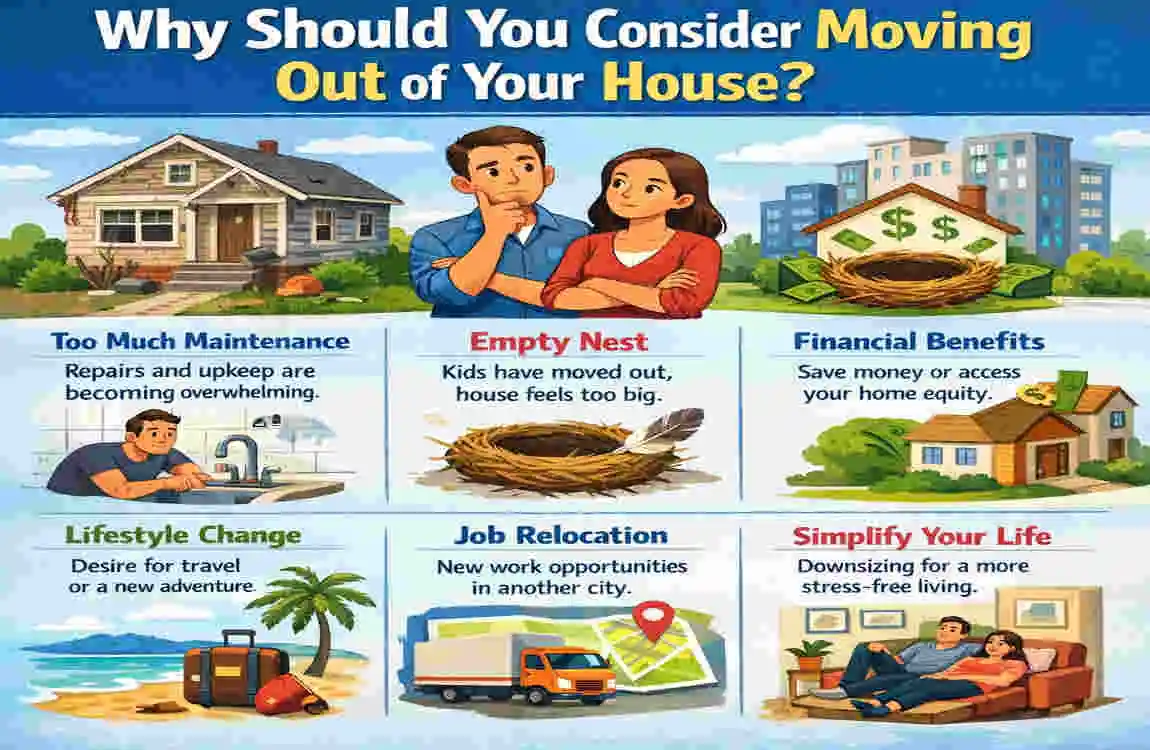
A dream home can work well for one stage of life and then stop working later. That does not mean you failed to choose the right house. It just means your needs changed.
You may need more space, less space, a better location, or lower costs. You may also be dealing with rising repair bills or a layout that no longer fits how you live.
Moving is not only about wanting something bigger or newer. Often, it is about finding a home that supports your lifestyle, budget, safety, and long-term plans. If your current home no longer does that, moving may be the smarter choice.
7 Key Signs You Should Move Out of Your House
Your House No Longer Fits Your Lifestyle
One of the clearest signs it may be time to move is when your home no longer fits your daily life.
Maybe your family has grown. Maybe you now work from home and need a quiet office. Or maybe you have hobbies, guests, or storage needs that your house cannot handle.
A home should make life easier, not harder. If you feel crowded, short on privacy, or always rearranging space to make things work, your house may no longer suit you.
Home Repairs Are Becoming Too Expensive
Every house needs upkeep, but some homes demand far more than others. If you keep paying for plumbing, roofing, electrical, or heating repairs, the costs can add up fast.
At some point, it becomes fair to ask whether fixing the house is still worth it. If repair bills keep coming and the problems keep returning, moving may be cheaper than staying.
A major renovation can also sound tempting, but not every home is worth a big investment. If the structure, layout, or systems are too far gone, moving may give you better value.
Your Neighborhood No Longer Meets Your Needs
A house is not just the building. It is also the area around it.
Maybe traffic has gotten worse. Maybe the neighborhood feels noisier or less safe. Maybe the schools, shops, parks, or services you need are no longer nearby. Even a great house can feel wrong if the location no longer fits your life.
Location matters a lot when you are considering whether to move out of your house. If your commute is too long or your access to daily necessities is too limited, moving may significantly improve your quality of life.
Your Housing Costs Are Too High
If your home takes too much of your income, that is a serious warning sign. Housing costs include more than just rent or mortgage payments.
You also need to think about:
- Property taxes
- Insurance
- Utilities
- Repairs
- Maintenance
- Loan interest
When these costs strain your budget, your home can become a source of stress rather than comfort. If you are constantly cutting back in other areas of your life to keep up with housing costs, it may be time to consider moving.
You Need More Space or a Different Home Layout
Sometimes the issue is not the size of the house alone. It is the layout.
Maybe the bedrooms are too small. Maybe there is not enough storage. Maybe the kitchen feels cramped, or the rooms do not flow well. Poor layout can make a house feel smaller and less useful than it really is.
If you need a home office, a playroom, extra bedrooms, or better open space, moving may make more sense than trying to force the old layout to work. Renovation can help in some cases, but not always.
Your Home Is Affecting Your Comfort and Quality of Life
Your house should support your peace of mind. If it does not, that matters.
You may notice too little natural light, too much noise, poor privacy, or a general feeling of stress when you are home. When a house becomes a place you endure rather than enjoy, it may be time to rethink staying.
Comfort is not a luxury. It is part of what makes a home worth keeping. If you cannot relax in your own space, that is a real sign something needs to change.
You Have Outgrown the Area or Your Future Plans Have Changed
Life changes. Your home should keep up if it can.
Maybe you got married, had children, changed jobs, or started thinking about retirement. Maybe you want to live closer to family, work, or a better school district. Or maybe you see a different future for yourself now.
A house that fit your old life may not fit your next one. If your long-term plans have changed, moving sooner may be better than waiting until the decision becomes urgent.
How to Know If Moving Is Better Than Renovating
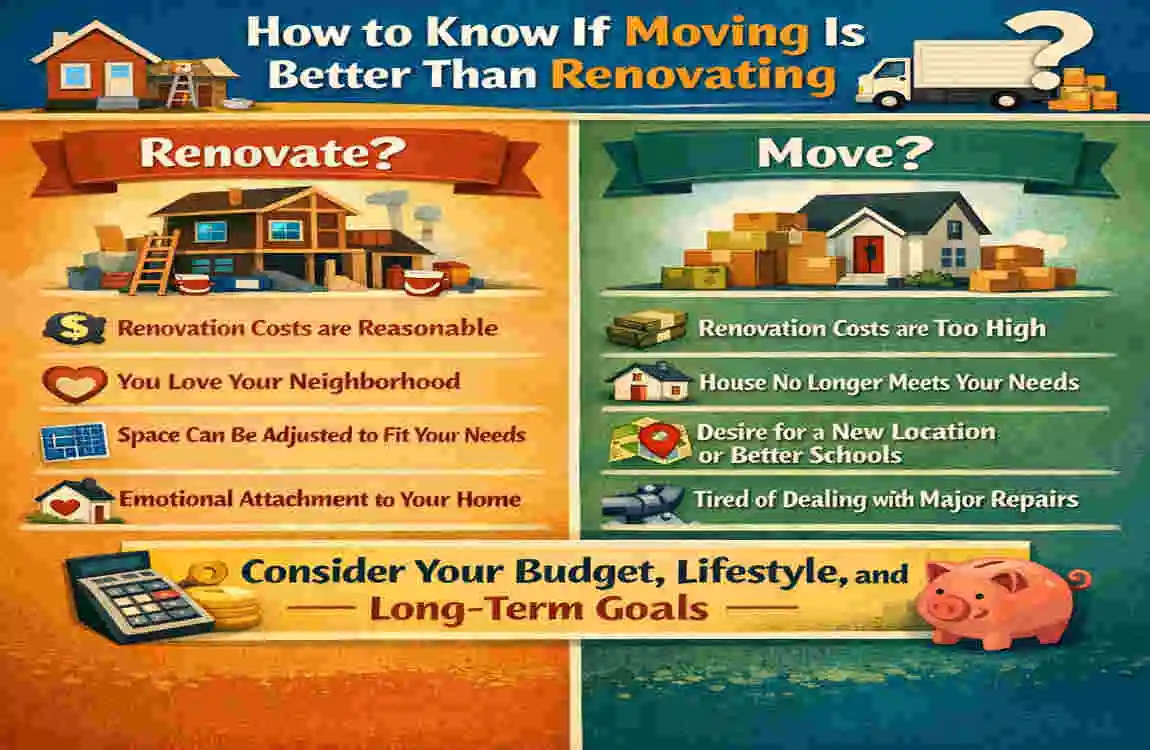
Sometimes the real question is not whether your home has problems. It is whether those problems are worth fixing.
Renovating can be a good choice when the home is still in a strong location, and the issues are limited to a few areas. Moving may be better when the house has deeper problems that renovation cannot solve easily.
Here is a simple comparison:
Factor Consider Moving Consider Renovating
Space Home is fundamentally too small One or two areas need improvement
Repairs Major ongoing problems Minor or manageable repairs
Location Area no longer suits you Location still works well
Cost Moving is financially practical Renovation is more affordable
Lifestyle Major lifestyle change Basic needs remain the same
A good rule is this: if the house itself is the problem, moving may be better. If only a few parts of the house are the problem, renovation may be enough.
Financial Factors to Consider Before Moving
Moving can improve your life, but it also comes with costs. Before making a decision, look at the full picture.
You may need to pay for:
- Selling costs
- Closing costs
- Moving expenses
- New mortgage or rent
- Property taxes
- Home insurance
- Maintenance costs
- Emergency savings after the move
Do not decide based only on what your current house is worth. A higher sale price does not always mean moving is a better financial move.
You should also consider what monthly payment you can comfortably handle after the move. A new home should reduce stress, not create a new financial burden.
What to Do Before Moving Out
Before you make any final decision, take a slow and practical look at your situation.
- Review your finances and monthly housing costs
- Estimate your home’s current market value
- Research neighborhoods and housing options
- Compare selling, renting, and renovating
- Create a realistic moving budget
- Prepare your home for sale if needed
This process helps you distinguish between temporary frustration and a real need to move.
Frequently Asked Questions
What are the biggest signs you should move out of your house?
The biggest signs are high housing costs, too little space, expensive repairs, a poor location, and changing lifestyle needs.
Is it better to move or renovate a house?
It depends on the situation. If the home has major problems or no longer fits your life, moving may be the best option. If the issue is limited, renovating may be enough.
How do you know when you have outgrown your house?
You may have outgrown your house if you need more rooms, more storage, a home office, or a better layout for your daily routine.
Should you move if your house needs too many repairs?
If repairs keep piling up and the costs are rising, moving may be the smarter choice. First, compare repair costs with the cost of a new home.
| Sign | Why It Matters |
|---|---|
| Your Home Feels Too Small | Limited space can make daily life uncomfortable and stressful. |
| Repairs Are Becoming Too Expensive | Frequent major repairs may cost more than moving to a better property. |
| The Location No Longer Fits | A long commute, poor access, or changing neighborhood can reduce convenience. |
| Your Family Needs Have Changed | Marriage, children, or other lifestyle changes may require more bedrooms or space. |
| Housing Costs Are Too High | Rising mortgage, rent, taxes, or maintenance costs can strain your budget. |
