

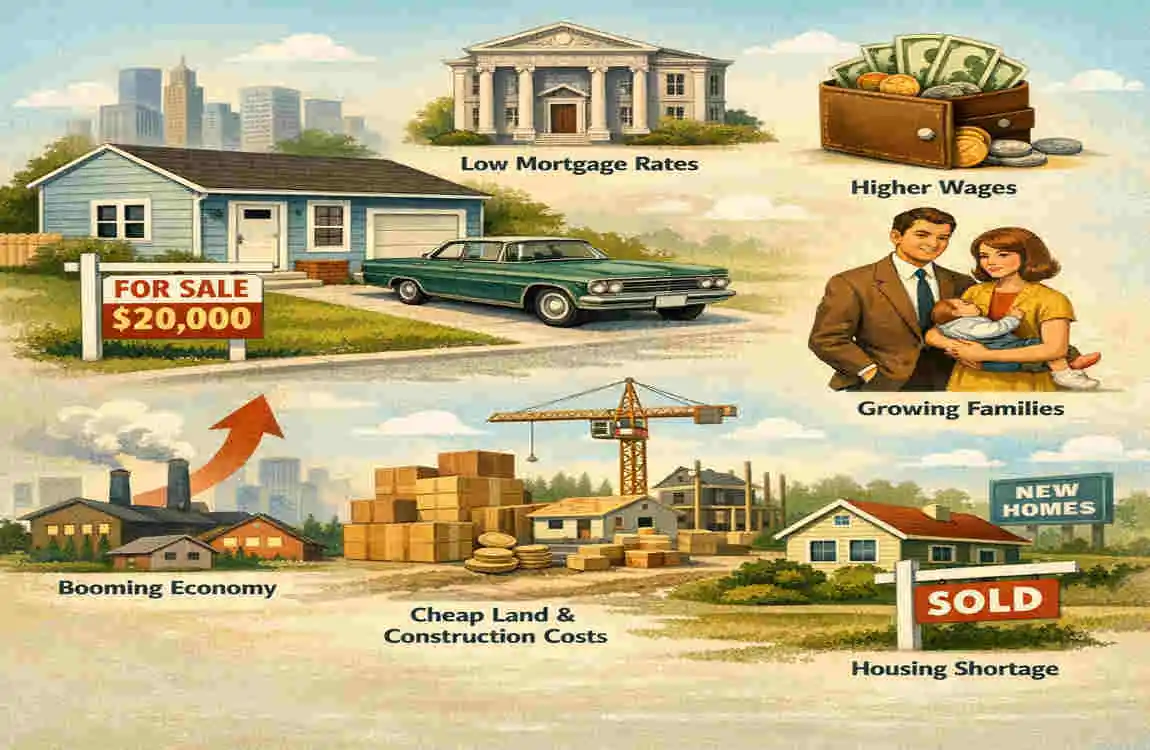
If you are asking what the average cost of a house was in 1965, the simple answer is this: a typical U.S. home cost around $13,000 to $15,000, with many historical records placing the average near $13,600 for a new home.
That may sound extremely low today, but the number only makes sense when you look at the full picture. In 1965, homes were smaller, land was cheaper, wages were different, and housing expectations were not the same as they are now.
What Was the Average Cost of a House in 1965?
Average Home Price in 1965
The average house price in 1965 was roughly $13,000 to $15,000 in the United States. A commonly cited figure for a new home is about $13,600.
That was the price for many middle-class families buying or building a typical home at the time. Of course, not every house cost the same. A home in a busy city could cost more, while a house in a smaller town or new suburb might cost less.
What a Typical House Looked Like
A typical home in 1965 was usually smaller and simpler than the average home today. Many had:
- 2 or 3 bedrooms
- 1 bathroom
- A small yard
- A carport or garage
- A basement in some regions
The design was practical. Families wanted space and comfort, but they didn’t expect the large open layouts, luxury kitchens, or extra bathrooms many buyers look for now.
Why Home Prices Varied Across the U.S.
House prices weren’t the same everywhere. A home in California, New York, or another fast-growing area often cost more than a similar home in a rural region.
Several things changed the price:
- Location
- House size
- Neighborhood quality
- Local wages
- Land value
- Whether the home was new or older
So when we ask what the average cost of a house in 1965 was, we are really talking about a general national picture, not one fixed price for every market.
Housing Prices in the United States During 1965
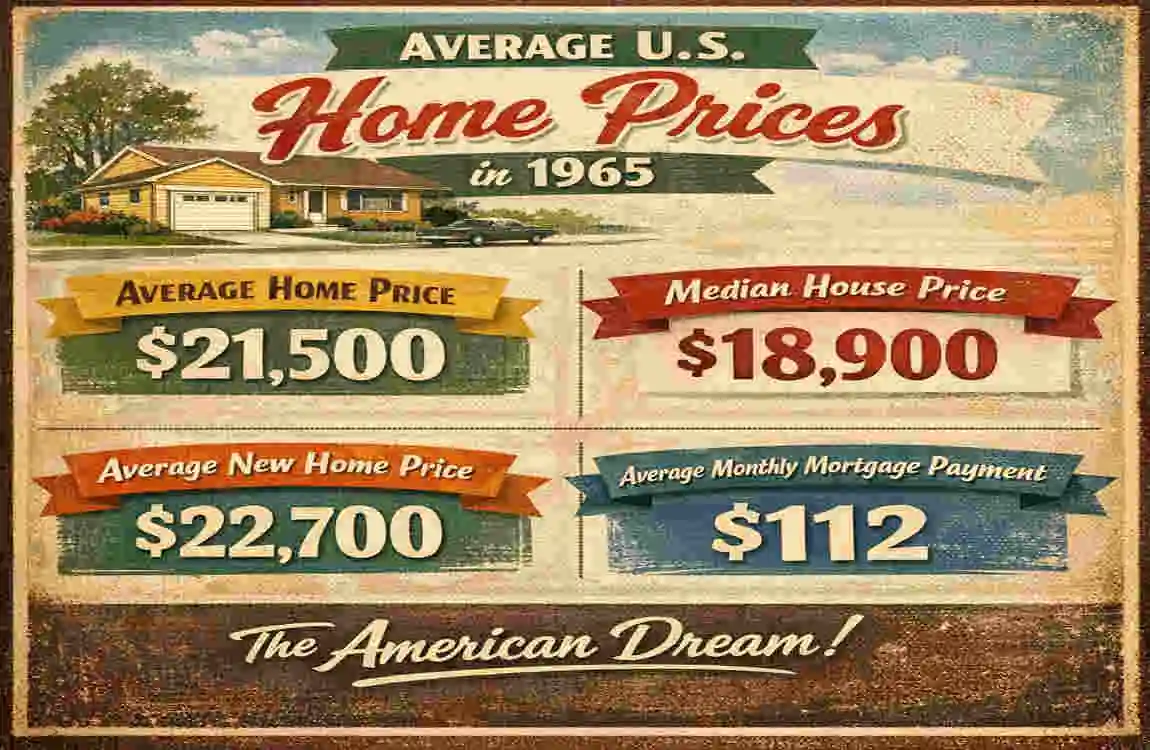
Suburban Housing Growth
The mid-1960s were still shaped by the suburban boom that followed World War II. Many American families moved into new neighborhoods outside cities.
Builders put up homes quickly, which helped keep prices lower than they would be in later decades. Large tracts of land were turned into housing developments, especially around growing cities.
Popular Home Styles in 1965
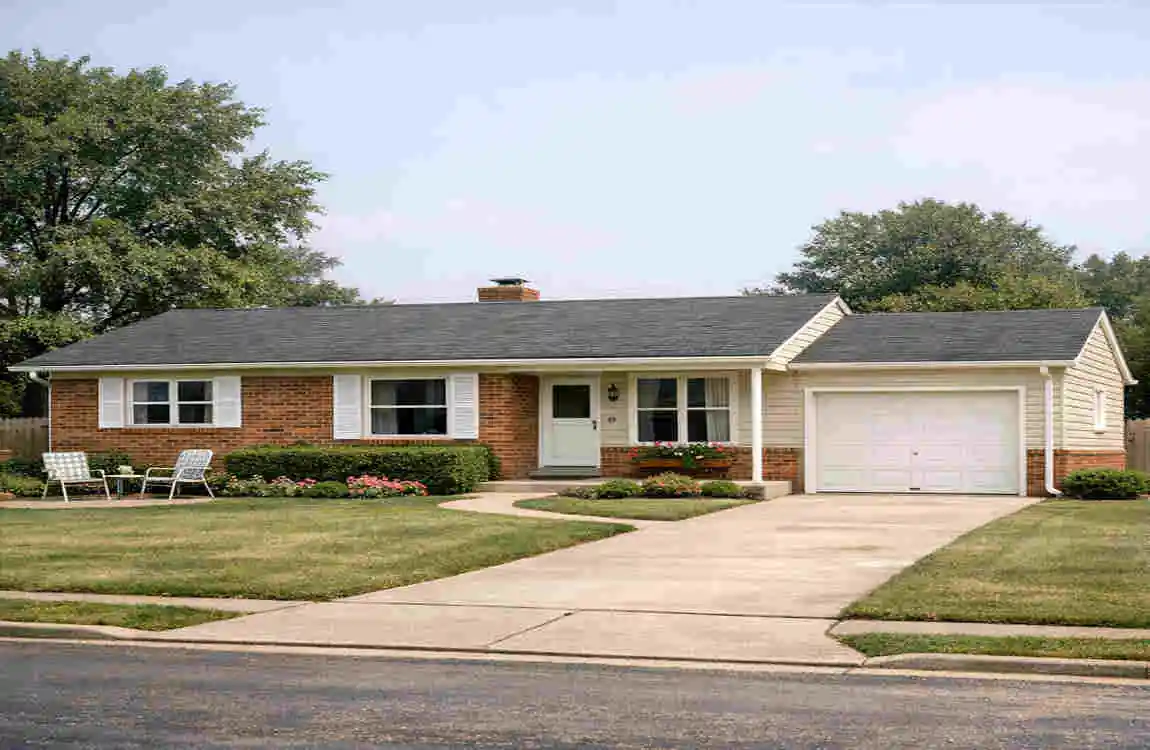
Single-family houses were the most common. These homes were usually simple and practical. You often saw ranch-style houses, split-level homes, and other modest designs.
People wanted a home that worked for family life. Style mattered, but function came first.
Typical House Size and Features
Builders often designed 1965 homes with basic family needs in mind. Common features included:
- A living room
- A kitchen and dining area
- Two or three bedrooms
- One full bathroom
- A backyard for children or gardening
Compared with modern homes, these houses were usually more compact. They used space efficiently, and that helped keep costs down.
Urban vs. Suburban Home Prices
In cities, homes could cost much more because land was limited and demand was higher. In the suburbs, land was easier to develop, so homes were often more affordable.
That difference still matters today, but it was especially important in 1965 as suburbs kept expanding and new homes were being built at a steady pace.
How Much Did a House Cost in 1965 Compared With Today?
1965 Dollars vs. Today’s Dollars
A house that cost about $13,600 in 1965 would be worth well over $130,000 today, based on inflation alone. That does not mean the house actually became that valuable in the housing market. It only means the dollar’s purchasing power changed.
This is an important difference. Inflation changes the value of money, while home prices also change because of demand, land, wages, and construction costs.
Housing Appreciation Over Time
Housing prices rose for reasons beyond inflation. They also increased because homes became larger, lots became more expensive, and more people wanted to live in certain areas.
So when you compare 1965 to today, you are seeing both money inflation and real market growth.
Changes in Construction Costs
Building a house costs more now than it did in 1965. Materials, labor, and regulations all play a role.
A few reasons construction costs rose:
- Higher labor costs
- More expensive materials
- Modern safety standards
- Updated building codes
- More features in newer homes
Changes in Land Values
Land became much more expensive in many places over time. This is one major reason house prices climbed. In 1965, more land was often available for suburban housing. Today, many areas have less space and much higher demand.
What Could Buyers Afford in 1965?
Average Household Income
To understand housing in 1965, you also have to look at income. A home was not cheap in absolute terms. However, many families could still afford one because incomes and expectations matched the market of that time.
The real question is not just price. It is price compared with income.
Mortgage Payments in the 1960s
Mortgage payments in 1965 were often lower in dollar terms than they are today. However, interest rates and lending rules differed, so the home-buying experience was different.
Monthly payments depended on:
- Purchase price
- Down payment
- Loan length
- Interest rate
Down Payments and Financing
Buyers often needed a meaningful down payment, though lending was different from today. Many families saved carefully before buying.
The good news was that house prices were still tied more closely to wages than they are in many expensive markets today. That made ownership feel more reachable for a larger share of households.
Homeownership and Affordability
Here is the key idea: a house price by itself does not tell the full story. A $13,600 home in 1965 may look tiny compared with today’s prices, but it still required planning and discipline.
Housing Factor1965Modern Comparison
Average house price About $13,000–$15,000 Much higher in most U.S. markets
Household income Lower than today in dollar terms Higher, but not always enough to match prices
Mortgage rates Different lending environment Usually more complex and market-driven
Typical home size Smaller, simpler homes Larger homes in many areas
Homeownership More reachable for many families Still possible, but often harder in high-cost markets
Factors That Shaped the 1965 Housing Market
Economic Conditions
The economy in 1965 was strong in many parts of the country. People had jobs, suburbs were growing, and housing construction was active. That helped support home buying.
Population and Household Growth
The postwar generation was forming new households. More families needed homes, which increased demand.
At the same time, the country was still expanding outward into new suburban communities. That combination shaped house prices and availability.
New Construction
Builders were creating many new homes during this period. More supply generally helped keep prices from rising too quickly.
Interest Rates
Mortgage rates influenced how much buyers could borrow and what they could afford each month. Even if a house price looked manageable, higher borrowing costs could change the final picture.
Supply and Demand
Like today, local supply and demand mattered a lot. In places with lots of new building, prices stayed more moderate. In crowded or fast-growing areas, prices climbed faster.
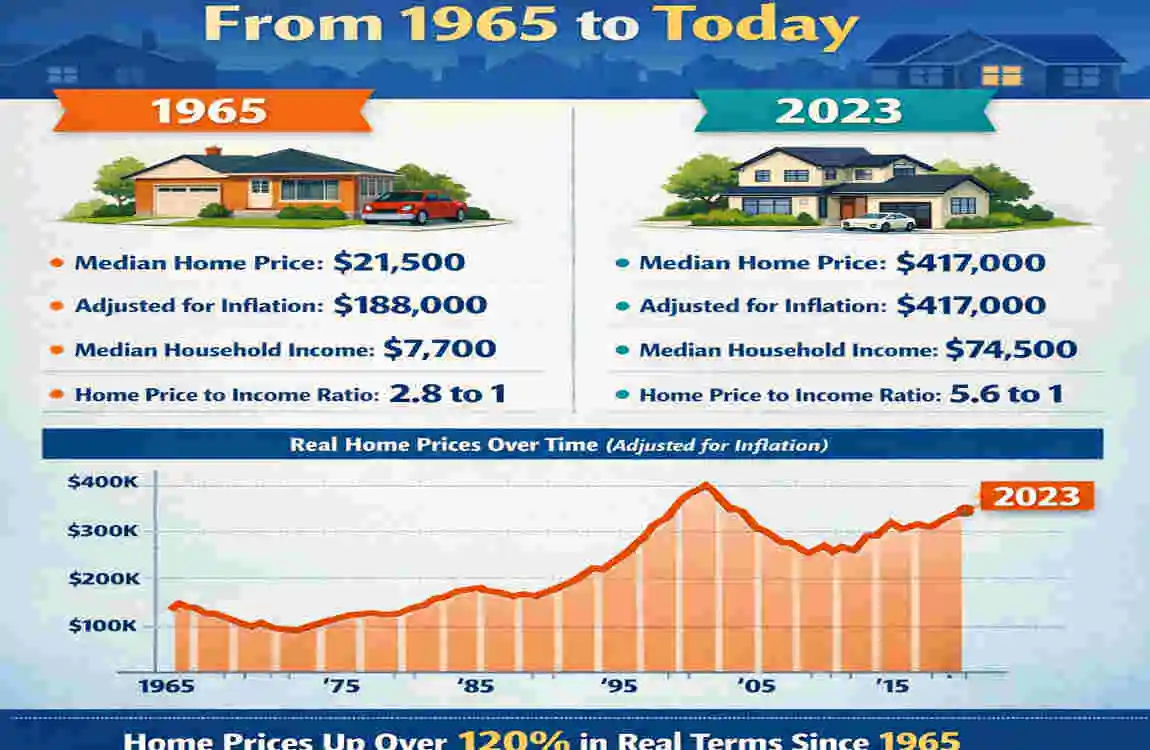
How U.S. House Prices Changed From 1965 to Today
Housing Prices in the 1970s
In the 1970s, inflation began to push prices upward faster. Homes became more expensive, and borrowing costs rose.
Housing Prices in the 1980s and 1990s
The 1980s brought high interest rates, while the 1990s saw more steady growth. Home values continued rising, but not evenly everywhere.
Housing Prices From 2000 to 2020
This period saw major changes. Rising demand, limited supply in many areas, and rapid growth in some regions pushed prices higher.
Recent Housing Prices
In the last few years, many areas have seen even stronger price pressure. Limited inventory and higher construction costs have kept homes expensive.
What the Long-Term Trend Shows
The big picture is clear: home prices have risen far beyond inflation in many markets. That does not mean every house is a good investment in every situation, but it does show how much the housing market has changed since 1965.
Frequently Asked Questions About House Prices in 1965
What was the average cost of a house in 1965?
The average U.S. house price in 1965 was roughly $13,000 to $15,000, with many sources placing it around $13,600 for a new home.
How much did a new house cost in 1965?
A new house often cost in a similar range, though the exact price depended on the region, size, and features.
How much was a mortgage payment in 1965?
Mortgage payments were generally much lower in dollar terms than many modern payments. However, they still depended on the loan size, rate, and down payment.
What was the average salary in 1965?
Household earnings were much lower in dollar terms than today, but home prices were also much lower. The relationship between income and house price is what matters most.
How much would a 1965 house cost today?
After inflation, a typical 1965 house price would equal well over $130,000 today. However, actual market value could be much higher or lower depending on the home and location.
Were houses affordable in 1965?
For many families, yes. Homes were more closely tied to wages, and many buyers could afford a modest house with careful budgeting.
| Information | 1965 Details |
|---|---|
| Average House Price | About $20,000–$22,000 in the U.S. |
| Median House Price | Around $18,000–$20,000 |
| Typical Home Size | Smaller than many modern homes |
| Mortgage Rates | Generally around 5–6% |
| Home Style | Ranch, Colonial, Cape Cod, and split-level homes |
| Construction Cost | Much lower than today |
| Economic Context | Postwar housing growth and expanding suburbs |
