

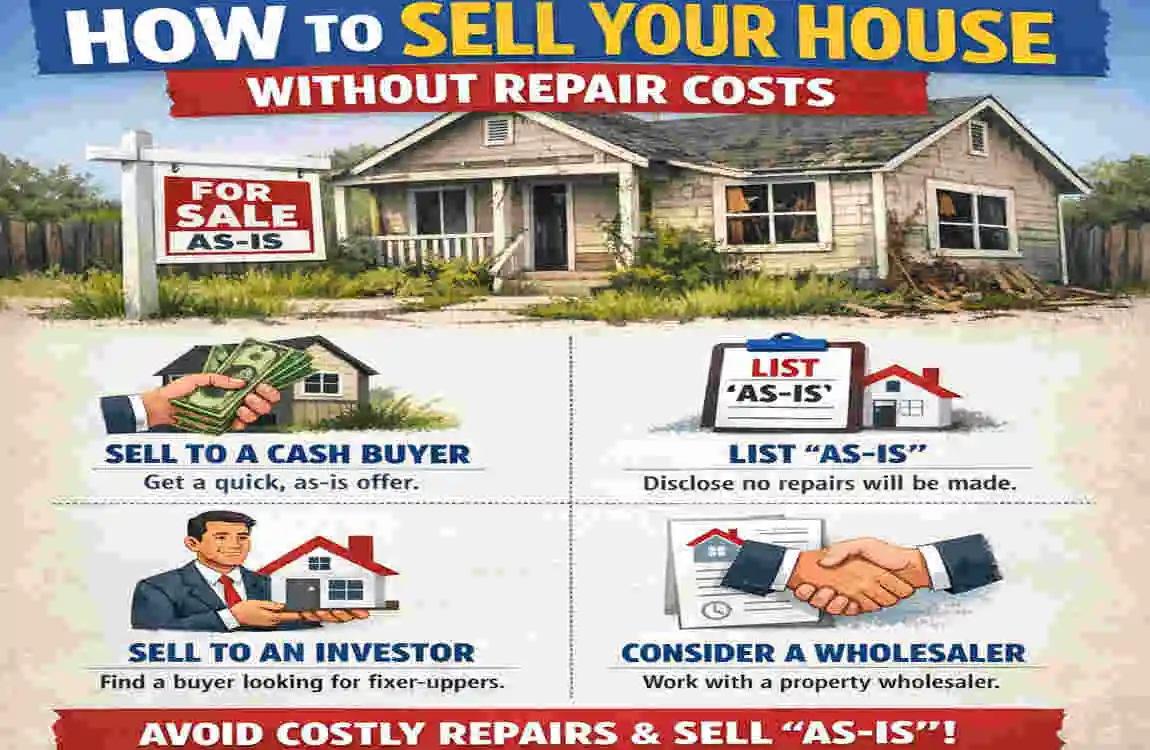
If you are wondering how to sell your house without repairs, the good news is that it can be done. Many homeowners do it every year. They sell the property as-is, meaning they do not spend money fixing every problem before listing.
| Method | How It Works | Main Benefit |
|---|---|---|
| Sell As-Is | Sell the property in its current condition. | Avoid repair expenses. |
| Set a Competitive Price | Price the house according to its condition and local market. | Attract more buyers. |
| Target Cash Buyers | Approach buyers who purchase properties needing work. | Potentially speed up the sale. |
| Disclose Known Issues | Inform buyers about known property defects. | Build trust and reduce disputes. |
| Highlight Best Features | Showcase the location, layout, space, and natural light. | Increase buyer interest. |
| Improve Presentation | Declutter, clean, and organize the house without renovating. | Make a better first impression. |
| Consider an Investor | Contact property investors interested in fixer-uppers. | Avoid major renovation work. |
| Negotiate Repairs | Offer a price adjustment or agreed credit where permitted. | Help close the deal without doing repairs yourself. |
| Compare Offers | Review the price, fees, financing, and closing timeline. | Choose the most suitable offer. |
This approach helps when money is tight, time is short, or the house needs more work than you can manage. Maybe you inherited a home that needs updates. Maybe you need to move fast for a job. Or maybe you do not want to pour more money into a place you are ready to leave.
Understanding the As-Is Home Selling Process
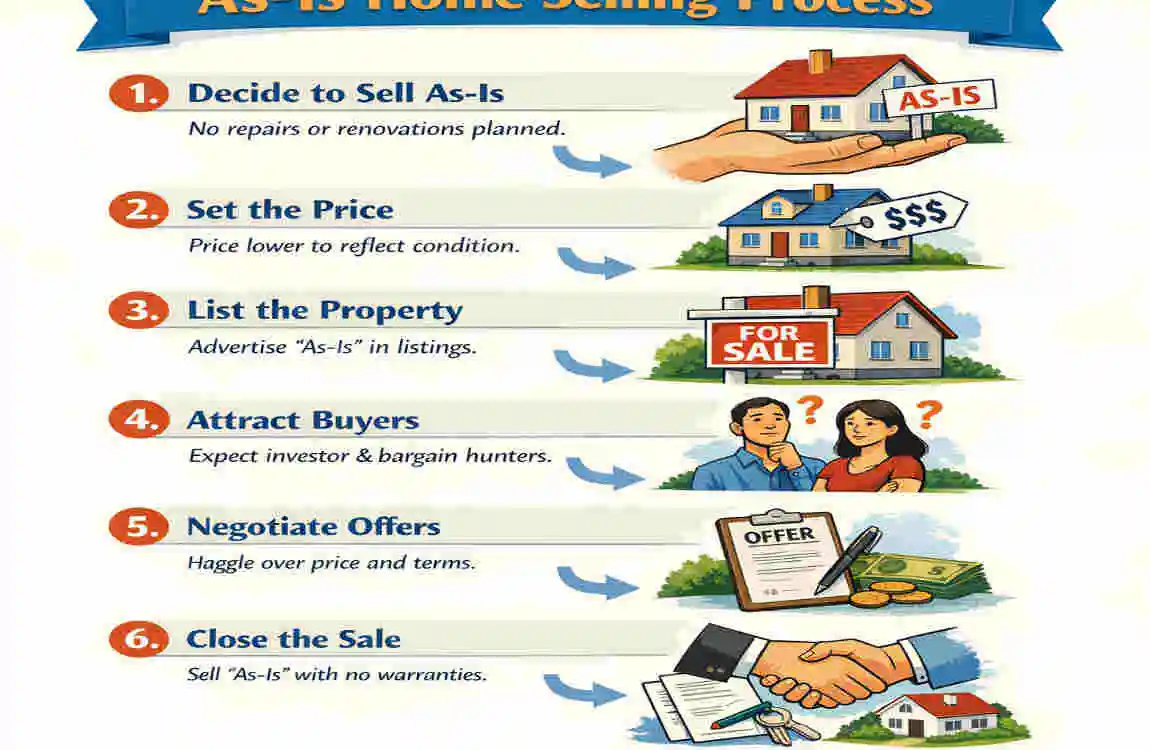
What “as-is” really means
When you sell a house as-is, you are telling buyers you don’t plan to make repairs before closing. The home is sold in its current condition, with whatever cosmetic or structural issues it already has.
That does not mean you can hide problems. You still need to share known defects and follow local disclosure rules. In simple terms, as-is means the seller won’t make repairs, not that they have no responsibility at all.
Benefits and drawbacks
Selling as-is can save time and money. You avoid paying for roof work, plumbing fixes, paint, flooring, or other updates. You also reduce the stress of managing contractors and inspection repairs.
But there are trade-offs. Buyers often offer less because they factor in repair costs. Also, some buyers will skip the house entirely if they want a move-in-ready home.
Why honest disclosure matters
Even if you sell as-is, you should be clear about known issues such as:
- Water damage
- Foundation concerns
- Electrical problems
- Roof leaks
- Mould or pest damage
Honesty protects you and helps you avoid legal trouble later. Buyers usually feel more comfortable when they know exactly what they are looking at.
Practical Ways to Sell Without Repairs
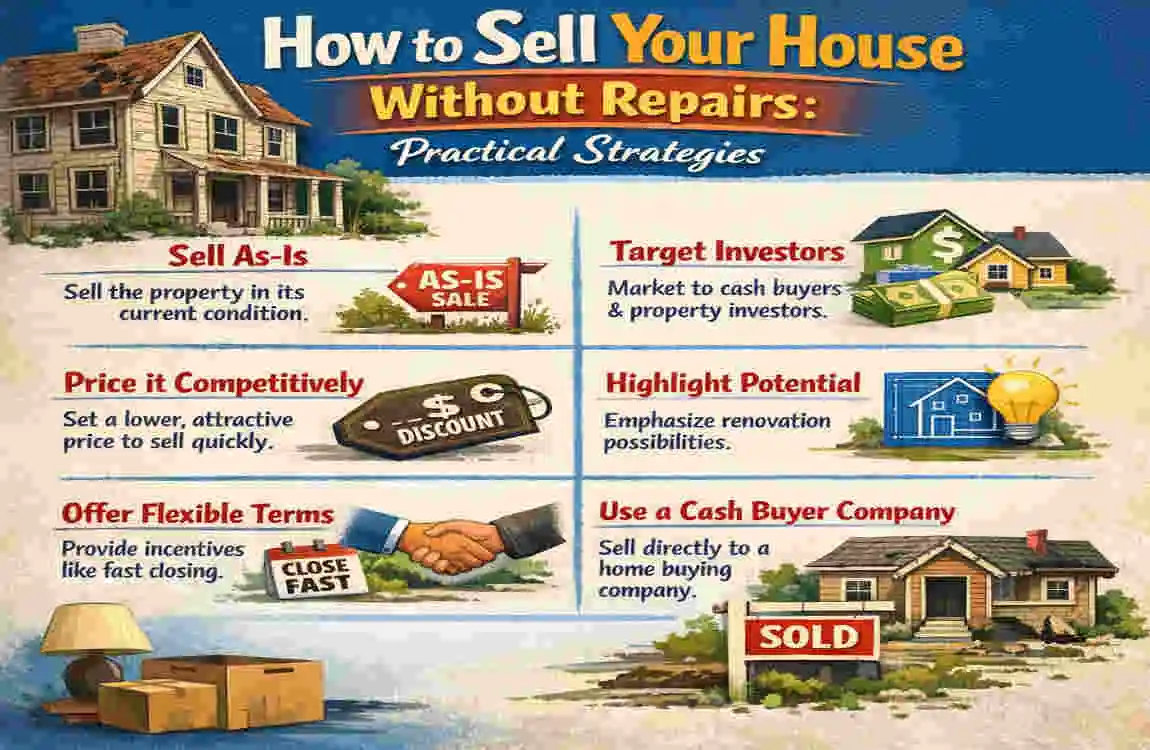
Set a realistic price
A home that needs work should not be priced like a fully updated one. Look at similar homes in your area, then adjust for condition. If the kitchen is outdated or the roof is old, the price should reflect that.
Buyers will do the math anyway. They will estimate repair costs and compare your home with others. If your price is too high, your listing may sit for a long time.
Target the right buyers
Not every buyer wants a move-in-ready home. Some people actively look for houses that need work.
These buyers may include:
- Cash buyers
- Real estate investors
- House flippers
- DIY buyers
- People looking for a lower entry price
These buyers often care more about location, lot size, and potential than about perfect finishes.
Consider a direct sale
If you want speed, a direct sale may help. Some investors buy homes quickly and close without many delays. This can help if you need to move fast or don’t want to deal with showings, repairs, and long negotiations.
A traditional listing can still work well, especially if the home has strong bones and a good location. The best choice depends on your timeline and your goals.
Work with an experienced agent
A real estate agent who has sold fixer-uppers can be a big help. They know how to market a home that needs work and speak to the right buyers.
A good agent can also help you avoid pricing mistakes and explain what similar homes are selling for. That support can make the process much easier.
Highlight the home’s strengths
Even if the property needs repairs, it still has selling points. Focus on what is already good about the home.
For example:
- Great neighborhood
- Large yard
- Strong floor plan
- Good natural light
- Nearby schools, shops, or transit
- Room for renovation value
People buy potential all the time. If the home has a solid location or layout, make that part of the story.
Preparing Your House for Sale Without Expensive Repairs
Clean, declutter, and simplify
You do not need to renovate to make a home more appealing. Start with basic cleanup. Remove clutter, sweep floors, wipe surfaces, and open up the rooms as much as possible.
A clean home feels more cared for, even if it still needs repairs. It also helps buyers see the space more clearly.
Improve curb appeal with simple tasks.
First impressions matter. You can improve your home’s exterior without spending much.
A few low-cost ideas:
- Mow the lawn
- Trim bushes and weeds
- Sweep walkways and porches
- Remove trash or broken items
- Add a clean welcome mat
These small steps can make the property look more inviting right away.
Use light and space to your advantage.
Open curtains, turn on lights, and arrange furniture so rooms feel bigger. Bright spaces feel more welcoming and help buyers focus on the home’s potential rather than its flaws.
Take honest, clear photos.
Good photos matter, even for an as-is sale. Use clear images that show the property honestly. Do not hide major problems, but do show rooms from their best angles.
Clear photos attract serious buyers and reduce wasted time with people who aren’t a fit.
Gather your documents
Before listing, collect any important papers you have, such as:
- Property records
- Warranty details
- Permits
- Maintenance records
- Inspection reports
These documents help buyers feel more confident. They also show that you are organized and transparent.
Pricing, Negotiation, and Common Mistakes to Avoid

How buyers think about repairs
Most buyers look at a damaged home this way: purchase price + repair cost = total value. If they believe repairs will cost a lot, they will lower their offer.
That is why you should expect negotiation. That doesn’t mean your house has no value. It simply means buyers are calculating risk and work.
Cash offers vs. financed offers
Cash offers often move faster and come with fewer delays. Financed offers may bring more buyers, but they can also involve appraisals, loan approvals, and more conditions.
Here is a simple comparison:
OptionProsCons
Cash offer Fast closing, fewer delays, less paperwork May be lower than full market value
Financed offer Wider buyer pool, may bring a higher offer More contingencies, slower process.
Traditional listing More exposure, possible bidding interest More showings and longer timeline
Common mistakes to avoid
A few mistakes can make selling much harder than it needs to be:
- Overpricing the home
- Hiding known problems
- Ignoring buyer repair estimates
- Accepting an offer without reading the terms
- Skipping disclosure forms
- Doing one repair after another until costs rise too high
Sometimes a small repair is worth it, especially if it involves safety. For example, fixing a broken step, a major leak, or a dangerous electrical issue may help the sale go more smoothly and protect you from trouble.
Frequently Asked Questions
Can I sell my house without making any repairs?
Yes. You can sell a house as-is without doing repairs. Just be honest about the condition and price it fairly.
Is it better to sell as-is or renovate first?
It depends on your situation. If you have time and money, some repairs may increase your sale price. If you need speed or have a limited budget, selling as-is may be better.
How much less can I expect to receive?
That depends on the home’s condition, location, and the cost of needed repairs. Buyers usually subtract repair costs and add a risk discount.
Who buys houses that need major repairs?
Common buyers include investors, flippers, cash buyers, and people looking for renovation projects.
Can I sell for cash without a real estate agent?
Yes. Some homeowners sell directly to cash buyers. Still, it helps to review the offer carefully.
Do I need to disclose problems?
Yes. Even when selling as-is, you usually must disclose known issues that could affect the home’s value or safety.
How can I make my house more attractive without spending money?
Clean it well, remove clutter, open blinds, improve lighting, and tidy the yard. These small steps can make a big difference.
How long does it take to sell without repairs?
It can take days, weeks, or longer depending on price, location, and buyer type. Cash sales are usually faster than traditional sales.
