

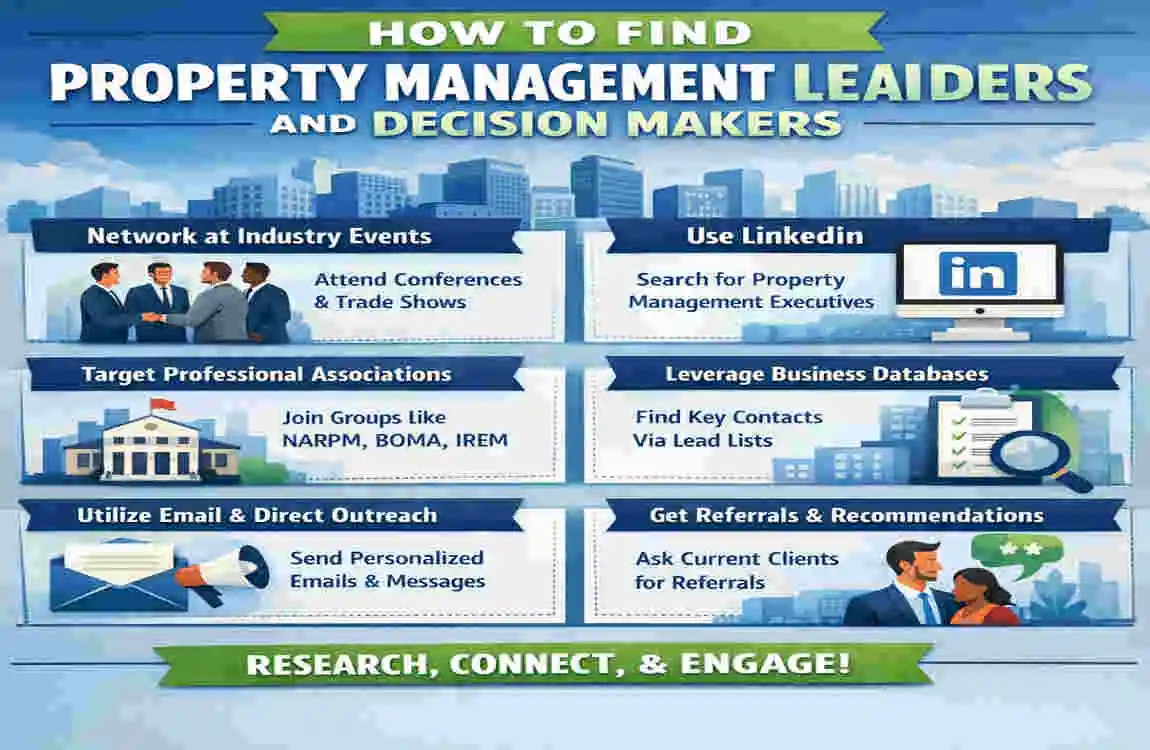
If you are trying to grow a service business, sell to real estate companies, or build stronger B2B relationships, learning how to identify decision-maker property management contacts can save you a lot of time.
The reason is simple. Not every person at a property management company can approve a vendor, sign a contract, or choose a service provider. Some people give input. Some people review options. Others make the final call.
Understanding Property Management Leaders and Decision Makers
A property management decision maker is the person who can choose vendors, approve services, or influence business spending for a property management company.
That person is not always the same in every company. In some businesses, the owner makes the call. In larger organizations, the decision may go through a regional manager, operations director, or procurement team first.
Why the Right Contact Matters
When you sell to property management companies, time matters. You want to speak with someone who can actually move the process forward.
If you contact someone without buying authority, they may like your offer but still can’t act on it. That can slow your sales process and waste a lot of effort.
Different Roles, Different Power
Property management companies often have several layers of responsibility. Some people handle day-to-day operations. Others manage multiple properties. Others focus on purchasing or budgets.
That means you need to understand the structure before you reach out. A smaller company may have one clear decision-maker. A larger company may involve several people.
Company Size Changes Everything
In a small property management firm, the owner may approve service contracts directly. In a medium-sized company, a property manager may handle vendor selection. In a large company, you may need to speak with operations, procurement, or a regional leader.
So when you ask yourself how to identify the decision-maker in property management, remember this: the answer depends on company size, property type, and internal approval process.
Identify Key Decision-Making Roles in Property Management
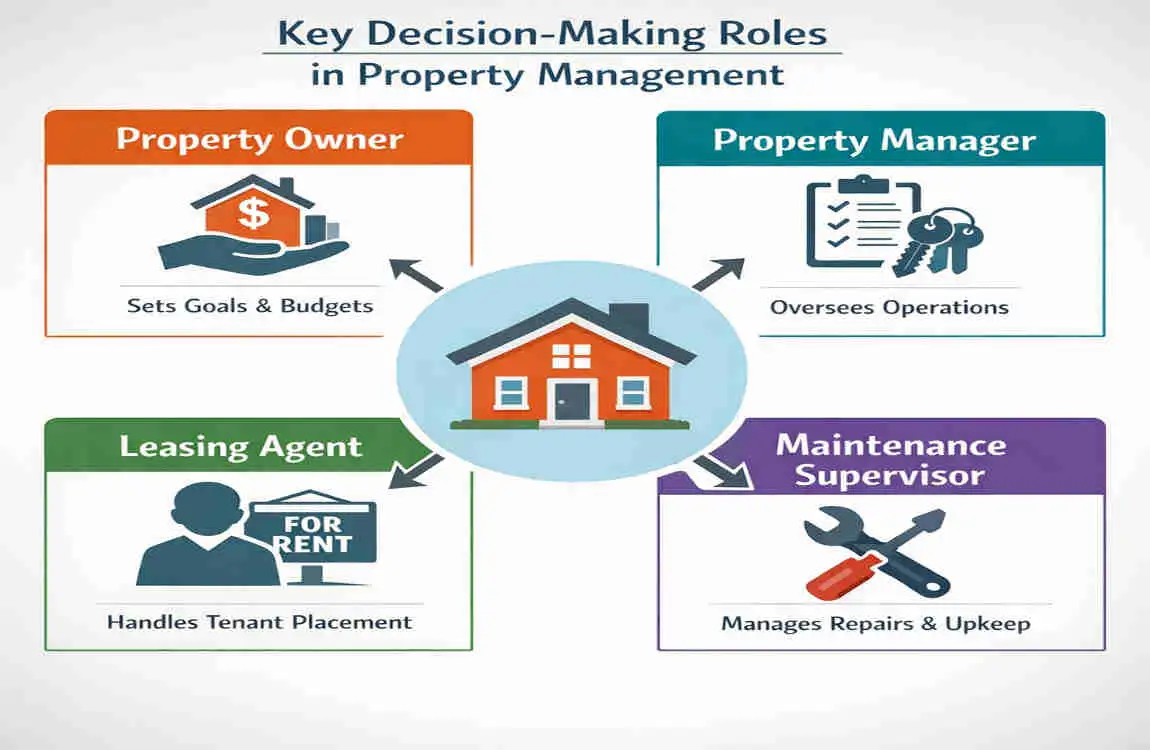
To find the right contact, first identify which job titles usually matter most.
Property Management Company Owners
Owners often have the highest level of authority, especially in smaller firms. They usually care about cost, service quality, and long-term value.
If the company is small or family-run, the owner may be the main person choosing vendors. That makes them an important contact for your outreach.
Owners often want to know:
- how your service helps the property
- whether it saves money
- how it affects tenant satisfaction
- whether it reduces risk
Property Managers and Regional Managers
Property managers often handle the daily needs of a property or a group of properties. They may review vendor options, manage service requests, and recommend providers.
Regional managers often oversee several sites. As a result, they may influence decisions across multiple properties at once.
These roles matter because they often sit close to the real problems you can solve. They know what the property needs right now.
Operations and Maintenance Directors
Operations and maintenance directors often have a strong voice in vendor decisions. They usually care about response time, reliability, and service quality.
If your business solves maintenance problems, this role is a very good one to target. These leaders often understand the practical side of property operations better than anyone else.
Procurement and Asset Management Teams
Procurement teams focus on buying, contracts, and budget control. Asset management teams focus on the long-term performance of property assets.
If a company has a formal approval process, procurement may become the final gatekeeper. That means even if a property manager likes your service, procurement may still need to review the contract.
How to Identify Decision Maker Property Management Contacts
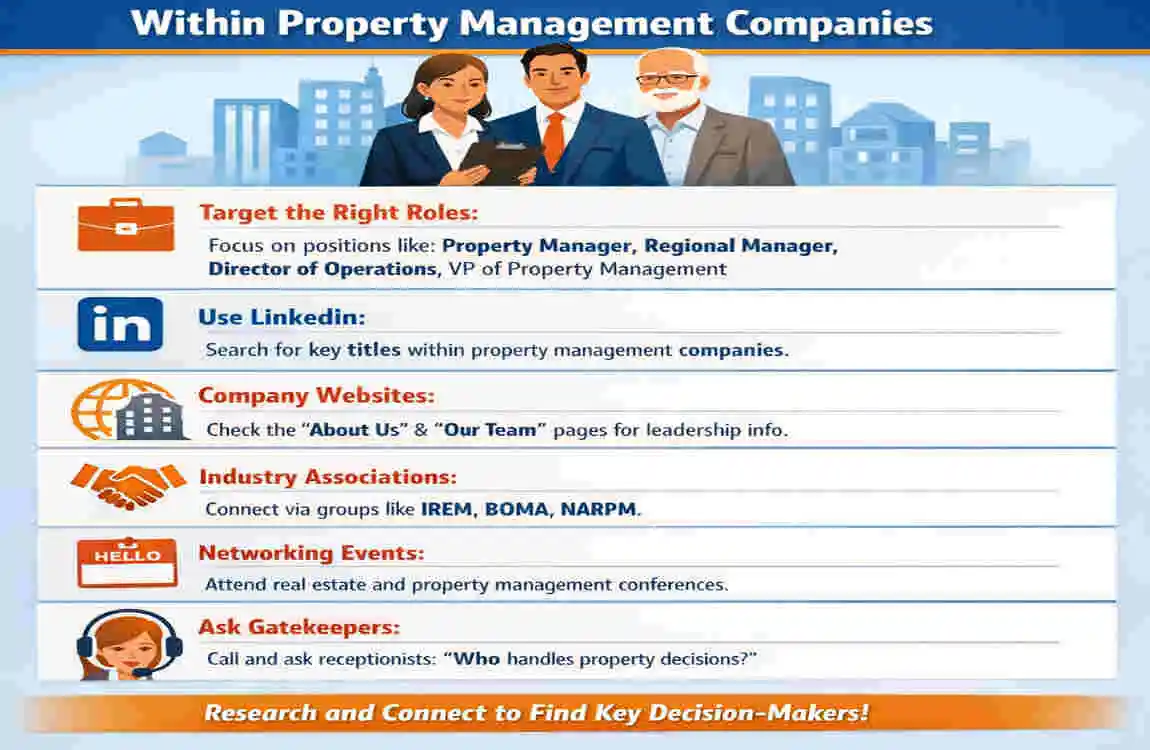
This is the heart of the process. You want to find the right person, not just any person.
Search for Specific Job Titles
Avoid starting with a general company inbox if you can. Search for titles such as:
- Property Manager
- Regional Property Manager
- Director of Property Management
- Operations Director
- Asset Manager
- Procurement Manager
- Company Owner
These titles are much more useful than a generic “info” address.
Use Company Pages and Professional Profiles
Company websites and professional networking profiles often show titles, duties, and seniority. That can help you tell whether someone is a real decision-maker or just a support contact.
Look for clues such as:
- management responsibility
- vendor oversight
- budget control
- contract approval
- regional or company-wide authority
Check for Signs of Authority
A person’s title helps, but it’s not enough on its own. You also want to know what they actually do.
Someone may sound important but still have limited authority. Another person may have a simpler title but still control the budget. That is why you should look at responsibilities, not just job labels.
Cross-Check Contact Details
Once you find a possible decision maker, verify the contact information before outreach. Make sure the person still works at the company and holds the same role.
This step saves time and helps you avoid sending messages to outdated or inactive contacts.
Simple Decision-Maker Qualification Checklist
Use this quick checklist before you reach out:
- Does the person work at the right company?
- Do they hold a relevant title?
- Do they manage property operations, budgets, or vendors?
- Can they influence or approve purchasing decisions?
- Is their contact information current?
If most of the answers are yes, you likely have a strong contact.
Qualify and Verify the Right Decision Maker
Finding a contact is only the first step. You still need to make sure they are the right person for your offer.
Confirm the Person’s Current Position
People move jobs often. A profile or website listing may be outdated, so always check that the person still works there.
If the company has many properties or a large structure, the title may also change from one branch or region to another.
Find Out Who Controls the Budget
A strong lead influences or controls spending. If they don’t handle budget decisions, your pitch may need to go through someone else first.
Ask yourself:
- Do they approve vendor spend?
- Do they review service contracts?
- Do they recommend outside providers?
- Do they escalate purchases to someone else?
Learn the Vendor-Selection Process
Some companies use a simple approval process. Others require multiple reviews. A property manager may recommend a vendor, but procurement or leadership may still sign off.
If you understand that process early, you can tailor your outreach better and avoid pushing too hard on the wrong person.
Separate Influencers from Final Decision Makers
Not every helpful contact is the final signer. Some people influence the decision, while others approve it.
Both types matter, but they are not the same. A strong outreach plan often includes both, especially in larger companies.
Keep Records in a CRM
If you are building a sales pipeline, keep decision-maker details organized in a CRM or tracking sheet.
That way, you can store:
- name
- title
- company
- property type
- contact details
- notes on authority
- follow-up status
This helps you stay organized and avoid repeated mistakes.
Connect With Property Management Leaders Effectively
Once you find the right people, your message matters as much as your research.
Create a Relevant Introduction
Start with a simple explanation of what you do and how it helps property management teams.
Do not send a generic sales message. Instead, connect your service to a real property need, such as maintenance support, tenant satisfaction, cost savings, or response time.
A good introduction should feel useful, not pushy.
Choose the Right Outreach Channel
Different companies respond better to different channels. Some people prefer email. Others respond better to a call or a professional networking message.
You can use:
- email outreach
- professional networking platforms
- phone calls
- industry events
- referrals
- existing business relationships
The right channel depends on the company and your service.
Build Trust Before Making an Offer
Property management leaders are often busy. They want to know you understand their world.
You can build trust by:
- showing industry knowledge
- mentioning relevant results
- keeping your message short and clear
- offering useful information
- following up politely
Do not rush into a hard sell. First, earn attention. Then, earn interest.
Make Your Message Specific
A specific message is stronger than a broad one. If you know the company manages apartments, talk about apartment needs. If you know it manages commercial spaces, focus on that instead.
Specific outreach feels more professional and more relevant.
Common Mistakes When Finding Property Management Decision Makers
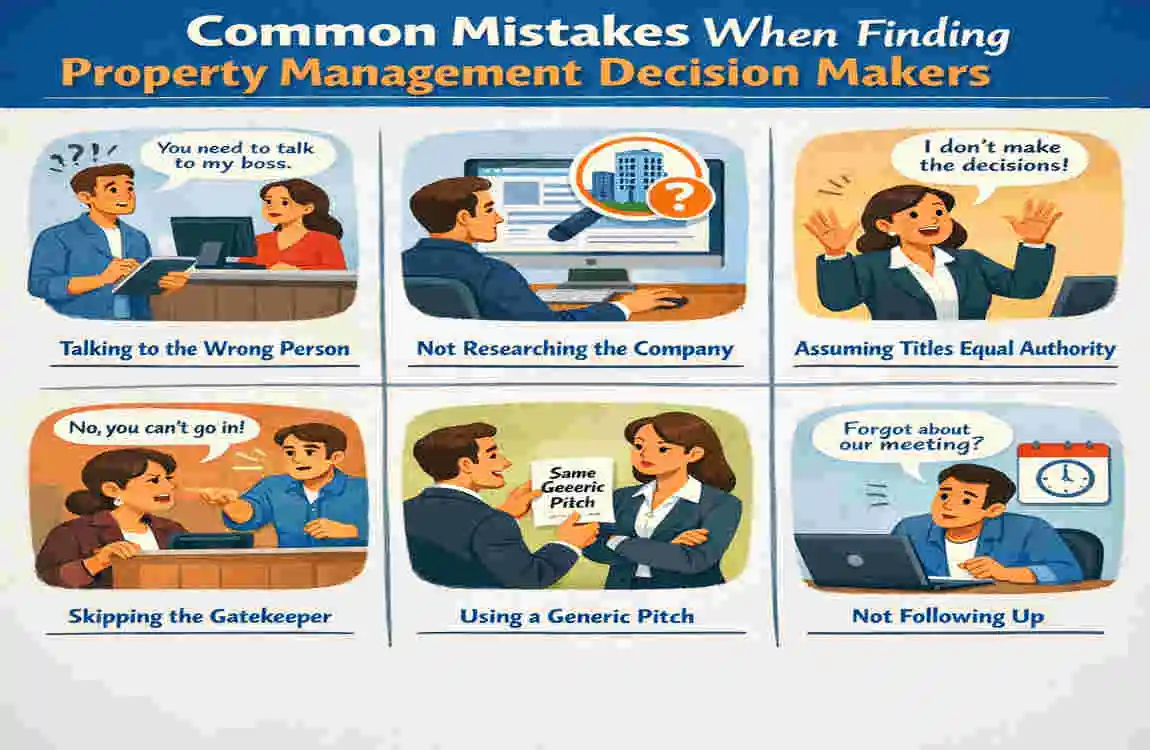
Many outreach efforts fail because of simple mistakes. You can avoid those problems with a little extra care.
Contacting the Wrong Employee
One of the biggest mistakes is sending your message to someone without buying power. This wastes time and often leads nowhere.
Using Outdated Contact Information
Old titles, old emails, and old phone numbers can make your outreach fail before it even starts. Always verify your data.
Assuming Every Property Manager Has Final Authority
That is not always true. In some companies, the property manager is only one part of the process.
Ignoring Procurement Rules
If a company has a formal purchasing process, you need to respect it. Skipping the process can hurt your credibility.
Sending Generic Messages
A generic pitch usually gets ignored. Decision-makers want to know you understand their property type and likely needs.
Not Researching the Property Portfolio
If you do not know what they manage, you cannot offer the right solution. Portfolio research helps you speak their language.
Failing to Follow Up
Sometimes one message is not enough. A polite follow-up can keep the conversation moving without being annoying.
Common Mistakes at a Glance
- Wrong contact
- Old information
- Generic pitch
- No follow-up
- No portfolio research
- Ignoring approval steps
How to Build Better Outreach Around Decision Makers
Once you know who to contact, your outreach should feel thoughtful and relevant.
Match Your Offer to the Property Type
A service that works well for apartments may not work for office buildings or retail centers. Match your message to the property type.
Speak to Real Problems
Property leaders care about practical issues like cost, speed, safety, tenant experience, and reliability. Focus on those points.
Keep Your Pitch Short and Clear
Long messages are easy to ignore. A short, direct, useful message is usually better.
Follow Up Professionally
A polite follow-up is not a bad thing. Just keep it respectful, clear, and helpful.
FAQ About Property Management Decision Makers
How do I identify the decision maker in a property management company?
Look for senior roles such as property managers, regional managers, operations directors, procurement managers, or company owners. Then verify who actually influences purchasing decisions.
What is the best way to find property management leaders?
Use company websites, professional networking platforms, business directories, industry associations, referrals, and company news to locate the right people.
Does the property manager make purchasing decisions?
Sometimes yes, sometimes no. In smaller firms, property managers may have strong authority. In larger companies, other teams may need to approve the decision.
What job titles should I search for?
Useful titles include Property Manager, Regional Property Manager, Director of Property Management, Operations Director, Asset Manager, Procurement Manager, and Property Management Owner.
Why is identifying the right decision maker important?
It reduces wasted outreach, improves communication, shortens the sales process, and helps you build better business relationships.
How can I verify that someone is a property management decision maker?
Check their job duties, title, seniority, company structure, and role in vendor selection or budget approval.
Should I contact multiple people at the same company?
Sometimes that makes sense, especially when responsibilities are shared. But your outreach should be personalized and coordinated, not repetitive or generic.
| Method | What to Look For | Best Approach |
|---|---|---|
| Company Websites | Owners, executives, property managers | Check the “About” and “Leadership” pages |
| CEOs, directors, managers | Search by company and job title | |
| Industry Directories | Property management firms and contacts | Use business and real estate directories |
| Real Estate Events | Company leaders and decision makers | Attend conferences, expos, and networking events |
| Referrals | Trusted industry contacts | Ask existing clients or partners for introductions |
| Social Media | Active company representatives | Follow firms and identify senior team members |
