

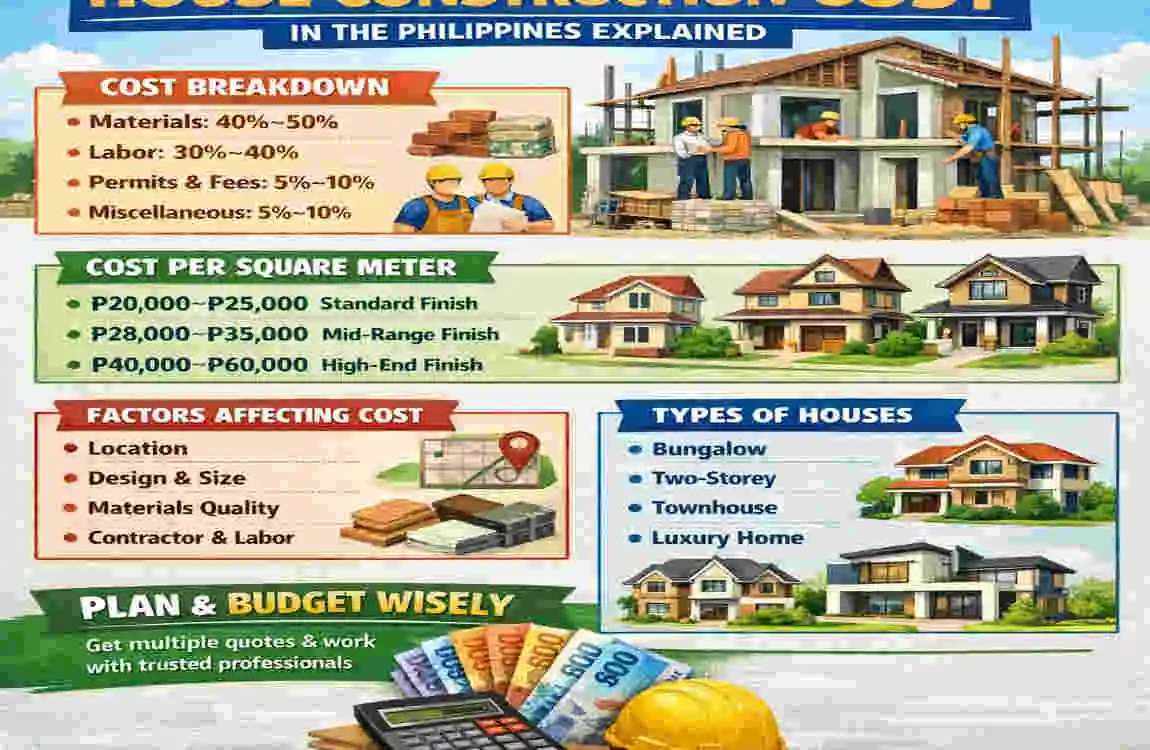
If you are planning to build a home, one of the first things you need to understand is the cost of building a house in the Philippines. This cost can vary widely depending on the size of the house, the location, the materials you choose, and the level of finish you want.
In the Philippines, building a house is a major investment. Some people want a simple starter home, while others prefer a modern family house or even a luxury build. Because of that, there is no single fixed price.
What Is the Average House Construction Cost in the Philippines?
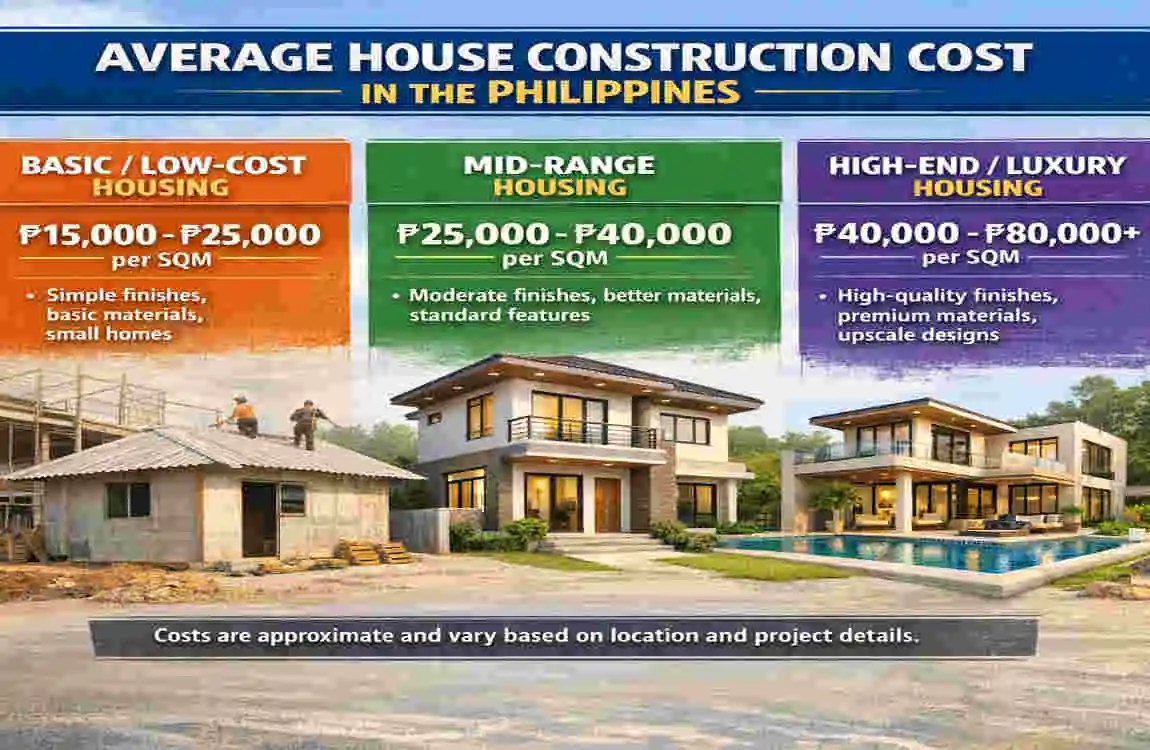
The most common way to estimate a house budget is by using the cost per square meter. This means contractors calculate the price based on the house’s total floor area.
Typical Construction Cost Per Square Meter
In general, construction costs can be grouped into three levels:
- Basic construction
- Standard construction
- High-end construction
A basic house uses simpler materials and finishes. A standard house has higher-quality materials and greater comfort. A high-end house uses premium materials, custom design, and more detailed finishing.
This is why two homes with the same size can have very different budgets.
Estimated Cost by House Type
Here is a general idea of how house type can affect cost:
- Small starter home — lower budget, simple layout
- Single-story family house — moderate budget, practical design
- Two-story home — higher budget because of extra structure and labour
- Modern or luxury house — highest budget because of premium materials and custom features
Example Construction Budget
You can use this simple formula:
Floor Area × Construction Cost Per Square Meter = Estimated Construction Cost
For example:
- 50 sq.m. house × estimated rate = rough budget
- 100 sq.m. house × estimated rate = rough budget
- 150 sq.m. house × estimated rate = rough budget
This is only a starting point. The final cost may increase once you add finishes, permits, labour changes, and site work.
Why Prices Vary
The house construction cost in the Philippines changes because of:
- Location
- Materials
- Design complexity
- Labor
- Finishing quality
A simple house in a provincial area will usually cost less than a similar house in a busy city.
Major Factors That Affect House Construction Cost in the Philippines
House Size and Floor Area
A bigger house needs more materials, more labour, and more time. If you add a second floor, you also need stronger structural support, which increases the budget.
Location
Construction cost also depends on where you build. For example, building in Metro Manila, Cebu, or Davao may cost more because labour and delivery costs can be higher.
In provincial areas, some materials may be cheaper, but transport costs can still affect the total price if suppliers are far away.
Design and Architectural Style
A simple rectangular house usually costs less than a house with complex walls, angled roofs, large glass panels, or balconies.
The more detailed the design, the more money you will likely spend.
Quality of Materials
Materials have a huge effect on total cost. Basic tiles, roofing sheets, paint, doors, and windows are more affordable. Premium versions can raise the price quickly.
Even small choices, such as the type of flooring or bathroom fixtures, can significantly affect the budget.
Labor Costs
You also need to pay for the people who build the house. This includes:
- Masons
- Carpenters
- Electricians
- Plumbers
- Painters
- Tile installers
- Roof workers
Skilled workers usually cost more, but they also help improve the quality of the work.
Construction Costs by House Type and Quality
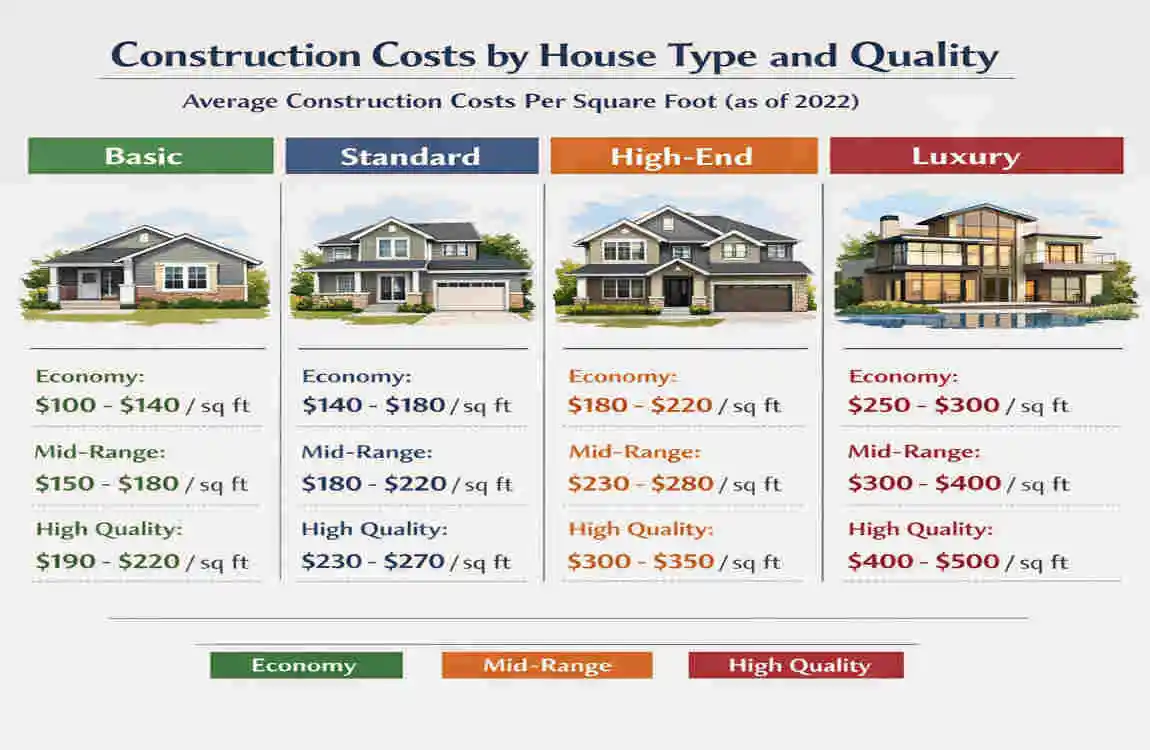
Basic or Budget House
This type is best for homeowners who want something practical and affordable. It usually has a simple layout, fewer decorative details, and basic materials.
The focus is on function first.
Standard Family Home
A standard home has better finishes, more comfort, and more design choices. It is a good option for families who want a long-term home without going too far into luxury spending.
Mid-Range Modern House
This type usually includes modern kitchens, nicer bathrooms, better lighting, and improved exterior finishes. It often looks more stylish and feels more polished.
Luxury House
Luxury homes use premium materials, custom architecture, and high-end features. This category can become expensive very quickly because almost every detail is upgraded.
Where Does Your House Construction Budget Go?
Knowing where the money goes helps you plan better.
Materials
Some of the biggest material costs include:
- Concrete and cement
- Steel reinforcement
- Hollow blocks or wall materials
- Roofing materials
- Lumber and carpentry supplies
- Electrical materials
- Plumbing materials
- Paint and finishing products
Labor
Labour refers to the people doing the actual construction work. This usually includes masonry, carpentry, painting, plumbing, electrical work, roofing, and tile installation.
Professional and Design Fees
You may also need to pay for:
- Architect
- Structural engineer
- Electrical and plumbing professionals
- Surveying services
These fees may feel like extra costs, but they help avoid bigger problems later.
Permits and Other Project Expenses
Other common expenses include:
- Building permits
- Inspections
- Site preparation
- Utility connections
- Transportation and delivery
How to Reduce House Construction Cost Without Sacrificing Quality
If you want to lower your house construction cost in the Philippines, focus on smart planning.
Simple Ways to Save Money
- Choose a simple house design
- Plan your budget before construction starts
- Compare contractors and suppliers
- Pick durable materials, not just cheap ones
- Avoid making design changes during construction
- Keep a contingency fund for surprise expenses
A simple plan often saves more money than trying to fix problems later.
House Construction Budget Planning: A Practical Step-by-Step Guide
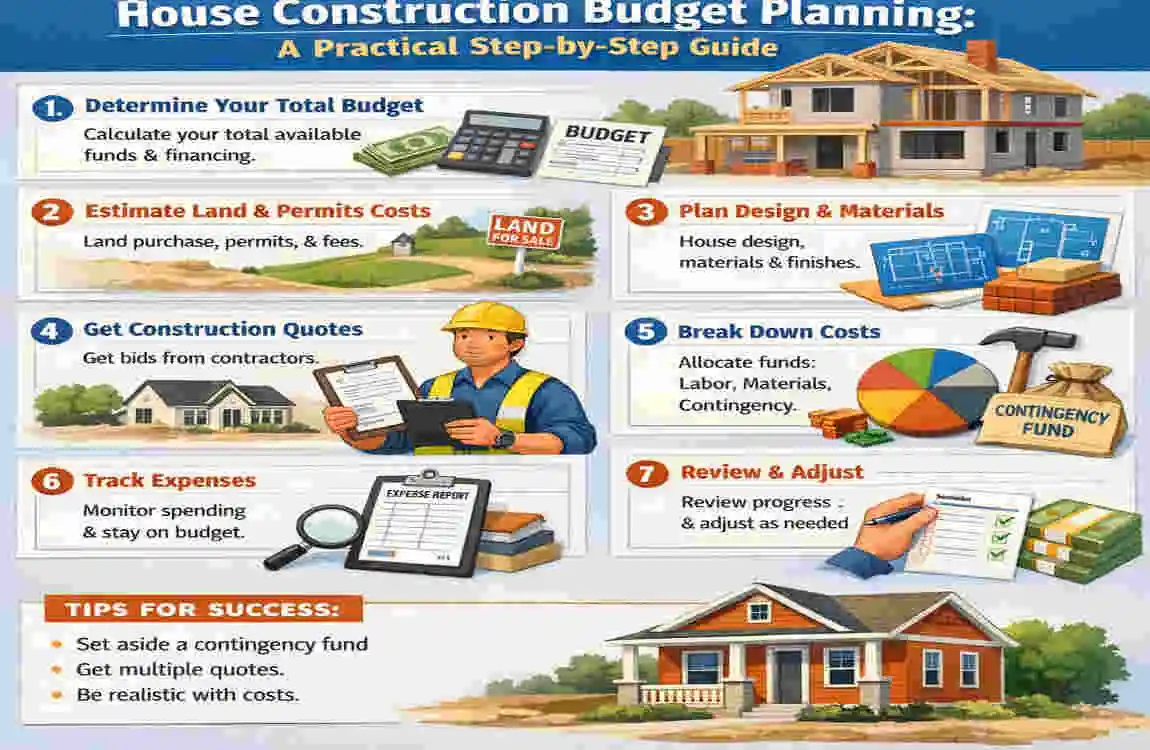
Determine Your Floor Area
Think about how many bedrooms, bathrooms, and living spaces you really need. Do not build bigger than your budget allows.
Choose Your Construction Standard
Decide whether you want basic, standard, or premium quality.
Estimate the Initial Budget
Use the square meter method to get a starting figure. Remember, this is only an estimate.
Add Extra Costs
Include permits, design fees, site work, and utility connections.
Request Detailed Quotations
Ask for itemised quotations so you can compare materials, labour, timelines, and payment terms.
Add a Contingency Budget
Always save extra money for unexpected issues. A small reserve can help you avoid stress later.
FAQs About House Construction Cost in the Philippines
How much does it cost to build a house in the Philippines?
It depends on the house size, location, materials, labour, and finish level. There is no single fixed amount.
How much does it cost to build a 100-square-meter house in the Philippines?
You can estimate it by multiplying the floor area by the construction rate per square meter. The final amount depends on your chosen quality level.
Is it cheaper to build a house or buy one in the Philippines?
Building gives you more flexibility, while buying can be faster and more convenient. The better choice depends on your budget and timeline.
Does house construction cost include land?
No. Land is usually a separate expense from construction.
What is the biggest expense when building a house?
Usually, the highest costs are materials and labour.
Can I reduce my construction cost?
Yes. Keep the design simple, compare quotations, and avoid unnecessary changes.
| Factor | Typical Cost / Consideration |
|---|---|
| Basic construction | ₱25,000–₱35,000 per m² |
| Mid-range construction | ₱35,000–₱50,000 per m² |
| High-end construction | ₱50,000+ per m² |
| 100 m² house | Around ₱2.5M–₱5M+ |
| Main cost factors | Location, floor area, materials, labor, design, and finishes |
| Additional expenses | Architect/engineer fees, permits, utilities, site preparation, and landscaping |
| Best way to budget | Get a detailed quotation based on your house plans and site conditions |
