

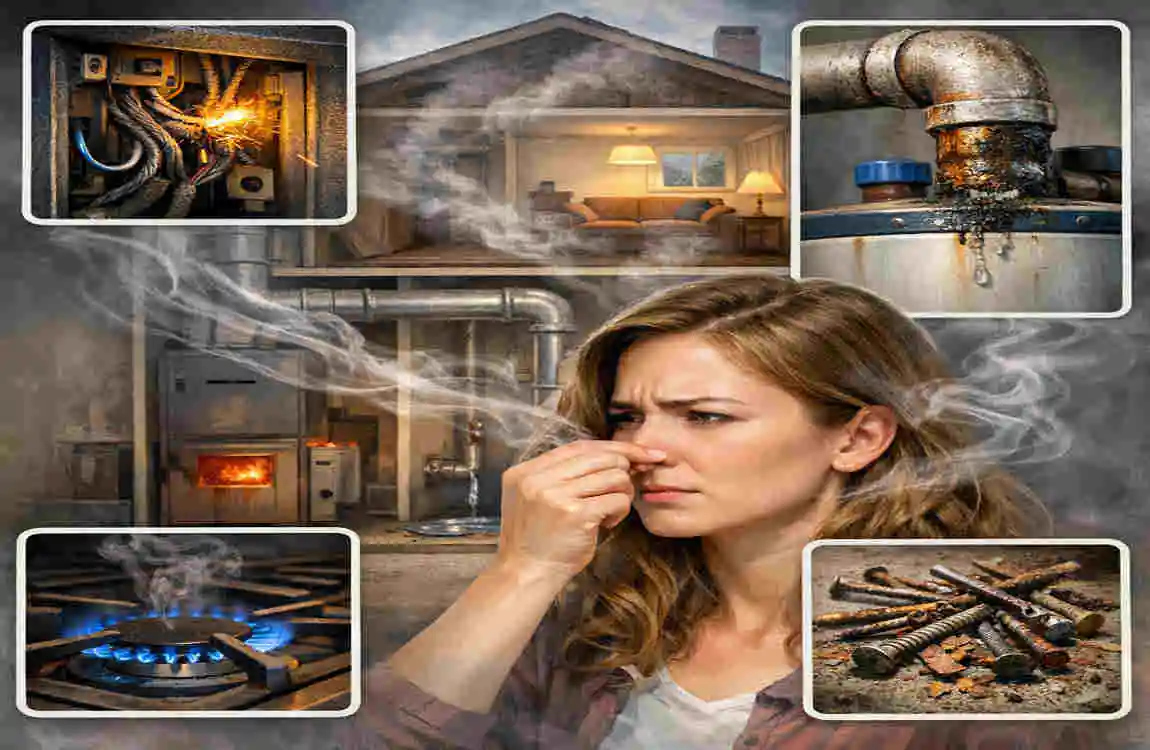
If you are asking why my house smells like metal, you are not alone. A metallic smell in the home can come from many sources, and some are harmless while others require quick attention.
The smell may come from plumbing, water, appliances, HVAC systems, cleaning products, rust, or electrical components. That is why it matters to notice where the smell starts, when it happens, and what else you notice with it.
If the odor also smells like burning, hot plastic, smoke, or electrical heat, do not ignore it. Those signs can point to a bigger problem.
What Does a Metallic Smell in a House Mean?
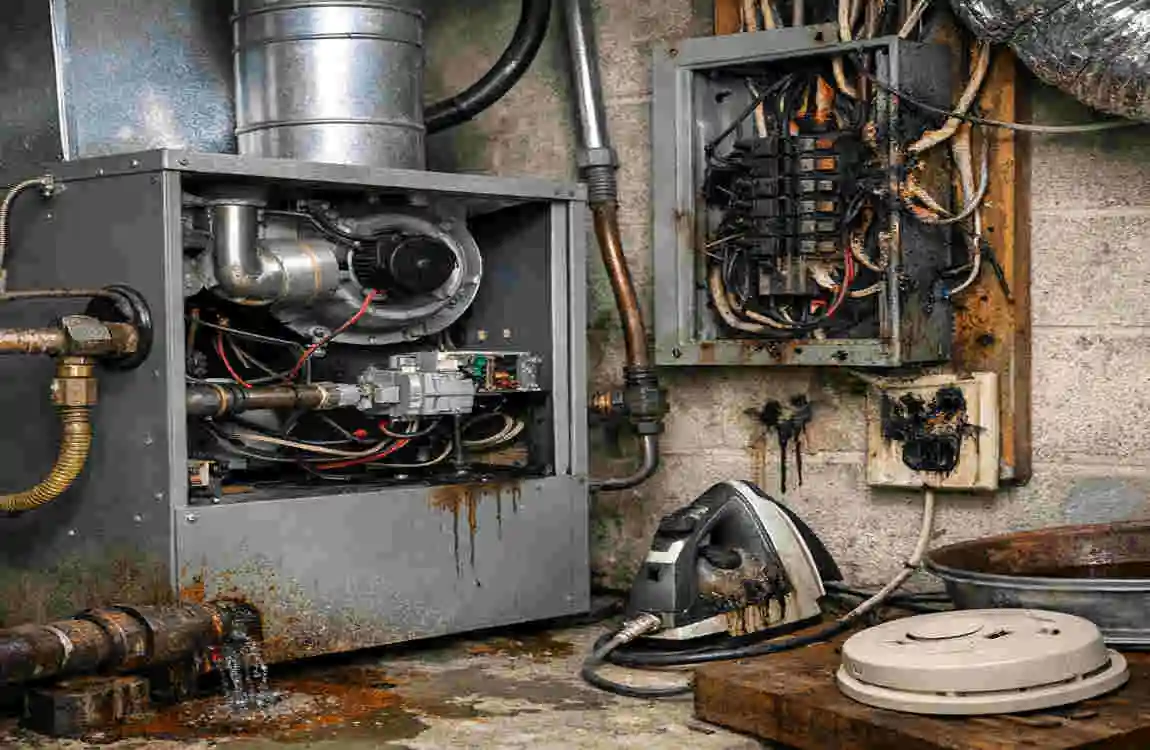
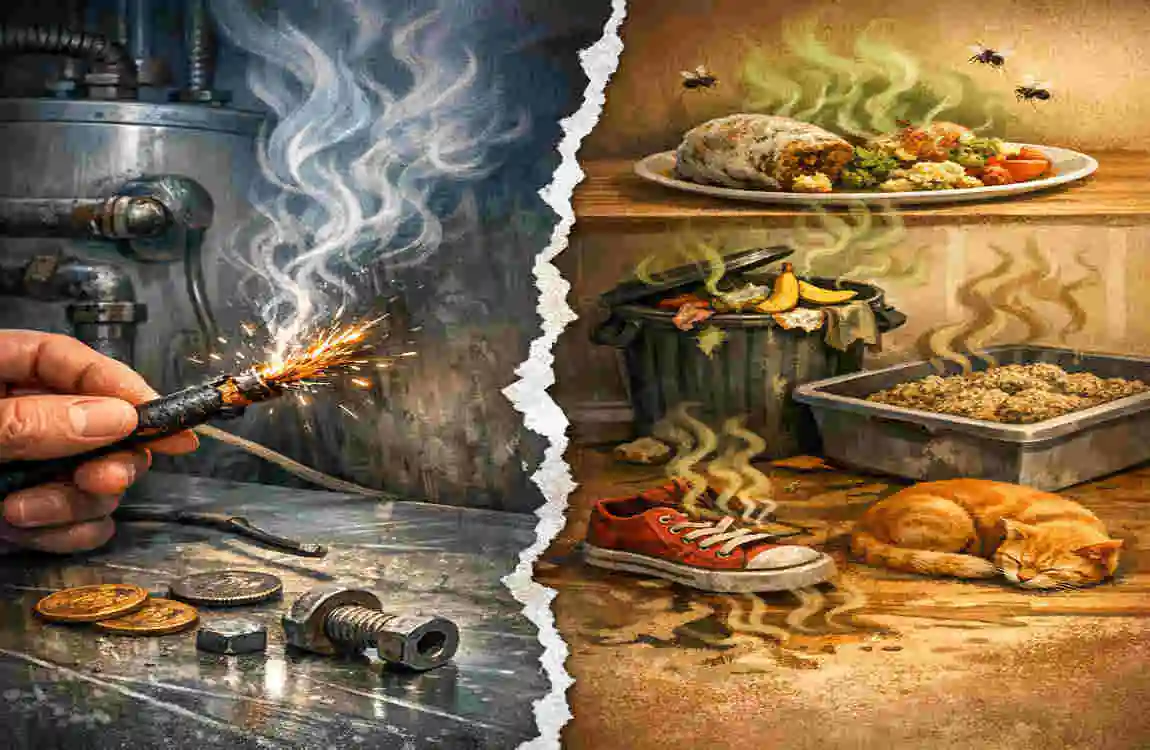
A metallic smell can feel like iron, copper, pennies, hot metal, or electrical burning. Some people notice it in one room. Others smell it through the whole house.
Common Types of Metallic Odors
- Iron-like or steel-like smell
- Copper or penny-like smell
- Hot metal smell
- Sharp electrical smell
- Metallic smell from water
Why It Can Be Hard to Find
Odors move through walls, vents, pipes, and rooms. So the smell you notice in the kitchen may actually start in the bathroom, laundry area, basement, or even inside a wall.
Why Does My House Smell Like Metal?
Plumbing and Metal Pipes
Old pipes can rust or corrode over time. That can create a metallic smell, especially near sinks, drains, or water heaters.
Metallic-Smelling Water
Water can smell metallic if it contains iron, copper, or other minerals. Sometimes the smell is stronger when the water has been sitting in the pipes.
Electrical Problems
Electrical issues can cause a smell that people describe as metallic, burnt, or sharp. If you notice heat, sparks, or buzzing, treat it seriously.
Heating and HVAC Systems
When the heat turns on after being unused for a while, dust and buildup can create strange smells. Sometimes that smell seems metallic or hot.
Appliances
Common sources include:
- Ovens
- Dryers
- Refrigerators
- Dishwashers
- Washing machines
- Space heaters
Rust and Corrosion
Rusty fixtures, pipes, radiators, or tools can give off a metallic odor. Corrosion is often a sign that the material is aging or damaged.
Cleaning Products and Chemicals
Some cleaners and solvents have sharp odors that people mistake for a metallic smell. This is more likely if the smell appears after cleaning.
Metallic Smell Coming From the Water
Water is one of the first things you should check.
Why Tap Water Can Smell Metallic
Metal in the pipes, mineral buildup, or stagnant water can all change the smell of tap water. Iron and copper are common reasons.
How to Check the Water
Try these simple checks:
- Compare hot and cold water
- Test more than one faucet
- Run the water and see if the smell fades
- Check whether the odor is only from one fixture
When Water Testing Makes Sense
If the smell keeps coming back, or the water also looks odd, tastes strange, or has sediment, a water test may be a smart next step.
Could an Electrical Problem Cause a Metallic Smell?
Yes. This is one reason you should not ignore the odor.
Warning Signs to Watch For
- Burning or smoky smell
- Warm outlets or switches
- Flickering lights
- Buzzing or crackling sounds
- Tripped breakers
- Sparks
- Discolored outlets
What to Do
If you suspect electrical trouble, stop using the damaged area and call a qualified electrician. Do not open panels or try to repair wiring yourself.
How to Find the Source of a Metallic Smell
Start With the Strongest-Smelling Area
Try to find the room where the odor is strongest. That often gives you the best clue.
Check Plumbing Fixtures
Look at sinks, drains, pipes, and water heaters. See whether the smell changes when you run water.
Inspect Appliances
Check for unusual heat, damaged cords, odd noises, or smells around appliances.
Check Heating and Ventilation Areas
Vents and HVAC units can spread odors around the home, so inspect them too.
Notice When the Smell Appears
Ask yourself:
- Does it happen when heat turns on?
- Does it happen after running water?
- Does it appear near one appliance?
- Does it happen at a certain time of day?
Simple Ways to Reduce a Metallic Smell
Improve Ventilation
Open windows when it is safe, and use exhaust fans to help clear the air.
Clean Problem Areas
Clean drains, appliance surfaces, and nearby fixtures if they look dirty or have buildup.
Fix Rust or Corrosion
If metal parts are damaged or rusty, they may need repair or replacement.
Keep Systems Maintained
Regular plumbing, HVAC, and appliance maintenance can help prevent repeat odors.
When Should You Call a Professional?
Call an Electrician If
You notice burning, sparks, smoke, hot outlets, or electrical damage.
Call a Plumber If
The smell seems tied to water, pipes, leaks, or a water heater.
Call an HVAC Professional If
The smell keeps coming from vents, heating, or cooling equipment.
Leave the Home If Needed
If you smell strong burning, see smoke, or think there may be an active electrical emergency, leave and get help right away.
Metallic Smell vs. Other Common Odors
SmellPossible SourceWhat to Consider
Metallic Pipes, water, wiring, appliances Find the exact source
Burning Wiring, heater, appliance Check for overheating
Musty Moisture or mold Look for damp areas
Rotten egg Gas or drain issue Treat as a safety concern
Sewage Drain or sewer line Plumbing inspection may be needed
Chemical Cleaners or solvents Improve ventilation
Common Mistakes to Avoid
Masking the Smell
Air fresheners can hide the odor, but they do not fix the problem.
Ignoring Burning-Metal Smells
A smell like hot metal or burning wiring should never be brushed off.
Assuming It Is Always the Water
Sometimes the source is an appliance, a pipe, a heater, or an outlet instead.
Trying Dangerous Repairs Yourself
Do not open electrical panels or handle damaged wiring unless you are qualified.
FAQ
Why does my house smell like metal?
It may come from plumbing, water minerals, rust, appliances, HVAC systems, or electrical components.
Why does my house smell like iron?
An iron-like smell is often linked to rust, metal pipes, or water with high iron content.
Can electrical wiring make my house smell metallic?
Yes. Overheating electrical parts can create a metallic or burning smell.
Why does my tap water smell like metal?
Metallic-smelling water can be caused by iron, copper, minerals, or corroded plumbing.
Is a metallic smell in a house dangerous?
Not always, but burning or electrical smells should be taken seriously.
How can I get rid of a metallic smell in my house?
Find the source first. Then clean, repair, ventilate, or call a professional if needed.
| What the Metal Smell May Mean | Common Cause | What to Check |
|---|---|---|
| Metallic or iron-like odor | Rusty pipes or fixtures | Check faucets, pipes, and water color |
| Burning metal smell | Overheating electrical wiring | Inspect outlets, switches, and appliances |
| Metallic smell near the water heater | Corrosion or sediment | Check the tank and water heater connections |
| Smell from drains | Plumbing buildup | Clean drains and check for standing water |
| Strong chemical-metal odor | Possible plumbing or electrical issue | Have a professional inspect the source |
| Smell after rain | Damp metal, rust, or moisture | Check basements, pipes, and HVAC areas |
| Persistent unexplained smell | Hidden plumbing or electrical problem | Contact a qualified professional promptly |
