

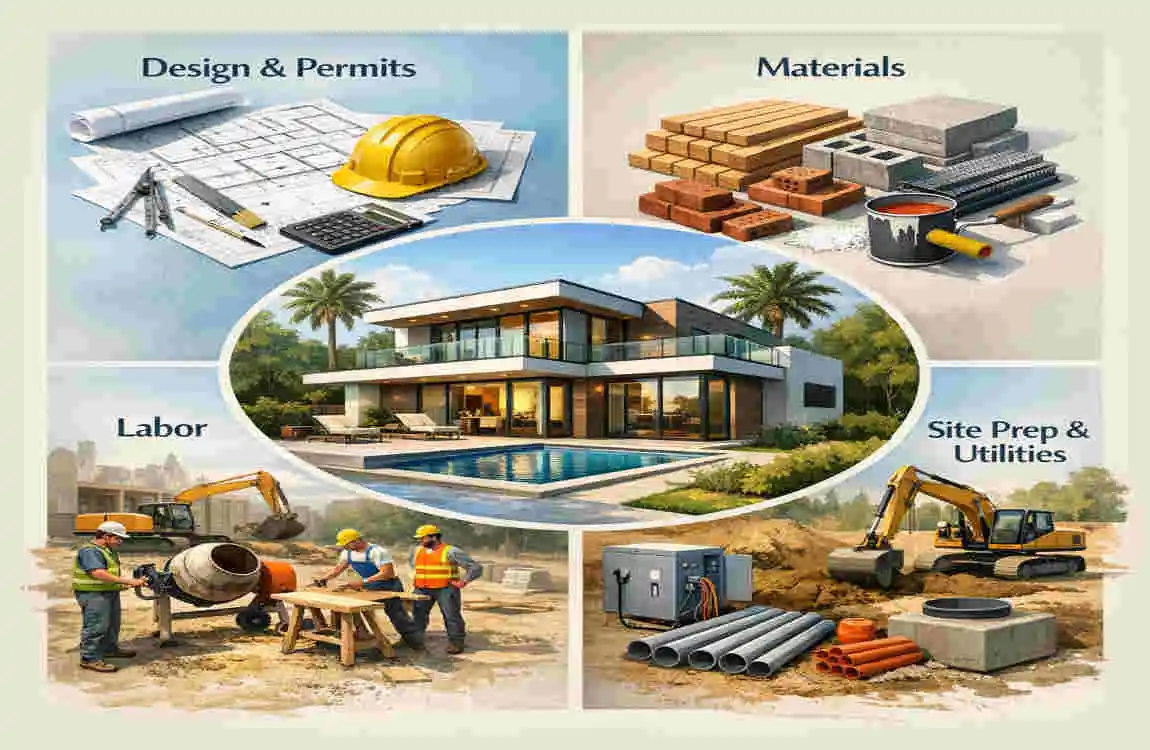
The cost of building a modern house depends on many moving parts. There is no single price that fits every project. A small, simple home in a low-cost area will cost much less than a large custom house on a difficult site.
A modern house usually has clean lines, open rooms, larger windows, and simple shapes. Some modern homes are easier to build because they use straightforward layouts. Others cost more because they include custom details, premium finishes, or special structural features.
The final price is shaped by house size, location, design complexity, materials, labour, and finishes. Even two homes with the same square footage can have very different budgets if one uses standard materials and the other uses high-end products.
That is why it helps to think of modern house building as a set of choices. Each choice affects the total cost. If you understand those choices early, you can plan better and avoid surprises.
The biggest reason prices change is that every project is different. Land conditions, permits, labour rates, and material prices can all shift the budget.
For example, a flat site with easy access is usually cheaper to build on than a sloped lot that needs major grading. A home with simple finishes is less expensive than one with custom cabinetry, stone cladding, and floor-to-ceiling windows.
Average Cost of Building a Modern House
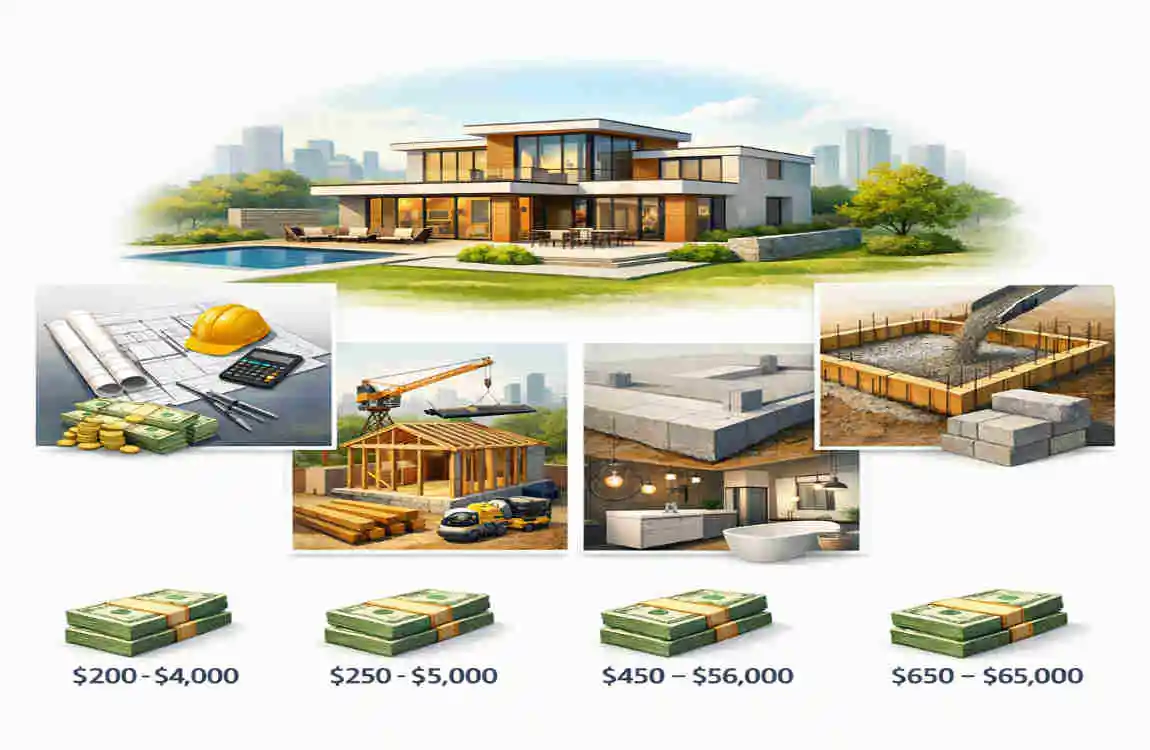
A simple cost-per-square-foot view
A common way to estimate building costs is to use cost per square foot. This gives you a starting point before you get quotes from builders.
Lower-cost modern homes may sit at the basic end of the range. Mid-range homes usually fall in the middle. Luxury modern homes can rise quickly because of premium materials and custom features.
General budgeting table
House Type Approx. Cost Per Sq. Ft. Best For
Basic modern home Lower range Simple layouts and standard finishes
Mid-range modern home Middle range Balanced design and quality materials
Luxury modern home Higher range Custom features and premium finishes
How size affects total cost
The bigger the house, the higher the total cost. That sounds obvious, but it matters because even a small increase in square footage can add a lot to the final budget.
For example, a modest modern home may stay manageable if the design is simple. But once you add more bedrooms, larger living spaces, and extra bathrooms, the cost rises quickly.
What to remember when budgeting
The modern house construction cost you see in estimates is usually only a starting point. Actual pricing depends on your area, the builder, the material choices, and the complexity of the design.
A smart budget should include more than just the structure. It should also cover soft costs, permits, and a reserve for the unexpected.
Major Factors That Affect Modern House Construction Costs
House Size and Layout
Larger homes cost more.
A larger home needs more foundation, framing, roofing, wiring, plumbing, insulation, and finish materials. It also needs more labour.
Even if the design is simple, extra square footage still increases cost. More rooms mean more walls, more doors, more trim, and more work overall.
Open plans and unusual layouts
Open floor plans are very popular in modern homes. They can feel bright and spacious, but they may also need stronger beams or special structural support.
Unusual layouts can also add cost. If the design has angled walls, split levels, or unique shapes, the builder may need more time and more custom work.
Location and Site Conditions
Land preparation matters
Before construction starts, the site may need clearing, grading, or excavation. Some lots are ready to build on. Others need a lot of preparation.
If the soil is poor, the land slopes sharply, or utility lines are far away, the cost goes up.
Access and local labour
A hard-to-reach site can slow down deliveries and increase labour time. Local labour rates also vary by area so that the same home may cost more in one city than in another.
Permits and utilities
A modern home still needs permits, inspections, and utility connections. These costs are easy to overlook, but they are part of the real budget.
Architectural Design
Modern features can change the price.
Some modern features are beautiful but expensive. Large glass panels, flat or low-slope roofs, cantilevers, and tall ceilings can raise the cost of both design and construction.
These elements often require more planning and more skilled labour.
Simpler shapes can save money.
A clean, box-like shape is usually cheaper to build than a complex design with many corners and rooflines. That is one reason some modern homes are more affordable than people expect.
A simple design can still look elegant if it uses good materials and smart proportions.
Materials and Finishes
Standard vs. premium choices
Materials have a major impact on the final price. Standard flooring, cabinets, and windows are much more budget-friendly than premium versions.
For example:
- Laminate or engineered flooring usually costs less than solid hardwood
- Quartz or stone countertops often cost more than basic surfaces
- Vinyl or fibre-cement siding may be more affordable than natural stone
- Standard windows usually cost less than oversized custom glass systems
Where upgrades matter most
Some upgrades are worth the money because they improve comfort and durability. Others are purely visual.
You may want to spend more on items that are used daily, such as windows, insulation, roofing, and HVAC. Decorative upgrades can often be kept simple if the budget is tight.
Modern House Construction Cost Breakdown
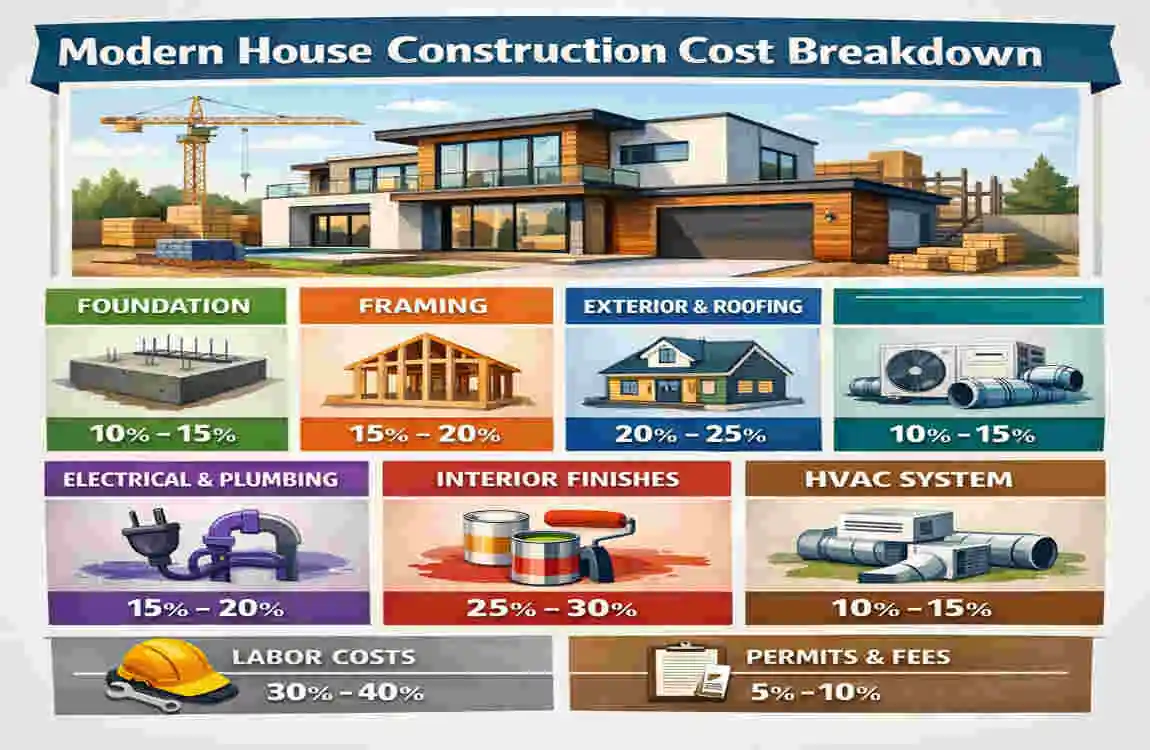
A clear cost breakdown helps you see where the money goes. This makes planning much easier.
Cost Category What It Includes Budget Impact
Land Preparation Clearing, grading, excavation Medium–High
Foundation Footings, slab, basement High
Framing Walls, floors, structural elements High
Roofing Structure and roofing materials Medium–High
Windows & Doors Glass, frames, exterior doors Medium–High
Electrical & Plumbing Wiring, pipes, fixtures High
HVAC Heating and cooling systems Medium–High
Interior Finishes Flooring, paint, cabinets Medium–High
Exterior Finishes Siding, stucco, stone, landscaping Medium–High
Direct costs vs. soft costs
Direct costs are the expenses for the physical building. These include materials, labour, and major construction work.
Soft costs are the extra project costs that are not part of the structure itself. These can include:
- Architectural plans
- Engineering work
- Permits
- Inspections
- Financing costs
- Insurance during construction
These items can add up fast, so they should never be ignored.
Why a contingency fund matters
No matter how well you plan, surprises happen. Material prices may shift. The site may need extra work. A design change may become necessary.
That is why you should keep a contingency fund. It gives you breathing room when the project does not go exactly as planned.
A good reserve helps protect your budget from stress and delays.
How to Reduce the Cost of Building a Modern House
Start with a simple floor plan.
The easiest way to save money is to keep the layout efficient. A simple plan usually costs less to build than a complex one.
Try to limit unnecessary corners, special roof shapes, and custom structural elements unless they truly add value.
Choose durable, cost-effective materials.
You do not need the most expensive material in every category. Many mid-range products look great and last a long time.
Focus on value, not just price. A product that lasts longer may save money over time.
Compare contractor estimates
Never rely on just one quote. Ask for several estimates so you can compare pricing, materials, and scope of work.
This helps you see whether one builder is overpriced or whether another is leaving out important details.
Plan systems early
Electrical, plumbing, and HVAC should be planned early in the design process. Changes made late in construction are often expensive.
A well-planned build is usually cheaper than a project that keeps changing.
Avoid design changes during construction.
This is one of the easiest ways to lose control of your budget. Every change can affect labour, materials, and timing.
If possible, finalise the major decisions before work begins.
Spend wisely on important parts.
Some areas are worth protecting with better spending. Structural work, waterproofing, insulation, and mechanical systems all matter for long-term performance.
Saving money here can create expensive problems later.
Is Building a Modern House More Expensive?
Sometimes yes, sometimes no
A modern house can be more expensive if it includes large windows, custom materials, special rooflines, or advanced technology. These features can raise both material and labour costs.
But modern design can also be cost-friendly. Simple forms, open layouts, and efficient use of space can reduce waste and help control spending.
When modern design increases cost
Costs often rise when the home includes:
- Large glass walls
- Flat or low-slope roofs
- Cantilevered sections
- Custom finishes
- High ceilings
- Smart-home systems
- Premium energy features
These elements can look amazing, but they are not always budget-friendly.
When modern design saves money
Modern homes can also be efficient to build when the design stays simple. Clean shapes and practical layouts often reduce construction complexity.
A straightforward modern house may cost less than a highly detailed traditional home with many roof angles and decorative features.
Long-term costs matter too.
Some modern homes cost more up front but less over time. Energy-efficient windows, insulation, and HVAC systems may increase the initial budget, but they can lower utility bills later.
That means you should think beyond the first price tag. A smart choice today can save money for years.
How to judge premium features
Ask yourself whether the feature adds real value to your life. If it improves comfort, energy use, or daily function, it may be worth the cost.
If it is mainly decorative, you may want to simplify it.
Budget Planning, FAQs
How can I estimate the cost of building a modern house?
A simple formula is:
Estimated Construction Cost = House Size × Estimated Cost Per Square Foot + Additional Project Costs
That gives you a practical starting point.
But remember, soft costs, site work, permits, and upgrades must be added to get a more realistic number.
How much should I budget for unexpected costs?
You should always set aside a contingency reserve. The amount depends on the project, but having extra money available is very important.
Unexpected costs are common in construction, especially when site conditions or material prices change.
What is the most expensive part of building a modern house?
The most expensive parts are often the foundation, framing, windows, mechanical systems, and high-end finishes. These are major cost drivers because they involve both materials and skilled labour.
Can I build a modern house on a small budget?
Yes, you can. The key is to keep the layout simple, avoid unnecessary custom details, and choose materials that offer good value.
A smaller, well-designed modern house can feel stylish without being overly expensive.
| Cost Factor | What It Includes | Cost Impact |
|---|---|---|
| Land & Site Work | Land preparation, excavation, grading | Medium–High |
| Design & Planning | Architect, drawings, permits | Medium |
| Foundation | Footings, concrete, foundation walls | High |
| Structure | Framing, walls, floors, roof | High |
| Electrical & Plumbing | Wiring, fixtures, pipes, fittings | Medium–High |
| Windows & Doors | Modern windows, exterior and interior doors | Medium |
| Interior Finishes | Flooring, paint, cabinets, countertops | Medium–High |
| Smart Features | Home automation, security, smart lighting | Low–Medium |
