

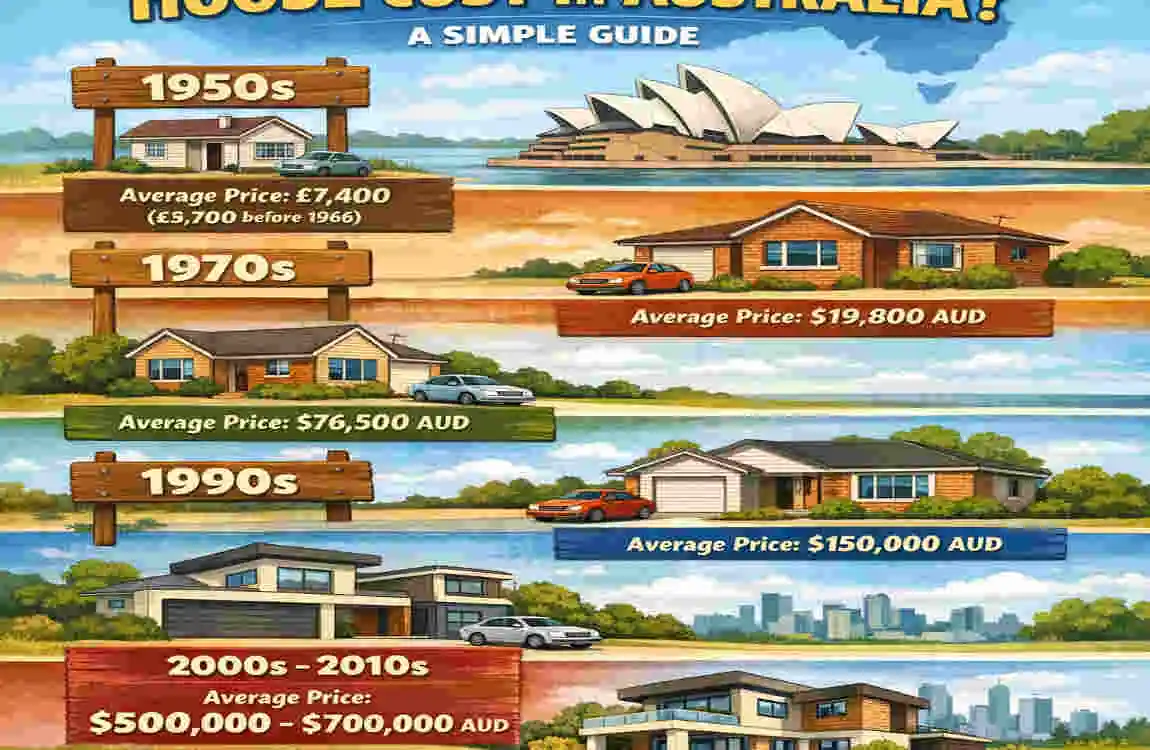
Australian house prices have changed a lot over the years. In some periods, prices rose slowly. In others, they jumped quickly and stayed high.
If you are asking how much a house costs in Australia, the answer depends on the year, city, suburb, home size, and the market at the time. A house in Sydney has often cost far more than a similar house in Adelaide or Perth. Even within the same city, one suburb can be very different from another.
What Was the Average House Price in Australia?
A Simple Look at Historical Prices
The average cost of a house Property in Australia has grown over many decades. In earlier years, prices were much lower in dollar terms, but incomes, interest rates, and living costs were also very different.
That means you cannot compare an old house’s price to today’s price without accounting for inflation and buying power. A home that seemed cheap in the past may still have been expensive for the average family at that time.
House Prices by Decade
Here is a simple view of how house prices generally changed:
Decade General Trend
1970s Lower prices by today’s standards
1980s Moderate growth and rising demand
1990s More gradual changes in many markets
2000s Stronger growth in many cities
2010s Significant price increases in major areas
2020s High prices in many capital-city markets
Why Prices Increased
Several factors pushed prices higher over time:
- Limited housing supply
- Population growth
- Urban development
- Higher construction costs
- Strong demand in major cities
- Changing mortgage rates and lending conditions
When more people want homes than the market can quickly supply, prices usually rise.
How Much Did a House Cost in Australia by City?
Location is one of the biggest reasons house prices differ so much. A home in one city can cost far more than a similar home elsewhere.
City General Price Level Main Factors
Sydney Higher Strong demand and limited land
Melbourne Higher Large population and established suburbs
Brisbane Moderate to high Population growth and demand
Perth Varies Local economy and mining sector
Adelaide Moderate Lower relative housing costs
Canberra Higher Government and employment demand
Hobart Varies Limited supply and smaller market
Sydney
Sydney has long been one of Australia’s most expensive housing markets. The city has strong demand, limited land in many desirable areas, and many buyers competing for the same homes.
Some suburbs are especially expensive because of their location, transport access, schools, waterfront views, or prestige.
Melbourne
Melbourne is another major market where prices can be high, especially in inner suburbs. Outer suburbs often cost less than the city fringe or established premium areas.
The final price usually depends on how close the home is to transport, shops, jobs, and schools.
Brisbane
Brisbane has seen strong growth in many periods. Demand has increased in both established and developing suburbs.
Some areas remain more affordable than Sydney or Melbourne, but prices can still climb quickly in popular locations.
Perth, Adelaide, Canberra, and Hobart
These cities can be very different from one another.
Perth prices often move with the local economy. Adelaide usually has lower costs than the biggest eastern cities. Canberra can be expensive because of steady employment demand. Hobart has a smaller market, so that limited supply can push prices up in certain areas.
What Factors Affect the Cost of a House in Australia?
Location
Location matters more than almost anything else.
A house near good schools, transport, shopping, parks, and jobs will usually cost more. City homes are often more expensive than regional homes, but even within one city, prices can vary widely by suburb.
Property Size and Type
The kind of property also affects price.
A detached house usually costs more than an apartment. A larger block of land can also increase value. New homes, townhouses, and older homes all sit at different price points.
Interest Rates
Interest rates affect how much buyers can borrow. When rates rise, repayments get higher. That can reduce what many buyers can afford.
So even if house prices stay the same, monthly costs can still change a lot.
Supply and Demand
When there are not enough homes available, prices often go up. This happens more strongly in places with growing populations and strong job markets.
More buyers chasing fewer homes usually means higher prices.
Property Condition
A renovated home may cost more than a home that needs work. Age, layout, energy efficiency, and structural condition all matter too.
A well-kept home is often more attractive, even if it is not brand new.
How Much Did a House Cost in Australia Compared With Income?
House price alone does not tell you whether a home was affordable.
What really matters is the relationship between home prices and the incomes of the people buying them. This is called housing affordability.
A house may have cost less in old dollars, but if wages were also much lower and interest rates were high, it may still have been difficult to buy.
Why the Price-to-Income Ratio Matters
This Ratio shows how many years of income a household needed to buy a home. It is a better way to compare past and present prices than just looking at the dollar amount.
It also helps explain why housing can feel less affordable even when wages rise.
How Much Money Do You Need to Buy a House in Australia?
The purchase price is only part of the total cost. Buyers also need to plan for upfront and ongoing expenses.
Deposit
The deposit is usually one of the highest early costs. A larger deposit can reduce the amount you need to borrow.
In simple terms, more savings can make the purchase easier to manage.
Stamp Duty and Government Charges
Most buyers also need to pay stamp duty or similar government charges, depending on the state or territory.
Some first-home buyers may get concessions or exemptions, depending on eligibility.
Legal and Inspection Costs
You may also need to pay for:
- Conveyancing or solicitor fees
- Building and pest inspections
- Property searches
These costs may seem small compared with the house price, but they still matter.
Mortgage Costs
Buying with a loan can involve extra charges like:
- Loan application fees
- Valuation fees
- Mortgage-related charges
- Ongoing repayments
That is why buyers should think about the full monthly cost, not just the sale price.
Is Buying a House in Australia Still Affordable?
Affordability depends on income, deposit size, location, and borrowing power.
For some buyers, regional areas or outer suburbs may still feel more realistic. For others, high-priced capital-city areas may be out of reach unless they have strong savings or higher incomes.
What Buyers Should Keep in Mind
- Higher interest rates increase repayments
- Bigger deposits reduce borrowing pressure
- Cheaper suburbs may still have high living costs
- The full cost of ownership includes maintenance, insurance, and taxes
A clear budget is always the safest place to start.
Australia House Price Trends: Past vs. Present
Australian property values have changed a lot over time. In many markets, prices rose steadily for years, with some periods of faster growth.
It is important to remember that past growth does not guarantee future growth. Property markets can slow down, stay flat, or fall in some periods.
Nominal vs. Inflation-Adjusted Prices
A house price from 30 years ago may look tiny compared with today’s prices. But once you adjust for inflation, the comparison changes.
That is why historical prices should always be viewed in context.
Why Local Research Matters
National averages are useful, but they do not tell the full story. A home’s real value depends on the city, suburb, land size, condition, and demand in that exact area.
Tips for Estimating the Cost of a House in Australia

If you want to estimate a home’s value more accurately, start with recent local sales.
Simple Ways to Estimate Value
- Compare similar homes in the same suburb
- Check land size and building size
- Look at the property’s condition
- Consider renovation needs
- Add stamp duty and buying costs
- Estimate mortgage repayments
- Include insurance and maintenance
- Watch local market trends
These steps help you build a more realistic picture of what a house may cost.
FAQ
How much did a house cost in Australia in the past?
House prices were much lower in dollar terms many years ago, but wages, interest rates, and living costs were also different. Past prices should be compared with income and inflation.
How much does an average house cost in Australia today?
It depends on the city and suburb. Major capital cities are usually more expensive than many regional areas.
What is the most expensive city to buy a house in Australia?
Sydney has often been among the most expensive housing markets in Australia, though prices vary by suburb and property type.
Is it cheaper to buy a house outside a major Australian city?
Often yes, but buyers should still consider jobs, transport, services, and local demand before deciding.
How much deposit do I need to buy a house in Australia?
That depends on the lender and loan type. A larger deposit usually reduces borrowing needs.
What other costs come with buying a house in Australia?
Buyers may need to budget for stamp duty, legal fees, inspections, mortgage costs, insurance, and moving expenses.
Have Australian house prices always increased?
No. Prices can rise, stay flat, or fall depending on the market and economic conditions.
| Key Point | Quick Information |
|---|---|
| Typical House Cost | Australian house prices vary greatly by city and region. |
| Sydney | Generally among the most expensive housing markets in Australia. |
| Melbourne | High prices, but typically more affordable than Sydney. |
| Brisbane | Prices have increased significantly in recent years. |
| Regional Areas | Often offer more affordable homes than major capital cities. |
| Main Cost Factors | Location, land size, property type, condition, and local demand. |
| Extra Buying Costs | Stamp duty, legal fees, inspections, loan costs, and moving expenses may apply. |
| Key Takeaway | The cost of a house in Australia depends heavily on where and what type of property you buy. |
