

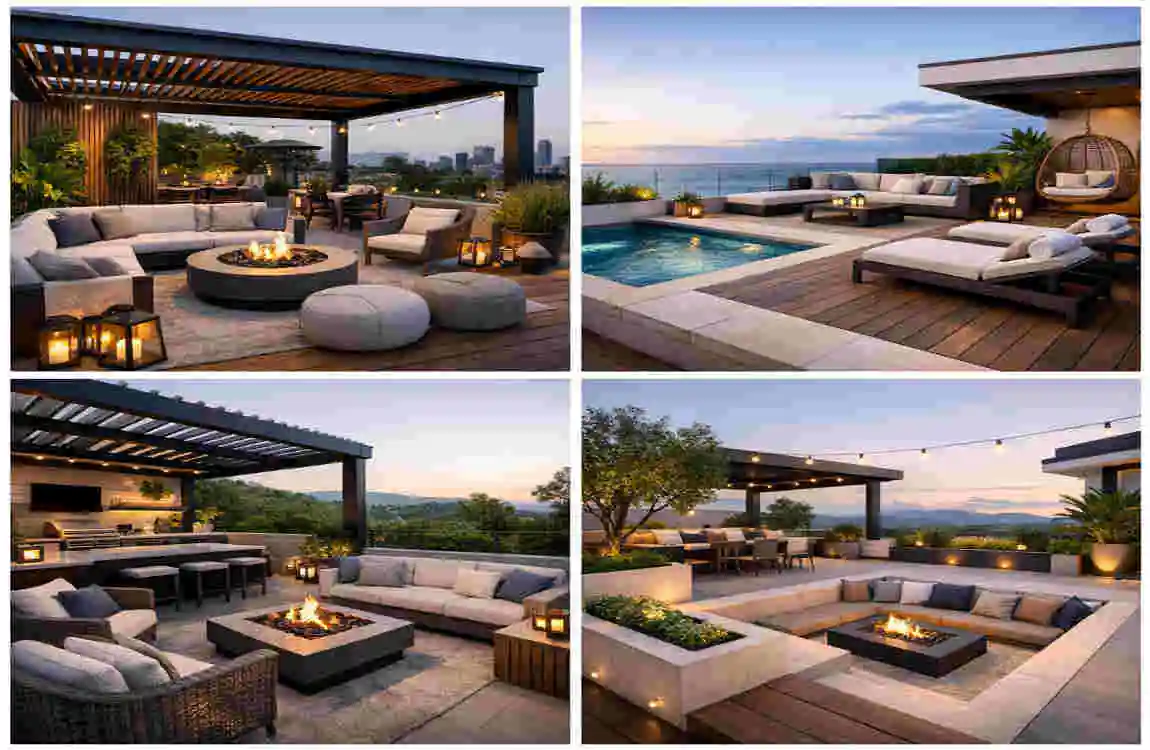
A terrace rooftop design can turn an empty roof into one of your home’s most useful and enjoyable spaces. Instead of leaving that space unused, you can create a place to relax, host guests, eat outside, grow plants, or enjoy fresh air.
Many homeowners like rooftop terraces because they add comfort without needing a full home extension. With the right layout, materials, and furniture, a rooftop can become a quiet weekday retreat and a lively weekend gathering spot.
The best part is that you do not need a huge space to make it work. A small rooftop can still feel stylish and practical with a good plan. A larger roof can become a full outdoor living area with seating, shade, greenery, and dining space.
Modern Terrace Rooftop Design Styles for Every Home
Minimalist rooftop terrace designs
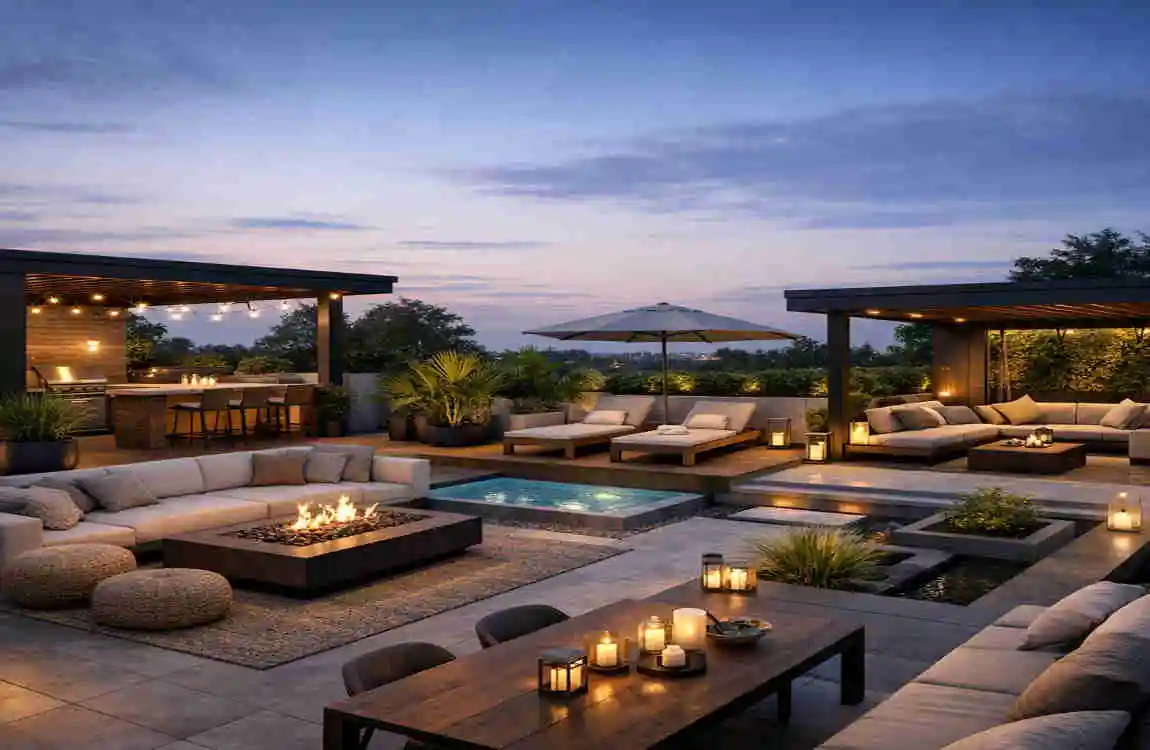
Minimalist rooftop spaces focus on clean lines, open areas, and simple colours. This style works well if you want your rooftop to feel calm and uncluttered.
A minimalist terrace often uses neutral shades like white, grey, beige, or soft brown. Furniture stays simple, and decorations are kept to a minimum. The idea is to let the space breathe.
This style works well if your home already has a modern look. It also works well for people who want a peaceful place without too much visual noise.
Contemporary rooftop terrace designs
Contemporary design feels current, polished, and comfortable. It often mixes stylish furniture with practical outdoor features.
You may see smooth seating, modern planters, sleek railings, and elegant lighting in this type of rooftop. The look is clean, but not cold. It still feels welcoming.
If you want your rooftop to feel updated and attractive, this style gives you plenty of flexibility.
Luxury rooftop terraces
Luxury rooftop terraces focus on comfort and finish. They often include premium flooring, plush seating, decorative lighting, and high-end outdoor furniture.
These spaces are usually designed for relaxing and entertaining. If the layout allows, you might add a lounge corner, a dining zone, a fire feature, or a bar-style setup.
Luxury does not always mean oversized or flashy. It can also mean choosing a few excellent pieces that make the space feel rich and refined.
Small rooftop terrace ideas
Small rooftops can still look wonderful. The key is to use space wisely and avoid overcrowding.
Try compact seating, foldable furniture, or built-in benches. Keep the colour palette light to make the area feel bigger. Add just a few plants and a simple lighting plan.
When a small rooftop is well designed, it can feel cosy instead of cramped. That is often what makes it so enjoyable.
Traditional and modern combinations
Some homes look best with a mix of old and new. You may want a rooftop terrace that feels warm and welcoming while still staying fresh and functional.
You can do this by blending classic textures like wood or stone with modern furniture and clean lighting. The result feels balanced and personal.
If your home already has a traditional exterior, this approach can help the rooftop match the overall architecture.
How to choose the right style
The best design matches your home and your daily life. Ask yourself what matters most: relaxing, dining, gardening, or entertaining.
Also think about your home’s shape, exterior finish, and climate. A rooftop design should look like part of the house, not something added without a plan.
Smart Layout Ideas for a Functional Rooftop Terrace
Plan different zones
One of the smartest ways to design a rooftop is to divide it into small zones. This helps the space feel organised and easy to use.
You might create:
- A seating area
- A dining corner
- A planting zone
- A walking path
- A quiet relaxation area
Even if the terrace isn’t large, clear zones help you use every part well.
Use space-saving furniture
If your rooftop is compact, choose furniture that does more than one job. A bench with storage, a foldable table, or stackable chairs can save a lot of space.
This makes it easier to move around and keeps the terrace from feeling crowded. The more flexible the furniture, the easier it is to change the layout later.
Create comfortable seating
A rooftop terrace should feel inviting. Outdoor sofas, cushioned chairs, and built-in benches can make the space more comfortable.
Place seating where people can talk easily and enjoy the view. If the rooftop gets strong sun or wind, choose a spot that still feels protected.
A good seating area often becomes the terrace’s heart.
Add an outdoor dining area.
If you enjoy eating outside, set aside space for a small dining corner. A simple table with chairs can be enough for family meals, coffee, or evening snacks.
Keep the area close to the kitchen if possible. That makes serving food easier and helps the terrace feel more useful in everyday life.
Leave enough walking space.
A beautiful rooftop should still be easy to move through. Keep paths clear so people don’t have to squeeze around furniture or plants.
Good access also matters for cleaning and maintenance. A layout that looks nice but feels awkward to use will not stay enjoyable for long.
Think about safety and structure.
Before building anything, check the roof’s load capacity, waterproofing, drainage, and safety rules. These are not design extras. They are basic needs.
If you’re making major changes to the rooftop, work with qualified professionals. The structure must safely support furniture, planters, people, and any added features.
Flooring, Furniture, and Materials for Modern Terrace Rooftops
Compare flooring options
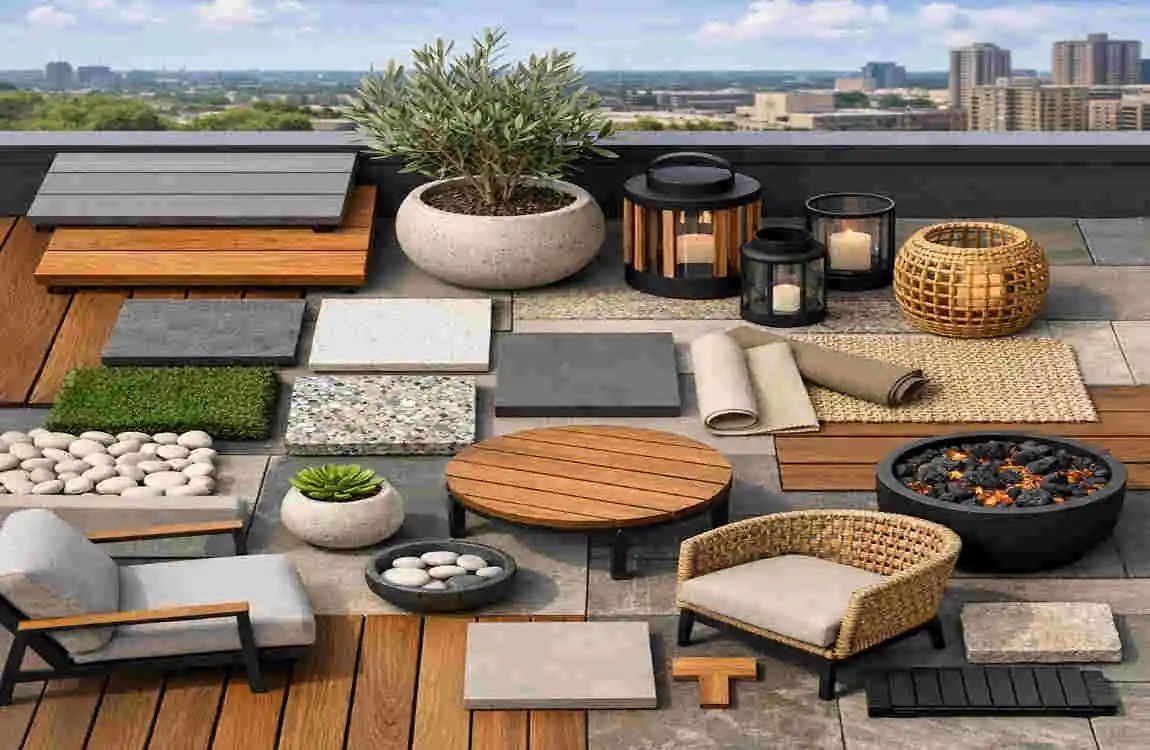
Flooring changes the look and feel of the whole rooftop. It also affects comfort, maintenance, and cost.
Common choices include:
- Outdoor tiles
- Natural stone
- Wooden decking
- Composite flooring
Each material has its own strengths.
Outdoor tiles
Outdoor tiles are a popular option because they are durable and easy to clean. They come in many styles so that you can match them to modern or traditional rooftops.
Choose outdoor-rated tiles that can handle changing weather.
Natural stone
Stone gives the terrace a solid, elegant look. It often works well in luxury or traditional spaces.
It can be more expensive, but it usually adds a timeless feel. Some stone types also stay cooler underfoot in warm weather.
Wooden decking
Wood makes a rooftop feel warm and natural. It looks beautiful with plants, soft seating, and simple lighting.
However, wood needs care. If you choose this material, be ready to clean and treat it occasionally to keep it looking good.
Composite flooring
Composite flooring is often a practical middle ground. It can look like wood with less maintenance.
This can be a smart choice if you want style and ease of care in one material.
Choose weather-resistant furniture
Outdoor furniture should be made for sun, rain, and changing temperatures. Materials like treated metal, teak, rattan-style synthetics, and weather-safe fabrics work well.
If you want your rooftop to last, do not treat furniture like indoor furniture. Outdoor use puts much more stress on every piece.
Add rugs, cushions, and accessories.
Outdoor rugs, cushions, and throws can make a rooftop feel much more welcoming. They soften the space and add colour without major changes.
Still, choose items that can handle weather better. Waterproof or quick-dry materials are a smarter choice for open-air spaces.
Railings, pergolas, and shade structures
These features do more than decorate the rooftop. They also improve comfort and safety.
A railing helps protect the roof edge. A pergola or shade structure can reduce harsh sunlight and keep the area usable longer during the day.
Table: Common rooftop materials at a glance
MaterialBest forMain benefitMaintenance
Outdoor tiles Easy-care rooftops Durable and versatile Low
Natural stone Elegant spaces Strong and timeless Medium
Wood decking Warm, natural look Beautiful and cosy Medium to high
Composite flooring Practical modern terraces Wood-like look with less upkeep Low
Rooftop Gardens, Plants, and Natural Decoration Ideas
Build a green rooftop terrace.
Plants can quickly turn a rooftop from plain to peaceful. Even a few well-placed pots can soften hard surfaces and make the space feel alive.
A green rooftop terrace also helps the area feel more like an outdoor room. Plants add movement, colour, and freshness.
Choose the right plants.
Not every plant does well on a rooftop. Wind, direct sun, and container growing can be tough on weak plants.
Choose plants that can handle:
- Strong sunlight
- Wind
- Container growth
- Simple watering schedules
Hardy grasses, shrubs, flowering plants, and some herbs can work well depending on your climate.
Use vertical gardens and tall planters.
If floor space is limited, vertical gardens are a smart idea. They let you add greenery without taking up too much space.
Tall planters also help create structure. They can divide spaces naturally and make the rooftop feel more designed.
Add small trees and decorative planters.
A small tree in a large container can become a beautiful focal point. It adds height and a more complete garden feeling.
Decorative planters are useful too. They can match your flooring, furniture, or railing colour and help pull the whole design together.
Try herbs and compact vegetables.
If you enjoy gardening, a rooftop can support a small herb bed or container vegetable garden. Common examples include basil, mint, rosemary, cherry tomatoes, and lettuce.
This gives the space both beauty and purpose. It can also make cooking feel more personal and enjoyable.
Mix greenery with natural finishes.
Plants look especially good when paired with wood, stone, and soft neutral colours. The combination feels calm and natural.
Avoid overfilling the roof with too many different plant types. Fewer, thoughtful choices usually look better.
Plan for water and drainage
A rooftop garden needs proper drainage. Too much standing water can damage plants and stress them.
If you plan to install many pots or garden beds, think about irrigation and maintenance early. That makes it easier to keep the space healthy and clean.
Lighting, Privacy, Shade, and Budget-Friendly Improvements
Use lighting to extend the space.
Good lighting lets you enjoy the rooftop after sunset. It also makes the space feel safer and more inviting.
Useful options include:
- LED lights
- Wall lights
- Lanterns
- Solar lighting
Soft lighting often works best. It creates mood without making the area feel too bright or harsh.
Add shade for comfort.
A rooftop without shade can become uncomfortable fast. Sun protection matters if you want to use the space often.
You can use:
- Pergolas
- Umbrellas
- Shade sails
These elements help control heat and make the area more usable during the day.
Improve privacy
Privacy is important on rooftops, especially in urban areas. You want to relax without feeling exposed.
Screens, trellises, and tall plants can help block direct views. Often, even a small change can make the space feel much more private.
Keep decor simple but effective.
You don’t need many decorations to make the terrace feel complete. A few well-chosen items are usually enough.
Simple outdoor artwork, cushions, candles, and planters can add personality without crowding the space.
Stay within budget
A rooftop upgrade does not have to happen all at once. In fact, many of the best spaces are built slowly over time.
Start with the essentials first:
- Flooring
- Safety and waterproofing
- Furniture
- Lighting
- Plants and decor
This approach helps you spend wisely and avoids unnecessary costs.
Reduce long-term expenses
Cheaper materials may seem like a good deal at first, but they can cost more later if they wear out quickly. Durable materials often save money over time.
Choose items that are easy to clean and replace. That keeps maintenance manageable and reduces stress.
How to Plan and Maintain the Perfect Terrace Rooftop Design
Start with the structure.
Before adding furniture or plants, check the roof’s condition. Make sure the structure can support the planned use.
Waterproofing, drainage, and load capacity are especially important. These elements protect your home first.
Set a clear budget
A realistic budget helps you make better decisions. It also keeps the project from growing too large too quickly.
Think about the main categories:
- Flooring
- Furniture
- Lighting
- Plants
- Shade
- Safety features
Knowing where your money will go makes planning easier.
Hire the right professionals.
Some parts of a rooftop project should always be handled by qualified professionals. Don’t guess about structural work, waterproofing, or electrical installation.
Good help early on can prevent expensive mistakes later.
Follow local rules
Rooftop projects may need permits or approval depending on your area. Safety rules matter, especially when you are making changes to a roof.
Always check local building requirements before starting major work.
Maintain the space regularly.
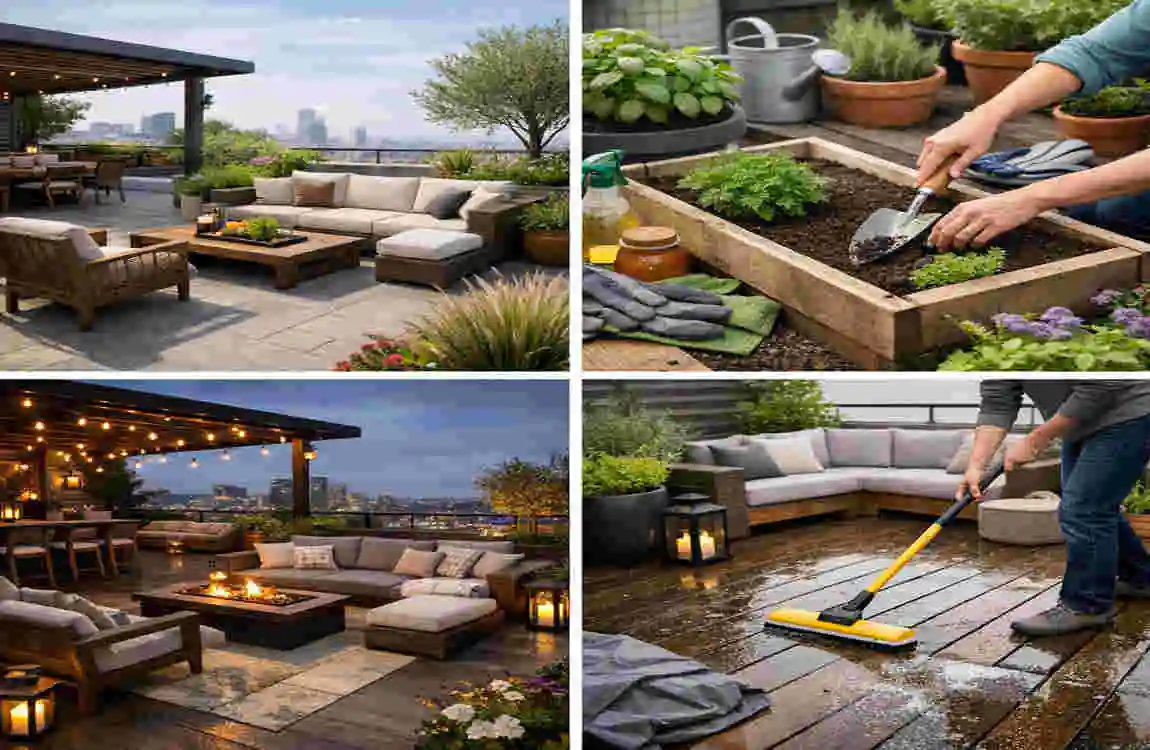
A rooftop terrace needs simple but regular care. Clean the floor, check drainage, inspect furniture, and water plants on schedule.
If you use lights or outdoor electrical fixtures, check them safely and keep them in good condition.
Avoid common mistakes
A few common problems can ruin an otherwise great terrace:
- Overcrowding the space
- Ignoring drainage
- Using weak materials
- Forgetting shade
- Skipping safety checks
Avoiding these mistakes makes your rooftop easier to enjoy and maintain.
Frequently Asked Questions
What is the best terrace rooftop design for a modern home?
A modern home often looks best with a clean, simple design that uses neutral colours, weather-resistant furniture, and a mix of seating, greenery, and lighting.
How can I design a small rooftop terrace?
Use compact furniture, light colours, vertical plants, and open walking space. Keep the layout simple so the area feels larger.
Which flooring is best for a rooftop terrace?
The best flooring depends on your budget, weather, and style. Outdoor tiles, composite flooring, and natural stone are all strong choices.
How much does a modern terrace rooftop design cost?
The cost depends on the space size, materials, furniture, lighting, and structural work. A basic setup costs much less than a fully finished luxury terrace.
How can I make my rooftop terrace look luxurious on a budget?
Focus on a few smart upgrades like good lighting, coordinated cushions, neat planters, and one or two strong furniture pieces. Small details can create a high-end look.
Which plants suit a rooftop garden?
Plants that handle sun, wind, and container growing are usually best. Herbs, grasses, flowering plants, and small shrubs often work well.
How can I protect my rooftop terrace from rain and sunlight?
Use waterproof materials, good drainage, shade structures, umbrellas, pergolas, and weather-safe furniture to protect the space.
| Design Idea | Key Features | Best For |
|---|---|---|
| Minimalist Rooftop | Clean lines, neutral colors, simple furniture | Modern homes |
| Green Terrace Garden | Potted plants, grass, vertical greenery | Nature lovers |
| Outdoor Lounge | Comfortable sofas and cushions | Relaxation |
| Pergola Rooftop | Shade, wooden or metal structures | Sunny terraces |
| Rooftop Dining Area | Dining table, chairs, ambient lighting | Family meals |
| Small Rooftop Design | Foldable furniture and smart storage | Compact homes |
| Luxury Terrace | Premium seating, elegant finishes | Upscale homes |
| Wooden Deck Terrace | Weather-resistant decking | Warm, natural style |
