

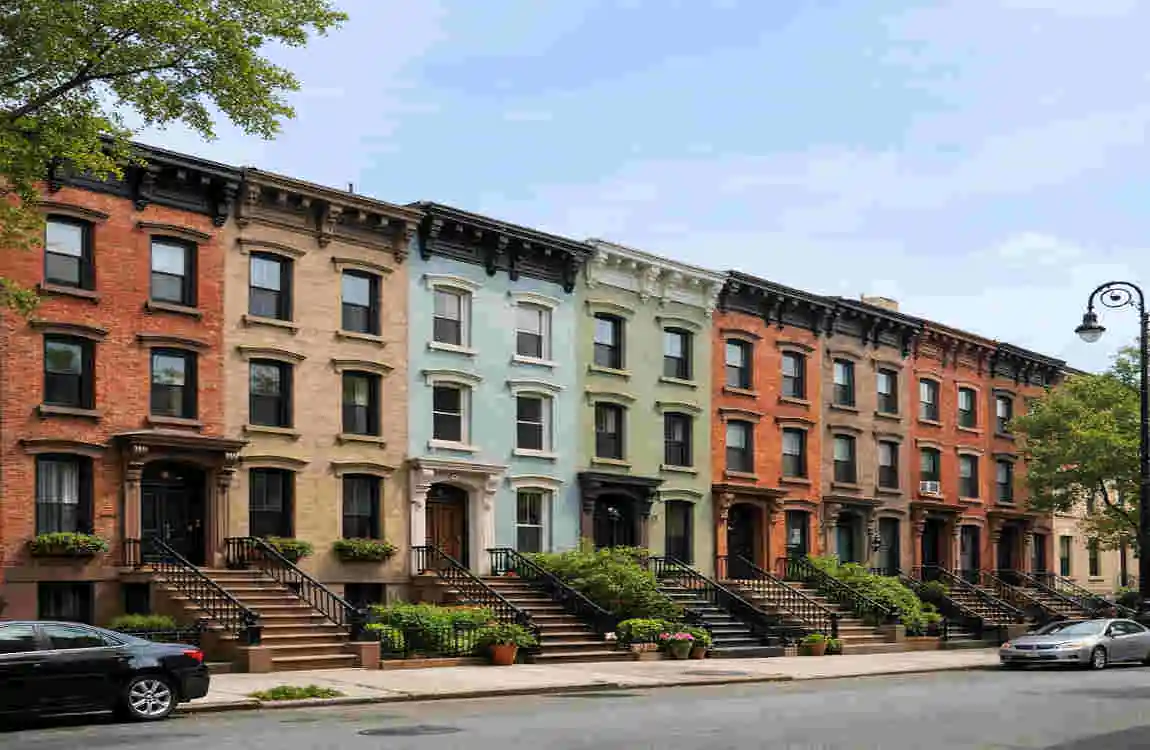
If you are asking what a row house is, the simple answer is this: a row house is a home that stands in a line of similar homes, with shared side walls and separate entrances.
You will often see row houses in cities and older neighbourhoods. They are practical, space-saving, and usually built close together. Many people like them because they offer a private home feel without needing a large piece of land.
What Is a Row House?
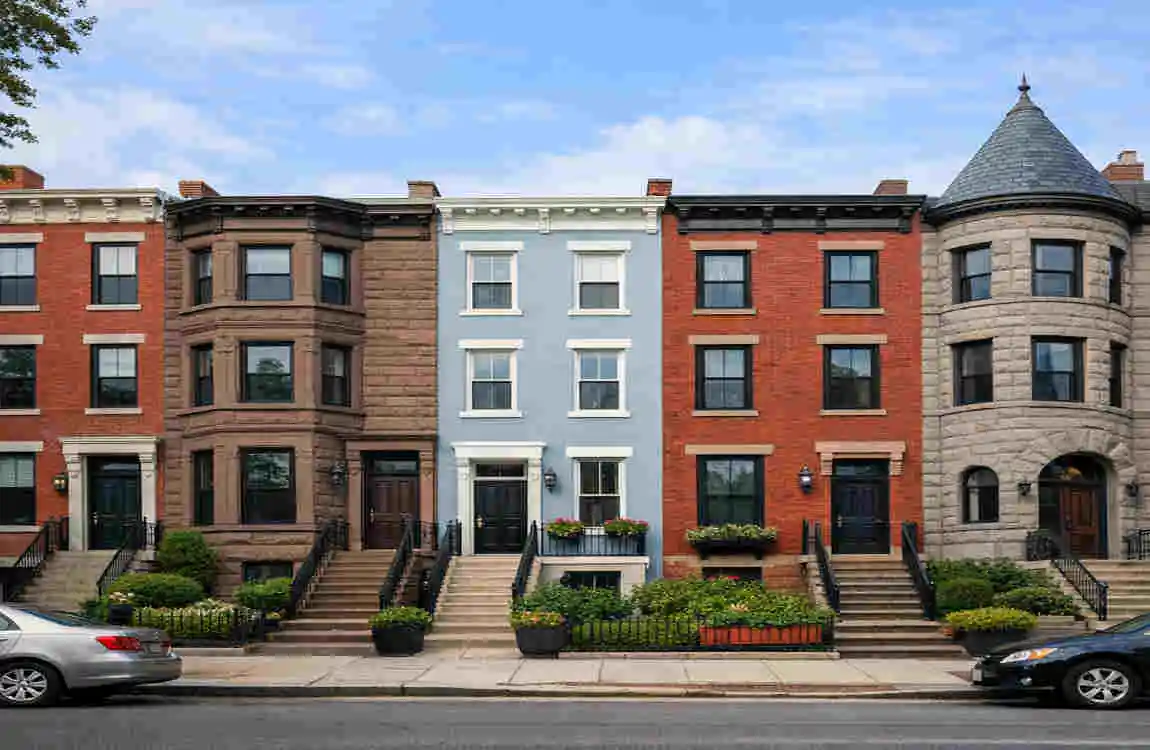
A row house is a type of home that is built side by side with other homes in a row. Each home is separate, but the houses usually share one or both side walls with the neighbouring homes.
This setup makes row houses different from detached homes, which stand alone with open space on all sides. Row houses are often found in older urban areas because they allow more homes to be built in a smaller space.
Why Row Houses Became Popular
Row houses became common in busy towns and cities because land was limited. Builders needed a way to house more people without spreading out too much.
Over time, row houses became known for their simple design, efficient layout, and strong neighbourhood feel.
Easy Way to Think About It
If you picture a long line of similar homes, each with its own front door, that is usually a row house.
Key Features of a Row House
Row houses have a few common features that make them easy to recognise.
Shared Walls and Connected Design
Most row houses share at least one wall with the home next door. In many cases, they share both side walls.
This shared-wall design helps save land and can make construction more efficient.
Similar Exterior Appearance
Row houses often look similar from the outside. They may have:
- Matching rooflines
- Similar windows
- Repeated front façades
- A uniform street appearance
This creates a neat and organised look along the street.
Multiple Floors
Many row houses use vertical space rather than wide land area. That is why they often have two or more floors.
This design gives homeowners more living space without needing a large footprint.
Private Living Space
Even though row houses are attached, each one is usually a separate private home.
That means each unit has its own entrance, rooms, and ownership setup.
How Does a Row House Work?
A row house works much like other homes, but its layout is often narrow and tall rather than wide.
Typical Layout
Most row houses have rooms arranged one after another, with living space on the main floor and bedrooms upstairs.
A common setup may include:
- Front living room
- Kitchen and dining area
- Bedrooms on upper floors
- Bathroom on one or more levels
Entrances and Outdoor Space
Row houses usually have a front entrance, and some may also have a rear door leading to a small yard, courtyard, or alley access.
Outdoor space is often limited, but some row houses may include:
- Small backyards
- Patios
- Balconies
- Rooftop areas
Utilities and Parking
Because row houses are often in urban areas, parking may be limited. Some homes have street parking, while others use shared lots or rear access.
Utilities and ownership can also vary based on the property and local rules, so it is always smart to check how the home is managed before buying.
Row House vs Townhouse vs Semi-Detached House
These terms are sometimes used in similar ways, but they are not always the same.
FeatureRow HouseTownhouseSemi-Detached House
Shared walls Usually both sides One or both sides Usually one side
Units in a row Several Several Usually two
Private entrance Yes Yes Yes
Outdoor space Often limited Varies Usually more
Typical setting Urban areas Urban/suburban Suburban areas
Row House vs Townhouse
In many places, row house and townhouse mean almost the same thing. Both usually describe homes built in a line and attached to neighbouring units.
Still, the exact meaning can vary by region.
Row House vs Semi-Detached House
A semi-detached house usually shares only one wall with one neighbour. A row house is more likely to be part of a longer line of attached homes.
That is one of the easiest ways to tell them apart.
Advantages and Disadvantages of Row Houses
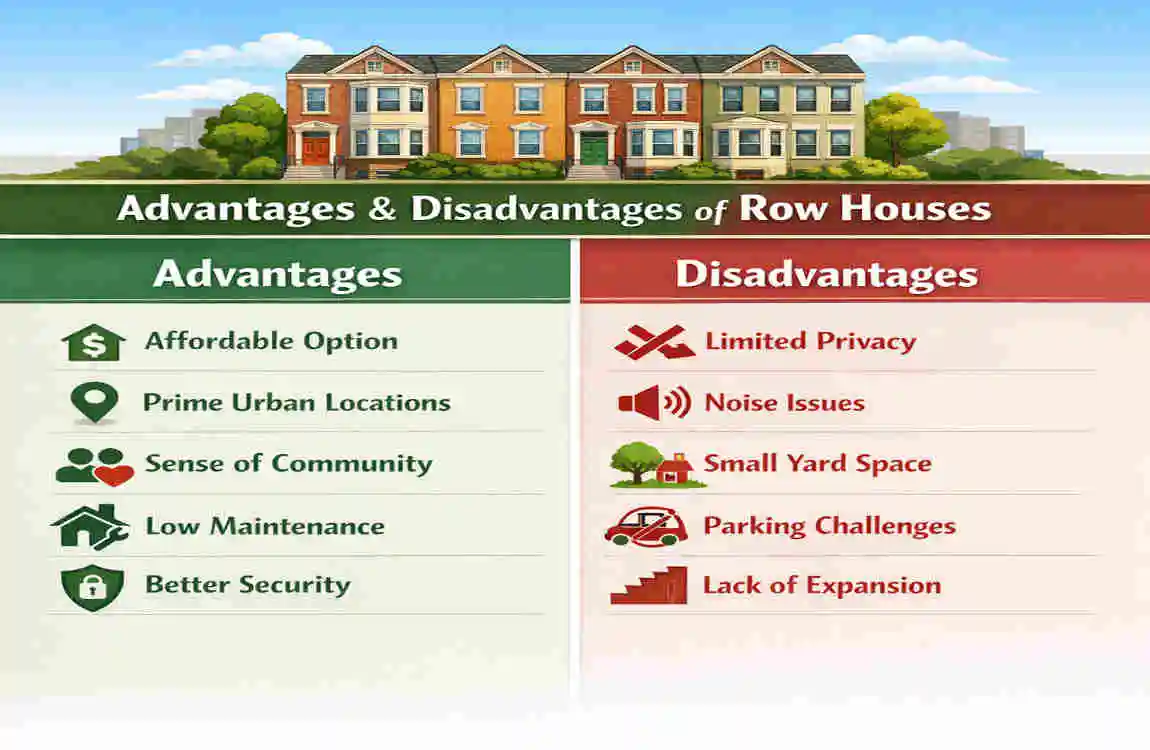
Row houses come with real benefits, but they also have some limits. Knowing both sides helps you decide if this type of home fits your needs.
Advantages
Row houses are popular for several good reasons:
- Efficient use of land
- Often close to shops and transport
- Can be more affordable than detached homes
- Strong architectural character
- Less exterior maintenance in some cases
They are especially attractive if you want city living with a traditional home feel.
Disadvantages
There are also some common drawbacks:
- Noise from shared walls
- Less outdoor space
- Limited parking in some areas
- Less privacy than detached homes
- Older homes may need more repairs
If you value silence, wide yards, or lots of separation from neighbours, a row house may feel tight.
Who Row Houses Suit Best
Row houses can be a good fit for:
- First-time buyers
- City residents
- Small families
- People who want lower land costs
- Buyers who like older architectural styles
How Much Does a Row House Cost?
There is no single price for a row house because location matters so much.
What Affects the Price?
A row house may cost more or less depending on:
- Location
- Size
- Age
- Condition
- Neighborhood demand
- Nearby schools, shops, and transport
A well-kept row house in a popular city area may cost much more than a similar one in a less active neighbourhood.
Ongoing Ownership Costs
Buying the home is only part of the cost. You also need to think about:
- Maintenance
- Insurance
- Property taxes
- Utilities
- Renovation costs
Older row houses may also need updates to plumbing, wiring, roofs, or insulation.
Is a Row House a Good Investment?
In many areas, row houses can be a good investment because they often have steady rental demand and strong resale potential.
But the value depends on location, upkeep, and renovation costs. A home that needs major work may not be a smart buy unless the price leaves room for repairs.
Are Row Houses Right for You?
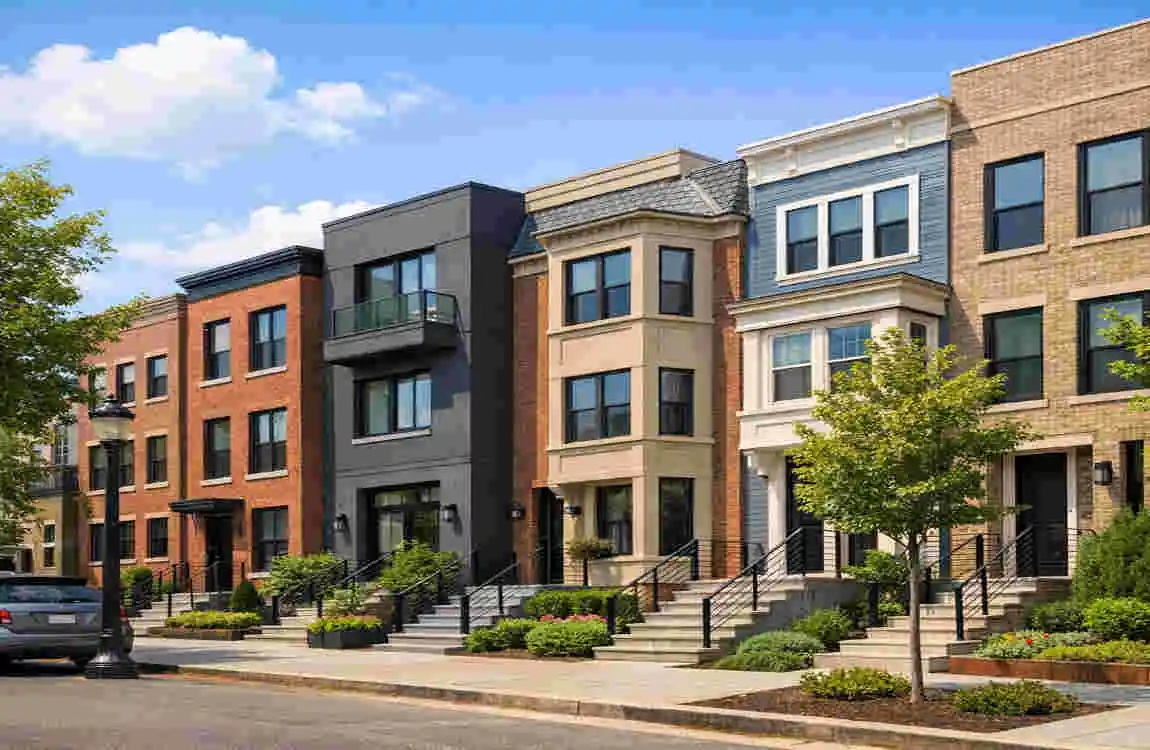
A row house can be a great choice if you want a home with character, city convenience, and efficient use of space.
What to Check Before Buying
Before you buy, look closely at:
- Shared walls
- Roof condition
- Plumbing
- Electrical systems
- Structural condition
- Local restrictions
These points matter because row houses often have older systems and tighter layouts.
Frequently Asked Questions
What is the row house?
A row house is a home built side by side with others in a row, usually sharing one or both side walls.
What is the difference between a row house and a townhouse?
The terms are often used similarly, but a townhouse may have a slightly broader meaning depending on the region.
Do row houses share walls?
Yes, most row houses share walls with neighbouring homes.
Are row houses cheaper than detached houses?
Often, yes, but it depends on the property’s location, size, and condition.
Are row houses good for families?
They can be, especially for families who want an urban location and do not need a large yard.
Can you renovate a row house?
Yes, but renovations may need to follow local rules and account for shared walls or older systems.
Do row houses have private yards?
Some do, but outdoor space is usually small.
Are row houses a good investment?
They can be, especially in strong rental or city markets.
| Feature | Description |
|---|---|
| Definition | A row house is a home built in a connected line with other similar homes. |
| Shared Walls | Each house usually shares one or both side walls with neighboring homes. |
| Layout | Most row houses are narrow and designed with multiple floors to maximize space. |
| Privacy | They offer private entrances and living spaces, but share structural walls with neighbors. |
| Outdoor Space | Some have small front yards, backyards, patios, or balconies. |
| Cost | Row houses can be more affordable than detached homes because land and construction are used efficiently. |
