

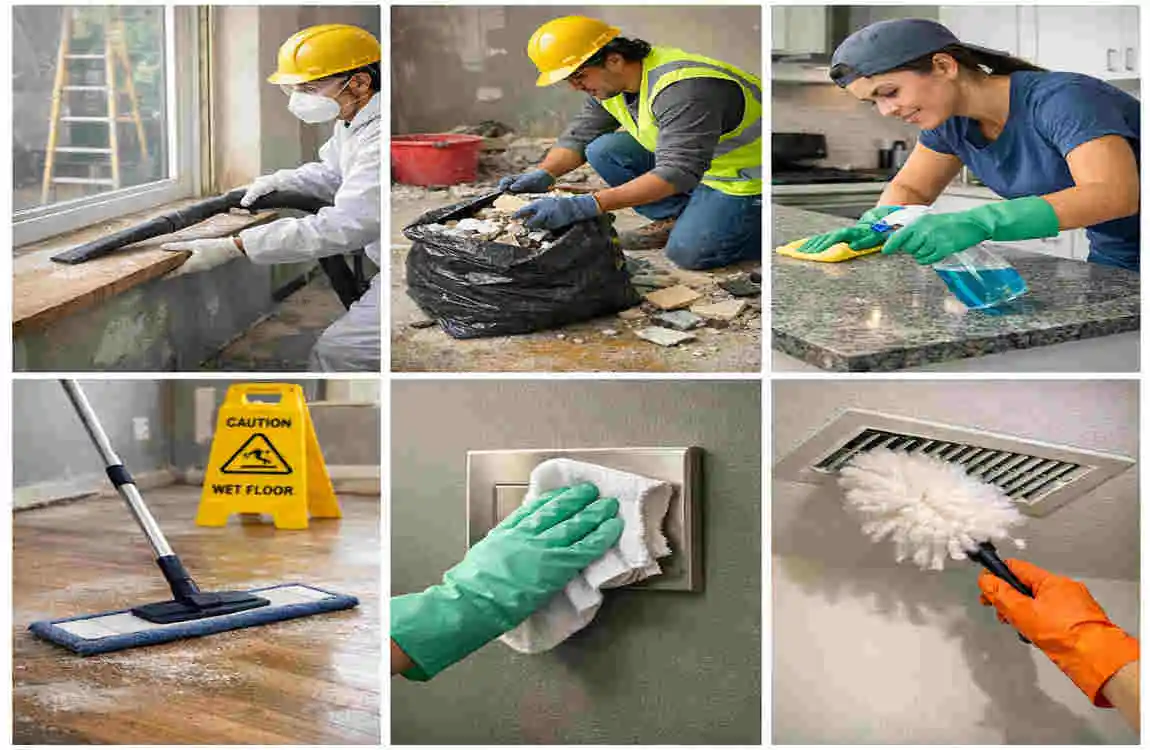
This differs from regular house cleaning. Regular cleaning handles daily dirt and mess. Construction cleaning handles fine dust, sticky residue, and rough debris that can hide in corners, vents, cabinets, and on floors.
If you want your home to feel fresh, safe, and ready to use, this step matters. Let’s go through it practically.
Construction cleaning is more detailed than standard cleaning. It does not just focus on visible dirt. It also targets the fine dust that spreads throughout the house during construction.
That dust can settle on walls, windows, shelves, fixtures, and even inside drawers. If you skip it, the house may still feel dirty even after the building work is finished.
Why Construction House Cleaning Is Important
Removes fine dust
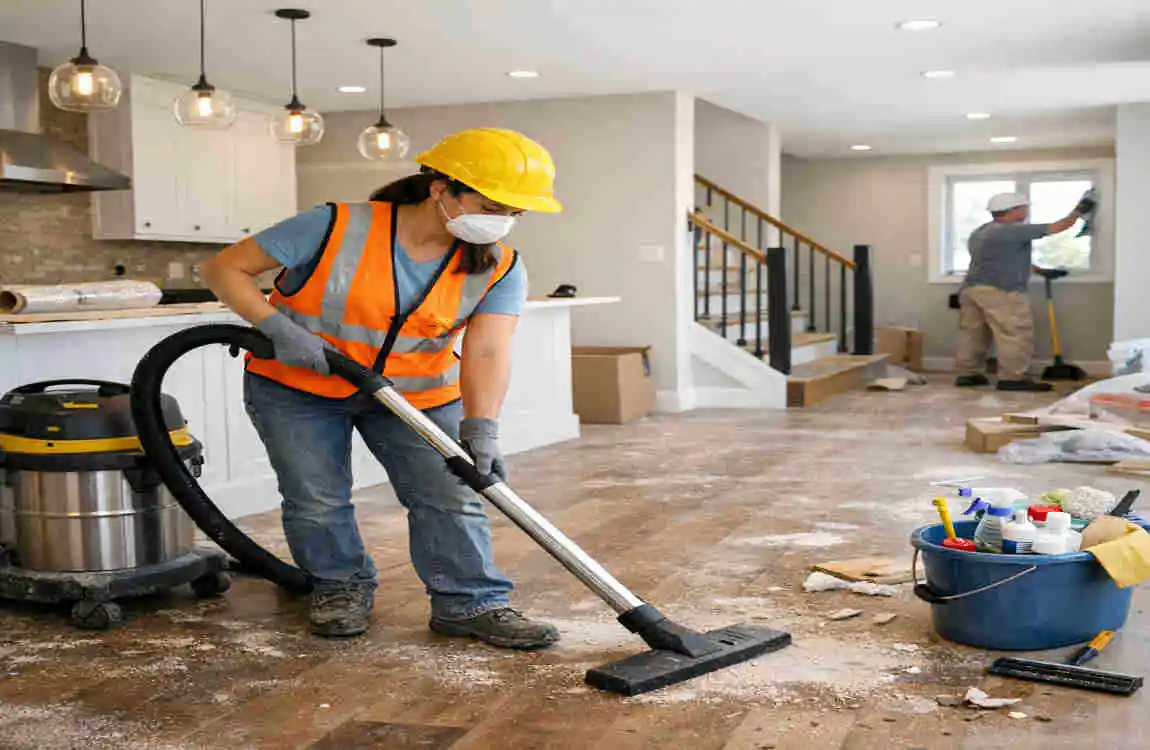
Construction dust is very small and spreads easily. It comes from cutting, sanding, drilling, and finishing work.
A regular broom may move it around instead of removing it. That is why vacuuming, microfiber cloths, and careful wiping work much better.
Improves indoor air quality
Dust doesn’t just sit on surfaces. It also floats in the air and can be breathed in.
Cleaning vents, fans, windows, and open surfaces helps reduce that problem. A cleaner home feels healthier and more comfortable right away.
Protects new surfaces
Harsh residue can damage new floors, cabinets, counters, and fixtures if they aren’t cleaned properly. Paint, adhesive, and cement can leave marks if they sit too long.
Using the right cleaner helps protect your investment.
Makes the home move-in ready
A clean home feels complete. Once the dust and debris are gone, you can bring in furniture, boxes, and personal items with peace of mind.
Essential Supplies for Construction House Cleaning
Basic cleaning tools
You do not need fancy equipment, but you do need the right tools.
Useful items include:
- Microfiber cloths
- Vacuum cleaner
- Brooms and dustpans
- Mops and buckets
- Scrub brushes
- Squeegees
- Sponges
- Extension dusters
Microfiber cloths and a good vacuum are especially important because they trap fine dust better than basic dusters.
Recommended cleaning products
Use gentle products whenever possible. Strong chemicals can damage new finishes.
Common cleaning products include:
- Mild all-purpose cleaner
- Glass cleaner
- Floor-safe cleaner
- Disinfectant for suitable surfaces
- Adhesive or paint-removal products for specific spots
Safety equipment
Construction cleaning can expose you to dust and sharp debris, so protect yourself.
Use:
- Work gloves
- Dust mask or respirator
- Protective eyewear
- Non-slip footwear
Good ventilation also helps while cleaning.
Smart Step-by-Step Construction House Cleaning Process
Start with a final inspection.
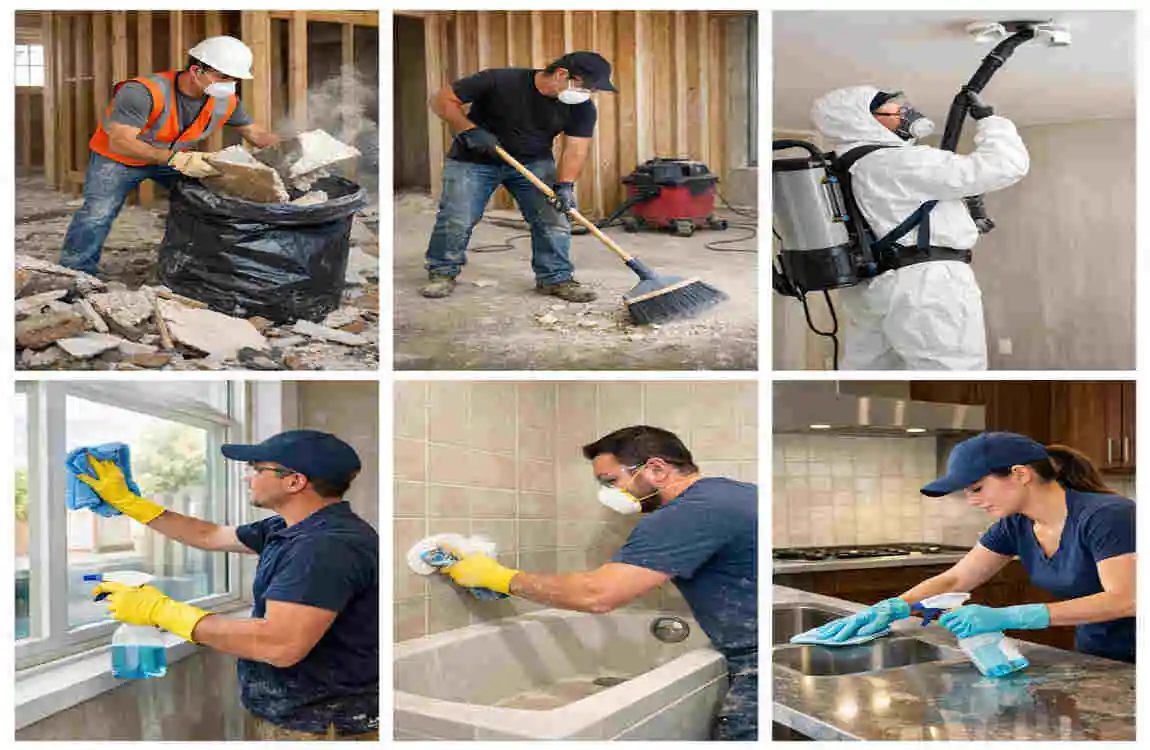
Before deep cleaning, walk through the house and look for large debris, paint spots, stickers, and residue. Check ceilings, walls, floors, trim, and fixtures.
This first look helps you plan the work room by room.
Clean from top to bottom
Always start high and work downward—clean ceilings, light fixtures, fans, and shelves first.
Then move to walls, cabinets, counters, and finally floors. This way, dust from higher areas does not fall onto already cleaned surfaces.
Remove construction dust carefully.
Dust removal usually takes more than one pass. Start with dry dusting or vacuuming. Then wipe surfaces with microfiber cloths.
Pay extra attention to:
- Corners
- Baseboards
- Behind doors
- Window tracks
- Inside closets
- Around vents
Clean windows and glass
New windows often have labels, tape, paint specks, or film. Remove these gently to avoid scratching the glass.
Clean the frames, tracks, sills, and glass surfaces with a suitable cleaner.
Clean walls, doors, and trim
Walls and trim often collect a thin layer of dust. Start with a soft cloth or duster.
Then clean door handles, switches, frames, and baseboards. Be careful with painted surfaces to avoid streaks or damage.
Deep clean the kitchen
The kitchen needs special care because it has many surfaces and corners.
Clean:
- Cabinets inside and out
- Countertops
- Sink and faucet
- Backsplash
- Drawers
- Appliance surfaces
Check for glue, dust, and leftover debris around hinges and handles.
Deep clean the bathrooms
Bathrooms often have grout residue, dust, and construction marks.
Clean:
- Toilet
- Sink
- Shower or tub
- Mirrors
- Fixtures
- Tile edges
- Floor corners
Be gentle around new finishes and use the right cleaner for tile and stone.
Clean floors by material
Different floors need different care. This is very important.
Floor Type Best Cleaning Approach
Hardwood Dry dust first, then lightly damp mop
Tile Vacuum first, then mop with safe cleaner
Vinyl Soft cleaning cloth and mild cleaner
Laminate Very little water, gentle wipe only
Natural stone pH-safe cleaner, no harsh chemicals
Concrete Sweep, vacuum, then mop carefully
Finish with final vacuuming and mopping.
Once you finish all upper and mid-level surfaces, vacuum again; this catches dust that fell during the earlier steps.
Then mop the floors with a cleaner that matches the surface. Let everything dry fully before moving in furniture.
Common Construction Cleaning Mistakes to Avoid
Cleaning too early
If construction is still active, cleaning too soon can waste your time. Dust and debris may return after the next phase of work.
Wait until major work is complete.
Using too much water
Too much water can damage wood, laminate, drywall, and some new finishes. Use controlled moisture only where needed.
Using harsh chemicals
Strong chemicals can leave marks or weaken finishes. Always read product instructions first.
Ignoring hidden areas
Dust hides in places people often forget, like:
- Behind appliances
- Inside cabinets
- Air vents
- Window tracks
- Light fixtures
- Closets
These areas need attention too.
Skipping the final inspection
Always do one last walk-through. Check rooms in both natural and artificial light so you don’t miss dust or streaks.
DIY vs Professional Construction House Cleaning
When DIY cleaning makes sense
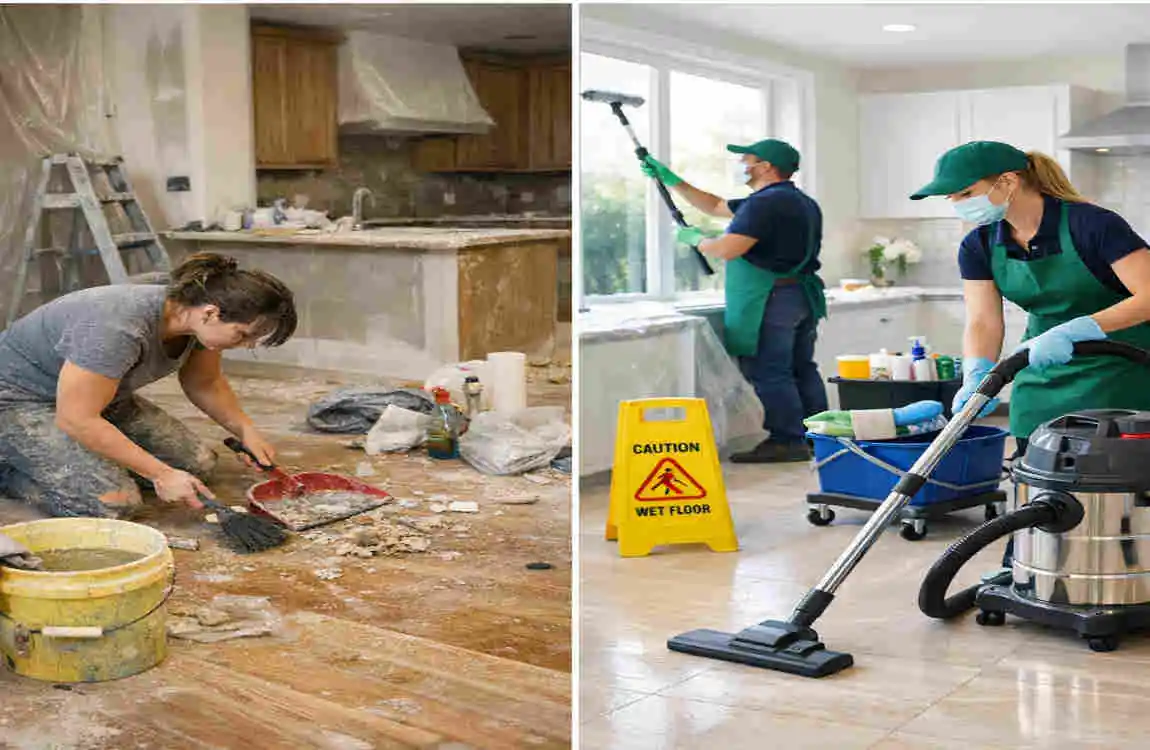
DIY cleaning can work well for smaller projects. If the renovation is light and you have time, tools, and patience, you may be able to do it yourself.
It also works when debris is low, and the home is easy to access.
When professional cleaning is better
Professional cleaning may be better for:
- Large new homes
- Heavy dust
- Major renovations
- Tight deadlines
- Multiple floors
- Difficult residue removal
Professionals usually have better equipment and faster methods.
FAQ About Construction House Cleaning
What is included in construction house cleaning?
It usually includes dust removal, debris pickup, window cleaning, surface wiping, floor cleaning, and bathroom and kitchen detailing.
When should construction house cleaning be done?
Do it after major construction is complete and before you move in furniture or belongings.
How do you remove construction dust from a new house?
Use vacuuming, microfiber cloths, gentle wiping, and repeat as needed.
Can I clean construction dust myself?
Yes, if the project is small, you have time, and you have the right tools. For larger jobs, a professional may be a better option.
Is construction dust harmful?
It can irritate the eyes, nose, and lungs, so wearing a mask and cleaning carefully is a smart idea.
| Cleaning Area | Smart Tip | Benefit |
|---|---|---|
| Construction Dust | Vacuum walls, floors, and corners before mopping | Removes fine dust effectively |
| Windows | Clean glass and frames after major construction work | Improves clarity and appearance |
| Floors | Sweep or vacuum first, then mop | Prevents muddy residue |
| Walls | Use a soft microfiber cloth for dust | Protects painted surfaces |
| Cabinets | Wipe inside and outside surfaces | Removes hidden dust |
| Kitchen | Clean countertops, sinks, and appliances | Creates a hygienic space |
| Bathrooms | Remove grout, cement, and construction residue carefully | Keeps surfaces clean |
