

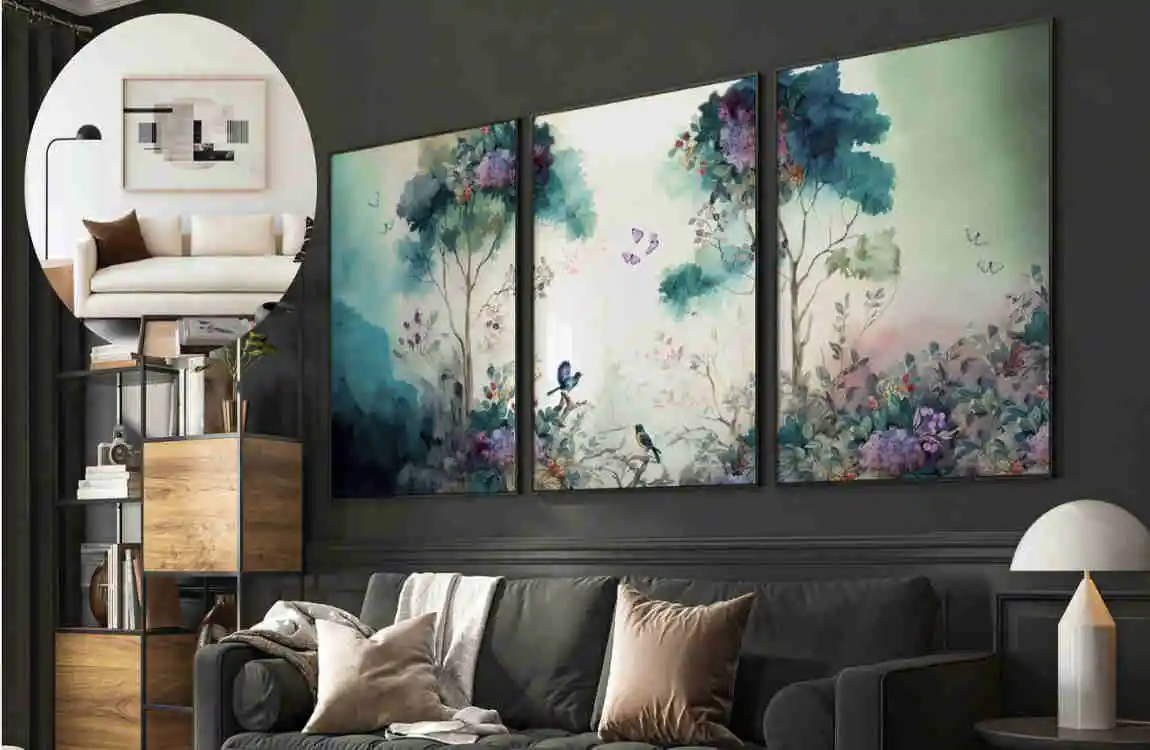
The right distance between furniture and artwork can completely change a room’s look. When a painting or framed picture sits too high, the wall can feel disconnected. When it sits too low, the furniture and artwork may look crowded.
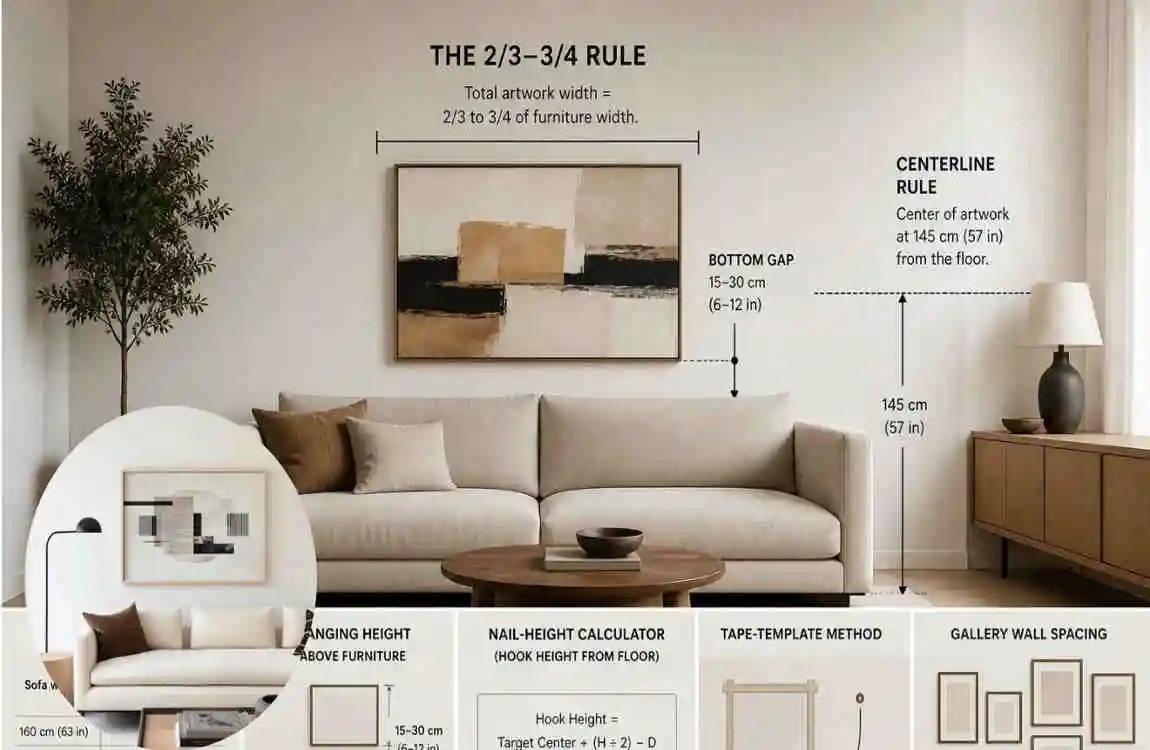
If you are wondering how much space between furniture and artwork is ideal, a good starting point is usually 6 to 12 inches between the top of the furniture and the bottom of the artwork. However, this is not a strict rule.
Your furniture height, artwork size, ceiling height, and room proportions all matter. A large sofa may need a different arrangement than a small console. At the same time, a tall headboard can change the ideal placement above a bed.
How Much Space Between Furniture and Artwork?
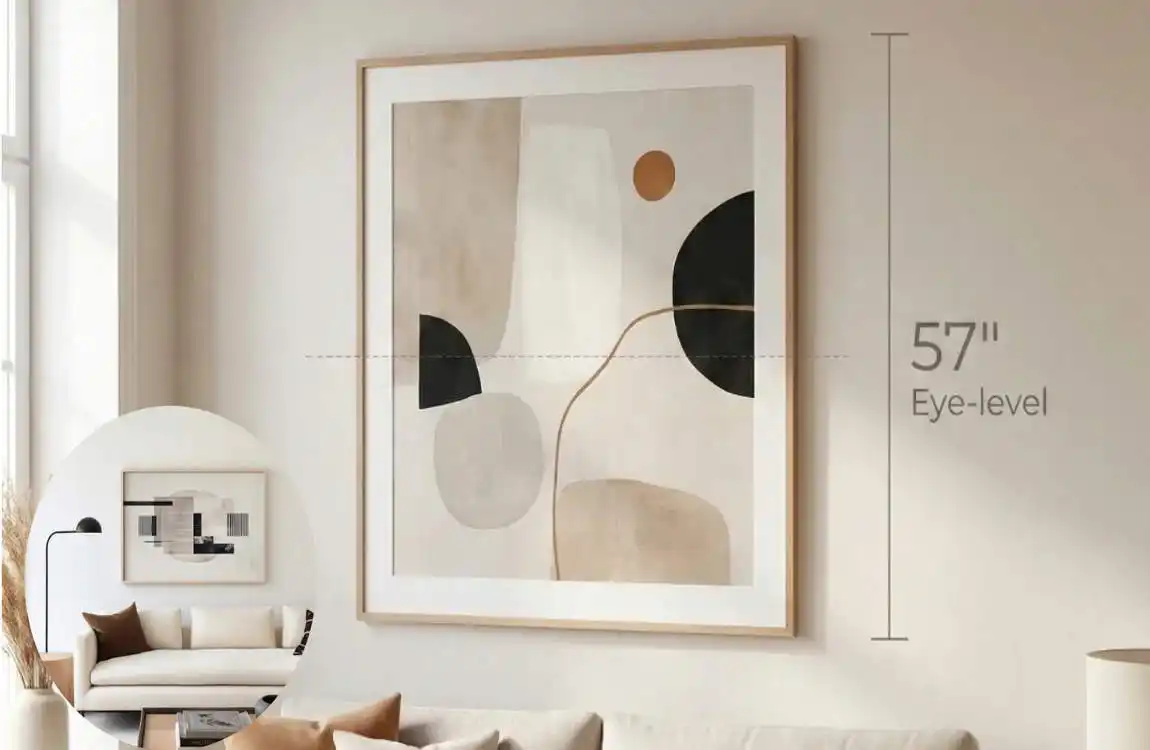
For most furniture arrangements, leaving around 6 to 12 inches between the furniture and artwork creates a comfortable visual connection.
This distance gives the artwork enough breathing room without making it look like it is floating too far above the furniture.
A Simple Spacing Rule
Start with 6–10 inches for sofas and consoles and around 6–12 inches for beds and desks.
Then adjust the position based on the size of the artwork and the furniture.
For example, a small picture above a low console may look better with a shorter gap. A large painting above a tall piece of furniture may need slightly more room.
Think About the Furniture Below
Artwork should visually relate to the furniture underneath it.
If you place a painting above a sofa, imagine the sofa and artwork as a single composition. The artwork should not appear disconnected from the seating area.
The same principle works with beds, cabinets, desks, and consoles.
Small Room Example
In a small living room, leaving a very large gap above the sofa can make the wall feel empty. A closer arrangement of around 6–8 inches may look more natural.
Large Room Example
In a larger room with a tall sofa and high ceiling, you may have more flexibility. A slightly larger gap can work if the artwork itself is substantial.
Always step back and look at the complete arrangement rather than focusing only on the measuring tape.
Ideal Artwork Height Above Different Furniture
Different furniture types require slightly different approaches. Let the furniture’s height and purpose guide your artwork placement.
Artwork Above a Sofa
Artwork above a sofa is one of the most common interior design arrangements.
A practical starting point is 6–10 inches above the sofa back.
Avoid hanging artwork too close to the ceiling. The artwork should feel connected to the sofa rather than positioned based on wall height alone.
Artwork width also matters. A single piece or gallery arrangement often looks balanced when it is roughly two-thirds to three-quarters of the sofa’s width.
For example, a very small picture above a large sofa may look lost. A wider artwork arrangement can create a stronger visual relationship.
Artwork Above a Bed
Artwork above a bed usually works best when it relates to the headboard.
A gap of about 6–12 inches above the headboard is a good starting point.
If the headboard is particularly tall, reduce the artwork size or adjust its position so the arrangement doesn’t feel cramped.
If there is no headboard, use the top of the mattress or the bed’s main visual line when planning placement.
Artwork Above a Console or Cabinet
Console tables and cabinets usually sit lower than sofas so that you can place artwork closer to the furniture.
A gap of around 4–8 inches often works well.
If you plan to place lamps, books, plants, or decorative objects on the console, leave enough space so the artwork does not compete with them.
The artwork and decorative objects should work together as one arrangement.
Artwork Above a Desk
Artwork above a desk needs to remain attractive without interfering with the workspace.
A distance of approximately 6–12 inches can work well, depending on the desk height and artwork size.
Avoid placing artwork where it blocks a monitor, shelves, lighting, or everyday work.
For a home office, functionality should come first. Your artwork should enhance the space, not make the desk hard to use.
Factors That Affect Furniture and Artwork Spacing
No single measurement works in every room. Several factors can change the ideal distance.
Furniture Height
Furniture height is one of the most important considerations.
A low console may require artwork to sit relatively low on the wall. A tall cabinet naturally pushes the artwork upward.
Before hanging anything, measure from the floor to the top of the furniture.
Then consider the artwork’s height and the available wall space.
Artwork Size and Shape
Artwork dimensions strongly affect placement.
A large horizontal painting can create a strong visual anchor. Smaller artwork may need to be grouped to create enough visual weight.
Vertical artwork may naturally draw the eye upward, while horizontal artwork often works especially well above sofas, consoles, and beds.
Treat a gallery wall as one overall artwork grouping rather than many unrelated frames.
Ceiling Height
Ceiling height also affects how artwork feels in a room.
With a low ceiling, hanging artwork too high can make the furniture arrangement feel disconnected.
With a high ceiling, you have more vertical space to work with, but that does not mean the artwork should automatically be placed near the ceiling.
Keep the furniture arrangement as the main reference point.
Room Size
A small room can quickly look crowded when you place too many large pieces together.
In a compact space, choose artwork that complements the furniture without overwhelming it.
Larger rooms can handle larger artwork and wider gallery walls.
However, more space does not mean you need to fill every wall. Space can help the room feel calm and organized.
Visual Balance
Measurements help, but your eyes matter too.
An arrangement can technically follow the recommended measurements and still look awkward.
Stand several feet away and look at the whole wall. Ask yourself whether the artwork feels connected to the furniture.
If it looks too high or too low, make a small adjustment.
How to Create Balanced Furniture and Artwork Arrangements
The best arrangements create a visual relationship between the furniture and artwork.
Think of the wall and furniture as one composition.
Keep Artwork Connected to Furniture
Avoid leaving a huge empty area between the furniture and artwork.
When artwork is too high, the furniture can appear visually separated from the wall decoration.
A smaller gap usually creates a stronger connection.
Use Proportion
Proportion matters as much as distance.
A tiny artwork above a large sectional sofa may not provide enough visual weight. On the other hand, an oversized painting above a narrow console can dominate the entire arrangement.
Choose artwork that is appropriately scaled for the furniture.
Use Center Alignment
Centering artwork with the furniture below it is one of the easiest ways to create balance.
For example, the center of a painting can line up with the center of a sofa, console, or bed.
This simple technique creates a clean, organized look.
Intentional asymmetry can also work, but it should look deliberate, not accidental.
Single Artwork vs. Multiple Pieces
One large artwork can make a strong statement.
Several smaller pieces can create a gallery wall and provide more visual interest.
If you use multiple pieces, consider the entire group as one shape. Measure the overall width and height before deciding where to hang it.
Gallery Walls
Gallery walls work best when the individual pieces have a clear relationship.
Keep the gaps between frames reasonably consistent. Around 2–4 inches is a common starting point for many gallery arrangements.
You can use different frame sizes, but establish a visual structure through alignment, spacing, or a shared theme.
Simple Spacing Guide
Furniture General Artwork Spacing Main Tip
Sofa 6–10 inches Keep art visually connected to the sofa
Bed 6–12 inches Consider the headboard height
Console 4–8 inches Leave room for décor
Desk 6–12 inches Keep artwork functional and visible
These measurements are starting points, not strict requirements.
Common Furniture and Artwork Spacing Mistakes
Even a beautiful piece of artwork can look wrong when it is poorly positioned.
Fortunately, most spacing problems are easy to fix.
Hanging Artwork Too High
This is one of the most common mistakes.
When artwork sits far above a sofa or console, it can look disconnected from the furniture.
Fix: Move it closer to the furniture and check the arrangement again from several feet away.
Leaving an Unnecessarily Large Gap
A large space between furniture and artwork can make the room feel unfinished.
Fix: Start with the 6–12-inch guideline, then adjust based on the artwork and furniture proportions.
Choosing Artwork That Is Too Small
A small frame above a large sofa may disappear visually.
Fix: Choose a larger piece or create a gallery arrangement that adds enough visual weight.
Creating an Overcrowded Gallery Wall
Too many frames placed too closely together can make the wall look busy.
Fix: Reduce the number of pieces or increase the space between selected frames.
Ignoring Furniture Height
Using the same artwork height for every piece of furniture can create awkward results.
Fix: Measure each furniture piece separately and adjust the artwork accordingly.
Placing Artwork Off-Center
Artwork that is unintentionally shifted to one side can make the room feel unbalanced.
Fix: Find the center point of the furniture and align the artwork or gallery grouping with it.
Mixing Frames Without a Clear Arrangement
Different frame sizes can work beautifully, but random placement may look messy.
Fix: Create a rough arrangement on the floor before hanging anything.
Easy Tips for Measuring and Hanging Artwork
A few minutes of preparation can save you from unnecessary holes in the wall.
Measure Before Drilling
Start with a tape measure.
Measure the furniture height, artwork height, and available wall space. Mark the approximate position using removable painter’s tape.
This gives you a chance to make adjustments before installing hardware.
Create a Paper Template
For large artwork or gallery walls, make paper or cardboard templates that match your frames’ size.
Place the templates on the wall with removable tape.
This lets you see the arrangement before committing.
It is especially helpful when working with several pieces.
Check the Artwork at Eye Level
Eye-level placement is useful, but it should not override the furniture arrangement.
When artwork sits above furniture, the relationship between the two matters more.
Check the artwork from normal standing and sitting positions. This is particularly useful in living rooms and bedrooms.
Leave Enough Breathing Room
Negative space gives a room a cleaner appearance.
Don’t feel like every inch of wall needs decoration.
Give artwork enough room to stand out while keeping it visually connected to the furniture below.
Step Back and Review
Once you have marked the position, step back.
Look at the wall from different parts of the room.
Check it while sitting on the sofa, standing near the entrance, and viewing it from the side.
If something looks slightly too high or too low, adjust it before permanently hanging the artwork.
Furniture and Artwork Spacing for Different Interior Styles
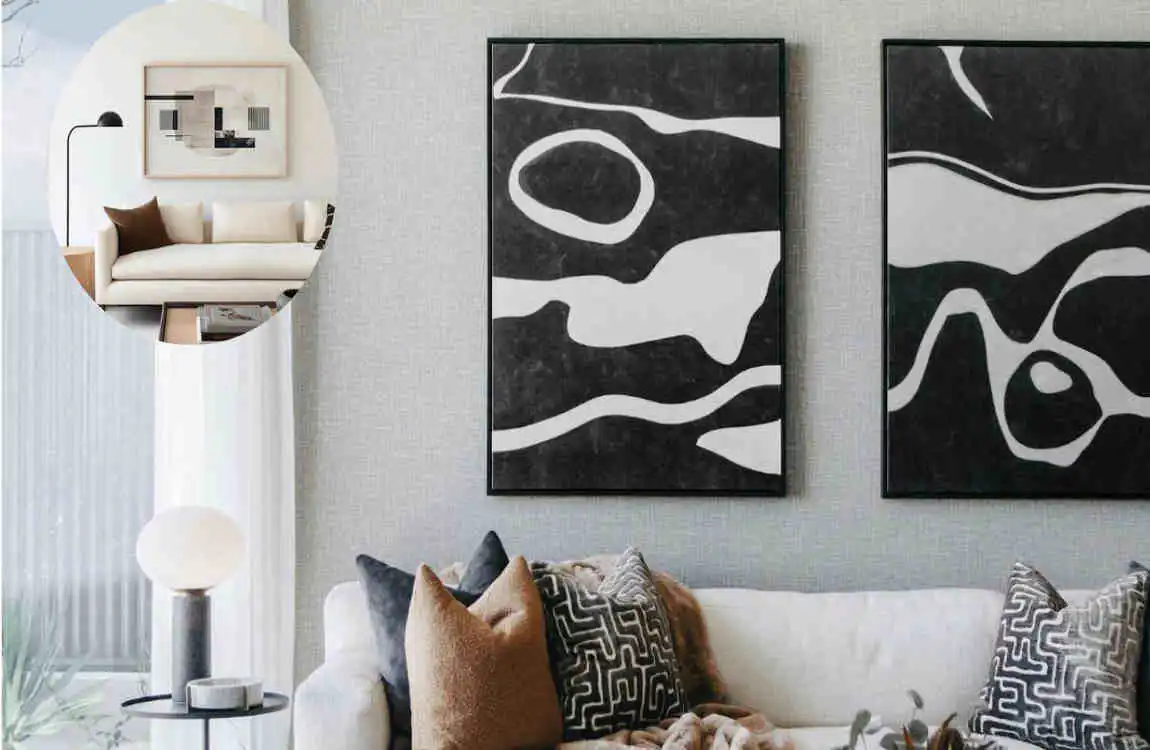
Your interior style can also influence how much space you want around artwork.
Modern Interiors
Modern interiors usually benefit from clean lines, simple arrangements, and consistent spacing.
Choose artwork that complements the furniture’s shape, and avoid unnecessary visual clutter.
A large single artwork can often work beautifully above a modern sofa or console.
Traditional Interiors
Traditional rooms often focus on balanced proportions and classic arrangements.
You can group artwork around furniture using symmetrical layouts.
Matching frames or coordinated artwork can help create a more formal appearance.
Minimalist Interiors
Minimalist rooms usually benefit from more negative space.
Instead of filling every wall, choose a few meaningful pieces and give them room to breathe.
Keep the spacing intentional and avoid overcrowding the furniture.
Eclectic Interiors
Eclectic interiors allow more flexibility.
You can mix artwork sizes, colors, frame styles, and shapes.
However, flexibility does not mean randomness. Use alignment, consistent gaps, or a shared visual theme to keep the arrangement connected.
Small-Space Interiors
In small rooms, artwork placement requires extra care.
Avoid oversized arrangements that make the furniture feel crowded.
Choose appropriately scaled pieces and use the available wall space efficiently.
A well-placed mirror or artwork can also create a stronger sense of openness without adding physical clutter.
Frequently Asked Questions
How much space should be between furniture and artwork?
A useful starting point is 6–12 inches between the top of the furniture and the bottom of the artwork.
For some consoles, 4–8 inches may look better. The exact distance depends on furniture height, artwork size, and room proportions.
How high should artwork be above a sofa?
Artwork is commonly placed around 6–10 inches above the sofa.
The artwork should also be appropriately scaled to the sofa. A larger sofa usually looks best with wider artwork or a gallery arrangement.
Should artwork be centered with furniture?
Usually, yes.
Centering artwork with the furniture underneath creates a balanced appearance. However, an intentionally asymmetrical arrangement can also work when the overall composition feels balanced.
How much space should be between a bed and artwork?
A gap of approximately 6–12 inches above the headboard is a useful starting point.
Consider the headboard height and artwork size before deciding on the final position.
Can artwork be too close to furniture?
Yes.
If artwork is almost touching the furniture, the arrangement can look crowded and difficult to read visually.
Leave enough breathing room while keeping the artwork connected to the furniture.
Should large artwork be higher than small artwork?
Not necessarily.
Artwork placement depends on its size, shape, relationship to the furniture, and wall proportions.
A large piece may actually need to sit lower so it remains connected to the furniture below.
What is the best way to measure artwork spacing?
First, measure the furniture height.
Then measure the artwork and decide on a starting gap, such as 6–12 inches. Mark the position with removable tape and step back to review it before drilling.
How do I space artwork in a gallery wall?
Treat the gallery wall as one large visual group.
Keep the gaps between individual pieces fairly consistent, often around 2–4 inches, and make sure the entire grouping is centered with the furniture below.
| Item | Recommended Spacing | Simple Tip |
|---|---|---|
| Sofa to Coffee Table | 14–18 inches | Leave enough room to walk and reach the table |
| Chairs to Coffee Table | 12–18 inches | Keep seating comfortable and accessible |
| Furniture Around a Rug | 8–18 inches | Keep furniture balanced around the rug |
| Artwork Above Sofa | 6–10 inches | Hang artwork close enough to feel connected |
| Artwork Above Console | 4–8 inches | Keep the artwork visually linked to the furniture |
| Artwork Between Two Pieces | 3–6 inches | Avoid making the gap look too wide |
| Artwork Above Bed | 6–10 inches | Center the artwork with the bed |
