

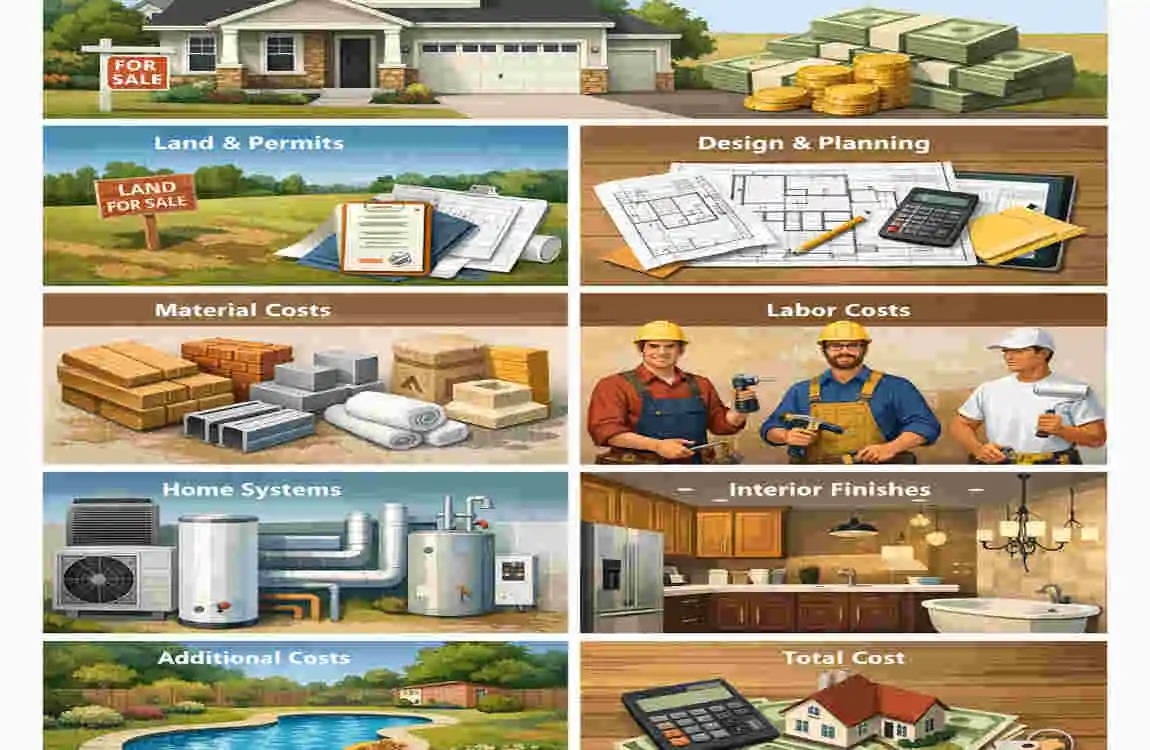
Building a home is exciting, but the cost can vary widely from one project to another. There is no single price that fits everyone.
Your final budget depends on location, size, design, materials, labor, and site conditions. A simple home on easy land will cost far less than a custom house with premium finishes and special features.
What Is the Average Cost of Building a New Home?
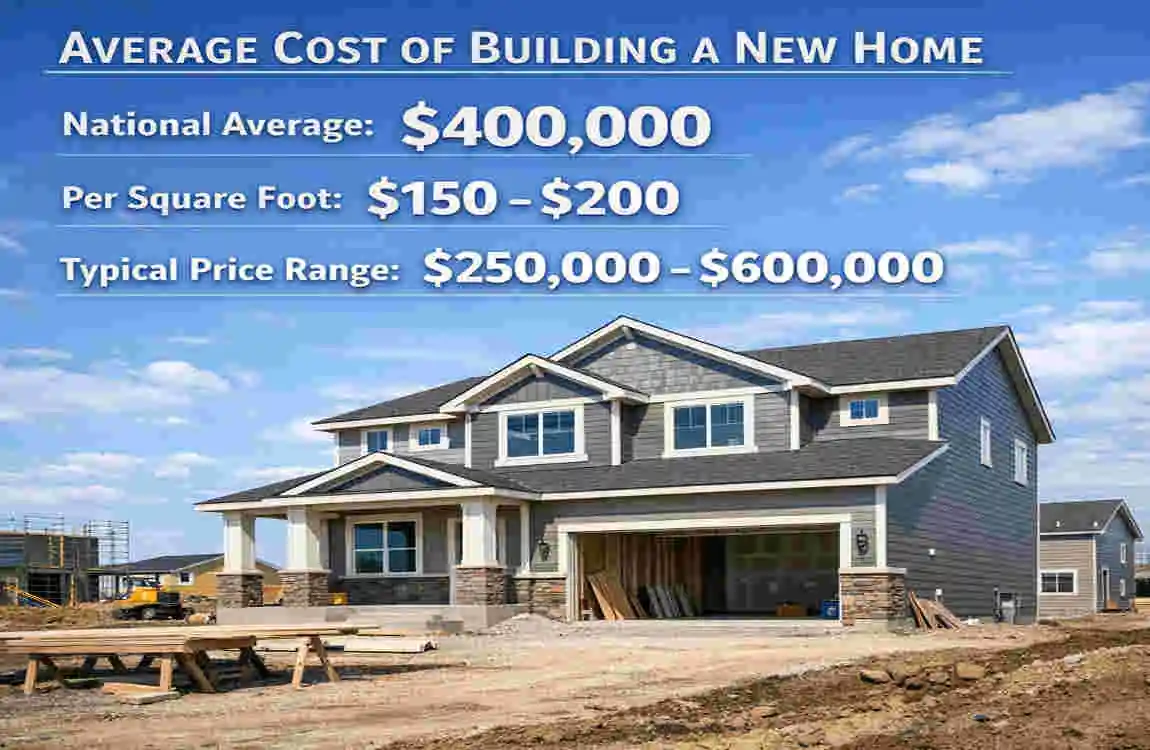
Typical Construction Cost
Most people start by looking at cost per square foot. That is a helpful number, but it is only a starting point.
A smaller home may have a higher cost per square foot because fixed expenses still exist. A larger home may seem cheaper per square foot, but the total cost will usually be much higher.
So when you look at averages, remember this: the final price depends on the full project, not just the size.
Cost by Home Size
Here is a simple example of how the budget can scale:
Home Type Approximate Cost Range
Small home Lower total cost
Medium-sized home Moderate total cost
Large home Higher total cost
Luxury/custom home Highest total cost
These are broad estimates only. Local labor rates, material choices, and land conditions can quickly change the numbers.
New Home Construction vs. Buying an Existing Home
Building a new home gives you more control. You can choose the layout, finishes, and features that fit your lifestyle.
Buying an existing home may cost less upfront in some markets, but it may also need repairs or updates. So the cheaper choice is not always the better one.
What Factors Affect the Cost of Building a New Home?
Location
Location is one of the biggest cost drivers.
Land prices can vary widely, and so can labor costs. Some areas also have stricter building rules, which can add time and money to the project.
Material availability matters too. If supplies need to be shipped farther, the cost may rise.
Home Size and Layout
A bigger house usually needs more materials, more labor, and more time.
The layout matters as well. A simple square or rectangular design is usually easier to build than a complex plan with many corners, levels, or unusual roof lines.
Open-plan layouts may reduce wall costs, while multiple floors can increase structural and labor costs.
Materials and Finishes
The materials you choose can push the budget up or down very quickly.
Big cost differences often come from:
- Flooring
- Cabinets
- Countertops
- Windows and doors
- Roofing materials
A home with basic finishes will cost much less than one with upgraded surfaces and custom details.
Custom Features
Extra features are nice, but they add to the total price.
Examples include:
- Garages
- Basements
- Outdoor living areas
- Smart-home technology
- Energy-efficient systems
If you want custom features, it helps to decide early which ones matter most.
Major Expenses When Building a New Home
Land and Site Preparation
Before the house goes up, you need the land ready.
This may include:
- Buying the lot
- Clearing the land
- Grading and excavation
- Drainage work
- Utility preparation
Site problems can lead to unexpected costs, especially if the land is uneven or requires major prep work.
Foundation and Structural Work
The foundation supports the entire home, so it is a major part of the budget.
Costs depend on foundation type, framing, and structural materials. A simple foundation is usually less expensive than a more complex one.
Plumbing, Electrical, and HVAC
These systems are essential to a comfortable home.
You will need to budget for:
- Plumbing installation
- Electrical wiring
- Heating and cooling systems
- Ventilation
These are not areas to cut too deeply, because they affect safety, comfort, and long-term performance.
Interior and Exterior Finishing
Finishing work is where the house starts to look like a home.
This often includes:
- Drywall and painting
- Flooring
- Kitchen and bathroom installation
- Siding
- Roofing
- Landscaping
Finishes may seem cosmetic, but they can take up a big part of the total budget.
Permits and Professional Fees
Do not forget the paperwork side of the project.
Common fees may include:
- Building permits
- Design fees
- Engineering costs
- Inspection fees
These costs are easy to overlook, but they matter.
How to Create a Realistic New Home Building Budget
Set Your Maximum Budget
Start with a number you can actually afford.
Think about down payments, financing, and monthly payments. It is better to build a home that fits your budget than to stretch too far and struggle later.
Separate Construction Costs From Other Expenses
Your budget should not treat everything as one lump sum.
Break it into parts:
- Land
- Construction
- Permits
- Professional services
- Landscaping
- Appliances and furnishings
That way, you can see where the money is going.
Keep a Contingency Fund
Unexpected costs happen all the time in construction.
You may encounter site issues, design changes, or changes in material prices. That is why a contingency fund is so important.
A reserve gives you breathing room when something does not go as planned.
Get Multiple Contractor Estimates
Always compare several quotes.
A low bid may look good, but it may not include everything. Check what each estimate covers and what it leaves out.
A detailed quote is often more useful than the cheapest one.
How to Reduce the Cost of Building a New Home
Choose a Simple Home Design
A simple design usually saves money.
Straight lines, fewer corners, and fewer complicated structural details can reduce labor and material costs. Simplicity is often the smartest budget move.
Select Cost-Effective Materials
You do not have to buy the most expensive materials to get a beautiful home.
Compare durability, style, and maintenance needs before making a choice. Spend more where quality matters most, and save where a simpler option still works well.
Build at the Right Size
Bigger is not always better.
More square footage usually means more materials, more labor, and more maintenance over time. Focus on space you will actually use.
Plan Everything Before Construction
Changes during construction are expensive.
Try to finalize the layout, finishes, and major decisions before the work starts. The more you change later, the more likely your budget will grow.
Balance Upfront and Long-Term Costs
Sometimes paying a little more now saves money later.
Energy-efficient windows, insulation, appliances, and HVAC systems can reduce utility bills and future repair costs. That makes them worth considering early.
Common Mistakes That Increase New Home Construction Costs
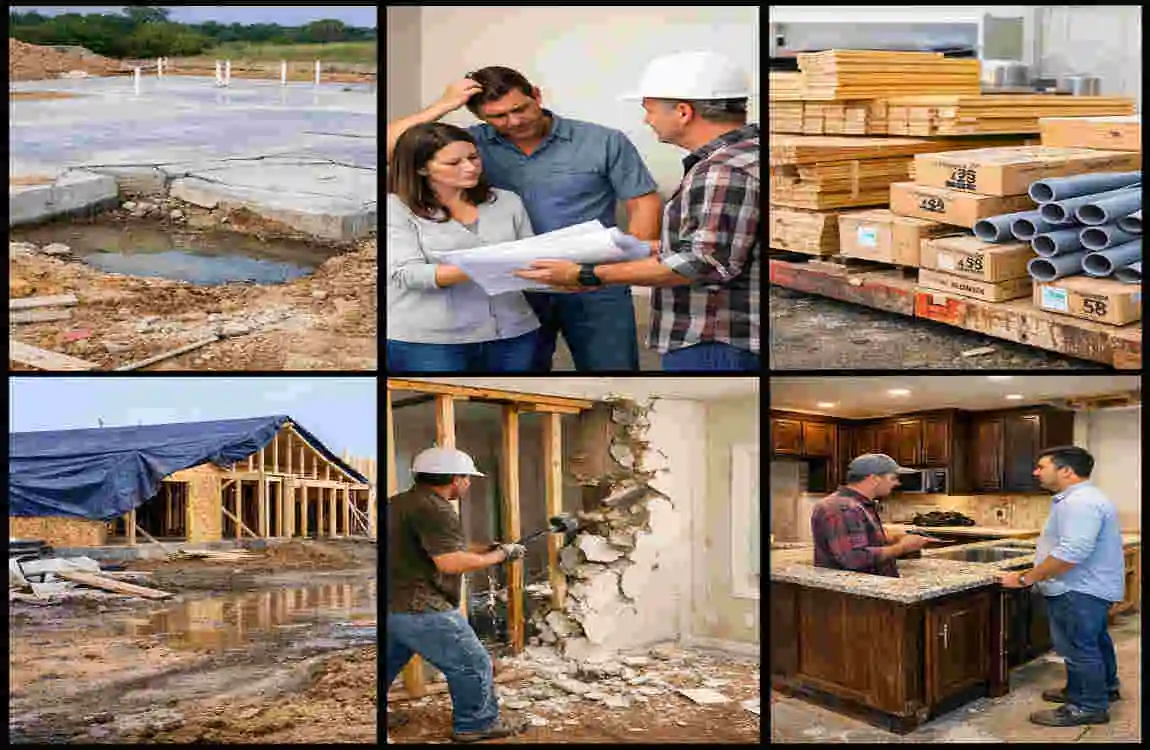
Underestimating Site Costs
Some homeowners budget for the house but forget the land prep.
Excavation, drainage, and utility work can be expensive, especially if the site is difficult.
Changing the Design During Construction
Changing plans after work begins can slow the job down and increase labor costs.
Even small changes can affect multiple parts of the build.
Choosing Materials Without Comparing Prices
Always compare before you buy.
The most expensive material is not always the best value, and the cheapest one may not last long enough.
Ignoring Permits and Local Requirements
Permits and inspections are part of the process.
If you ignore them, you may face delays, extra fees, or compliance problems later.
Spending Too Much on Cosmetic Features
Pretty finishes are nice, but the basics come first.
Focus on structure, safety, and essential systems before adding luxury extras.
FAQ: Cost of Building a New Home
How much does it cost to build a new home?
It depends on location, size, design, materials, labor, and site conditions. There is no single universal price.
What is the biggest expense when building a house?
The highest cost often comes from a mix of labor, materials, structural work, and site preparation.
Is it cheaper to build a house or buy one?
Either option can be cheaper depending on the local market, financing, and the home you want.
Does building a bigger house always cost more?
Yes, in most cases. More square footage usually means more materials, more labor, and more finishing work.
How much money should I save before building a house?
You should save for land, construction, permits, professional fees, and a contingency reserve for unexpected costs.
Can I reduce the cost of building a new home?
Yes. A simple design, smart material choices, careful planning, and a realistic budget can all help control costs.
| Cost Factor | Typical Cost Range |
|---|---|
| Land | $30,000–$150,000+ |
| Construction | $150–$400+ per sq. ft. |
| 2,000 sq. ft. home | $300,000–$800,000+ |
| Architect & permits | $10,000–$40,000+ |
| Utilities & site work | $20,000–$75,000+ |
| Finishing & landscaping | $15,000–$60,000+ |
| Estimated total | $350,000–$1 million+ |
