

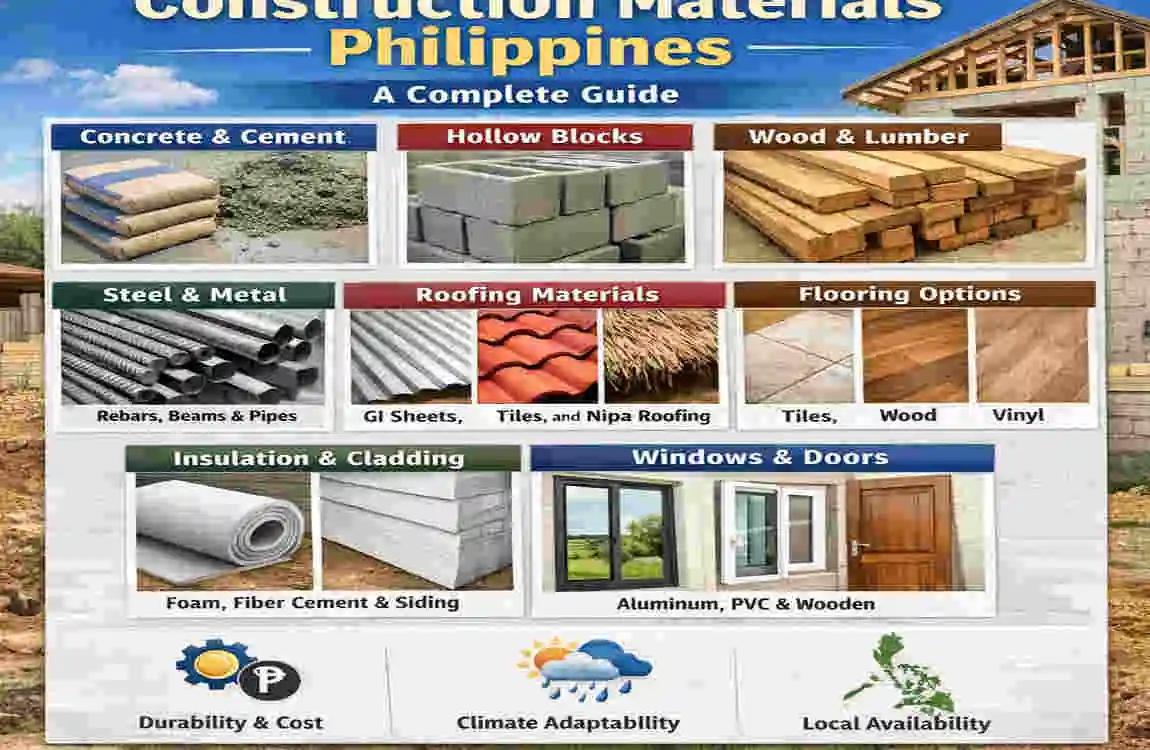
Choosing the right house construction materials that Philippine homeowners can trust is one of the most important parts of building a safe and comfortable home. The materials you choose affect strength, comfort, cost, maintenance, and long-term value. They also affect how well the house handles the Philippine climate.
In the Philippines, builders must think about heat, humidity, heavy rain, strong winds, pests, and material availability. A material that works well in one area may not be the best choice in another. That is why planning matters.
Common House Construction Materials in the Philippines
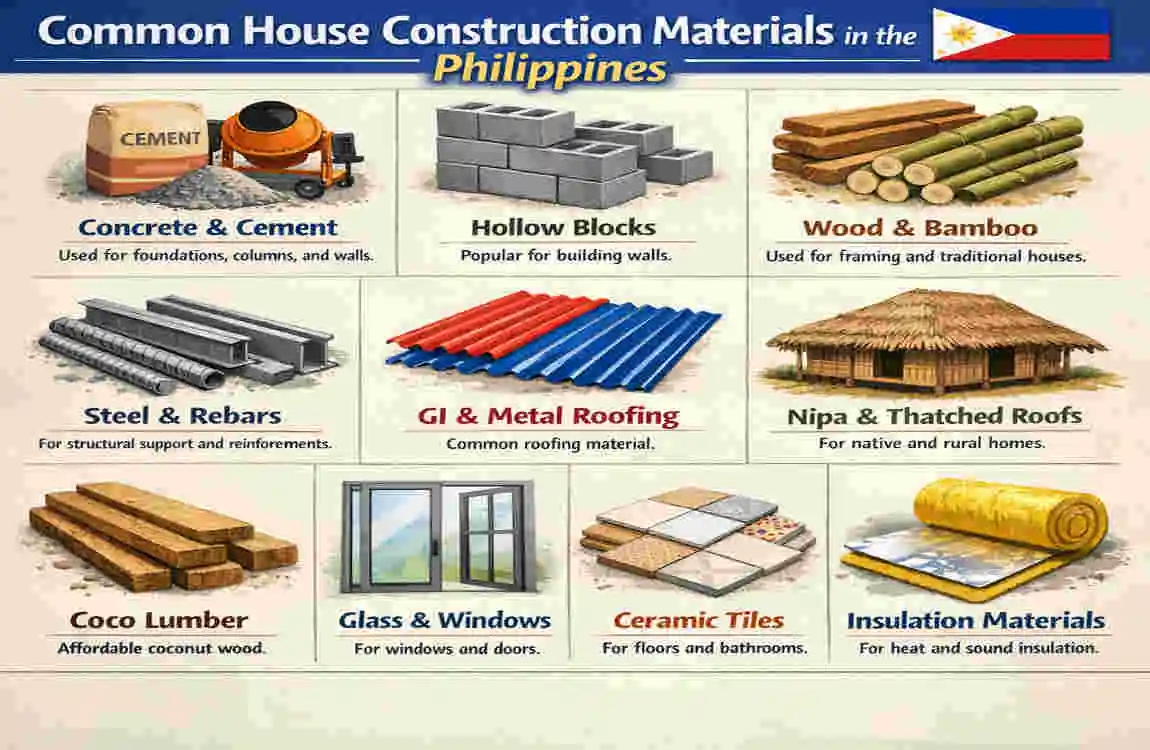
Concrete and Cement
Concrete and cement are among the most common materials used in house construction in the Philippines. They are used in many major parts of a home because they are strong, reliable, and widely available.
You will often see them used for:
- foundations
- columns and beams
- floor slabs
- walls
- driveways and exterior areas
Concrete works well in tropical conditions because it can handle heavy use and outdoor exposure. When properly mixed, poured, and cured, it becomes a long-lasting structural material.
Steel and Reinforcing Bars
Steel is important because concrete alone is strong in compression but weaker in tension. That is why builders use reinforcing bars, often called rebar, inside concrete.
Steel is commonly used for:
- reinforcing bars
- structural steel
- steel framing
- roof supports
The right grade and proper installation matter a lot. If steel is not placed correctly, the structure may lose strength.
Hollow Blocks and Concrete Blocks
Concrete hollow blocks are widely used in wall construction. They are affordable, easy to find, and useful for both exterior and interior walls.
They are popular because they are:
- cost-effective
- strong enough for many home walls
- available in many areas
- easy to work with
Still, they do have limits. They need proper reinforcement, plastering, and finishing to perform well over time.
Bricks
Bricks are less common in some Philippine homes than concrete blocks, but they still have a place in construction. They can create a classic look and may offer good durability.
Bricks are often chosen for:
- decorative walls
- accent features
- selected structural or design applications
They may cost more than hollow blocks, but many homeowners like their appearance and long service life.
Wood and Engineered Wood
Wood is often used for doors, cabinets, ceilings, flooring, and furniture. In some homes, it may also be used in selected structural areas, depending on the design.
Wood brings warmth and style, but it needs protection from:
- moisture
- termites
- rot
- warping
Proper treatment and maintenance are very important in the Philippine climate.
Roofing Materials
Roofing is one of the most important parts of a home because it must handle strong sun, rain, and wind.
Common roofing choices include:
- long-span metal roofing
- corrugated metal sheets
- clay or concrete tiles
- asphalt shingles
- insulated roofing systems
Metal roofing is popular because it is light, practical, and widely available. However, heat and noise should be considered. Insulation can help a lot.
Roofing Material Comparison
Roofing TypeMain BenefitCommon Consideration
Long-span metal Lightweight and durable Can get hot without insulation
Corrugated metal Affordable and common Needs good fastening and care
Clay or concrete tiles Attractive and long-lasting Heavier and may cost more
Asphalt shingles Clean appearance May need more upkeep in hot weather
Insulated roofing Better comfort Usually higher initial cost
Flooring Materials for Philippine Homes
Ceramic and Porcelain Tiles
Tiles are a top choice for many homes because they are durable, easy to clean, and good for humid climates. They work well in kitchens, bathrooms, living areas, and even outdoor spaces if the right type is used.
They are valued for:
- water resistance
- easy maintenance
- long life
- wide design choices
Porcelain tiles are often stronger and less porous than standard ceramic tiles.
Vinyl Flooring
Vinyl flooring is a practical choice for bedrooms and other interior spaces. It is comfortable underfoot and comes in many styles that can mimic wood or stone.
It is useful because it is:
- easy to clean
- affordable in many cases
- available in many designs
- softer than tile
Still, it should be used carefully in very wet areas unless it is moisture-resistant.
Laminate Flooring
Laminate can give the look of wood at a lower cost. It is popular for its appearance and quick installation.
But laminate has limits in humid areas. If moisture gets into the boards, they can swell or get damaged. That makes it less ideal for bathrooms or places that get wet often.
Natural Stone
Natural stone like granite, marble, and slate offers a premium look and strong performance. It is often used in high-end homes or feature areas.
Stone can be beautiful and durable, but it usually costs more and may need sealing and care.
Wall, Ceiling, and Interior Materials
Paint and Wall Finishes
Paint does more than add color. It also protects the underlying surface and improves the home’s appearance.
For Philippine homes, it is important to choose paint that can handle:
- humidity
- moisture
- heat
- mildew risk
Exterior paint should be formulated for outdoor exposure, while interior paint should be formulated for indoor conditions.
Gypsum Board
Gypsum board is commonly used for ceilings and interior partitions. It helps create a smooth, clean finish and is easy to install in many home designs.
Moisture-resistant versions are available for suitable areas, which is useful in humid environments.
Fiber Cement Boards
Fiber cement boards are useful for walls, ceilings, partitions, and some exterior applications. They are valued because they can resist moisture better than some other boards.
They are often chosen for areas that need a more durable panel material.
Insulation Materials
Insulation is very important in the Philippines because heat can build up quickly inside a home. Good insulation can help reduce indoor heat and make the house more comfortable.
Common solutions include:
- roof insulation
- wall insulation
- reflective materials
- proper ventilation
Even simple insulation can make a big difference in comfort and energy use.
Plumbing and Electrical Construction Materials
Plumbing Pipes
Common plumbing materials in the Philippines include:
- PVC
- CPVC
- PPR
These are used depending on the water system, water temperature, and installation needs. Choosing the right pipe helps with durability and water flow.
Water pressure and pipe quality matter too. Bad installation can lead to leaks, weak flow, or damage over time.
Electrical Wiring and Conduits
Electrical safety is critical in every home. Quality wires, conduits, breakers, switches, and outlets help protect the house and the people inside it.
Electrical systems should follow Philippine safety standards and be installed by qualified professionals. This is not the place to cut corners.
How Philippine Climate Affects Material Selection
Heat and Humidity
The Philippine climate is hot and humid for much of the year. That means materials should resist heat buildup, warping, and moisture damage.
Insulation, reflective roofing, and moisture-resistant finishes can help improve comfort.
Heavy Rain and Moisture
Rain is another major factor. Homes need good roof design, waterproofing, drainage, and moisture-resistant materials.
If water regularly enters the house, even strong materials can fail early.
Strong Winds and Storms
Some areas face stronger storms and wind. In these places, the structure, roof connections, and fastening systems become very important.
A good roof is not just about the sheet material. It is also about how securely it is installed.
Termites and Pests
Wood should be treated properly because termites and pests are a real concern in many parts of the country. Pest-resistant methods can help protect the house over time.
How Much Do House Construction Materials Cost in the Philippines?
There is no single price for all materials because costs change based on many factors.
Main Cost Factors
- house size
- material quality
- location
- supplier
- transportation
- labor
- design complexity
- availability
- market price changes
A material may be cheap in one city and expensive in another once delivery is included.
Creating a Construction Materials Budget
A simple budgeting process can help you stay organized:
- Prepare the house plans
- Create a materials list or bill of quantities
- Request several supplier quotations
- Compare quality as well as price
- Include delivery and waste allowances
- Keep a contingency budget
This approach helps reduce surprises later.
How to Choose the Best House Construction Materials in the Philippines
Consider the Local Climate
The best materials are those that suit local weather conditions. Heat, rain, and humidity should guide your choices.
Compare Quality and Price
The cheapest material is not always the best value. A slightly better product may last longer and cost less over time.
Check Product Standards
Always check specifications, certifications, and suitability for the intended use.
Consider Maintenance
Think about how much care the material will need. Some materials are beautiful but need more repairs, sealing, or cleaning.
Buy From Reliable Suppliers
A good supplier helps ensure that materials are stored properly, delivered on time, and of consistent quality.
Sustainable and Energy-Efficient Construction Materials
More homeowners are now looking for materials that save energy and reduce waste.
Useful Sustainable Options
- energy-efficient roofing
- insulation
- low-maintenance materials
- locally available materials
- recycled or recyclable products
- efficient windows and doors
- long-lasting materials
Sustainability is not just about being “green.” It is also about using materials that last, perform well, and require fewer repairs.
Common Mistakes When Buying Construction Materials
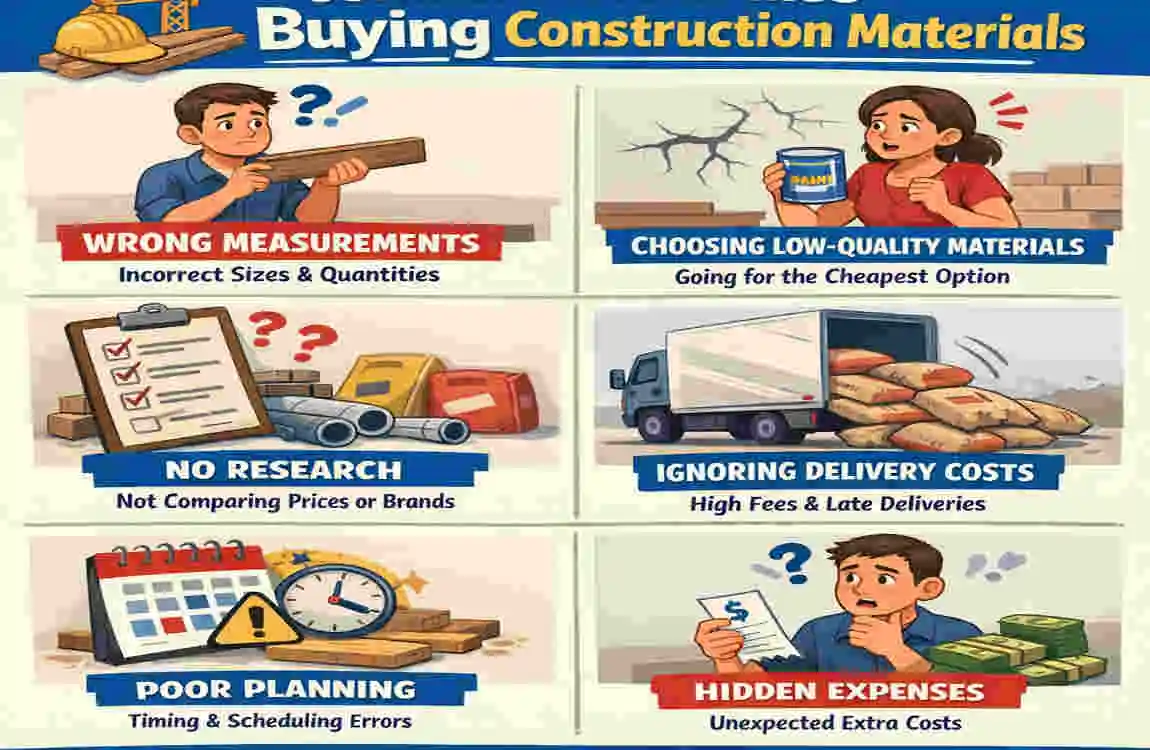
Choosing Only Based on Price
Very cheap materials can create bigger problems later. Repairs and replacements often cost more than choosing better materials from the start.
Buying Before Finalizing Plans
If you buy too early, you may end up with wrong quantities or products that do not fit the final design.
Ignoring Transportation Costs
Delivery can significantly affect the budget, especially for homes outside major cities.
Selecting Materials Without Thinking About Climate
A product that looks good in the store may not perform well in a hot, wet, or storm-prone area.
Poor Material Storage
Cement, wood, steel, and tiles can be damaged if stored improperly. Proper storage matters before and during construction.
Frequently Asked Questions
What are the most common house construction materials in the Philippines?
Common materials include concrete, cement, reinforcing steel, hollow blocks, metal roofing, tiles, wood, glass, and finishing materials.
What is the best material for building a house in the Philippines?
There is no single best material. The right choice depends on structure, climate, budget, location, maintenance, and design.
Is concrete good for houses in the Philippines?
Yes. Concrete is strong and widely used, but it still needs proper engineering, curing, drainage, and waterproofing.
What roofing material is best for a house in the Philippines?
Metal roofing and insulated roofing systems are common choices, but the best option depends on the home’s design, climate, and budget.
How can I reduce house construction costs in the Philippines?
Plan carefully, get accurate quantity estimates, compare suppliers, keep the design practical, and avoid unnecessary rework.
Should I buy construction materials myself?
You can buy some materials yourself, but coordinating with your contractor and project team helps avoid mistakes in quantities and specifications.
How do I calculate the materials needed to build a house?
Material quantities should come from the house plans and a detailed bill of quantities. Professional estimates are recommended.
| Material | Common Use | Key Benefit |
|---|---|---|
| Cement | Foundations, walls, floors | Strong and durable |
| Concrete | Structural frames, slabs, foundations | Excellent strength |
| Steel/Rebar | Columns, beams, foundations | Adds structural support |
| Concrete Hollow Blocks (CHB) | Exterior and interior walls | Affordable and widely available |
| Sand & Gravel | Concrete and masonry work | Essential for construction mixes |
| Roofing Sheets | Roof covering | Protects against sun and rain |
| Wood | Doors, ceilings, framing, finishes | Warm and versatile |
| Tiles | Floors, bathrooms, kitchens | Easy to clean and attractive |
