

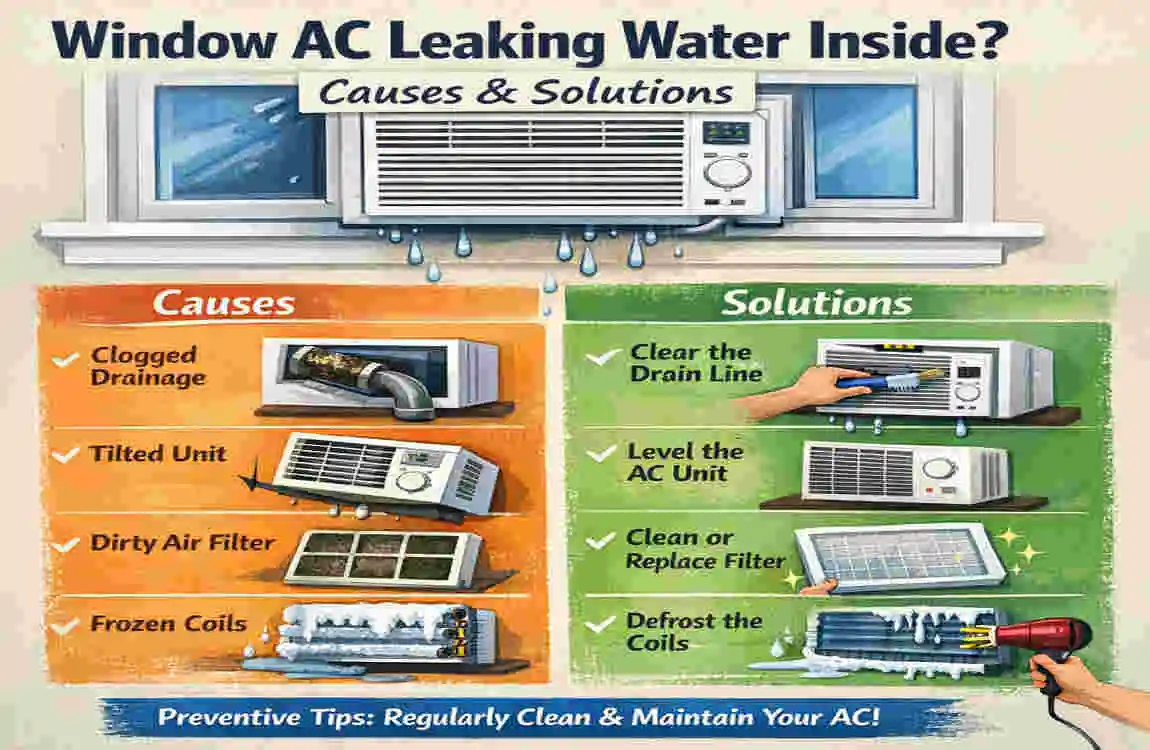
A window air conditioner leaking water inside the house is a common problem, but one you should take seriously. If you keep using the unit without checking it, the water can damage walls, floors, paint, and even lead to mold.
If you are asking why your window AC is leaking water in the house, the answer usually comes down to a few simple issues. In many cases, the problem is caused by a clogged drain, a dirty filter, a frozen coil, poor installation, or excessive indoor humidity.
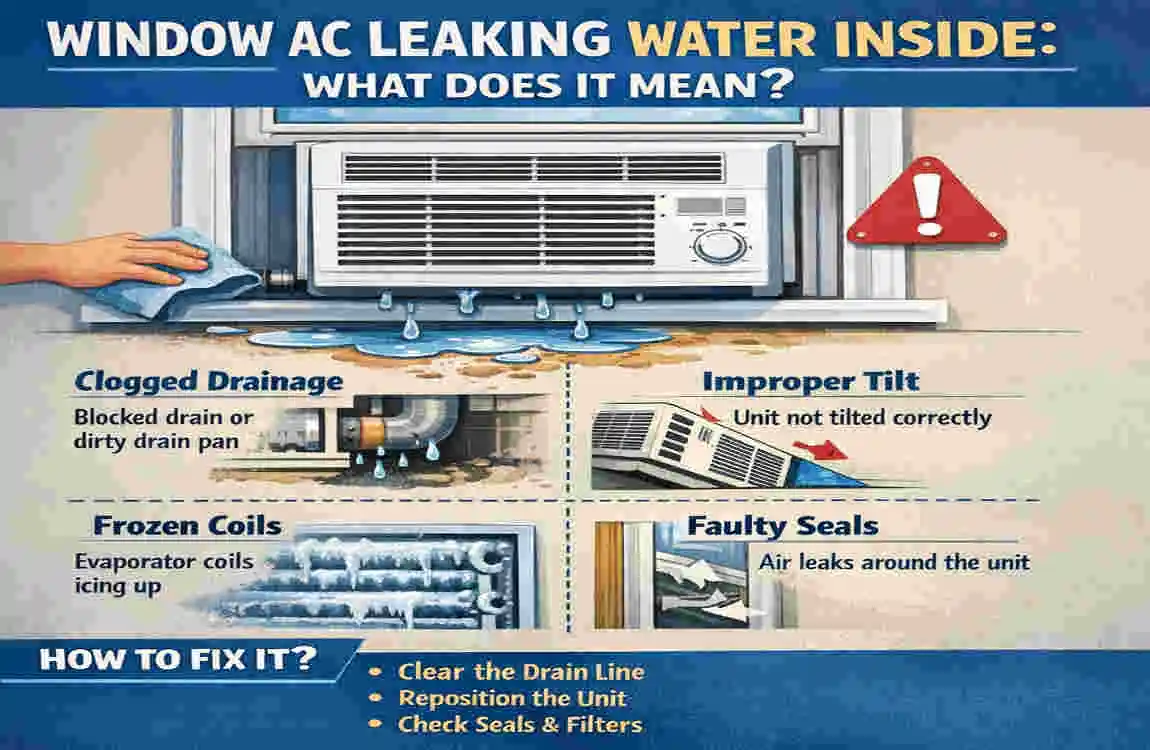
Window AC Leaking Water Inside: What Does It Mean?
How a Window AC Normally Handles Moisture
A window AC does more than cool the room. It also removes moisture from the air. That moisture condenses on the coil and should drain outside the unit in the normal direction.
When everything is working correctly, you may see water dripping outside the room, not inside. That is part of the cooling process.
What Indoor Leaking Usually Means
If water is leaking into the house, something is not working the way it should. The AC may be holding too much water, draining the wrong way, or freezing and melting.
You should also pay attention to any weak cooling, ice on the unit, dripping around the window frame, or water pooling near the wall.
Why Is My Window AC Leaking Water in the House?
Clogged Condensate Drain
Dust, dirt, and small debris can block the drain path. When that happens, the water has nowhere to go and may start leaking inside.
A blocked drain is one of the most common reasons a window AC leaks. In many cases, careful cleaning can help restore the flow.
Dirty Air Filter
A dirty filter reduces airflow. When air cannot move properly over the coils, the evaporator coil may become too cold and freeze.
Once the ice melts, the extra water can overflow and leak into the room. This is why a simple dirty filter can lead to a bigger water problem.
Frozen Evaporator Coil
The evaporator coil can freeze for several reasons. Common causes include poor airflow, a dirty filter, low refrigerant, or a unit that is running under strain.
When the ice eventually melts, the AC may release more water than the drainage system can handle. That often leads to indoor leaking.
Incorrect AC Installation
A window AC needs the right angle so condensation drains in the correct direction. If the unit is tilted the wrong way, water can move back into the house instead of outside.
This is especially important after installation or after the unit has been removed and reinstalled.
Damaged or Blocked Drain Pan
The drain pan collects water before it exits the unit. If the pan is cracked, rusted, or filled with dirt, the water may escape in the wrong place.
If the damage is severe, cleaning may not be enough. In that case, the pan may need Repair or replacement.
High Indoor Humidity
If the room is very humid, the AC has to remove more moisture from the air. That can create more condensation than usual.
If the system is already weak or partially blocked, the extra moisture may push it over the limit and cause leaking indoors.
How to Fix a Window AC That Is Leaking Water Inside
Turn Off the Unit
Before you do anything, switch the AC off. This protects you from electrical danger and gives the system time to stop moving air and water.
If water is near a plug, outlet, or electrical part, do not keep the unit running.
Clean or Replace the Air Filter
Remove the filter and check whether it is dusty or clogged. If it is reusable, clean it according to the manufacturer’s instructions.
If the filter is damaged or disposable, replace it. A clean filter can improve airflow and reduce the chance of freezing.
Check and Clean the Drainage Area
Look for dirt, dust, or anything blocking the drainage path. If you can safely access the area, clean it gently.
Do not force anything into the unit. Stick to simple cleaning unless the manual says otherwise.
Check for Ice on the Coils
If you see frost or ice, let the unit thaw completely before restarting it. Running the AC in frozen mode usually makes the problem worse.
After it thaws, check whether the airflow is better and whether the leak returns.
Check the Unit’s Position
Make sure the AC is installed securely and angled correctly. It should allow water to drain outward, not back into the room.
If the unit feels loose, ask someone experienced to help correct the installation.
Inspect the Drain Pan
Look for rust, cracks, or standing water in the pan. If the pan is badly damaged or hard to reach, a professional may need to inspect it.
A damaged pan often needs more than a quick home fix.
Table: Common Causes and Simple Solutions
Problem What It DoesSimple Fix
Clogged drain Stops water from draining properly Clean visible blockages
Dirty filter Blocks airflow and may cause freezing Clean or replace AC filter
Frozen coil Melts into excess water Turn off and let thaw
Bad installation Water drains the wrong way Recheck unit angle
Damaged drain pan Lets water escape Repair or replace pan
High humidity Creates extra condensation Improve room airflow
When Should You Call an HVAC Professional?
Sometimes the issue is too serious for a simple home fix. You should call a professional if:
- The unit keeps leaking after cleaning
- The coil keeps freezing again and again
- Water is near wiring or outlets
- You suspect a refrigerant problem
- Internal parts look damaged
- Water is harming walls, floors, or trim
A professional inspection can prevent a bigger repair later. It is often worth it when the problem keeps coming back.
How to Prevent a Window AC From Leaking Water
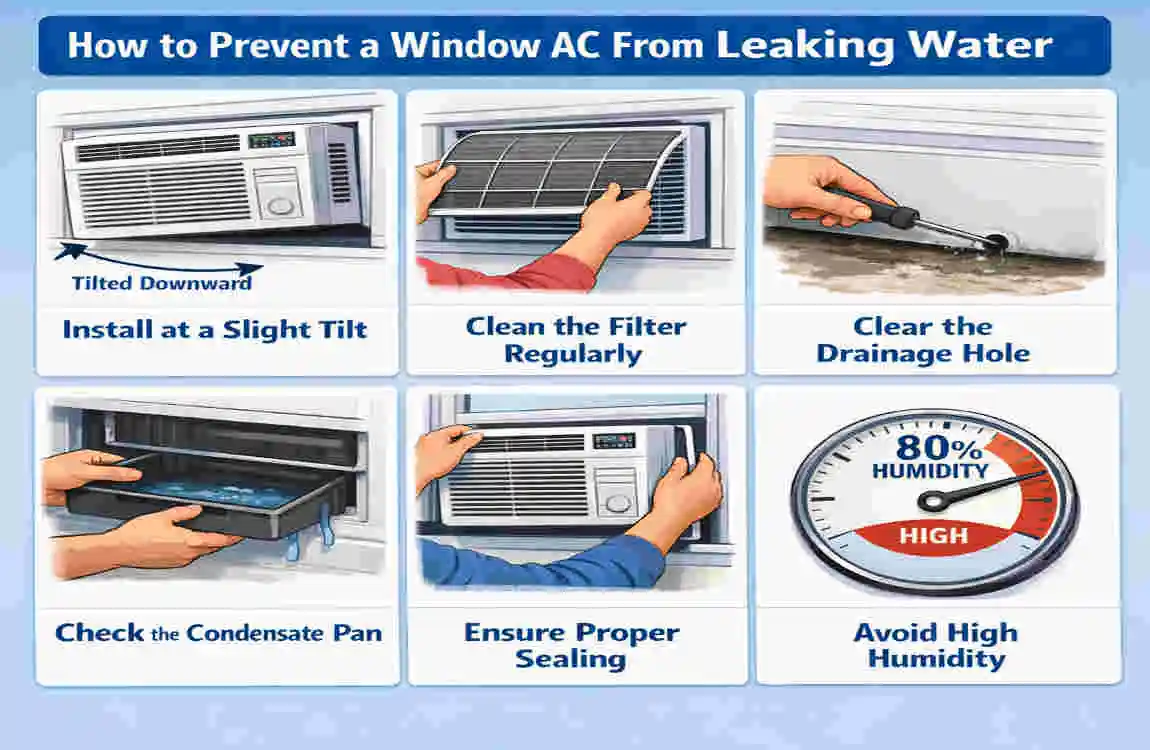
Clean the Filter Regularly
Check the filter often during heavy use. A clean filter helps the AC breathe properly and reduces strain on the system.
Keep the Drainage Area Clear
Dust and debris build up over time. A quick seasonal cleaning can help keep the drain open.
Make Sure the AC Stays Properly Installed
If the unit shifts after installation, the drainage angle may change. Check that the AC still sits securely in the window.
Watch for Early Warning Signs
Look out for ice buildup, reduced cooling, odd dripping, or water around the window frame. Catching these signs early can save you trouble later.
Keep the Surrounding Area Clean and Dry
A clean window area helps you spot leaks faster. It also reduces the chance of moisture damage to the wall or frame.
Common Mistakes to Avoid
Some mistakes can make the leak worse. Try not to:
- Keep running the AC while it is leaking
- Ignore a dirty filter
- Pour excessive water into the unit
- Remove internal parts without knowing how they fit
- Reinstall the unit at the wrong angle
- Wait too long after repeated leaks
A small problem can turn into a larger one if you keep using the unit without checking it.
FAQ
Why is my window AC leaking water inside the house?
A window AC can leak indoors due to a clogged drain, a dirty filter, a frozen coil, a damaged drain pan, high humidity, or improper installation.
Is it normal for a window AC to drip water?
Some water dripping outside is normal. Water leaking into the room usually indicates a problem.
How do I stop my window AC from leaking water inside?
Turn it off, clean the filter, check for blockages, let frozen coils thaw, and make sure the unit is installed correctly.
Can a dirty AC filter cause water to leak?
Yes. A dirty filter can restrict airflow and cause the coil to freeze. When the ice melts, extra water may leak inside.
Should I run a window AC if it is leaking water?
It is safer to turn it off until you find the cause, especially if water is near electrical parts.
Why does my window AC freeze up and then leak water?
Poor airflow, a dirty filter, or other mechanical issues can cause the coil to freeze. When it melts, the water may leak indoors.
How often should I clean my window AC filter?
Clean it regularly during heavy use, following the manufacturer’s instructions.
| Cause | Solution |
|---|---|
| Clogged drain hole | Clean the drain opening to allow water to flow outside. |
| Dirty air filter | Wash or replace the filter to improve airflow. |
| Frozen evaporator coil | Turn off the AC and let the ice melt before restarting. |
| Improper installation | Make sure the unit tilts slightly toward the outside. |
| Low refrigerant | Have a qualified technician check and recharge the refrigerant. |
| Blocked airflow | Keep vents and the front of the AC clear of furniture or curtains. |
| Damaged drain pan | Inspect the pan and replace it if cracked or rusted. |
