


A humid house can feel uncomfortable very fast. The air may feel heavy, windows may fog up, and some rooms may start to smell damp or stale. If you are wondering what to do when your house is humid, the first step is simple: find the source of the moisture, then deal with it in a steady, practical way.
Humidity matters because it affects both comfort and home health. Too much moisture can lead to condensation, mould, peeling paint, swollen wood, and that musty smell no one wants in their home. The good news is that many humidity problems can be improved with a few smart changes.
What Causes High Humidity in a House?
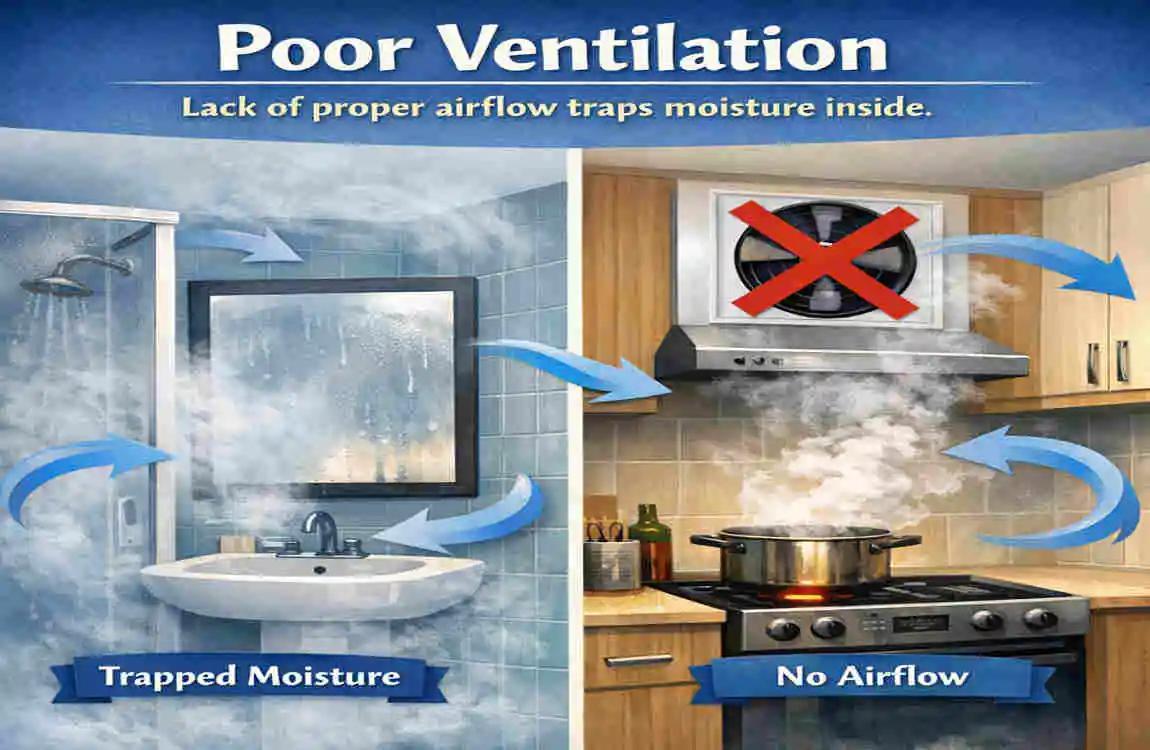
Common Sources of Indoor Moisture
A house clean often becomes humid because of everyday activities. You may not notice them at first, but they all add moisture into the air.
Common causes include:
- Cooking and boiling water
- Long showers
- Drying clothes indoors
- Poor ventilation
- Leaking pipes or plumbing
- Moisture from basements or crawl spaces
Even small habits can add up. If several of these happen every day, the indoor air may stay damp for long periods.
Weather and Building Factors
Sometimes the cause is not just what happens inside the home. Hot, humid outdoor weather can also push moisture indoors, especially if the house is not well sealed.
Poor insulation, air leaks, and weak HVAC performance can worsen the problem. If outside air continues to enter the house, indoor humidity may keep rising as well.
How to Tell If Your House Is Too Humid
Signs of Excessive Humidity
You can often spot humidity problems before they become serious. Watch for these signs:
- Condensation on windows
- Damp or sticky air
- Musty smells
- Peeling paint or wallpaper
- Mould or mildew
- Swollen wood floors or doors
If several of these appear together, the humidity level may be too high.
Using a Hygrometer
A hygrometer is a small tool that measures humidity in the air. It is one of the easiest ways to check whether your home feels humid for a reason or just because the weather is warm.
For most homes, a comfortable indoor humidity level is usually in a moderate range. If it stays high for long periods, moisture problems are more likely to appear.
What to Do If House Is Humid: Quick Solutions
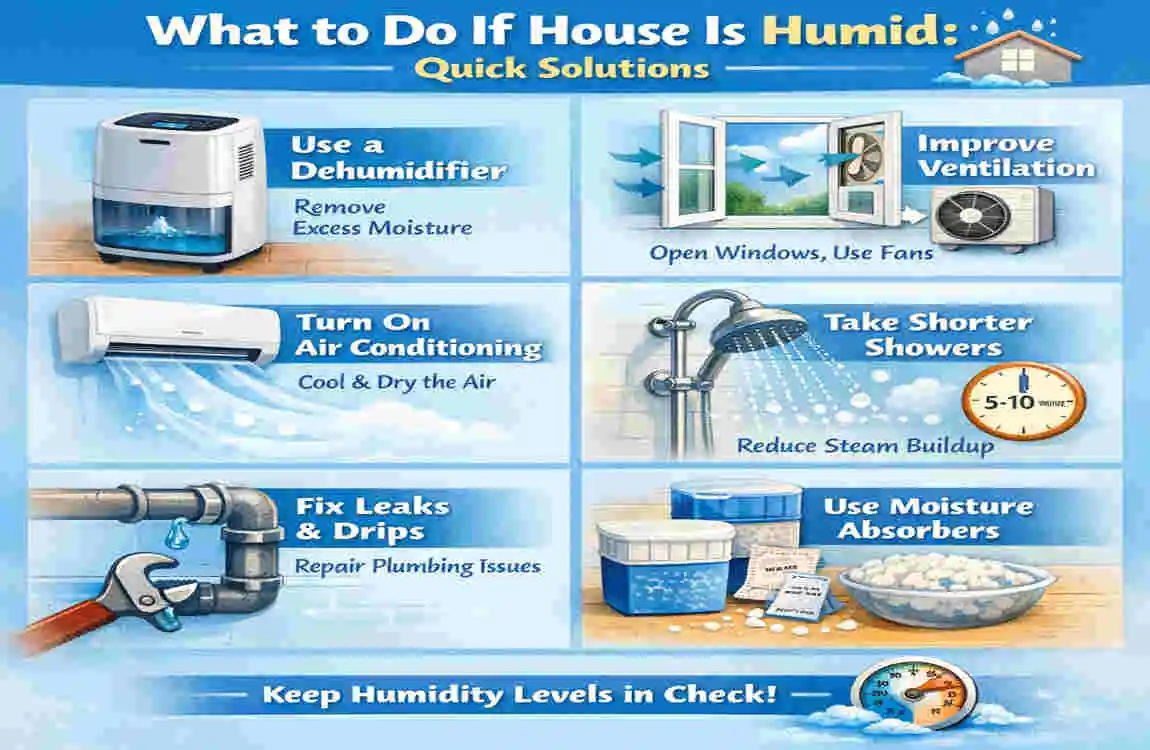
Improve Airflow and Ventilation
Good airflow is one of the fastest ways to reduce humidity. If moist air cannot escape the house, it stays trapped inside.
Try to:
- Use bathroom fans during and after showers
- Run the kitchen exhaust fan while cooking
- Open windows when the weather is dry enough
- Keep air moving with ceiling fans or circulation fans
This simple step can make a big difference, especially in kitchens, bathrooms, and laundry areas.
Use a Dehumidifier
A dehumidifier removes excess moisture from the air. This can be very helpful in bedrooms, living rooms, basements, and other spaces that stay damp.
When choosing one, think about the room size. A unit that is too small may not be strong enough. A larger one may work better in a basement or a very humid part of the house.
Also, remember to empty and clean home it regularly. A dirty dehumidifier will not work as well.
Adjust Your HVAC System
Your air conditioning system can help control humidity too. If it is working properly, it removes moisture while cooling the air.
To keep it effective:
- Replace dirty filters
- Make sure vents are open and clear
- Schedule maintenance when needed
- Use the system consistently if the weather is humid
Sometimes the problem is not the AC itself, but poor upkeep.
How to Prevent Humidity From Coming Back
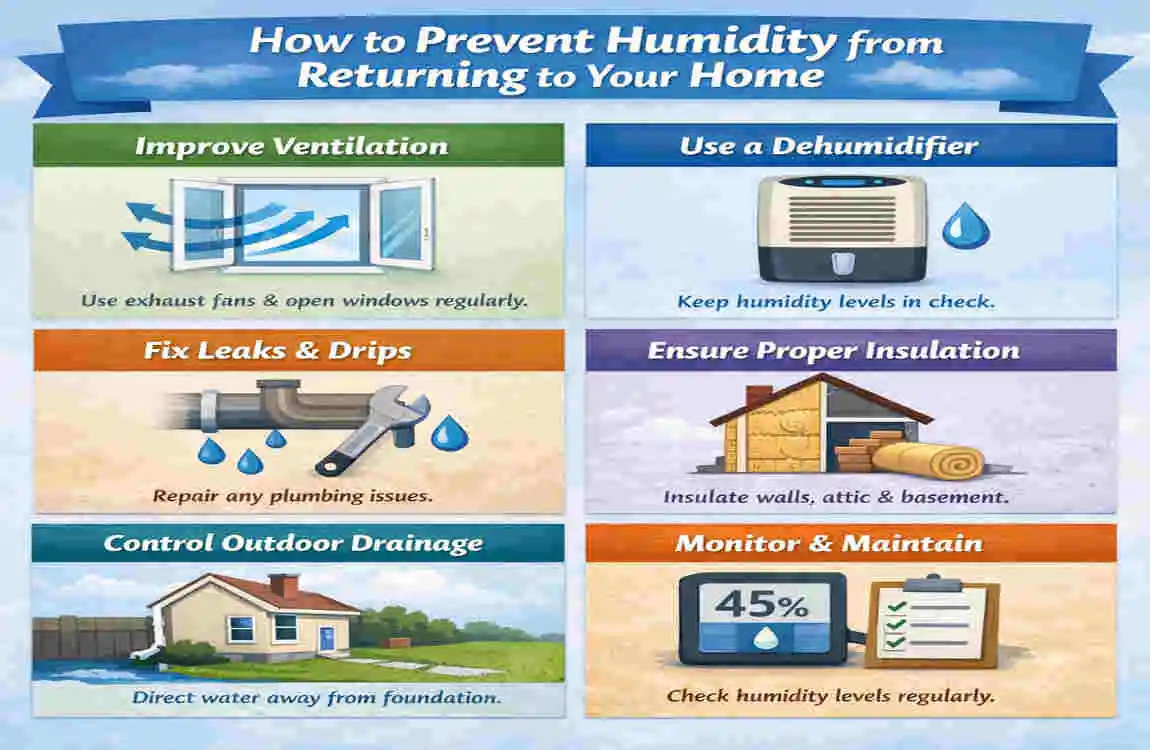
Fix Moisture at the Source
If the same humidity problem keeps returning, there is usually a source that needs attention. That could be a leak, poor airflow, or moisture entering from outside.
Check for:
- Plumbing leaks
- Roof leaks
- Damp basement walls
- Moist crawl spaces
- Poor bathroom ventilation
Fixing the source is the most reliable long-term solution.
Change Daily Habits
A few daily habits can help control moisture levels:
- Use exhaust fans while cooking or showering
- Avoid drying large amounts of laundry indoors
- Keep bathroom doors closed during showers
- Do not block vents or air returns
- Ventilate damp rooms as soon as possible
These habits may feel small, but they help prevent humidity from building up.
Improve Problem Areas
Some parts of the home are naturally more vulnerable than others. Bathrooms, basements, attics, and laundry rooms often need extra attention.
In these areas, you may want to use moisture-resistant materials, better ventilation, or a dehumidifier to keep things under control.
When Humidity Causes Mould or Home Damage
Humidity and Mould Growth
Humidity and mould often go together. Mould likes damp, warm places, and high indoor moisture provides the conditions it needs to grow.
You may see mould in corners, behind furniture, around windows, or near leaks. Cleaning it is important, but cleaning alone will not solve the problem if the moisture stays.
Potential Home Damage
Long-term humidity can cause real damage to a house. Common problems include:
- Wood swelling or warping
- Damaged drywall
- Peeling finishes
- Musty odors
- Reduced comfort indoors
Over time, these issues can lead to more expensive repairs if they are ignored.
When to Call a Professional
Sometimes humidity is more than a simple airflow problem. You may need professional help if:
- Humidity stays high even with a dehumidifier
- Mould keeps coming back
- You find a hidden leak
- There is visible water damage
- You suspect a structural moisture problem
If the problem is deep within the walls, floors, or roof, a trained expert can help find it faster.
FAQ About Humidity in the House
What should I do if my house is very humid?
Start by finding the source of the moisture. Then improve airflow, use a dehumidifier, and check for leaks or ventilation problems.
What is the ideal humidity level inside a house?
A moderate indoor humidity level is usually most comfortable. If the air feels sticky, smells damp, or creates condensation, it may be too high.
How can I lower humidity without a dehumidifier?
You can improve ventilation, run fans, open windows when conditions are right, and reduce indoor moisture from cooking or showering.
Why is my house humid even with the AC on?
Your AC may not be running efficiently, or moisture may be entering from leaks, poor insulation, or outside air gaps.
Does opening windows help reduce indoor humidity?
Sometimes yes, but only when the outdoor air is drier than the indoor air. If outside air is already humid, opening windows may make it worse.
Can high humidity cause mould in a house?
Yes. High humidity creates the damp conditions mould needs to grow, especially in closed or poorly ventilated spaces.
How long does it take for a dehumidifier to reduce humidity?
It depends on the room size, moisture level, and unit strength. Some homes improve quickly, while others need ongoing use.
| Problem | What to Do | Helpful Tip |
|---|---|---|
| High indoor humidity | Use a dehumidifier | Aim for about 30–50% humidity |
| Poor ventilation | Open windows and use exhaust fans | Vent bathrooms and kitchens regularly |
| Condensation on windows | Improve airflow and reduce moisture | Wipe away excess water |
| Damp bathroom | Run the exhaust fan during and after showers | Keep the door slightly open afterward |
| Moisture from cooking | Use a range hood | Cover pots while cooking |
| Damp basement | Check for leaks and use a dehumidifier | Inspect walls and floors for moisture |
