

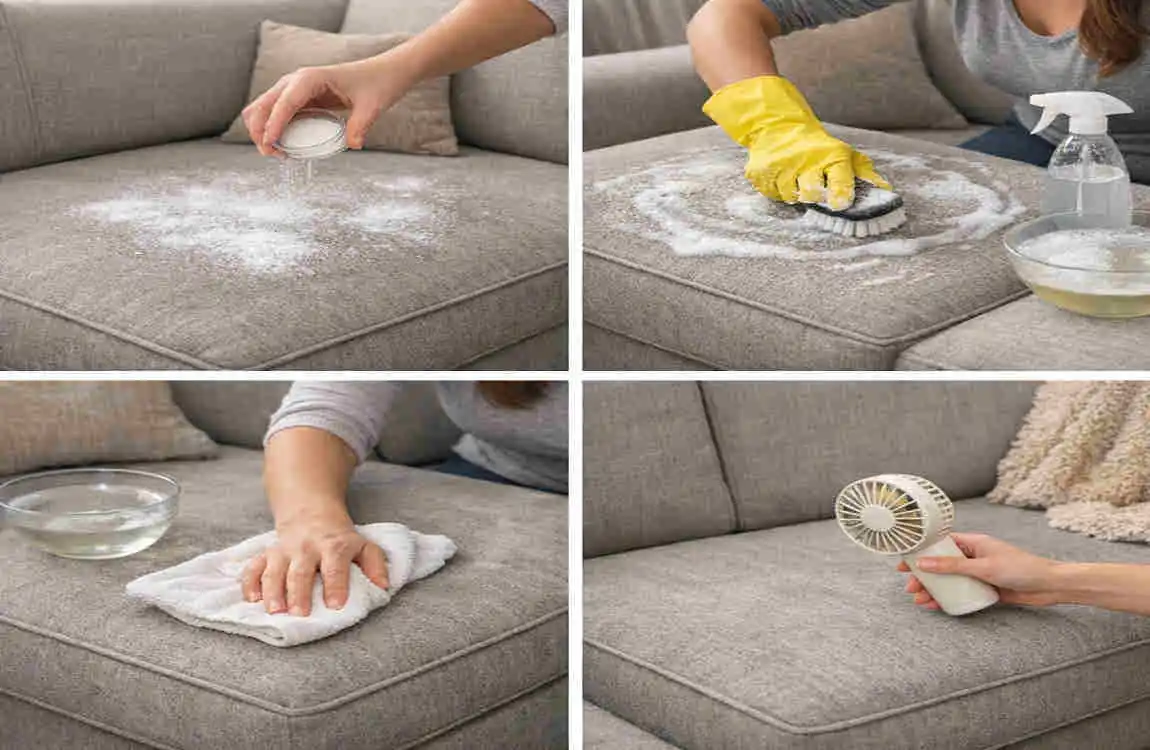
If you are looking for how to clean a sofa at home without a machine, the good news is that you do not always need special equipment to get great results. In many homes, a sofa can be cleaned well with a few simple tools, a little patience, and the right method.
Your sofa collects dust, crumbs, pet hair, body oils, food marks, and everyday dirt. Over time, that can make it look dull and feel less fresh. It can also trap odours and allergens, especially if the couch gets heavy use from family members, guests, or pets.
That is why regular sofa cleaning matters. It helps your furniture look better, smell better, and last longer. And if you use the right approach, you can clean it safely at home without a machine.
Why Clean Your Sofa at Home Without a Machine?
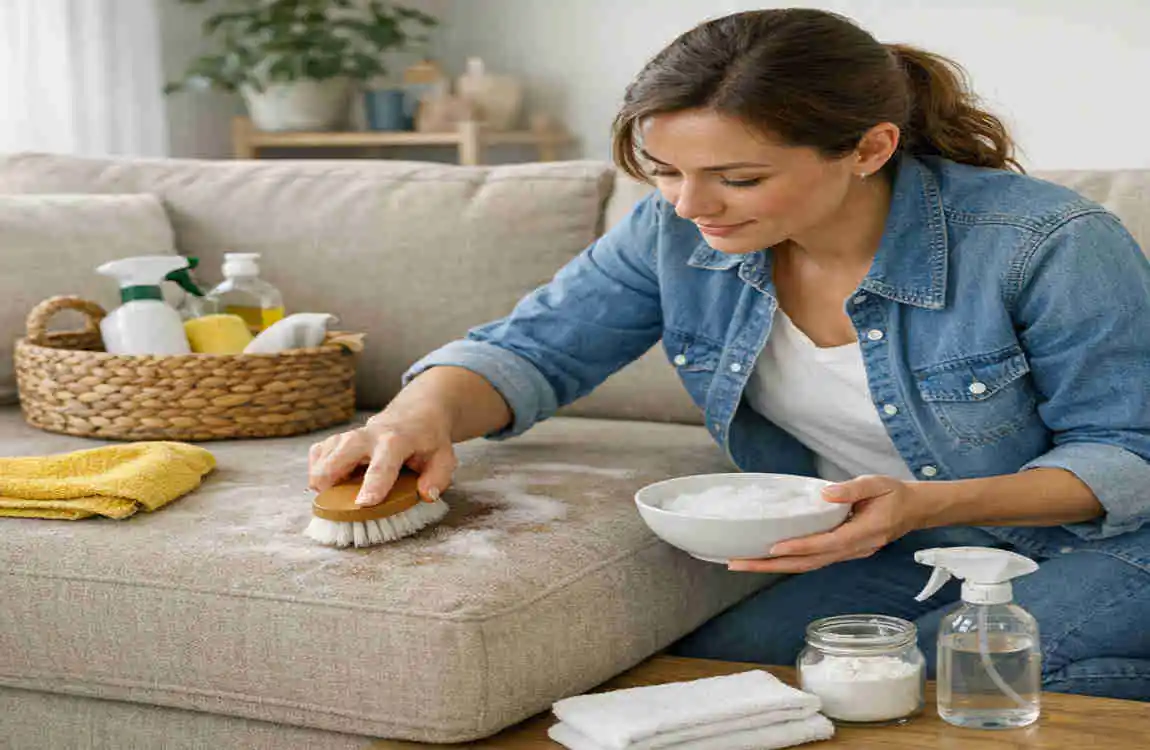
A sofa is one of the most used pieces of furniture in any home. People sit on it, eat near it, nap on it, and sometimes even let pets climb on it. That means it needs regular care.
Regular cleaning keeps the sofa looking fresh.
Dust and dirt do not always show up right away. But over time, they collect in the fabric, on the arms, and between the cushions.
When that happens, the sofa can look older than it really is. Cleaning it at home helps restore a fresher, tidier appearance.
It helps remove stains, odours, and allergens.
Even small spills can leave marks if they sit too long. Food, drinks, pet messes, and body oils can all build up on fabric.
Regular cleaning also helps reduce odours and allergens. That is especially helpful if anyone in the home has allergies or sensitivities.
DIY cleaning is a good option in many situations
Not every sofa needs a deep professional clean. If the dirt is light, the stain is fresh, or the odour is mild, DIY cleaning can work very well.
You can usually handle small problems at home if you act quickly and use the right method.
Check the fabric before you begin.
Before you clean anything, look at the sofa’s care label. This is one of the most important steps.
Different fabrics react differently to water and cleaning products. Some can handle gentle moisture, while others need dry methods or special care. Knowing this first can save you from damaging the fabric.
What You Need to Clean a Sofa Without a Machine
You do not need many fancy tools to clean a sofa well. In most cases, simple household items are enough.
Basic cleaning supplies
Here is a practical list of items you may want to gather:
- Microfiber cloths
- Warm water
- Mild dish soap or upholstery cleaner
- Baking soda
- Soft-bristle brush
- Spray bottle
- Clean towels
- A soft brush or vacuum cleaner alternative
A microfiber cloth is especially useful because it picks up dirt without being too rough on the fabric.
A few useful alternatives if you do not have a vacuum
If you do not have a vacuum, you can still remove loose dust and crumbs with a soft brush. A clean, dry cloth can also help lift debris from the surface.
You can also shake out removable cushions outside if the sofa design allows it.
What to avoid
Not every household product is safe for upholstery. Try to avoid:
- Bleach
- Strong ammonia cleaners
- Harsh scrubbing powders
- Too much rubbing alcohol
- Very hot water on delicate fabric
These products can fade colour, weaken fabric, or leave stains behind. A gentle method is almost always better.
How to Clean Sofa at Home Without Machine: Step-by-Step
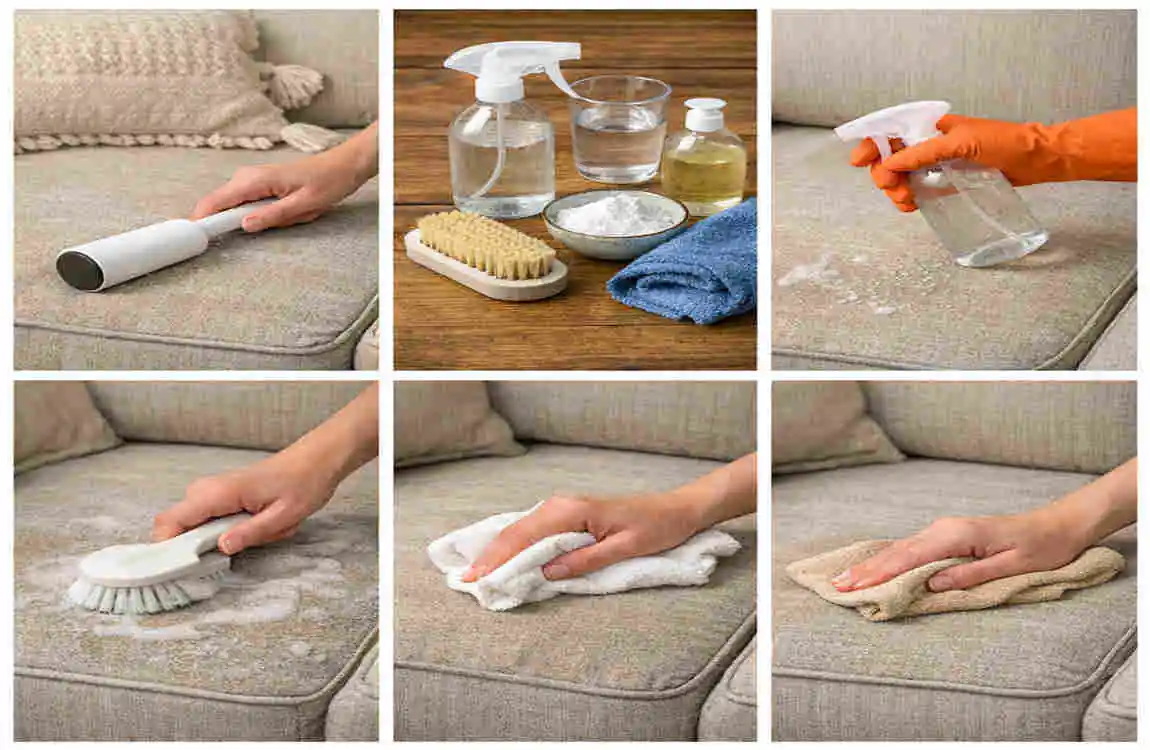
Now let’s move through the process. If you follow these steps in order, you will have a much better chance of getting the sofa clean without causing damage.
Remove cushions and loose items.
Start by taking off all loose cushions, blankets, pillows, and stored items. This gives you better access to the full sofa.
It also helps you clean the hidden areas where crumbs and dust often collect.
Brush or remove loose dust.
Before using any liquid cleaner, remove as much dry debris as possible. Use a soft brush to loosen dirt from the fabric.
If you have no vacuum, brush carefully and collect the dirt with a cloth or handheld dustpan. This step helps prevent muddy stains later.
Check the cleaning label.
Look for the sofa’s care tag or manufacturer instructions. This label may tell you whether the fabric can be cleaned with water, solvent-based products, or only dry methods.
This step matters because some fabrics can shrink, stain, or water-spot easily.
Prepare a mild cleaning solution.
For many fabric sofas, a small amount of mild dish soap mixed with warm water can work well.
Keep the solution gentle. You want enough cleaning power to remove dirt, but not so much soap that it leaves residue behind.
Test on a hidden area
Before cleaning the whole sofa, test the solution on a hidden spot such as the back corner or under a cushion flap.
Wait until it dries to see whether it changes the colour or texture. If it looks fine, you can continue.
Clean the surface gently.
Dip a microfiber cloth into the cleaning solution and wring it out well. The cloth should be damp, not soaking wet.
Wipe the sofa in small sections. Use light pressure and short, gentle strokes. Do not saturate the fabric.
Treat visible stains carefully.
If you see stains, work on them separately. Use a little extra attention, but do not scrub aggressively.
Blot the stain instead of rubbing it. Blotting lifts the stain more effectively and reduces the risk of spreading it.
Wipe away moisture
After cleaning, use a dry towel to remove excess moisture from the fabric. Press gently and allow the towel to absorb as much water as possible.
This step helps the sofa dry faster and prevents water marks.
How to Remove Common Sofa Stains Naturally
Different stains need different care. The sooner you treat them, the easier they usually are to remove.
Food and drink stains
Food stains and drink spills should be treated quickly. Start by blotting the spot with a dry cloth to absorb as much as possible.
Then use a small amount of mild soap solution and blot again. Do not scrub hard because that can push the stain deeper into the fabric.
Grease and oil marks
Grease stains can be tricky because they do not mix well with water. A little baking soda can help absorb some of the oil.
Sprinkle it lightly over the stain, let it sit, then brush it away before gently wiping the area with a suitable cleaner.
Ink stains
Ink stains should be handled with care. The wrong cleaning method can spread them.
Use very little liquid and blot the area gently. If the sofa is delicate, it may be better to use a fabric-safe cleaner designed for upholstery.
Pet stains and odours
Pet stains need quick attention because they can leave both a visible mark and a lingering smell.
Blot the area first, then clean it gently with a mild solution. If odour remains, baking soda can help after the spot has dried.
Mud and dirt
Let mud dry first if possible. That may sound backwards, but it often works better than wiping wet mud around.
Once dry, brush off any loose dirt, then clean the remaining mark with a mild soap solution.
Coffee and tea stains
Coffee and tea can leave dark marks if not treated promptly. Blot up the spill immediately, then clean the area with a gentle solution.
Fresh stains are much easier to remove than old ones.
Fresh stains vs old stains
Fresh stains are usually easier to remove because they have not had time to set in the fibres. Old stains may need several gentle cleaning attempts.
Do not assume the stain is permanent after one try. But also avoid harsh methods that might damage the sofa.
Why rubbing is a bad idea
Rubbing a stain aggressively can push it deeper into the fabric or spread it wider. It can also make the fibres look worn.
Blotting is almost always the better choice.
Quick stain guide
- Food and drinks: blot first, then clean gently
- Grease: use baking soda to help absorb oil
- Ink: use minimal liquid and a fabric-safe approach
- Pet stains: clean fast and address odour too
- Mud: let dry, brush off, then clean
How to Remove Sofa Odours Without a Machine
Sometimes the sofa looks clean but still smells stale. That happens when odours get trapped in the fabric or cushions.
Use baking soda safely.
Baking soda is one of the simplest odour-fighting tools you can use at home. Lightly sprinkle it over the fabric and let it sit for a while.
Afterwards, brush or shake it off carefully. It can help absorb unpleasant odours without getting the sofa wet.
Improve airflow in the room.
Fresh air helps a lot. Open windows if the weather allows, and let air circulate the sofa.
A fan can also help the sofa dry faster after cleaning and reduce lingering smells.
Use sunlight carefully
A little sunlight can help with odour control, but too much direct sun may fade some fabrics.
If you use sunlight, do it briefly and with care. Always think about the fabric type first.
Clean removable covers and cushions
If your cushions or covers can be removed and washed safely, that can make a big difference. Odours often collect in these areas more than people realise.
Cleaning them separately can help refresh the whole sofa.
Stop odours from coming back.
To prevent odours, try to keep the sofa free of food crumbs, spills, and pet messes. Regular light cleaning is much easier than dealing with strong smells later.
When odours are too strong for DIY
If the sofa has mould, deep pet odour, or a smell that won’t go away, it may need professional cleaning. Some odours sit deep in the padding and are hard to remove at home.
Common Sofa Cleaning Mistakes to Avoid
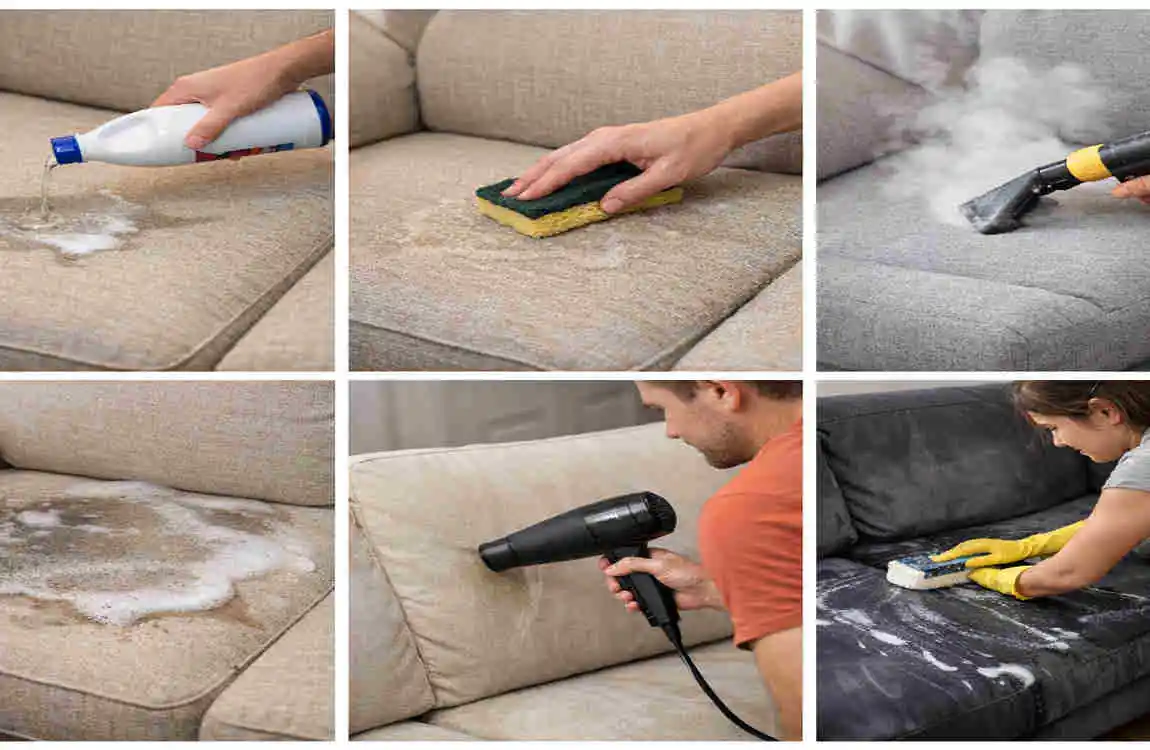
Even a simple cleaning job can go wrong if you rush. These are the mistakes that often cause trouble.
Using too much water
This is one of the biggest mistakes. Too much water can soak deep into the cushions and cause odour, marks, or drying problems.
The cloth should be damp, not dripping.
Skipping the care label
The fabric-care label tells you how the sofa should be cleaned. Ignoring it can lead to shrinking, fading, or damage.
Using harsh chemicals
Strong cleaners may seem powerful, but they can be too rough for upholstery. They may discolour the fabric or leave a bad residue.
Scrubbing too hard
Delicate fabric does not like aggressive scrubbing. Gentle blotting and light wiping work much better.
Mixing cleaning products
Never mix household chemicals unless the label specifically says it is safe. Some combinations can create harmful fumes or damage fabric.
Sitting on the sofa too soon
If the sofa is still damp, sitting on it can press dirt back in and slow the drying process. It may also leave new marks.
Forgetting hidden areas
The back of the sofa, under the cushions, and between the seams often collect the most dirt. Do not clean only the visible parts.
Not testing first
Always test your cleaner on a hidden area. It only takes a few minutes and can save you from ruining the fabric.
FAQ: Cleaning a Sofa Without a Machine
Can I clean my sofa with just soap and water?
Yes, in many cases a mild soap and water solution works well. But fabric type matters, so always check the care label first.
How do I clean a sofa at home without a machine?
Start by removing loose dust, then check the fabric label, test a mild cleaning solution, gently clean in sections, blot stains, and let the sofa dry fully.
Can baking soda clean a fabric sofa?
Baking soda is great for absorbing odours and can help freshen the sofa. Just make sure to remove the residue after use.
How do I clean a sofa without damaging the fabric?
Use gentle products, avoid too much water, test first, and do not scrub hard. Always follow the care instructions for the sofa.
How often should I clean my sofa at home?
A light cleaning every week or two is helpful, with deeper cleaning when needed. High-use sofas may need more frequent care.
How can I dry my sofa quickly after cleaning?
Use fans, open windows, and good airflow. Avoid soaking the fabric in the first place, since too much water slows drying.
When should I hire a professional sofa cleaner?
You may want professional help for delicate fabrics, strong stains, mould concerns, or odours that do not go away with normal home cleaning.
| Cleaning Step | What to Do | Helpful Tip |
|---|---|---|
| Remove Dust | Vacuum or brush the sofa surface | Focus on cushions and corners |
| Check Fabric | Read the sofa care label | Test cleaners on a hidden spot first |
| Make Cleaning Solution | Mix mild soap with warm water | Avoid soaking the fabric |
| Spot Clean | Gently dab stains with a soft cloth | Don’t rub hard, as it may spread stains |
| Deodorize | Sprinkle baking soda over the sofa | Leave it for 15–30 minutes, then remove |
| Rinse Carefully | Wipe with a clean, slightly damp cloth | Remove soap residue |
