

If you are planning to refresh your home, one of the first questions is usually how much it costs to paint a house. The answer depends on a few simple things: house size, paint quality, labor rates, surface condition, and whether you are painting inside, outside, or both.
That is why it helps to look at both materials and labor before you start. Paint is only one part of the job. You also need to think about primer, tools, prep work, repairs, and cleanup.
What Determines the Cost of Painting a House?
House Size and Square Footage
The bigger the house, the more surface area needs paint. Painters usually estimate by looking at walls, ceilings, exterior walls, trim, and other paintable surfaces.
A small room may only need a few cans, while a full house can need much more. More square footage usually means more labor, more paint, and more time.
Interior vs. Exterior Painting
Interior painting and exterior painting are not priced the same.
Interior work is often more controlled, but it may involve moving furniture, protecting floors, and working around daily life. Exterior work often needs extra prep, ladders, and weather-safe paint.
Paint Quality and Type
Paint comes in different levels. Budget paint costs less upfront but may require more coats. Mid-range paint usually gives a better balance of cost and quality. Premium paint often lasts longer and covers better.
Special paints can also raise the price. For example, washable, moisture-resistant, and weather-resistant paints are often more expensive.
Condition of the Walls and Surfaces
If the walls are in bad shape, the cost goes up. Painters may need to fill holes, sand rough areas, scrape peeling paint, or clean stains and mildew.
Good prep work takes time, but it helps the final paint job last longer and look better.
How Much Does a House Paint in Labor and Materials?
Average Labor Costs
Professional painters may charge by the hour, by room, by square foot, or by the whole project. The final number depends on location, experience, project size, and the amount of prep needed.
A simple room costs less than a tall staircase, a detailed trim job, or a full exterior—the more complex the work, the higher the labor cost.
Material Costs
Materials include more than paint. You may also need:
- Primer
- Brushes and rollers
- Trays
- Painter’s tape
- Drop cloths
- Caulk
- Sandpaper
- Patch and repair supplies
Good materials can improve the finish and help the paint last longer. That can save money later because you may not need to repaint as soon.
Labor vs. DIY Painting
Painting the house yourself can save labor costs, but it takes time and effort. You also need the right tools and enough skill to do the job well.
DIY can work for small, easy rooms. But high ceilings, tricky trim, exterior walls, and large repairs are often better left to professionals.
How to Estimate Your House Painting Cost
Calculate the Paintable Area
Start by measuring the walls and other surfaces you want to paint. For a rough estimate, you can multiply wall height by wall width.
You can usually subtract the area of large windows and doors when estimating paint coverage. This helps you avoid buying too much.
Estimate Paint Quantity
Different paints cover different amounts. Surface texture and color changes also affect coverage.
If you are painting over a dark color, or if the walls need primer, you may need more product than expected. Two coats are also common for a smoother finish.
Add Preparation and Repair Costs
Do not forget prep work. This can include:
- Cleaning walls
- Sanding
- Caulking gaps
- Filling holes
- Scraping old paint
- Priming patched areas
Skipping prep may save time now, but it can cause peeling, cracking, and a shorter paint life later.
Add Labor and Extra Expenses
You may also need to budget for ladders, scaffolding, furniture protection, and cleanup. Hard-to-reach areas can also increase the cost.
It is smart to set aside a little extra money for unexpected repairs.
How to Save Money When Painting a House
Choose the Right Paint
The cheapest paint is not always the best deal. Better paint may cost more, but it often covers better and lasts longer.
Pick the paint based on the room or surface, not just the price tag.
Prepare Surfaces Yourself
You may be able to save money by doing some of the prep work yourself. For example, you can move furniture, remove wall items, and clean surfaces before painters arrive.
That can reduce the time a crew spends on site.
Get Multiple Painting Quotes
Always compare more than one quote. A good estimate should explain prep, primer, coats, labor, materials, and cleanup.
The lowest price is not always the best value.
Paint During the Right Season
Exterior painting works best in dry, mild weather. If conditions are too cold, too hot, or too wet, the result may not last as long.
Planning at the right time can improve quality and reduce delays.
Avoid Unnecessary Color Changes
A major color change often needs more coats or primer. If possible, choose colors carefully before you buy paint.
That can help keep the project simpler and cheaper.
Common Mistakes That Increase House Painting Costs
Buying Too Much or Too Little Paint
If your estimate is wrong, you may waste money or make extra trips to the store. Measuring carefully helps you stay on budget.
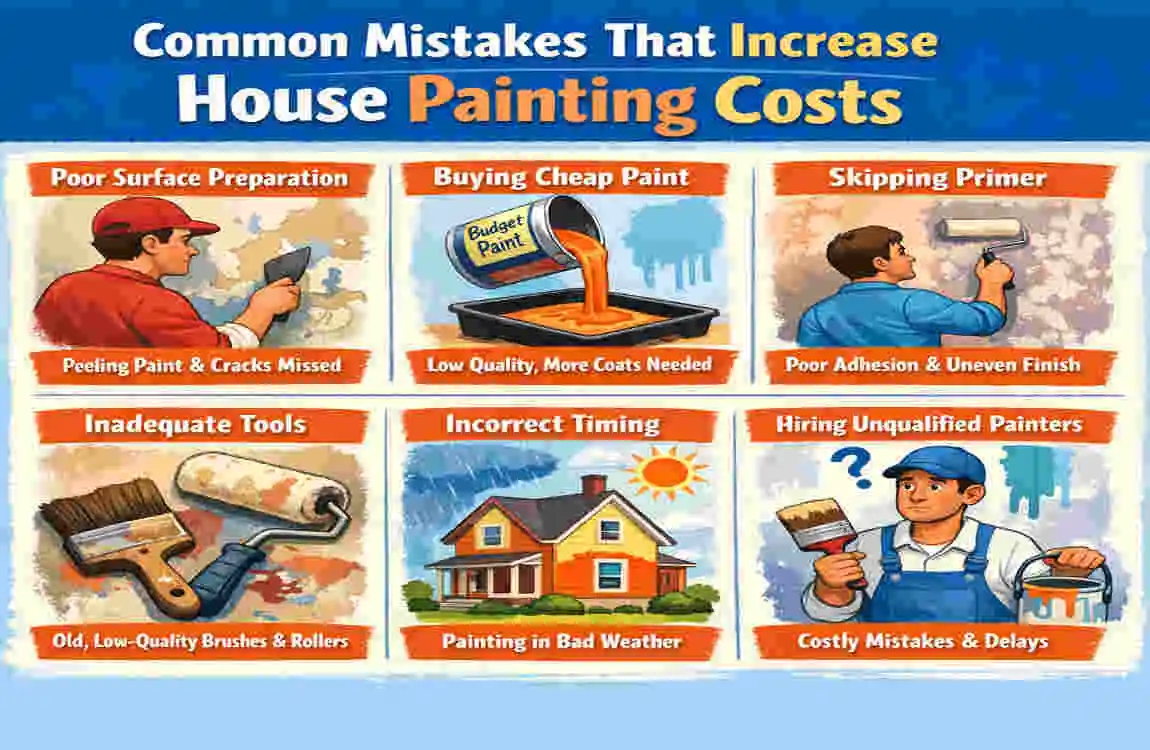
Skipping Primer
Primer is especially useful on bare walls, patched areas, stains, and big color changes. It helps the finish look smoother and last longer.
Ignoring Surface Preparation
Painting over dirt, peeling paint, or damage is a mistake. The new paint may not stick well, which can lead to early failure.
Choosing the Wrong Paint for the Surface
Not every paint works everywhere. Interior walls, trim, kitchens, bathrooms, siding, and wood all need the right type of product.
Hiring Based Only on Price
A very cheap quote may look attractive, but it can lead to poor work, weak prep, or hidden costs. Experience and reliability matter too.
FAQ About House Painting Costs
How much does a house paint?
The total cost depends on house size, paint type, surface condition, labor, location, and number of coats. There is no single universal price.
Is it cheaper to paint a house yourself?
Yes, DIY can reduce labor costs. But you still need tools, time, preparation, and the skill to do the job well.
How much paint is needed to paint a house?
It depends on surface area, paint coverage, number of coats, and whether primer is needed. Bigger and rougher surfaces need more paint.
How long does it take to paint a house?
Timing depends on the house size, preparation, number of painters, weather, and whether it is an interior or exterior project.
How often should a house be painted?
That depends on the surface, climate, paint quality, sunlight, and moisture exposure. Some areas need repainting sooner than others.
Does exterior painting cost more than interior painting?
Often, yes. Exterior projects may need extra prep, ladders, scaffolding, and weather-safe coatings.
How can I get an accurate house painting estimate?
Measure the space, note any damage or prep work, choose your paint type, and get detailed quotes from multiple painters.
| Cost Factor | Typical Cost / Range | What It Includes |
|---|---|---|
| Paint & Materials | $200–$800+ | Paint, primer, brushes, rollers, tape, drop cloths |
| Labor | $1–$3+ per sq. ft. | Professional painter wages and preparation |
| Interior Painting | $1,500–$5,000+ | Walls, ceilings, trim, and basic preparation |
| Exterior Painting | $2,500–$8,000+ | Exterior walls, preparation, primer, and paint |
| Surface Preparation | $200–$1,000+ | Cleaning, sanding, patching, and caulking |
| Total House Painting | $2,000–$10,000+ | Materials, labor, preparation, and finishing |
| Main Cost Factors | Varies | House size, paint quality, surface condition, and labor rates |
