

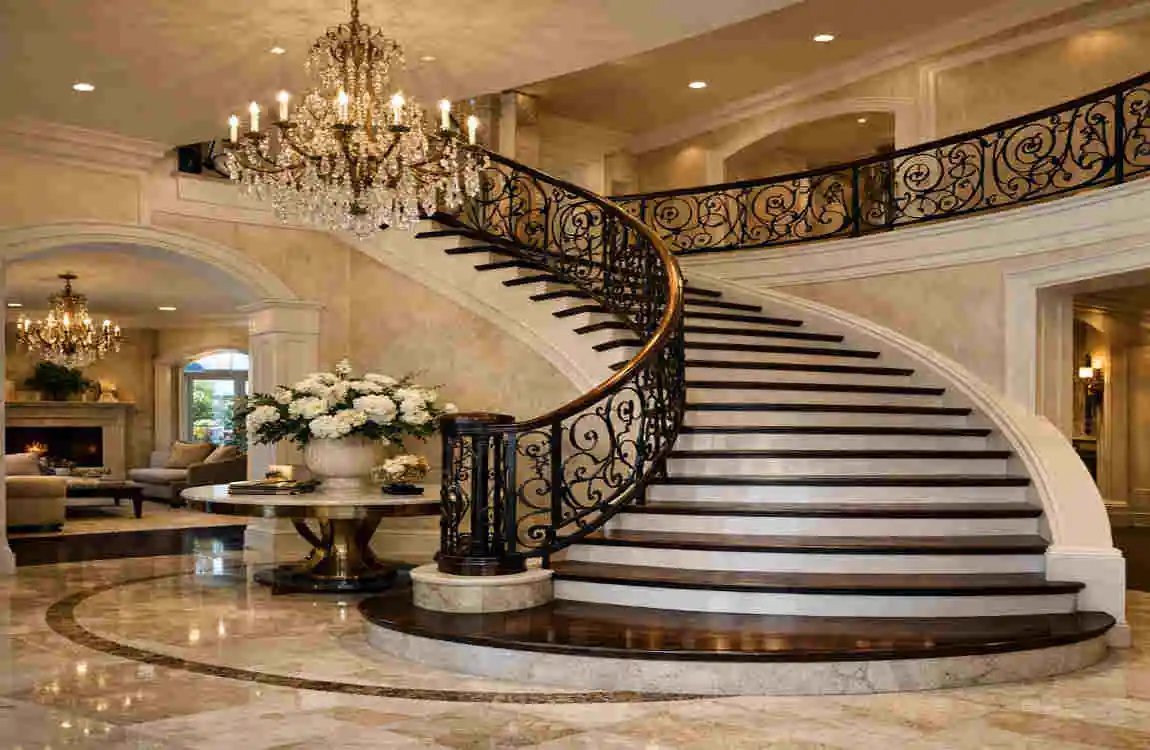
A curved staircase is one of the most elegant features you can add to a luxury home. It instantly adds style, movement, and scale. It also becomes a major design feature the moment someone walks through the front door.
But before you begin, it is important to understand the costs involved in luxury curved staircase plans. These staircases are beautiful, but they are also more complex than straight stairs. That means the price depends on design, materials, structure, and installation.
Curved Staircase Plan Cost for Luxury Homes
What is a curved staircase?
A curved staircase follows a smooth, bending path instead of going straight up. Depending on the design, it can create a soft sweep, a dramatic arc, or a more sculpted look.
Unlike a simple straight staircase, a curved staircase usually needs more planning. The shape must fit the home, the structure, and the surrounding space. That is one reason it often becomes a custom project.
Why curved staircases are popular in luxury homes
Curved staircases are popular because they feel grand. They do more than connect floors. They create a visual centrepiece.
In a luxury home, this matters. You want the staircase to feel like part of the architecture, not just a functional feature.
A curved staircase can make an entryway feel larger, more elegant, and more memorable. It can also help a home feel custom and high-end.
Curved, spiral, and straight staircases
These three staircase types differ in many ways.
- Straight staircases are the most direct and usually the simplest to build.
- Spiral staircases twist around a central point and save space.
- Curved staircases sweep gracefully and often take up more room.
If you want a luxury look, curved stairs often feel more open and dramatic than spiral stairs. They also tend to look more formal than straight stairs.
How design complexity affects cost
The more custom the staircase, the more it may cost.
A simple curve may be easier to build than a double curve or a floating design. If you want premium materials, custom railing, lighting, or structural changes, the price can rise quickly.
This is why planning matters. A clear design can help you control the final budget.
Key things to consider before planning
Before you begin, ask yourself a few important questions:
- How much space do you have?
- What look do you want?
- What materials fit your budget?
- Will you need structural changes?
- Do you want a bold statement piece or a softer design?
These choices will shape the final cost more than you might expect.
Average Curved Staircase Cost and Pricing Factors
Typical cost ranges
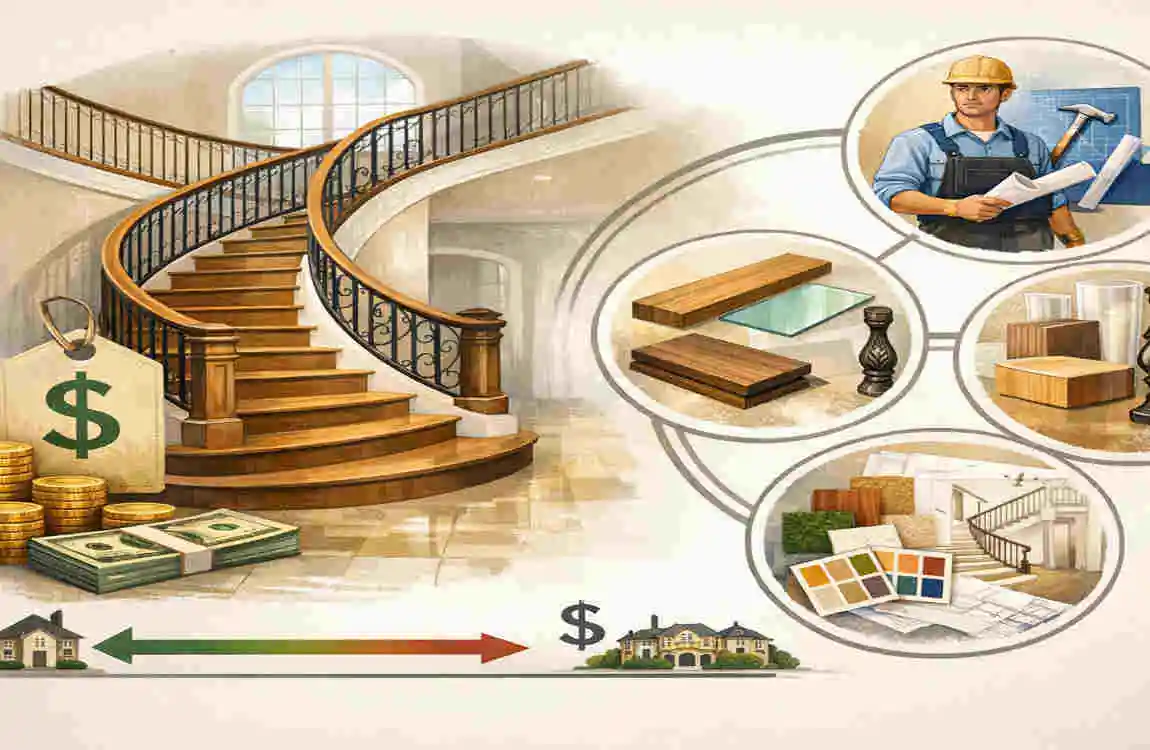
The cost of a curved staircase can vary widely. A simple custom build may fall in the lower end of the luxury range. Meanwhile, a highly detailed design with premium materials can cost much more.
In general, price depends on stair size, material choice, finish level, and the amount of custom work needed. In a luxury home, the staircase often becomes one of the more expensive interior features.
Cost per step and cost per square foot
Some contractors estimate pricing by step, while others look at square footage or total project scope.
This can be useful, but it is not always simple. Curved stairs often involve custom fabrication, so the price is usually more than just a step count.
The real cost depends on the structure, the curve, the railing, and the finishing details.
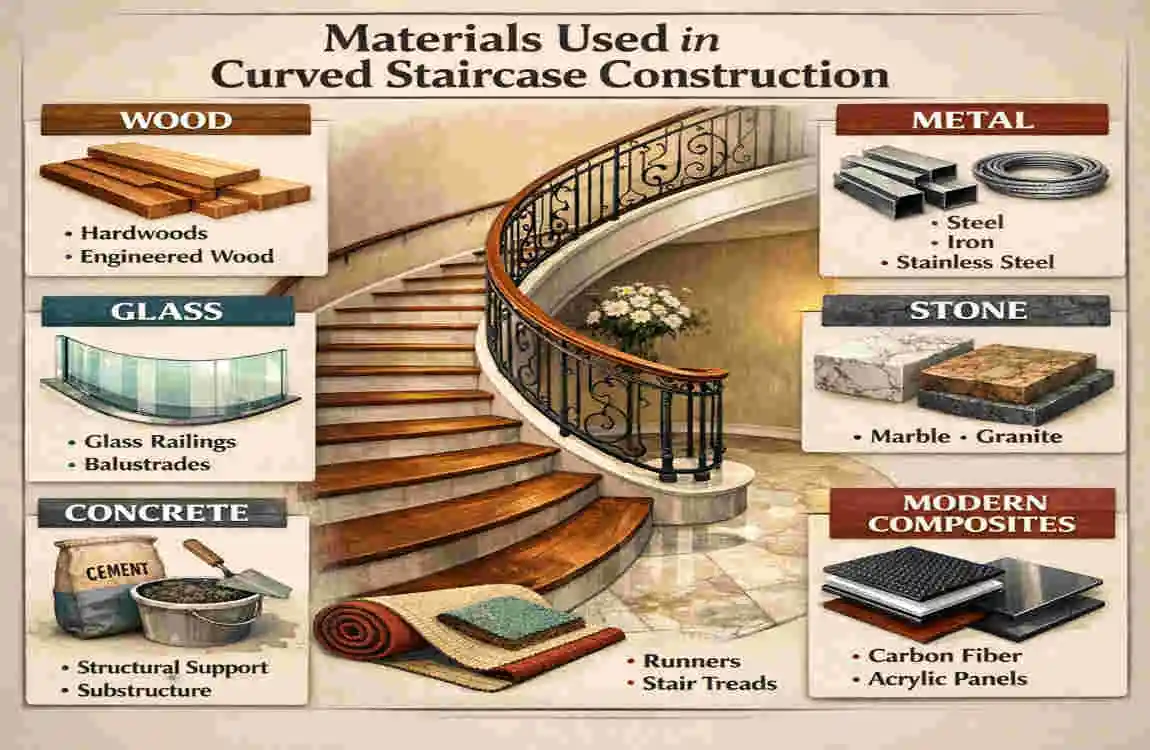
Materials and how they affect pricing
Material choice makes a huge difference.
Wood often feels warm and classic. Metal can create a sleek modern look. Stone and marble bring a dramatic luxury feel. Glass adds elegance and lightness.
The more premium the material, the more the project may cost. Some materials also need more structural support, which adds to the total budget.
Labour and installation costs
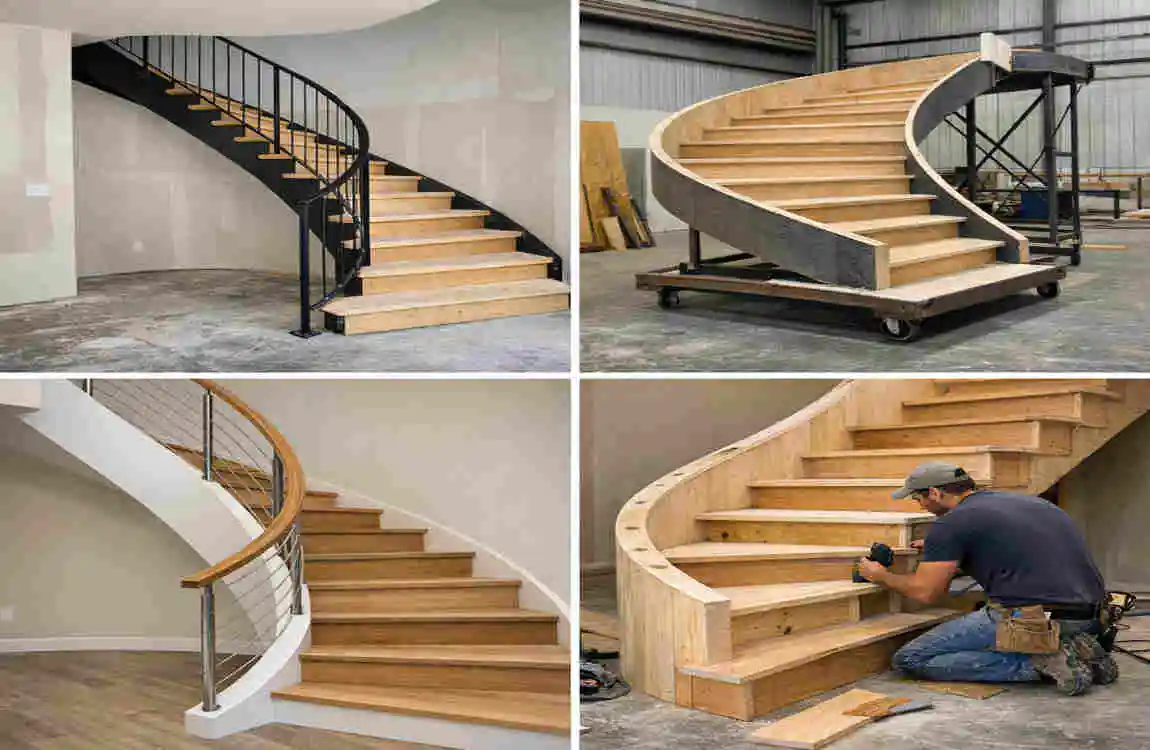
Curved staircases are usually not a simple install. They require skilled labour, careful measurements, and often a custom build process.
That means installation costs can be much higher than for a basic staircase. You are not just paying for materials. You are also paying for expertise.
Custom fabrication and engineering
Many curved staircases need custom fabrication. That means parts are made specifically for your home rather than pulled from standard stock.
You may also need structural engineering if the staircase changes how the home supports weight or movement. This adds another layer to the budget.
Delivery and site preparation
Large staircase components can be difficult to deliver and install. If your home has tight access or a complex layout, this can increase cost.
Site preparation may include protecting floors, clearing space, or making room for temporary construction access. These steps are often necessary, especially in luxury homes where finishes must be protected.
How location influences budget
Your location can affect labour rates, material availability, and permit requirements. In some areas, custom staircase work costs more simply because skilled labour is in higher demand.
Local building codes may also influence the final design and cost.
Quick cost table
Cost Factor Potential Impact
Staircase size A larger staircase can increase material and labour costs
Wood Moderate to high
Metal Moderate to high
Stone High
Glass High
Custom railing Can significantly increase cost
Structural modifications May add substantial expense
Luxury finishes Increase overall project budget
Luxury Curved Staircase Design Options
Modern curved staircase designs
Modern curved staircases often use simple lines, open views, and clean finishes. They feel elegant without looking too heavy.
These designs work well in homes that already have a contemporary style. They often use glass, metal, or light-toned wood.
Grand sweeping staircases
A grand sweeping staircase is dramatic and formal. It creates a strong first impression and often becomes the home’s main feature.
This is a good choice if you want your staircase to feel like a centrepiece in a large entryway.
Double-curved staircase concepts
A double-curved staircase has more than one curve and can feel especially sculptural. It is one of the most custom and expensive styles.
Because of its shape, it often requires more design work and more precise construction.
Curved floating staircases
Floating stairs create a lightweight visual effect. When combined with a curve, they can look very sleek and modern.
This style often works best in high-end contemporary homes that want a bold, minimal look.
Wood and glass combinations
Wood and glass together create a balanced luxury look. The wood adds warmth, while the glass keeps the staircase open and bright.
This combination works well when you want elegance without making the home feel too heavy.
Marble and stone luxury designs
Marble and stone staircases create a very refined look. They feel rich, polished, and timeless.
These materials are also heavy, so structural planning becomes especially important.
Metal and glass contemporary styles
Metal and glass can create a crisp modern look. This pairing is often used in homes that want a stylish but light visual effect.
It can work especially well in open-plan interiors.
Minimalist curved staircase designs
Minimalist curved staircases use less visual clutter. They focus on the shape itself and avoid extra decorative details.
This can be a smart choice if you want a clean luxury look that still feels special.
Matching the staircase to the home
The best staircase fits the home’s architecture.
A traditional home may look best with wood and classic railings. A modern home may suit metal, glass, or floating details. The staircase should feel like part of the home, not an added piece that clashes.
Materials Used in Curved Staircase Construction
Wood staircases
Wood is one of the most popular materials for luxury staircases. Oak, walnut, and maple are common choices.
Wood feels warm and timeless. It also works well with many interior styles, from classic to modern.
The main concern is maintenance. Wood needs care to stay looking its best over time.
Metal staircases
Steel and other metals are often used for strong structural support and modern style.
Metal can create slim lines and open forms, which is useful in luxury homes that want a lighter look. It is also strong and durable.
Stone and marble
Stone and marble are premium materials that bring a high-end feel. They are elegant, heavy, and visually striking.
Because of their weight, these materials often require extra structural planning. They are beautiful, but they usually raise the budget.
Glass elements
Glass is often used for balustrades or side panels. In some luxury homes, it can also be part of the stair design itself.
Glass helps keep the staircase open and bright. However, it also needs regular cleaning and careful installation.
Railings and balustrades
The railing is a big design choice. It helps define the staircase’s style and affects the cost.
Common options include:
- Wood railings
- Metal railings
- Glass railings
- Custom decorative railings
A custom railing can make the staircase look more unique, but it can also add significantly to the budget.
How to Plan a Curved Staircase for a Luxury Home
Measure the available space.
Start with the area where the staircase will go. Know how much floor and vertical space you have.
Curved staircases need room to sweep gracefully. If the space is too tight, the design may feel cramped.
Determine the height and width.
The distance between floors affects the number of steps and the overall shape. Stair width also matters because it affects comfort and visual scale.
A wider staircase often feels more luxurious, but it also costs more.
Plan the curve and geometry.
The curve’s shape is a major part of the design. A gentle curve feels elegant and smooth. A tighter curve may feel more dramatic but can be harder to build.
This is where a staircase specialist can really help.
Consider ceiling height and surrounding space.
A staircase is not only about the steps. It also has to fit under the ceiling and around nearby walls, windows, or open areas.
Poor planning here can affect both safety and appearance.
Select materials and finishes.
Choose materials that match your home’s style and your long-term needs. Also think about finish quality.
A simple matte finish feels different from polished marble or glossy wood. These details matter in a luxury project.
Include lighting in the design.
Lighting can make a curved staircase even more beautiful. It can highlight the shape, improve safety, and create a more polished look.
You might use wall lights, step lighting, or a chandelier above the staircase.
Work with a professional
A curved staircase is not usually a DIY project. It is better to work with an architect, builder, or staircase specialist.
They can help with measurements, safety, structure, and code compliance.
Consider building codes and safety.
Safety always matters, even in luxury design. The staircase must meet local rules for step height, railing height, width, and support.
These rules can influence both the design and the cost.
Create a realistic budget.
Budget for materials, labour, engineering, lighting, and finishing details. Also set aside extra money for surprises.
Luxury projects often uncover hidden costs during planning or construction.
Planning checklist
Use this simple checklist before you start:
- Floor-to-floor height
- Stair width
- Number of steps
- Curve radius
- Railing design
- Material selection
- Lighting
- Structural support
- Installation access
- Safety requirements
Ways to Control Curved Staircase Plan Cost
Compare multiple design options.
Do not settle on the first design you see. Compare a few different versions.
A smaller curve, simpler railing, or more practical material choice may reduce cost without hurting the final look.
Choose materials wisely
Luxury does not always require the most expensive material. Sometimes a smart combination gives you a similar effect for less money.
For example, wood with glass details may feel luxurious without the cost of full marble construction.
Avoid unnecessary structural changes.
If you can keep the existing structure mostly intact, you may save a lot. Major structural changes can quickly push the budget higher.
Work with the home’s layout whenever possible.
Use standard components where possible.
Custom work looks great, but it can cost more. If some parts can be standard without hurting the design, that may help control expenses.
Plan lighting and railings early
Late changes are often expensive. Decide on lighting and railing style early so the contractor can plan efficiently.
Get detailed estimates
Ask for a breakdown of costs. You want to know what you are paying for.
A good estimate should include materials, labour, engineering, delivery, installation, and finishing.
Keep a contingency budget.
Luxury projects often include surprises. A contingency fund gives you room to handle those issues without stress.
Balance beauty and durability.
A staircase should look elegant, but it should also last. Sometimes a more durable finish makes better long-term sense than a delicate one.
Think about long-term maintenance.
Some materials need more cleaning or repair. Before you choose, think about how much care the staircase will need over time.
Curved Staircase Cost: FAQs and Final Planning Tips
How much does a curved staircase cost in a luxury home?
The cost can vary a lot depending on the size, materials, and complexity. Custom luxury curved staircases often cost much more than standard stairs because they require special design and installation.
Is a curved staircase more expensive than a straight staircase?
Yes, in most cases. A curved staircase usually needs more design work, custom fabrication, and careful installation.
What is the most expensive material for a curved staircase?
Stone, marble, and high-end glass details are often among the most expensive choices. Custom railings and finishes can also raise the price.
How much does a custom curved staircase plan cost?
Planning costs depend on whether you need architectural drawings, structural engineering, or custom design work. More complex projects usually cost more at the planning stage too.
Are curved staircases difficult to install?
Yes, they are usually more difficult than straight stairs. They need precise measurements, custom parts, and skilled labour.
What type of railing is best for a luxury curved staircase?
That depends on the home style. Glass works well for modern homes, while wood or metal may suit more traditional spaces.
Can a curved staircase increase the value of a home?
It can improve a home’s visual appeal and luxury feel, which may make it more attractive to buyers. But the value increase depends on the design, quality, and overall home market.
How much space is needed for a curved staircase?
A curved staircase usually needs more room than a straight staircase. The exact space depends on the curve, width, and height of the staircase.
What should a curved staircase cost estimate include?
A good estimate should include design, materials, labour, engineering, delivery, installation, railings, lighting, and possible structural work.
| Factor | Estimated Cost / Range | Key Details |
|---|---|---|
| Basic Curved Staircase | $8,000–$20,000 | Simple design with standard materials |
| Mid-Range Design | $20,000–$40,000 | Better finishes, custom railings and wider steps |
| Luxury Curved Staircase | $40,000–$80,000+ | Premium materials and detailed craftsmanship |
| Grand Custom Staircase | $80,000–$150,000+ | Large statement staircase with bespoke design |
| Wood Construction | $15,000–$60,000+ | Oak, walnut and other premium woods |
| Stone/Marble | $25,000–$100,000+ | Elegant finish for luxury interiors |
| Glass & Metal | $20,000–$70,000+ | Modern and open appearance |
