

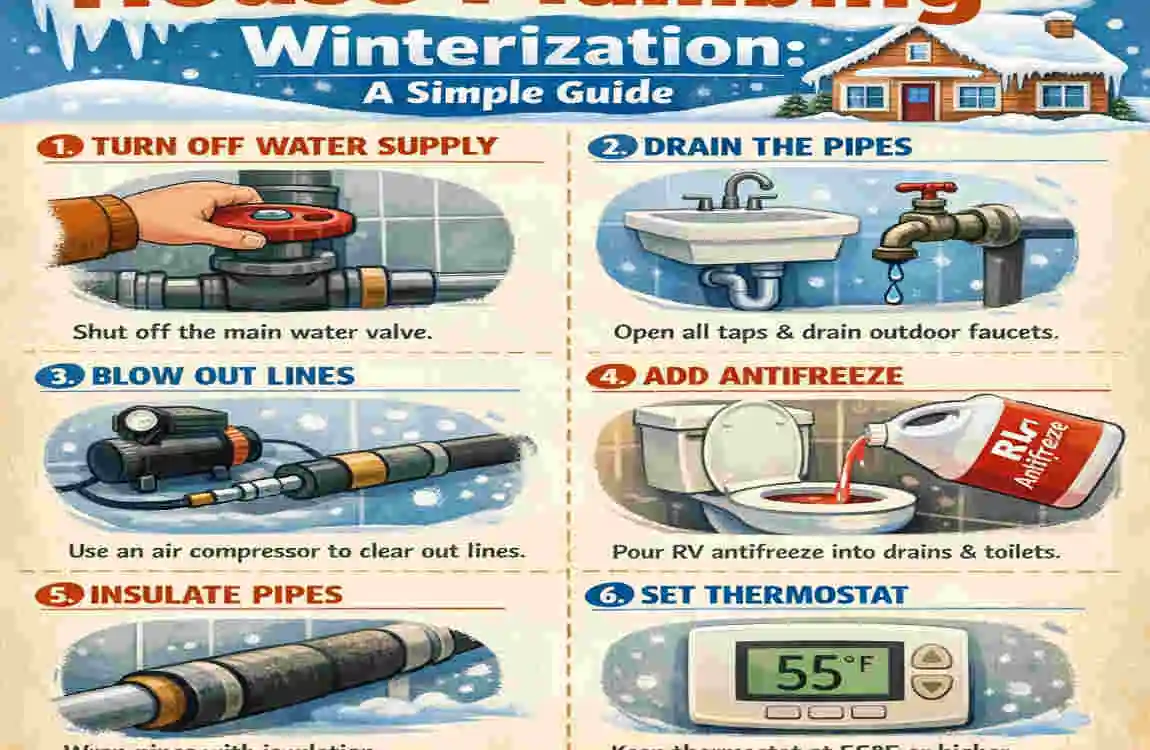
Knowing how to winterize a house plumbing system can save you stress, money, and damage. When temperatures drop, water inside pipes can freeze, expand, and crack the pipe walls. That can lead to leaks, burst pipes, wet walls, and expensive repairs.
Winterizing your plumbing is simply the process of protecting your pipes, faucets, drains, and water heater before cold weather arrives. It is much easier to prepare early than to deal with frozen plumbing in the middle of winter.
Understanding How Cold Weather Affects Your Plumbing
What Happens to Water Inside Pipes?
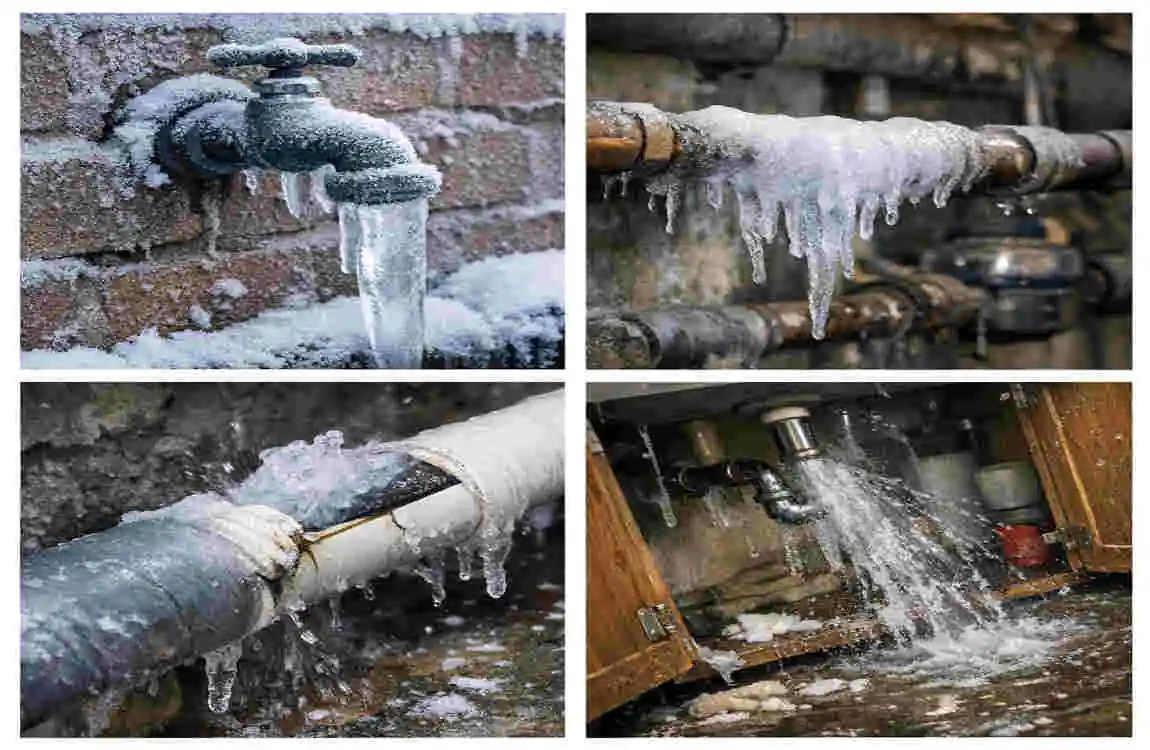
Water expands when it freezes. That might sound small, but inside a closed pipe, that expansion creates strong pressure.
As pressure builds, the pipe can crack or burst. Even a small split can release a lot of water once the ice melts.
Which Plumbing Areas Are Most at Risk?
Some parts of the home are more likely to freeze than others. These include:
- Exterior faucets and hose bibs
- Outdoor water lines
- Pipes in garages, basements, attics, and crawl spaces
- Unheated rooms
- Pipes along exterior walls
These areas are usually colder, less insulated, or exposed to outside air. That makes them much more likely to freeze.
Signs Your Plumbing Needs Winter Preparation
Your plumbing may already be at risk if you notice:
- Slow water flow
- Frost on exposed pipes
- Condensation on pipes
- Strange sounds in the plumbing
- Small leaks around fittings
- Drafty areas near plumbing lines
If you spot these warning signs, it is time to prepare right away.
How to Winterize a House Plumbing System
Inspect the Plumbing Before Winter
Start by checking all visible pipes, especially in cold or unheated areas. Look for cracks, rust, loose fittings, or small leaks.
Also check pipe insulation. If insulation is damaged, missing, or thin, replace it before freezing weather begins.
Do not ignore gaps around walls, windows, doors, or pipe openings. Cold air can enter through these spaces and make nearby plumbing colder.
Disconnect and Drain Outdoor Water Lines
Outdoor plumbing often freezes first.
Remove all garden hoses before cold weather starts. A hose left connected can trap water in the faucet and pipe, which increases the chance of freezing.
If possible, shut off the outdoor water supply. Then open the exterior faucet so any leftover water can drain out.
You can also use faucet covers or insulation caps for extra protection. But remember, covering the faucet alone is not enough if water is still trapped inside.
Insulate Exposed Pipes
Pipe insulation is one of the easiest ways to reduce freeze risk. It is especially useful for pipes in basements, crawl spaces, garages, and attics.
Common insulation materials include foam sleeves and wrap-around pipe covers. These help slow heat loss and protect the pipe from cold air.
Still, insulation isn’t a complete solution on its own. It works best when used together with drainage, heating, and air sealing.
Protect Interior Plumbing From Freezing
Inside the home, keep cold air away from plumbing whenever possible. If pipes are in cabinets under sinks, open the cabinet doors on very cold nights so warm air can circulate.
Seal drafts around plumbing openings. Even small cracks near pipes can allow enough cold air to cause trouble.
Also keep unheated areas from getting too cold. A little indoor heat can go a long way in protecting vulnerable plumbing.
Winterizing the Water Heater, Drains, and Fixtures
Preparing Your Water Heater
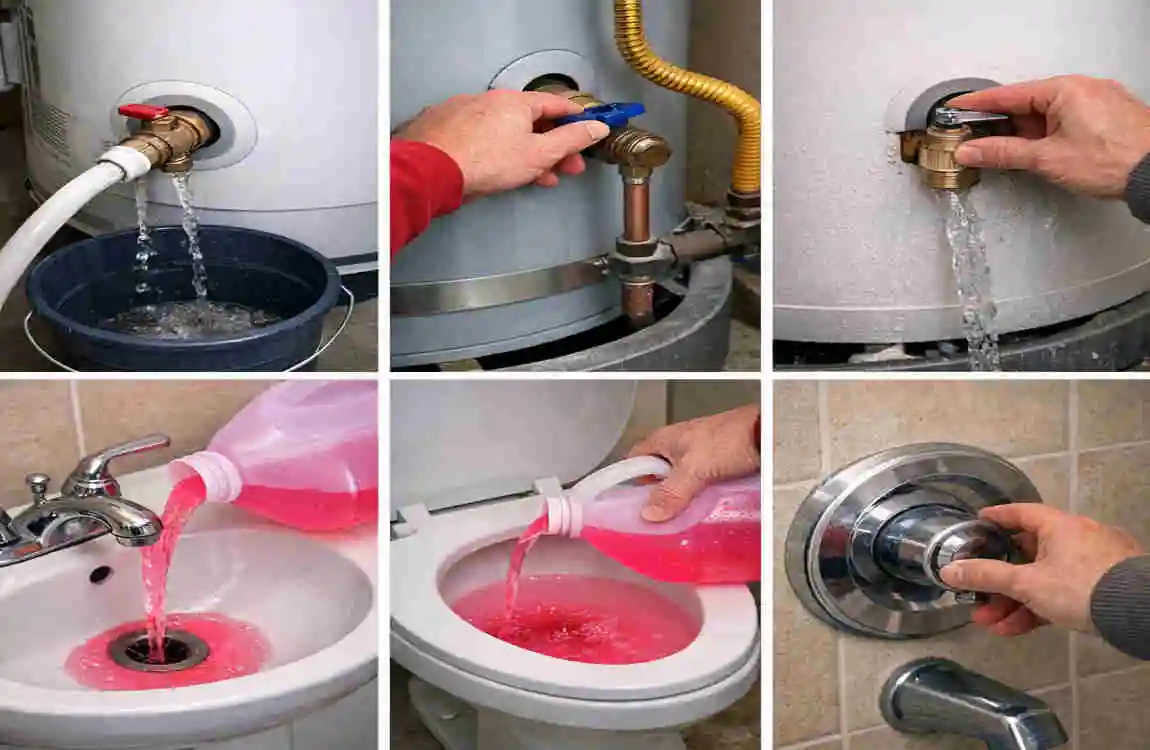
Also check your water heater before winter. Look for leaks, rust, or other signs of wear.
If the heater is in a cold space, insulation around exposed hot-water pipes can help reduce heat loss. This can help the system run more efficiently during winter.
If you are not sure whether your water heater is in good shape, a professional inspection may be worth it.
Protecting Sinks, Toilets, and Drains
Most indoor sinks and toilets are safe if the home is heated well. But rarely used fixtures can still cause problems if water sits in vulnerable lines.
Run water through unused fixtures from time to time. This keeps the plumbing moving and helps reduce stagnation.
If your home will be vacant, take extra steps. Standing water in pipes and traps can freeze and damage the system.
Winterizing a Vacant House
A vacant home needs more than basic protection. If the house will be empty for a long time, consider shutting off the main water supply and draining the plumbing lines.
You may also need to prepare the water heater and any connected appliances. In many cases, professional winterization is the safest option for vacation homes, rentals, or seasonal properties.
What to Do When Plumbing Pipes Freeze
How to Identify a Frozen Pipe
A frozen pipe often shows clear warning signs. Water may slow down or stop completely. You may also see frost on the pipe or feel a cold, hard section that looks swollen.
If you turn on a faucet and very little water comes out, a frozen pipe could be the reason.
Safe Ways to Thaw a Frozen Pipe
If you think a pipe is frozen, open the faucet first. This gives melting water somewhere to go.
Then apply gentle heat to the frozen section. You can use a hair dryer or warm towels. Start near the faucet and work slowly toward the frozen area.
Keep watching the pipe as it thaws. If you see leaks or cracks, shut off the water right away.
What Not to Do
Never use an open flame on a frozen pipe. That is dangerous and can damage the plumbing or start a fire.
Do not use sudden, extreme heat either. Slow, controlled warmth is much safer.
If you think a pipe has burst, turn off the main water supply and call a plumber.
Common House Plumbing Winterization Mistakes to Avoid
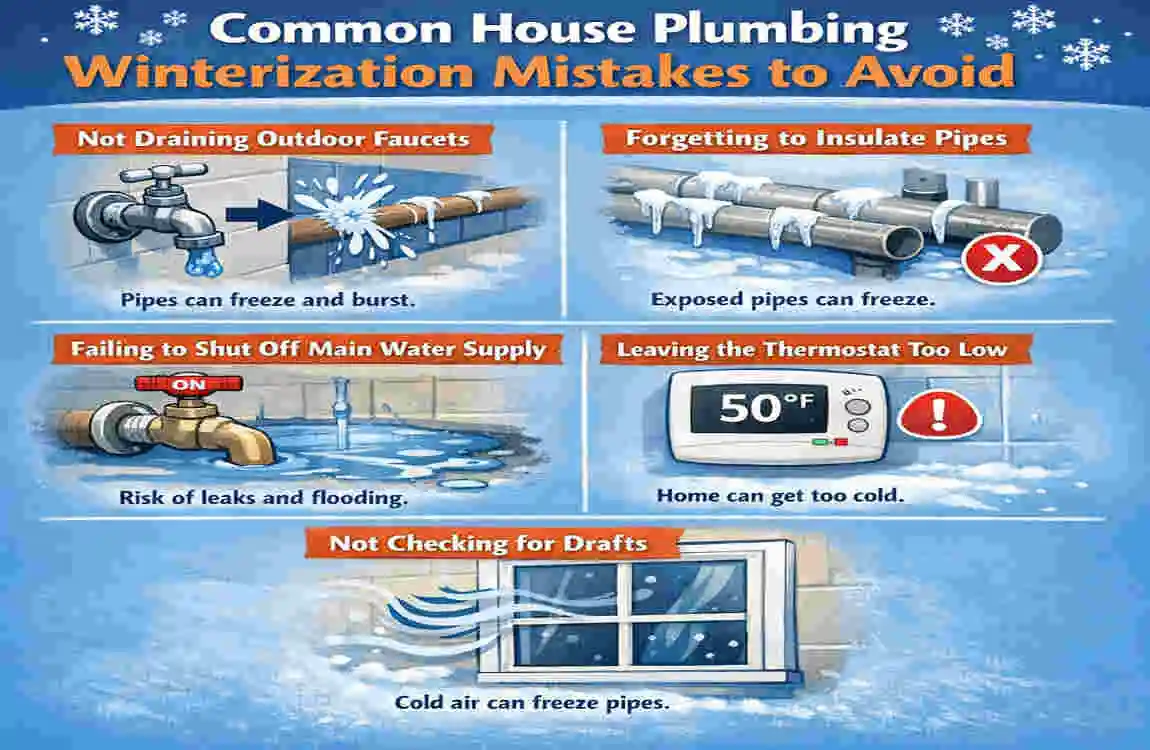
Many homeowners make the same mistakes every year. Try to avoid these:
- Forgetting outdoor faucets
- Leaving garden hoses connected
- Insulating only part of an exposed pipe
- Ignoring small leaks
- Turning the heat off completely
- Forgetting about pipes in garages or crawl spaces
- Assuming insulation alone is enough
- Waiting until the first freeze
A little preparation now can save you a much bigger problem later.
FAQ About How to Winterize a House Plumbing System
How do you winterize a house plumbing system?
Start with a full inspection, disconnect outdoor hoses, shut off outside water if possible, drain vulnerable lines, insulate exposed pipes, and keep indoor areas warm.
At what temperature do house pipes freeze?
There is no single exact temperature. Pipes can freeze faster in unheated or poorly insulated areas, even when temperatures are only near freezing.
Should I leave faucets dripping in winter?
In very cold weather, a small drip can sometimes help reduce freeze risk in vulnerable pipes. This is mainly a short-term precaution.
Do you need to turn off water when winterizing a house?
If the home will be empty, yes, it is often best to shut off the main water supply and drain the lines. For an occupied home, you usually focus on insulation and heat.
How do I winterize outdoor faucets?
Remove hoses, shut off the outdoor water supply if possible, drain the faucet, and add a faucet cover for extra protection.
What pipes should be insulated for winter?
Focus on exposed pipes in garages, basements, crawl spaces, attics, and any area that gets cold or drafty.
Can pipes freeze even inside the house?
Yes. Pipes near outside walls, windows, or unheated rooms can still freeze if cold air reaches them.
How long does it take to winterize house plumbing?
For a typical home, it may take just a few hours. Larger homes or vacant properties may take longer.
When should I winterize my house plumbing?
Do it before sustained freezing weather starts, not after the first freeze arrives.
Should I hire a plumber to winterize my house?
A plumber can help if your home has a complex system, a history of freezing problems, or if the house will be vacant for winter.
| Area | Winterization Step | Why It Matters |
|---|---|---|
| Water Supply | Shut off water when needed | Helps prevent leaks and pipe damage |
| Outdoor Faucets | Disconnect hoses and drain faucets | Reduces freezing risk |
| Exposed Pipes | Insulate pipes with pipe insulation | Helps protect against cold temperatures |
| Indoor Plumbing | Keep indoor areas warm | Prevents pipes from freezing |
| Drains | Check and clear drains | Helps avoid blockages and standing water |
| Water Heater | Inspect and maintain the heater | Supports reliable hot-water supply |
| Leaks | Repair small leaks before winter | Prevents bigger plumbing problems |
| Vacation Homes | Drain or winterize unused plumbing | Protects vacant properties from freeze damage |
