

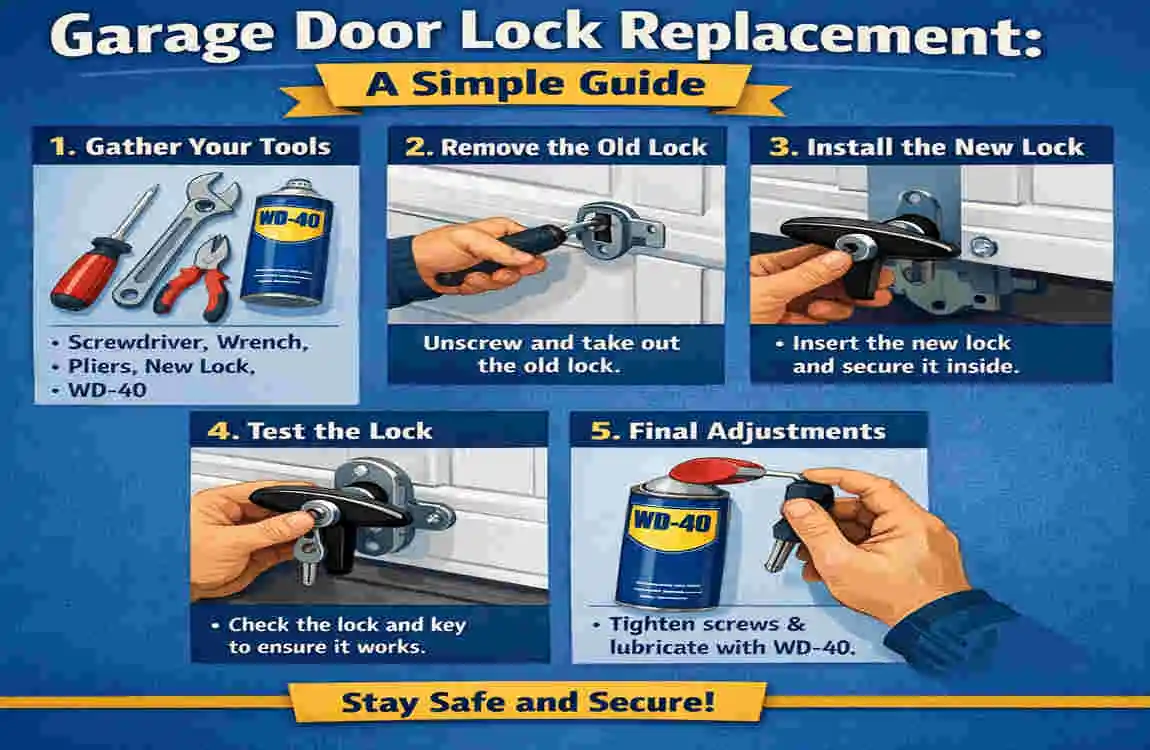
A secure garage door matters more than many people think. Your garage often holds tools, bikes, outdoor gear, and sometimes even a direct entry point into your home. If the lock is worn out, broken, or missing a key, replacing it can improve garage door security right away.
If you are wondering how to change a garage door lock, the good news is that many basic lock replacements are manageable as a DIY job. You need the right lock, the right tools, and a careful step-by-step approach. In some cases, though, damage, alignment problems, or a faulty opener may make professional help the safer choice.
Why Garage Door Lock Replacement Matters
Security and peace of mind
A garage door lock is a simple part, but it plays a big role in home security. If the lock is loose, rusty, or broken, it may not protect your garage the way it should.
A strong, working lock can help prevent unwanted entry and give you more confidence when you leave home.
Common reasons to replace a lock
People usually replace a garage lock for one of these reasons:
- The lock is damaged or worn out
- The key is lost
- The lock no longer turns smoothly
- The home needs better security
- The old hardware no longer fits properly
Sometimes the lock still works, but it feels weak or outdated. In that case, a new garage door lock can be a smart upgrade.
When DIY makes sense
A basic garage door lock replacement is often fine for DIY if the door is in good shape and the new lock matches the old one well.
If the door is bent, stuck, unusually heavy, or connected to a faulty opener, it is safer to call a technician rather than attempt the repair yourself.
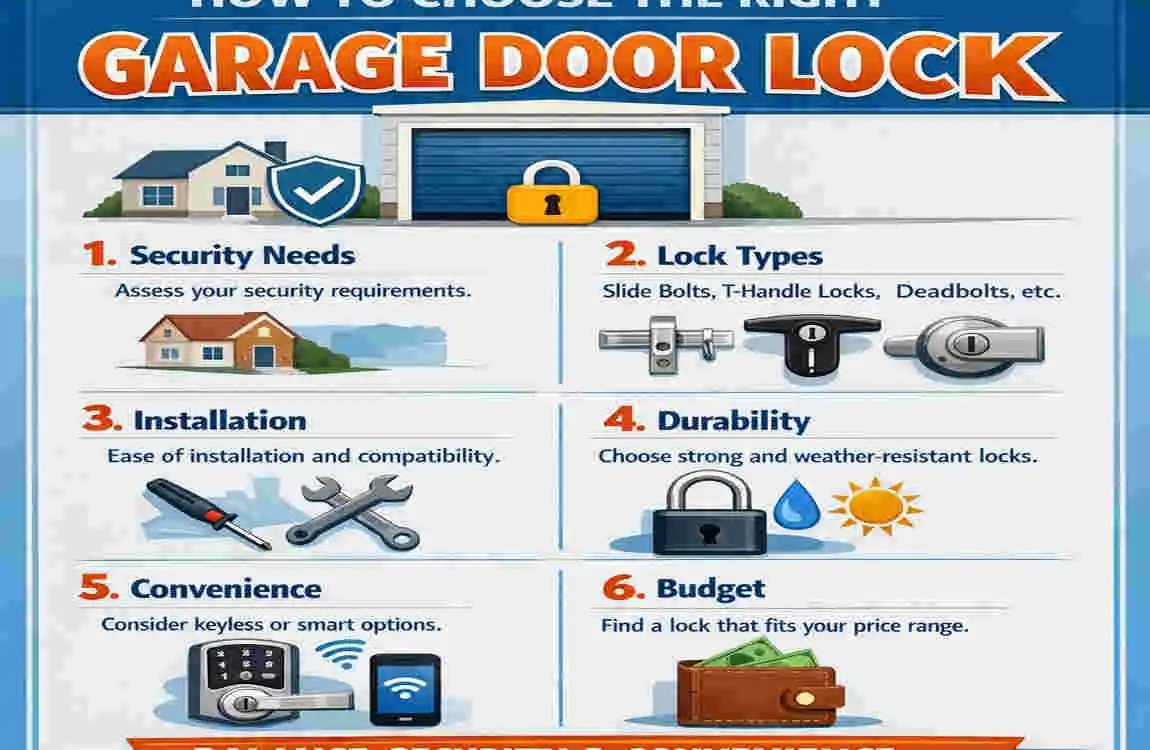
How to Choose the Right Garage Door Lock
Types of garage door locks
There are several common lock types, and each one works a little differently.
T-handle locks are very common on up-and-over garage doors. They are simple and usually easy to replace.
Slide bolts are basic manual locks that move into place to secure the door.
Keyed locks use a key from the outside and may also connect to interior parts of the lock mechanism.
Interior garage door locks are used on the inside of the door and often provide extra security.
Smart or electronic locking systems are more advanced and may work with remotes, keypads, or connected security systems.
What to check before buying
Before you buy a replacement, check these things carefully:
- Door type and model
- Current lock size
- Mounting hole spacing
- Material and durability
- Security features
- Compatibility with the existing door
If the new lock does not match the old one properly, you may end up with extra drilling or alignment problems.
Tools and Materials You Need
Basic tools
Most garage door lock installation jobs need only a few common tools.
You will usually need:
- Replacement garage door lock
- Screwdriver
- Wrench or socket set
- Drill and drill bits, if needed
- Measuring tape
- Pencil or marker
- Safety gloves
- Safety glasses
How to Change Garage Door Lock Step by Step
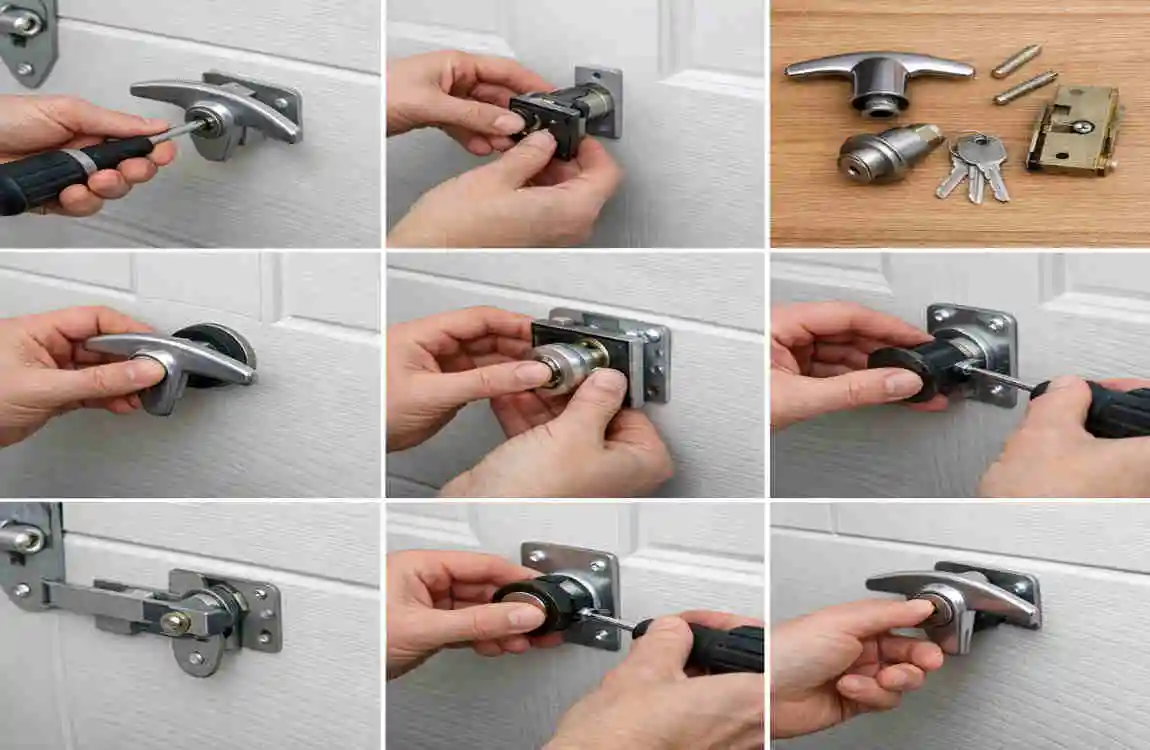
If you want a simple answer to how to change a garage door lock, the process usually follows a clear pattern. Work slowly, keep the door stable, and test everything before finishing.
Secure the garage door
Close the garage door completely before you start. The door should not move while you are removing hardware.
If the door has an automatic opener, disconnect it if the manufacturer says it is safe to do so. That helps prevent accidental movement.
Remove the existing lock.
Find the screws, bolts, or mounting pieces that hold the old lock in place. Remove the interior hardware first, then carefully take out the external parts.
If the lock is rusty or stuck, apply steady pressure rather than forcing it. Forcing old hardware can damage the panel.
Inspect and measure the door.
Once the old lock is removed, look closely at the area around the opening. Check for:
- Rust
- Cracks
- Bent metal
- Damaged holes
- Loose mounting areas
Measure the old opening and compare it with the new lock. This step helps you avoid a poor fit.
Install the new lock.
Place the new lock in position based on the product instructions. Hold the outside and inside parts in place, then insert the screws or bolts.
Tighten the hardware firmly, but do not over-tighten it. Too much force can strip the threads or pull the lock out of alignment.
Test the lock
After installation, test the lock several times. Lock and unlock it slowly first, then check how it works with the door fully closed.
Make sure:
- The key turns smoothly
- The lock engages properly
- The handle moves without sticking
- The door opens and closes normally
If anything feels off, stop and adjust it before using the door regularly.
Simple installation checklist
Use this short checklist before calling the job done:
- Remove the old lock
- Check the mounting area
- Fit the new lock correctly
- Tighten all hardware
- Test locking and unlocking
- Open and close the door carefully
Common Garage Door Lock Replacement Mistakes
Buying the wrong lock
One of the biggest mistakes is choosing a lock that does not match the door or hole spacing. Even small differences in size can cause problems.
Installing the lock out of alignment
If the lock is slightly crooked, it may not latch properly. The door may also feel harder to use.
Over-tightening screws
It is easy to think tighter is better, but that is not always true. Over-tightening can damage the lock, warp the mounting area, or make future repairs harder.
Testing too quickly
Do not assume the job is done the moment the hardware is installed. Test the lock slowly and check for smooth movement.
Ignoring door damage
If the door panel is bent or the mounting area is weak, a new lock may still fail. In that case, the issue is not just the lock itself.
Safety tip
If the garage door is damaged, very heavy, stuck, or connected to a malfunctioning opener, it is better to contact a qualified technician rather than attempt a repair.
Garage Door Lock Maintenance and Security Tips
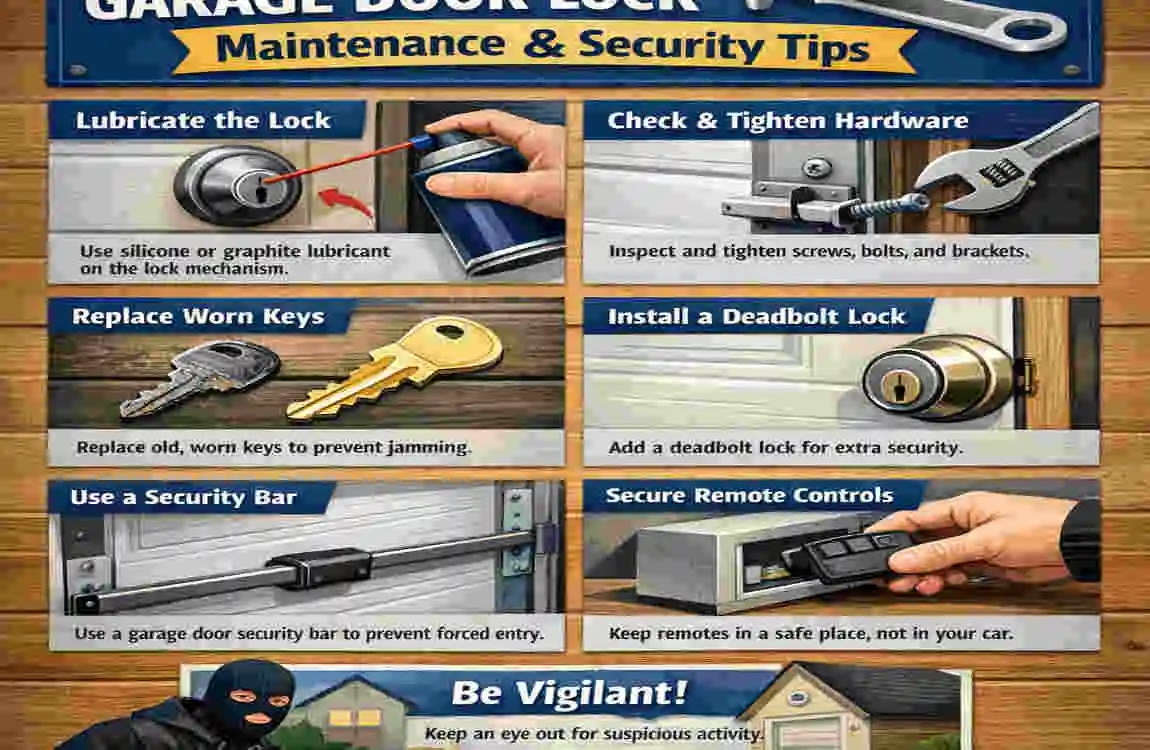
Keep the lock working smoothly.
A new lock will last longer if you care for it properly. Check it from time to time and clean away dirt, dust, or rust.
If the maker recommends a lubricant, use it lightly. A small amount can help the parts move more easily.
Improve garage security
A lock is only one part of garage security. You can also improve safety by:
- Keeping remotes secure
- Replacing lost or stolen keys
- Checking for weak spots in the door
- Keeping the emergency release accessible
- Upgrading old hardware when needed
These small steps can make a real difference.
Watch for warning signs.
If the lock starts sticking again, feels loose, or no longer lines up correctly, do not ignore it. Fixing small issues early can prevent bigger problems later.
FAQ: How to Change Garage Door Lock
Can I change a garage door lock myself?
Yes, many basic lock replacements are suitable for DIY if the door is in good condition and the new lock matches the old setup.
How long does it take to replace a garage door lock?
A simple replacement may take less than an hour, while a more involved job can take longer if the hardware is damaged or the fit is not exact.
How do I know which garage door lock to buy?
Measure the old lock, check the mounting points, and make sure the replacement is compatible with your garage door type.
What tools are needed to replace a garage door lock?
You usually need a screwdriver, wrench, measuring tape, and sometimes a drill. Safety glasses and gloves are a good idea too.
Should I replace a garage door lock if I lose my key?
Yes, replacing or rekeying the lock is often the safer choice if the key is lost and you are not sure who may have access to it.
Why won’t my new garage door lock engage?
The most common reasons are poor alignment, incorrect installation, or damaged door hardware. The door may also shift slightly when it closes.
When should I hire a professional?
Get help if the door is damaged, the lock system is complicated, or you are not confident about the installation.
| Step | What to Do | Helpful Tip |
|---|---|---|
| Check the Lock | Identify the lock type and inspect for damage. | Make sure the replacement matches your garage door. |
| Gather Tools | Prepare a screwdriver, wrench, measuring tape, and new lock. | Follow the lock manufacturer’s instructions. |
| Remove Old Lock | Unscrew and carefully remove the existing lock. | Keep the old screws until the new lock is installed. |
| Measure Carefully | Check the lock spacing and mounting holes. | Accurate measurements help prevent fitting problems. |
| Install New Lock | Position the replacement and tighten the hardware securely. | Avoid overtightening, which can damage components. |
