

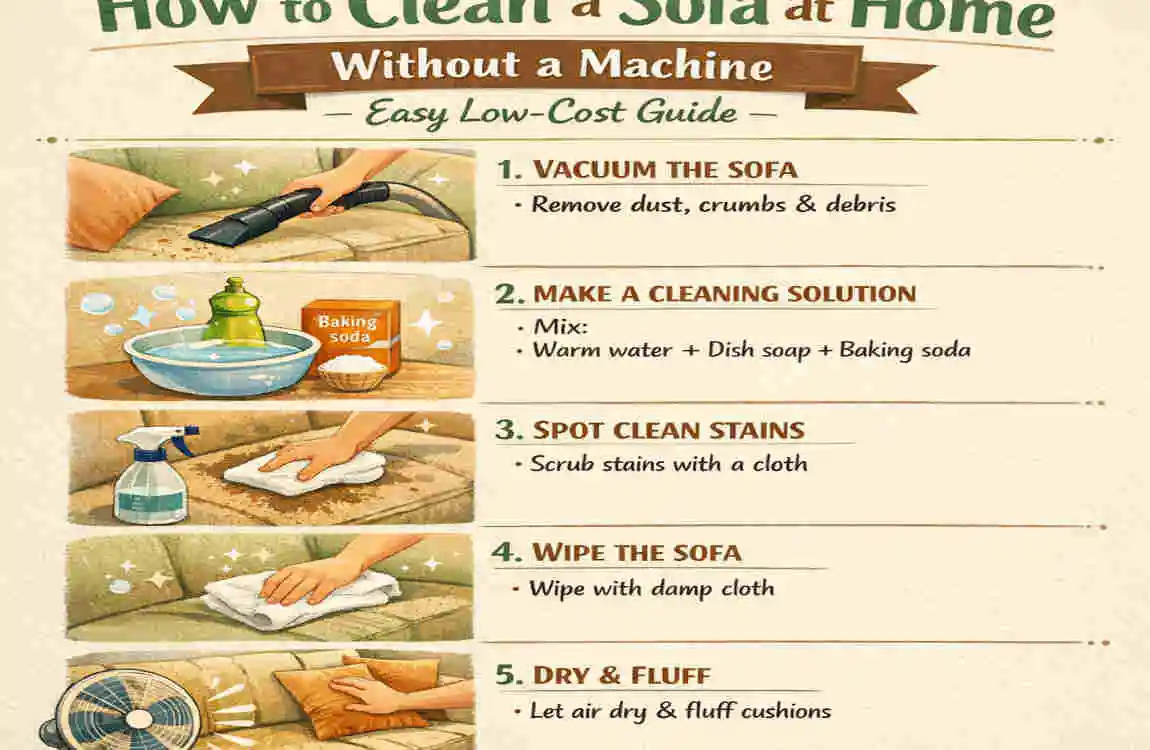
A sofa gets used every day, so it naturally collects dust, crumbs, body oils, stains, and odours. Over time, even a nice sofa can start to look dull or feel a little tired. The good news is you don’t need expensive equipment to freshen it up.
If you want to clean a sofa at home without the cost of a machine, the process can be simple, low-cost, and practical. With a few basic supplies and a little care, you can clean most sofas by hand and keep them looking much better.
Check Your Sofa Fabric Before Cleaning
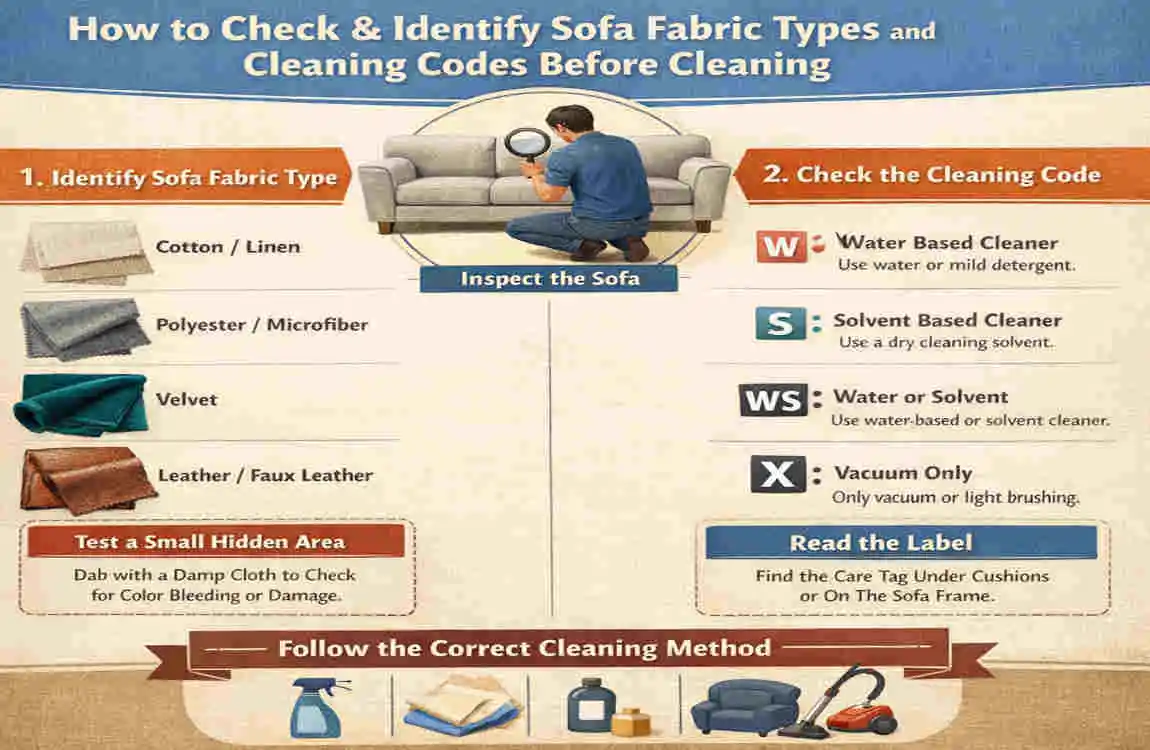
Identify the sofa cleaning code.
Before you clean anything, check your sofa’s tag. Most upholstered furniture has a cleaning code that tells you what is safe to use.
Here is what the common codes mean:
Code Meaning Cleaning Method
W Water-based cleaner only Mild soap and water
S Solvent-based cleaner only No water; use a fabric-safe solvent
WS Water- or solvent-based cleaner Either may work, with care
X Vacuum only No wet cleaning
This step matters because using the wrong cleaner can stain, shrink, or damage the fabric.
What if the label is missing?
If you cannot find the tag, be careful. Test a tiny hidden area first. If the sofa is delicate, expensive, or old, it may be better to ask a professional before cleaning it yourself.
Test the cleaning solution first.
Always test your cleaner in a hidden spot, like under a cushion or on the back edge of the sofa. Wait until it dries and check for:
- Color fading
- Color bleeding
- Fabric damage
- Water rings
- Texture changes
If the patch looks fine, the cleaner is probably safe to use on a larger area.
Gather low-cost cleaning supplies.
You do not need much. A simple sofa cleaning kit can include:
- Vacuum cleaner or soft brush
- Microfiber cloths
- Warm water
- Mild dish soap
- White vinegar, if suitable
- Baking soda
- Soft-bristle brush
- Spray bottle
- Clean towels
These are inexpensive and often already in the home.
How to Clean a Sofa at Home Without a Machine
Remove cushions and loose debris.
Remove any loose cushions, if possible. Shake them outside if that is safe for the fabric. Then clean between the cushions and along the seams.
Use a vacuum or soft brush to remove:
- Crumbs
- Hair
- Dust
- Pet dander
- Small bits of dirt
This step helps the wet cleaning work better because you won’t rub dirt deeper into the fabric.
Make a simple homemade cleaning solution.
For many sofas, a mild soap-and-water mix is enough.
A simple option is:
- A bowl of warm water
- A few drops of mild dish soap
Mix gently to avoid creating too many bubbles. You want the cloth damp, not soaked.
If your fabric allows it, diluted white vinegar may help with odour and some light marks. But always patch test first.
Clean the sofa by hand.
Now you can start cleaning in small sections.
Follow this process:
- Dip a microfiber cloth into the cleaning solution.
- Wring it out well so it is only slightly damp.
- Gently wipe the dirty area.
- Do not scrub hard.
- Rinse the cloth as it gets dirty.
- Finish with a clean, damp cloth to remove soap residue.
This slow, gentle method is one of the best ways to clean upholstery without a machine.
Why you should avoid soaking the fabric
Too much water can cause:
- Watermarks
- Slow drying
- Musty smells
- Mold risk
- Damage to padding underneath
So always use minimal moisture. That is the safest way to clean by hand.
Remove Common Sofa Stains and Odours
How to remove food and drink stains
Fresh stains are easier to handle than old ones. If something spills, blot it quickly with a clean cloth.
Do not rub. Rubbing can push the stain deeper into the fabric.
For tea, coffee, juice, or soft drink stains:
- Blot the spill
- Use mild soap and water
- Dab gently from the outside inward
- Repeat until the stain lightens
- Dry the area with a clean towel
If the stain is old, you may need to repeat the process more than once.
How to deal with grease and oil marks
Grease can be tricky because water alone often does not lift it well.
A good first step is to blot up any excess oil. You can also use a small amount of absorbent powder on some fabrics, but only if the upholstery allows it. Then follow with a mild cleaning solution.
Be careful not to spread the stain by scrubbing too much.
How to remove pet hair and odours
If you have pets, your sofa may collect hair and smells quickly. Start by brushing or vacuuming the surface. If you do not have a vacuum, a lint roller, rubber glove, or slightly damp cloth can help lift hair.
For odours, baking soda often helps if the fabric can handle dry powder treatment. Lightly sprinkle it on the sofa, leave it for a while, then brush or vacuum it away.
How to clean dusty corners and seams
Dust loves to hide in a sofa’s corners, seams, and folds. Use a soft brush or dry microfiber cloth to reach these spaces before using any wet cleaner.
This helps remove hidden dirt and makes the overall cleaning more effective.
Low-Cost Sofa Cleaning Methods Without a Machine
Baking soda method
Baking soda is a popular low-cost cleaning helper because it absorbs odours and freshens the fabric.
How to use it:
- Sprinkle a light layer on the sofa
- Let it sit for 15–30 minutes, or longer if needed
- Brush it off gently
- Vacuum if available, or wipe it away carefully
Baking soda helps control odour, but it is not a magic stain remover. It works best as part of a larger cleaning routine.
Soap and water method
This is usually the simplest and safest choice for many fabric sofas.
Use a mild soap mix and a damp microfiber cloth. Clean in small areas and avoid over-wetting the material. This method is often enough for general dirt, light marks, and everyday cleaning.
Vinegar cleaning method
Diluted white vinegar can sometimes help with odours and some stains. But it should be used carefully.
Always:
- Dilute it with water
- Patch test first
- Avoid mixing it with other cleaners
- Do not use it on delicate or moisture-sensitive fabrics unless safe
Vinegar can help, but it isn’t ideal for every sofa.
Steam-free deep cleaning
If you want a deeper clean without a machine, use a step-by-step manual approach:
- Remove dust and debris first
- Treat stains one by one
- Use only small amounts of moisture
- Wipe clean in stages
- Dry fully before using the sofa again
This method takes more time, but it helps refresh the sofa without expensive equipment.
How to Dry a Sofa After Cleaning
Improve air circulation
Drying is just as important as cleaning. Open windows if the weather allows it. Use fans to move air across the sofa. If cushions are removable, separate them so air can reach all sides.
Prevent mould and musty smells.
Damp upholstery can trap moisture inside the padding. That can lead to mould, mildew, and bad smells. Never cover the sofa while it is still wet.
Make sure the fabric feels fully dry before you sit on it again.
How long does it take to dry?
Drying time depends on:
- Fabric type
- Amount of water used
- Room humidity
- Air movement
- Room temperature
A light hand-cleaning job may dry fairly quickly. A heavily damp sofa can take much longer. When in doubt, give it extra time.
Signs the sofa is dry
The sofa is ready when:
- The fabric feels dry to the touch
- There is no cool dampness
- The cushions do not smell musty
- No dark moisture spots remain
Mistakes to Avoid When Cleaning a Sofa at Home
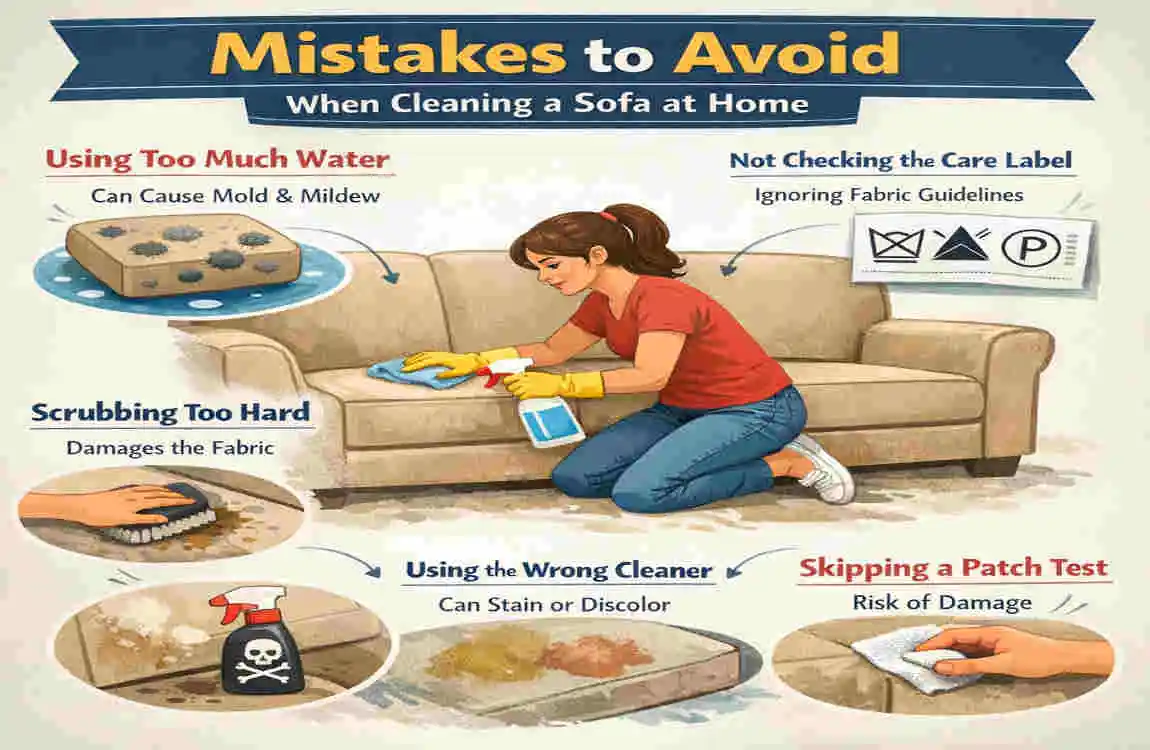
Using too much water
This is one of the biggest mistakes people make. Wet cleaning should be damp cleaning, not soaking.
Too much water can leave marks, damage the padding, and slow drying.
Scrubbing too hard
If you scrub a stain aggressively, you may damage the fibres or spread the stain. Blotting and gentle wiping work much better in most cases.
Using harsh chemicals
Bleach and strong household cleaners can be too harsh for upholstery. They may fade the fabric or break down the fibres.
Skipping the patch test
A small patch test can save you from a big problem. It shows how the fabric reacts before you clean the whole sofa.
Ignoring the fabric type
Not every sofa material can be cleaned the same way. Always check the label, because a method that works on one sofa may harm another.
FAQ About Cleaning a Sofa Without a Machine
Can I clean a sofa at home without a machine?
Yes. You can clean many sofas with simple items like cloths, mild soap, baking soda, and a soft brush.
What is the cheapest way to clean a sofa?
The cheapest way is usually a mix of mild soap, warm water, microfiber cloths, and baking soda.
How much does it cost to clean a sofa at home without a machine?
The cost is usually very low if you already have basic supplies at home. It mainly depends on what you need to buy.
Can I use dish soap to clean my sofa?
Yes, in many cases, mild dish soap works well when diluted properly. Always test it first.
Can baking soda clean a fabric sofa?
Baking soda helps with odours and light freshening, but it isn’t a complete stain remover on its own. How do I clean a sofa without a vacuum?
Use a soft brush, lint roller, or dry microfiber cloth to remove dust and hair by hand.
How can I clean a sofa without making it wet?
Use dry brushing, lint removal, and baking soda where appropriate. These methods use very little moisture.
How often should I clean my sofa at home?
Light cleaning every week or two is helpful. Do deeper spot cleaning as needed.
When should I hire a professional sofa cleaner?
Consider professional help for delicate fabric, heavy stains, bad odours, or water-sensitive upholstery.
| Cleaning Step | What You Need | How to Do It | Helpful Tip |
|---|---|---|---|
| Remove Dust | Vacuum or soft brush | Brush cushions, seams, and corners | Clean hidden areas carefully |
| Check Fabric | Sofa care label | Identify fabric and cleaning instructions | Test products on a hidden spot |
| Make Cleaning Solution | Warm water + mild soap | Mix a small amount of soap with water | Avoid soaking the sofa |
| Spot Clean | Soft microfiber cloth | Gently dab stains instead of rubbing | Work from the outside toward the center |
| Clean Cushions | Damp cloth | Wipe cushions evenly with light moisture | Remove covers first if washable |
| Remove Odors | Baking soda | Sprinkle lightly and leave for 20–30 minutes | Brush or vacuum it away afterward |
