

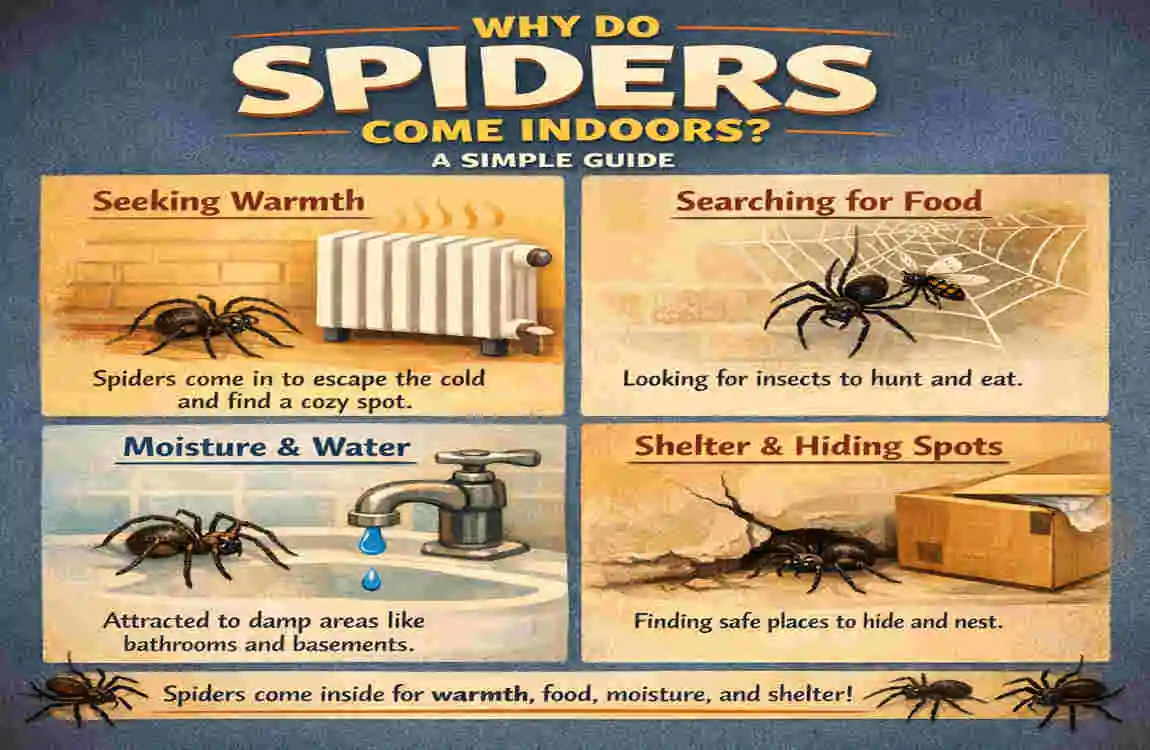
If you are asking why spiders come inside the house, the answer is usually very simple: they are looking for food, shelter, moisture, or a better place to live.
Most spiders do not come indoors to bother people. They usually enter by accident or because your home gives them something they need. That may be insects to eat, a warm corner to hide in, or a damp area that feels comfortable.
The good news is that you can lower spider activity with a few simple habits. You do not need to panic. You need to understand what attracts them and how to make your home less inviting.
Why Do Spiders Come Inside the House?
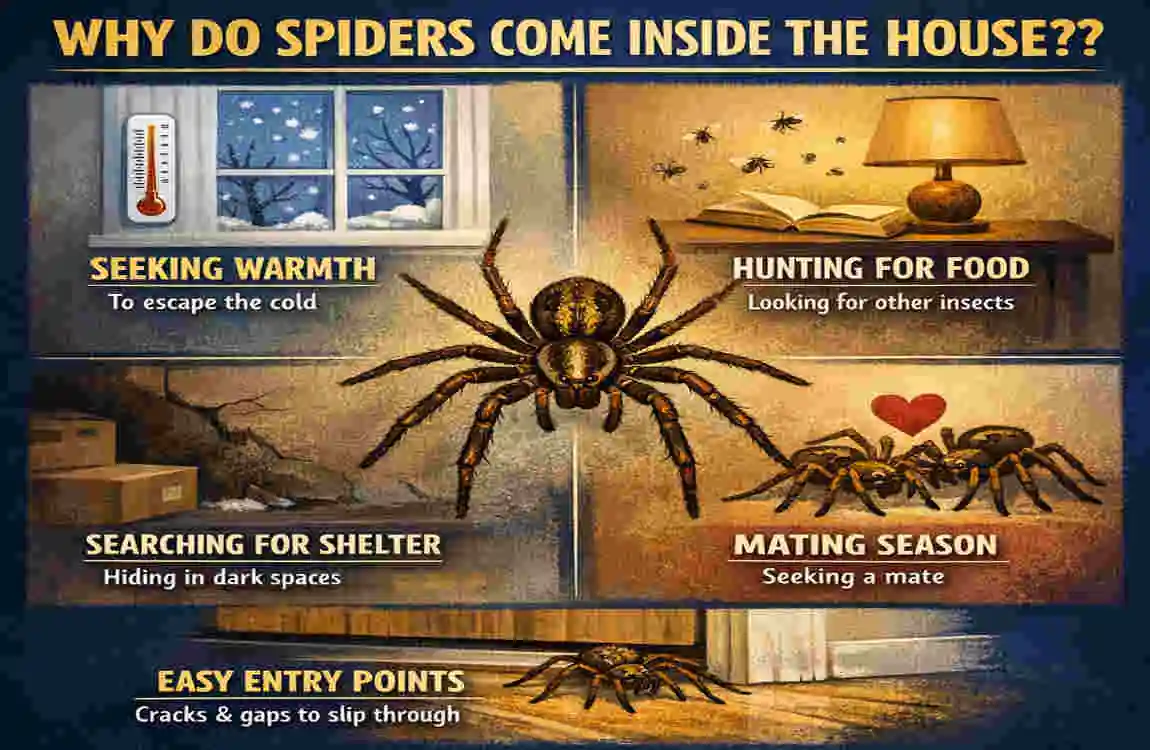
They Are Looking for Food
Spiders follow their food source. If your clean home has insects, spiders may come in after them.
They often eat flies, mosquitoes, moths, gnats, and other small bugs. So if lights attract insects near windows or doors, spiders may also show up.
This is why homes with more bugs often see more spiders too. The spider is usually not the real problem. The insects are.
They Need Shelter
Spiders also want a safe place to rest. They like quiet, undisturbed spots where they will not be bothered.
That is why you may find them in:
- Basements
- Garages
- Closets
- Attics
- Storage rooms
These spaces give them hiding places, and they often stay there unless something disturbs them.
Weather and Seasonal Changes
Weather changes can push spiders indoors. When it gets too hot, too cold, or too wet outside, some spiders move inside to find better conditions.
You may notice them more during certain times of the year. That does not always mean your home has a serious spider problem. Sometimes it just means the season changed.
Moisture and Humidity
Spiders often like moist areas because they also attract insects. Bathrooms, kitchens, crawl spaces, and damp basements can all become spider-friendly.
If a room stays damp, it may support both spiders and the bugs they eat.
To reduce moisture, try to:
- Fix leaks quickly
- Use ventilation fans
- Dry wet areas after use
- Keep basements and crawl spaces as dry as possible
Common Places Spiders Hide Indoors
Dark and Undisturbed Areas
Spiders like places where people do not move around much. Corners, boxes, closets, and storage bins are common hiding spots.
Clutter helps them stay hidden, so a messy area often gives spiders more places to settle.
Around Windows and Doors
Small gaps around windows and doors can give spiders a way in. Damaged screens and loose seals make it even easier.
If you notice spiders near openings, that may mean they are entering from outside.
Garages, Attics, and Basements
These areas usually have less activity, more hiding places, and sometimes more insects. That makes them ideal for spiders.
Regular sweeping and inspection can help you notice webs, egg sacs, or entry points early.
Outdoor Areas Near the House
Spiders often live outside first and then move closer to the house. Wood piles, thick plants, outdoor lights, and yard debris can all attract insects.
If insects gather near your clean home, spiders may follow.
How to Keep Spiders Out of Your House
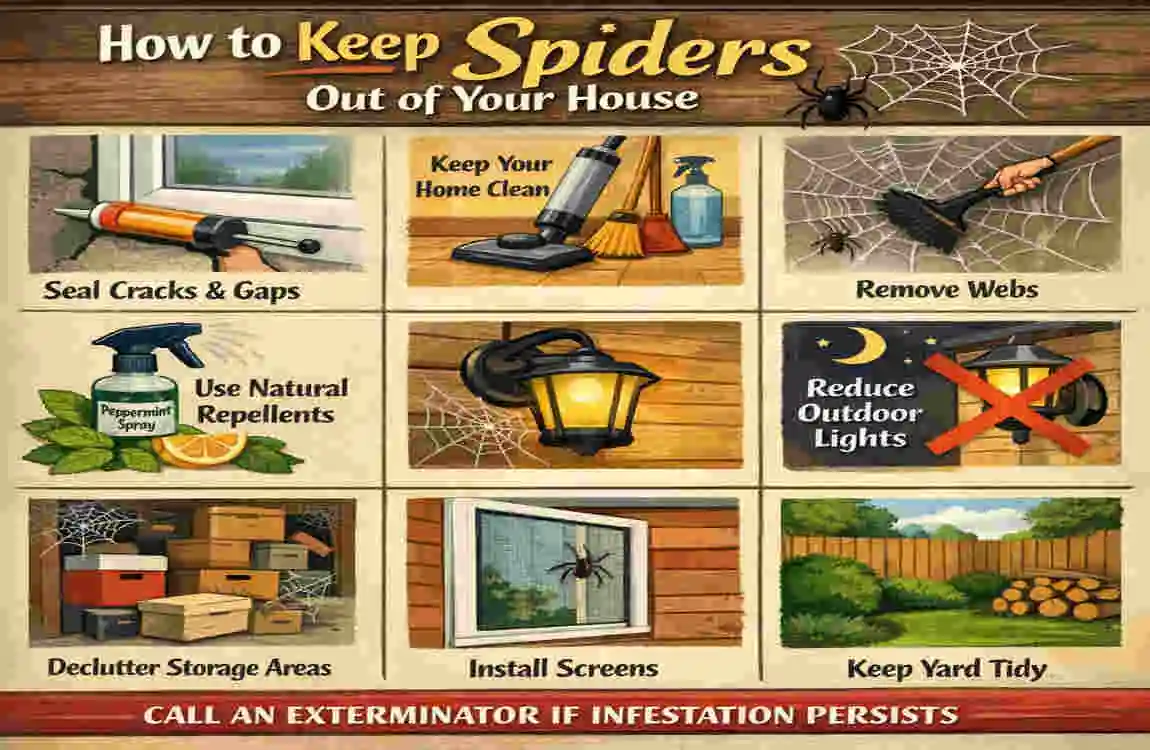
Seal Cracks and Gaps
One of the best spider-prevention tips is to seal entry points. Check around walls, foundations, windows, doors, and utility openings.
Use caulk or weatherstripping where needed. Even small gaps can matter.
Repair Screens and Door Seals
Look at window screens and door edges. If you see holes, tears, or loose-fitting parts, repair them.
A tight seal makes it much harder for spiders and insects to get in.
Reduce Clutter
Spiders love undisturbed spaces. That means clutter gives them more places to hide.
Keep boxes organised, avoid piles of clothes or paper, and clean storage areas often. A tidy room is less attractive to spiders.
Control Other Insects
If you reduce the bugs in your home, spiders will have less reason to stay.
Keep food covered, clean up crumbs, and deal with flies or other insects quickly. Since spiders follow prey, fewer insects usually means fewer spiders.
Keep the Home Clean
Regular cleaning helps a lot. Vacuum corners, window frames, ceiling edges, and hidden spaces often.
Removing webs does not just improve appearance. It also makes the space less comfortable for spiders.
Manage Outdoor Lighting
Bright outdoor lights can attract insects, which in turn attract spiders. If possible, reduce unnecessary lighting near doors and windows.
That small change can help lower spider activity around the house.
Are Spiders in the House Dangerous?
Most household spiders are harmless.
The spiders most people see indoors are not dangerous. They are just common household spiders trying to survive.
That said, you should still avoid touching any spider if you do not know what kind it is.
When to be careful
If you see a spider you cannot identify, do not handle it directly. Keep children and pets away until you are sure what it is.
It is always better to be cautious than to guess.
When professional pest control may help
If you keep seeing spiders often, or if webs and egg sacs appear in many rooms, there may be a bigger issue.
In that case, pest control can help find the cause. Often the real issue is an insect problem, a moisture problem, or too many easy entry points.
Simple Ways to Remove Spiders Safely
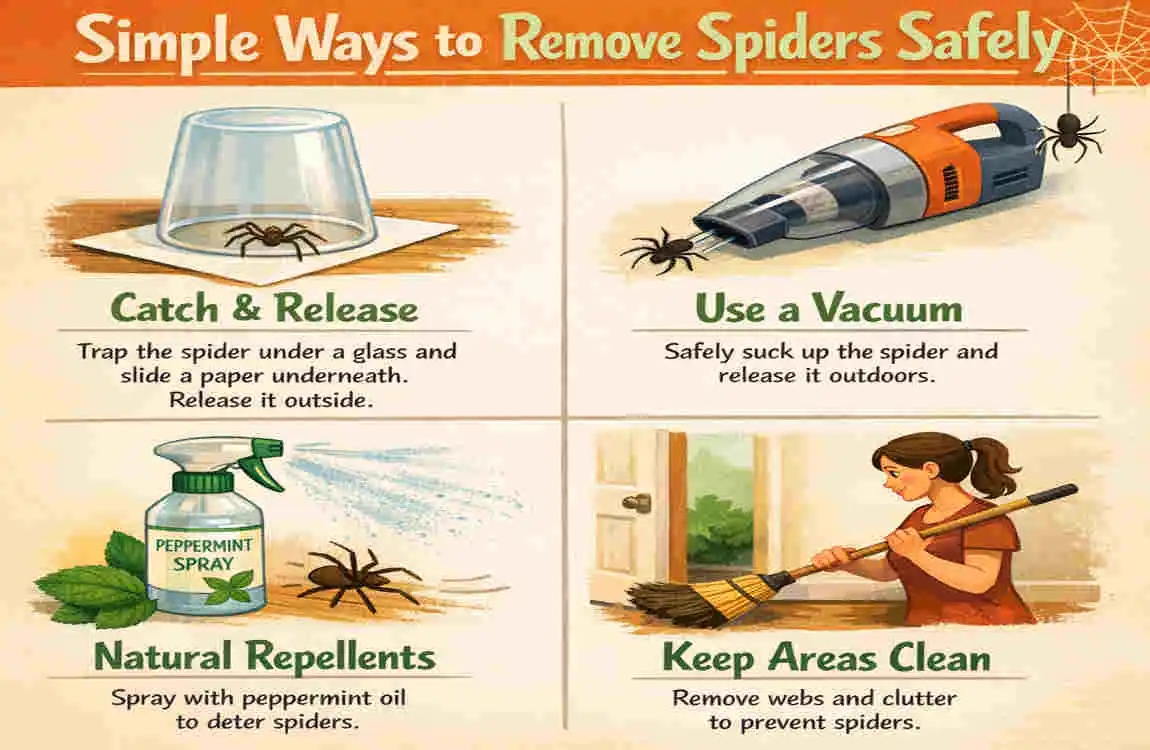
Vacuuming
Vacuuming is one of the easiest ways to remove spiders and webs. It works well in corners, along baseboards, and around ceilings.
Regular vacuuming also helps remove the small insects spiders eat.
Use a container and paper.
If you are comfortable doing so, you can trap a spider in a container and slide a piece of paper underneath it. Then you can release it outside.
Avoid direct contact if you can. This keeps the process simple and safe.
Improve prevention after removal.
Removing one spider does not solve the whole problem. If spiders can still get in, more may follow.
That is why it is smart to combine removal with sealing cracks, regular cleaning, and reducing insect populations.
FAQ About Spiders Coming Inside the House
Why do spiders come inside the house?
They usually come inside seeking food, shelter, moisture, and more favourable temperatures. Openings in the home make it easy for them to get in.
Why are there suddenly many spiders in my house?
This can happen because of seasonal changes, increased insect activity, or a new hiding place inside the home. It does not always mean a major infestation.
Does a clean house still get spiders?
Yes. Even very clean homes can get spiders if there are small entry points or insects inside. Cleanliness helps, but it does not stop every spider.
What attracts spiders to bedrooms?
Bedrooms may attract spiders because they are quiet, dark, and sometimes have insects near windows or corners. Clutter can also make them feel hidden.
How can I stop spiders from entering my house?
Seal cracks, repair screens, reduce clutter, control insects, and keep the home clean. These simple steps make a big difference.
Should I be worried if I see one spider indoors?
Usually no. One spider does not always mean a problem. Frequent sightings are more important to watch.
Do spiders come inside because of cold weather?
Sometimes, yes. Cooler weather can push spiders toward warmer shelter, including homes. Behaviour can vary by species, though.
| Reason | Explanation |
|---|---|
| Food | Spiders enter homes looking for insects and other small prey. |
| Warmth & Shelter | Indoor spaces provide protection from cold, heat, rain, and wind. |
| Moisture | Damp areas such as bathrooms, basements, and kitchens can attract spiders. |
| Light | Outdoor lights attract insects, which may indirectly attract spiders. |
| Easy Entry | Cracks, gaps around windows, doors, and vents provide entry points. |
| Breeding | Some spiders enter sheltered areas to find safe places to build webs or lay eggs. |
