

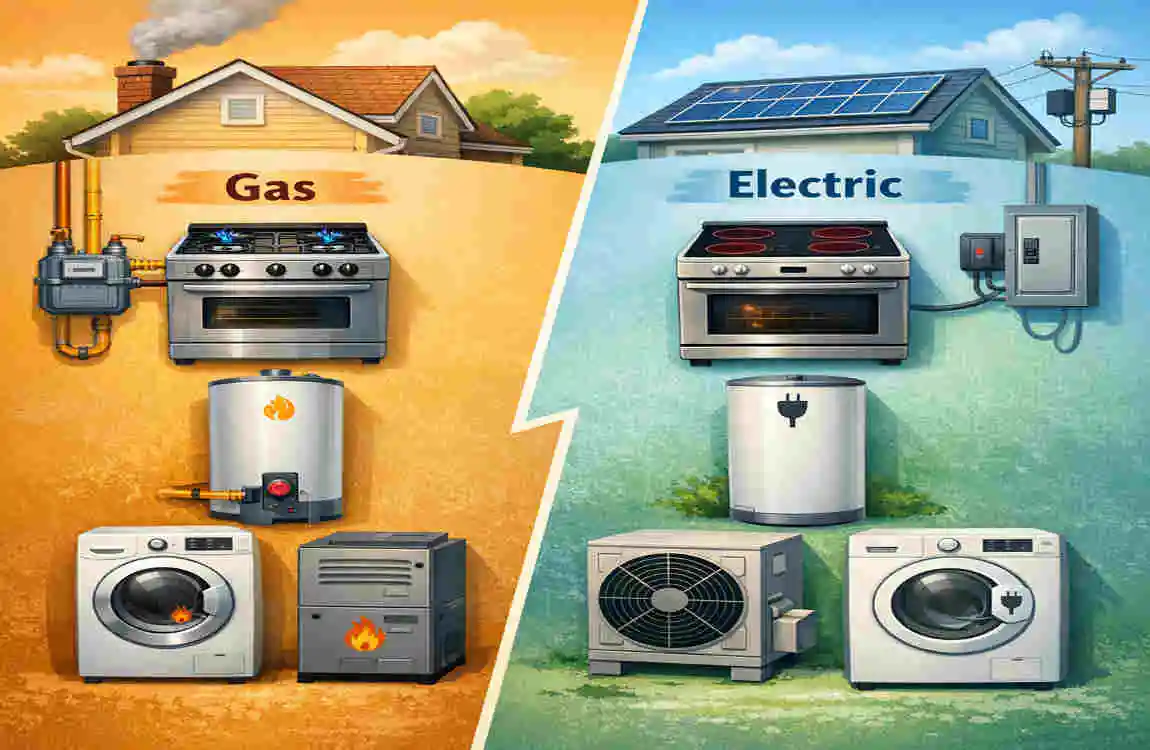
If you are asking, “Is my house gas or electric?” you are not alone. Many homeowners are unsure which utilities their homes use, especially if they recently moved in or inherited the property.
The good news is that it is usually easy to figure out. You can check your utility bills, meters, appliances, and heating system to get a clear answer. In many homes, the real answer is not just gas or electric. It is often both.
Some systems run on natural gas, while others use electricity. That is why it helps to look at the whole house instead of guessing from one appliance or one bill.
Is My House Gas or Electric? Understanding the Basics
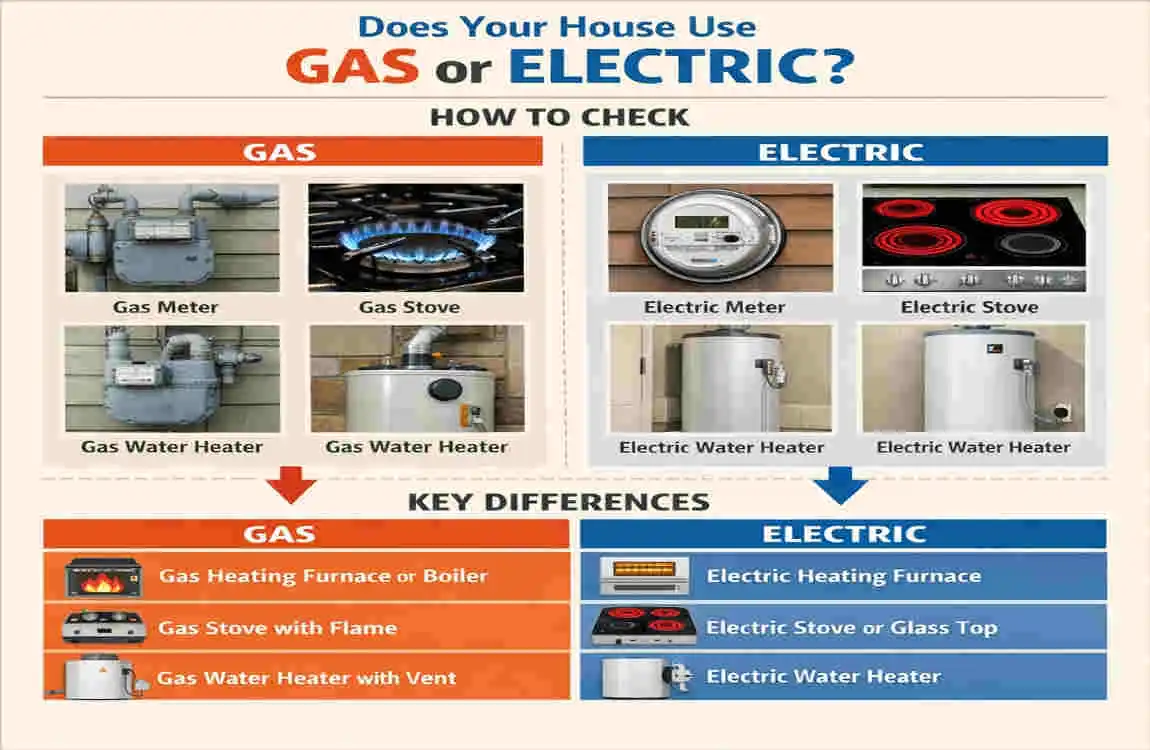
A home can use gas, electricity, or a mix of both. This is important because many people think a house is fully electric just because they see an electric bill, but that is not always true.
What Gas Usually Powers
Natural gas is often used for:
- Heating
- Water heating
- Cooking
- Dryers
- Fireplaces
What Electricity Usually Powers
Electricity often runs:
- Lights
- Outlets
- Air conditioning
- Refrigerators
- Dishwashers
- Electric heaters and heat pumps
Many homes are dual-fuel, which means they use both energy sources in different parts of the house.
Check Your Utility Bills to Find Out
One of the easiest ways to tell whether a house is gas or electric is to check the bills.
What to Look For
On your utility statement, look for words like:
- Natural gas
- Gas usage
- Electric usage
- kWh
- Therms
- CCF
If you see a gas charge and an electric charge, your home likely uses both.
One Bill Does Not Always Mean One Fuel
Sometimes one company sends both bills, but that does not mean the house uses only electricity or only gas. It may simply mean the same provider handles both utilities.
If you see only an electric bill, that still does not prove the house is all-electric. The home may get gas from another provider.
Look at Your Meters
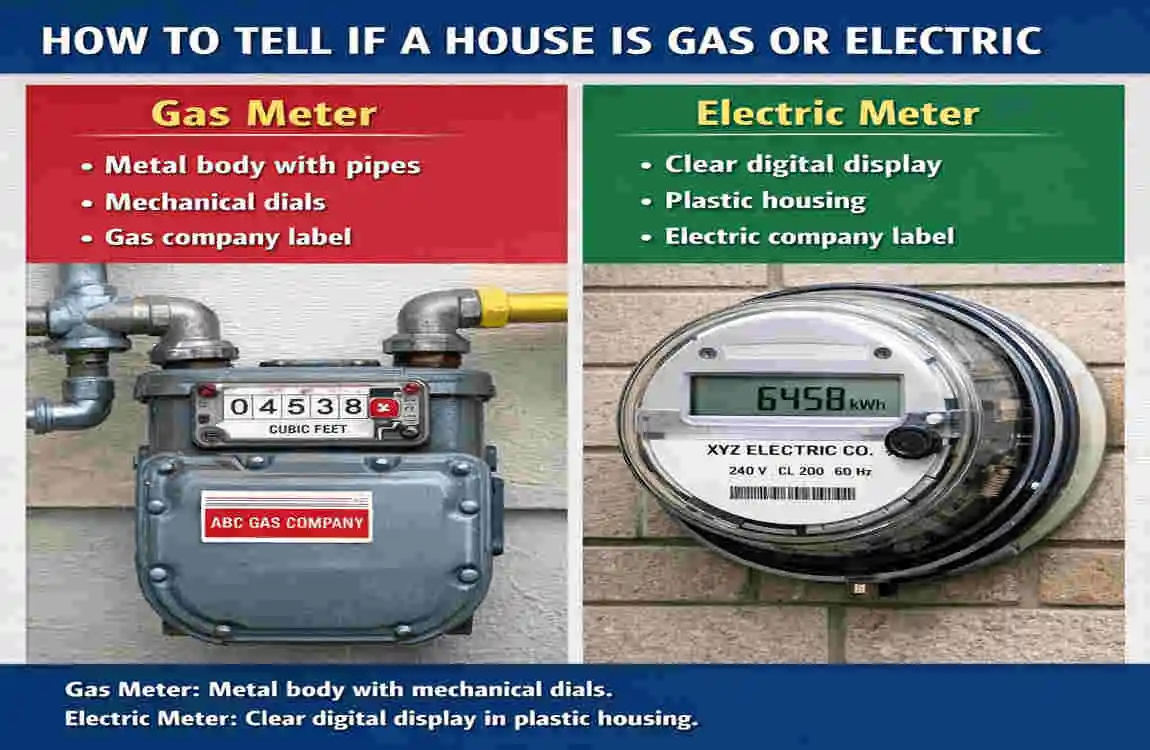
Meters can give you a very clear clue.
FeatureGas MeterElectric Meter
What it measures Gas use Electricity use
Common look Small dials or digital readout Digital display or spinning dial
Location Outside near gas line or side of house Outside wall, basement, garage, or utility area
Connected to Gas pipes Power lines and electrical panel
How to Identify Each Meter
A gas meter is usually connected to metal pipes. It may be located outside the home or near the side wall.
An electric meter is usually connected to the electrical system and may be located near the main panel, outside the house, or in a utility area.
Safety Reminder
Do not tamper with gas lines or utility equipment. If something looks damaged or unclear, contact the utility company or a licensed professional.
Check Your Major Home Appliances
A home’s appliances can tell you a lot about whether it is gas or electric.
Furnace
A gas furnace usually has a gas supply line connected to it. An electric furnace does not use a gas line and instead runs on electrical power.
Water Heater
A gas water heater often has a vent pipe at the top and a gas line leading into it. An electric water heater usually has electrical wiring instead.
Stove or Range
A gas stove usually has visible burners and a gas connection. An electric stove may have coil burners or a smooth glass top.
Clothes Dryer
Gas dryers connect to a gas line. Electric dryers use a heavy electrical plug and no gas line.
Fireplace
Some fireplaces burn gas, while others are electric. A gas fireplace often has a control valve or gas line nearby.
Boiler
If your home has a boiler, it may run on gas or electricity. The labels and connections usually show which one it uses.
Mixed Appliance Homes
Many homes use both gas and electric appliances. For example, a house may have a gas furnace and stove but electric lights, outlets, and air conditioning.
How to Tell If Your Heating and Water Heating Are Gas or Electric
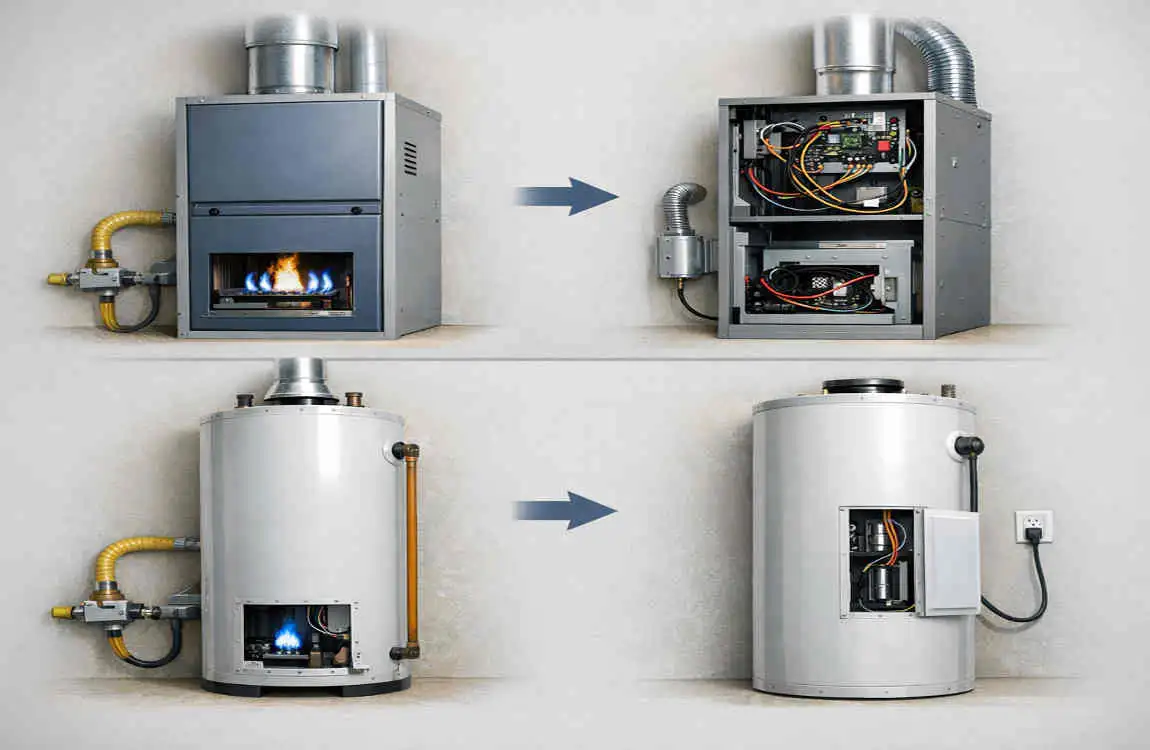
Heating and hot water are two of the biggest clues.
Gas Furnace vs. Electric Furnace
A gas furnace burns natural gas to create heat. You may see a gas pipe, venting system, or pilot-related parts.
An electric furnace uses heating elements and electrical wiring. It usually does not have a gas line.
Gas Water Heater vs. Electric Water Heater
A gas water heater often has:
- A gas line
- A vent at the top
- A burner area at the bottom
An electric water heater usually has:
- Electrical wires
- No gas line
- A more sealed appearance
Heat Pumps
Heat pumps are an important electric heating option. They use electricity to move heat rather than create it, as a gas furnace does.
If your home uses a heat pump, that usually means at least part of your heating system is electric.
Gas vs. Electric Home: Which Is Better?
There is no single best answer for every house. It depends on your local rates, climate, and how you use energy.
Gas Home: Pros and Cons
Pros:
- Often good for strong heating
- Works well for cooking and water heating
- Can be efficient in cold climates
Cons:
- Requires gas lines and gas service
- Can involve more maintenance
- Adds safety concerns related to gas leaks
Electric Home: Pros and Cons
Pros:
- Easier to electrify with modern systems
- No gas line needed for appliances
- Can be cleaner depending on local power sources
Cons:
- Heating costs may be higher in some areas
- Depends heavily on electricity prices
- Some electric systems may cost more upfront
What Really Matters
Local utility rates matter a lot. A gas home may be cheaper in one area and more expensive in another. Climate also matters because a cold region may need stronger heating, while a warmer area may rely more on cooling.
If you are thinking about switching from gas to electric, you should look at the full cost, not just the appliance price.
FAQ: Is My House Gas or Electric?
How can I tell if my house is gas or electric?
Check your utility bills, look at your meters, and inspect your main appliances and heating equipment.
Does having an electric meter mean my house is all electric?
No. Many homes use both gas and electricity. An electric meter only shows how much electricity your home uses.
How do I know if my stove is gas or electric?
A gas stove usually has burners and a gas line. An electric stove uses coils or a smooth electric top.
How can I tell if my water heater is gas or electric?
Look for a gas line and venting system for gas models. Electric models use wiring instead.
Is gas cheaper than electricity for a house?
It depends on your local energy prices, appliance efficiency, and how much energy your household uses.
Can I switch my house from gas to electric?
Yes, in many cases you can, especially with heat pumps, electric water heaters, and induction cooking.
Who can I contact if I am still unsure?
You should contact your utility provider or a licensed professional rather than guessing around gas equipment.
| What to Check | Gas House | Electric House |
|---|---|---|
| Heating | Uses natural gas or propane | Uses electricity |
| Water Heater | Often has a gas burner | Uses electric heating elements |
| Stove/Cooktop | Visible gas flames | Smooth or coil electric surface |
| Utility Meter | Has a gas meter and electric meter | Usually only an electric meter |
| Furnace | Gas burner heats the air | Electric heating elements |
| Monthly Costs | Gas + electricity bills | Mainly electricity bill |
