

A beach house should feel light, calm, and easy to enjoy. The flooring plays a big part in that feeling. It needs to look beautiful, but it also has to handle sand, salt air, moisture, and daily wear.
That is why tile is such a smart choice. It combines durability, easy cleaning, moisture resistance, and coastal style into a single material. If you are planning a seaside home or updating an existing one, the right tile can help create that relaxed coastal look without sacrificing practicality.
Why Tile Flooring Works So Well in Beach Houses
Moisture and Humidity Resistance
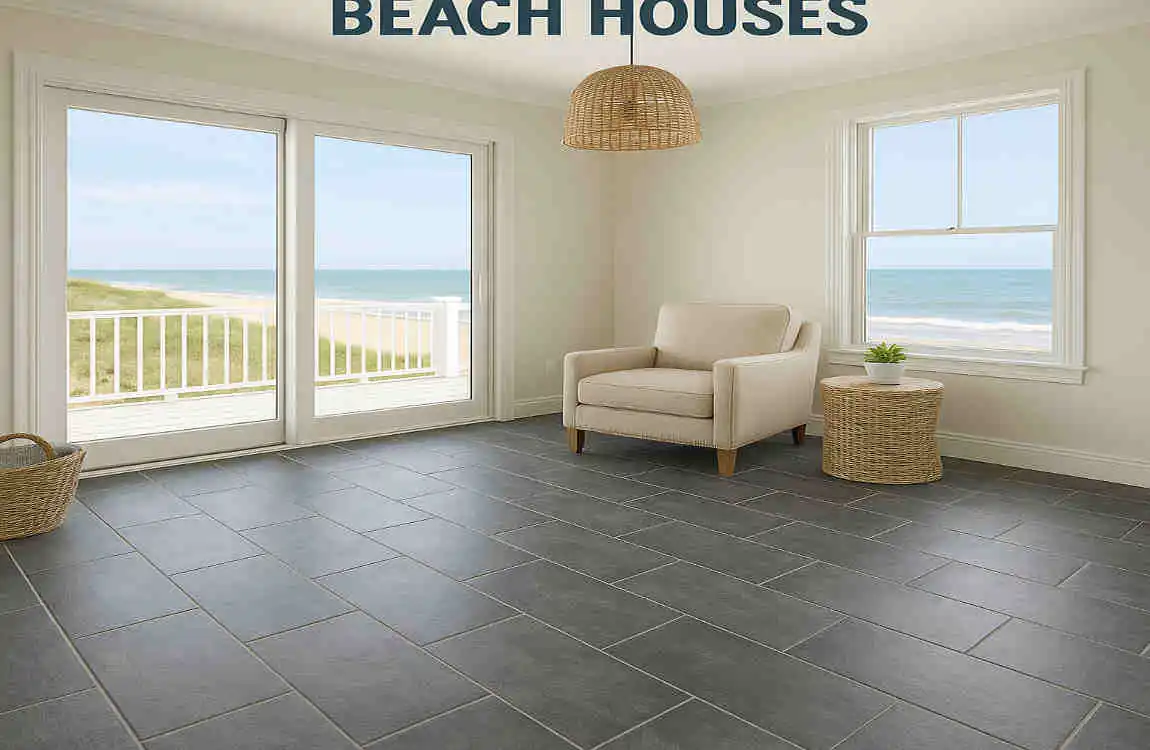
Beach homes often deal with higher humidity and more moisture than regular homes. That is why tile works so well in these settings.
Tile handles damp conditions better than many flooring types. It is a strong choice for entryways, kitchens, bathrooms, laundry rooms, and open living areas. If your home is close to the water, this matters even more.
Easy Cleaning and Maintenance
A beach house floor should be easy to live with. Sand, wet feet, and salty air can make cleaning a constant job.
Tile helps make that job simpler. A quick sweep or vacuum removes sand, and a regular mop keeps the surface fresh. You do not need a complicated care routine, which makes tile very practical for vacation homes and full-time coastal living.
Cool and Comfortable Surface
Warm weather is part of the beach house lifestyle, and tile helps support that feeling. It naturally feels cooler underfoot than many other flooring options.
That makes it a comfortable choice in sunny climates. If needed, tile can also work with radiant heating in cooler areas, giving you flexibility in different seasons.
Best Coastal Tile Colours for a Beach House
Soft White and Cream Tiles
White and cream are classic coastal colours. They reflect light well and help rooms feel airy and open.
These shades work beautifully with natural wood, woven furniture, linen fabrics, and simple décor. If you want your beach house to feel bright and peaceful, this is one of the best places to start.
Sandy Beige and Warm Neutral Tiles
Beige, sand, and other warm neutrals create a soft, natural look. They echo the colour of the shore without feeling too obvious.
These tones are a nice option if you want something warmer than white. They also tend to hide everyday dust and sand a little better.
Ocean Blue and Seafoam Green
Blue and green shades can bring in a gentle coastal feel. They do not need to be bold. In fact, soft versions usually work best.
You might use these colours in a pattern, border, or accent area rather than across the entire floor. That keeps the design calm and balanced.
Grey and Greige Coastal Tiles
Modern beach homes often lean toward greige, a mix of grey and beige. These colours feel clean, simple, and easy to match with other finishes.
They work well if you want a coastal home that feels updated rather than overly themed.
Popular Coastal Tile Flooring Ideas for Beach House
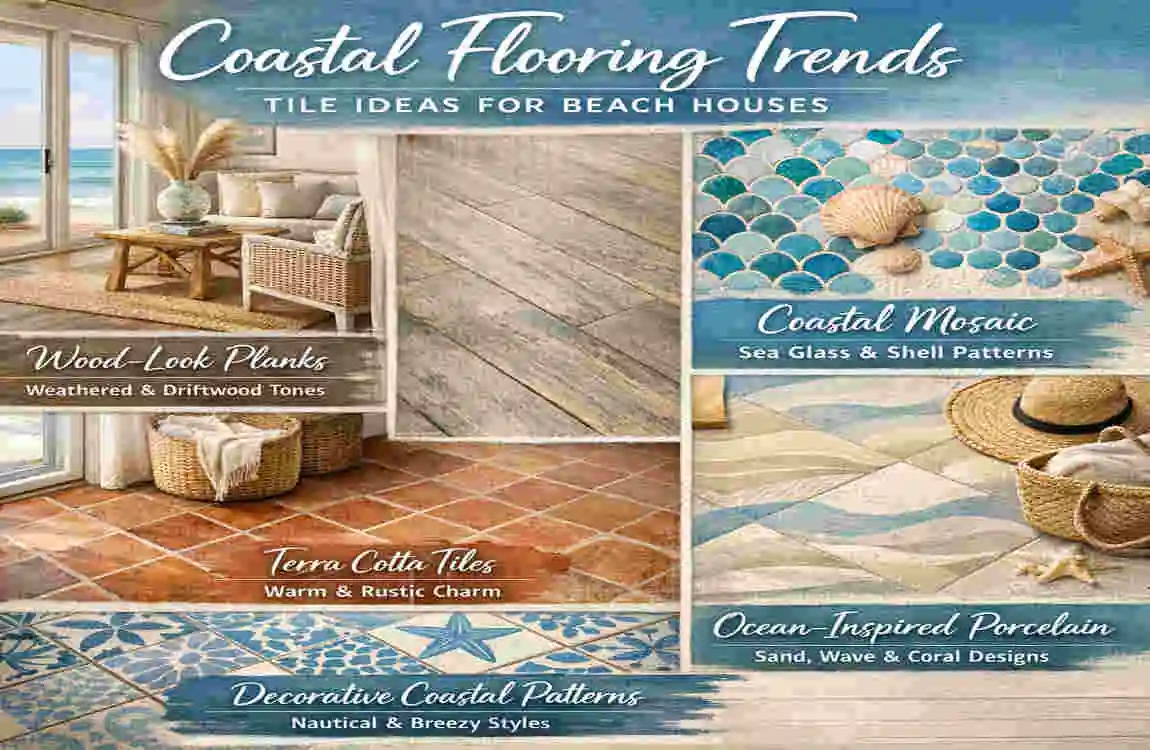
Wood-Look Porcelain Tile
This is one of the most popular coastal tile flooring ideas for beach house designs. It gives you the warm look of wood with the strength of tile.
That is a big benefit in a beach home, where moisture and sand can be hard on natural wood floors. Plank-style wood-look tile also creates a relaxed, easy coastal feel.
Natural Stone-Look Tile
Stone-look tile brings a more organic feel to the home. It can resemble marble, limestone, travertine, or slate.
These looks fit nicely with coastal architecture because they feel grounded and natural. They can add elegance without making the room feel heavy.
Large-Format Coastal Tiles
Large tiles are a smart choice for creating a spacious look. They help reduce the number of grout lines, which makes the floor feel cleaner and more open.
This works especially well in homes with plenty of natural light. The result is simple, fresh, and modern.
Patterned and Decorative Tiles
If you want more character, patterned tile can be a great option. Soft geometric styles, wave-like designs, or Mediterranean-inspired patterns can add personality.
The key is to keep the pattern subtle. In a beach house, the flooring should feel welcoming rather than busy.
How to Choose the Right Tile for Different Beach House Rooms
Living Room and Open Spaces
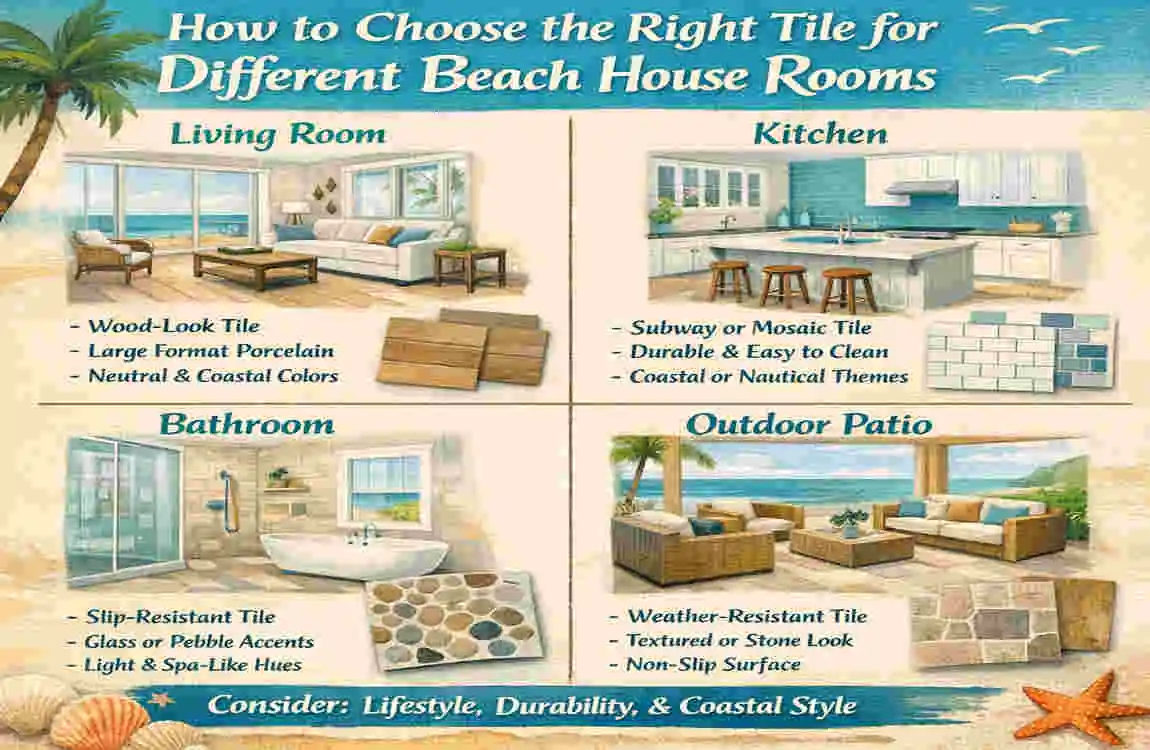
In a living room or open-plan area, flooring should connect the whole space. A neutral tile in a soft white, beige, or light grey usually works well.
These colours make the room feel calm and allow furniture and décor to stand out. If the home has lots of windows, light tile can make the space feel even brighter.
Kitchen
The kitchen needs flooring that can handle spills, sand, and everyday traffic. This is where stain resistance and easy cleaning become especially important.
Porcelain tile is often a strong choice here. It offers a practical surface while still fitting the coastal look.
Bathroom
Bathrooms need tile that handles moisture very well. This is where slip-conscious surfaces matter too.
Textured or matte tile is often a better choice than very glossy tile. You can also coordinate the floor with the wall tile for a more polished look.
Entryway and Mudroom
Entry areas get the most wear in a beach house. Wet sandals, sandy shoes, and saltwater messes all tend to collect here.
Durable tile is especially useful in these spaces because it withstands daily use and cleans quickly.
Coastal Tile Layouts and Design Trends
Straight-Lay Pattern
A straight-lay pattern is simple and timeless. It works well when you want the floor to feel clean and calm.
This is often the easiest layout for modern beach homes because it does not compete with the overall design.
Herringbone and Chevron
Herringbone and chevron layouts add movement and style. They can make the floor feel more custom and refined.
These patterns work best when you want a little more visual interest without using bold colours.
Large Plank Layouts
If you choose wood-look tile, a large plank layout can make the space feel more like real wood flooring. It also supports the relaxed, natural look many beach houses aim for.
Mixed Tile Sizes
Using a mix of tile sizes can create a more custom appearance. This approach can work in bathrooms, foyers, or feature zones.
It is a good way to make certain areas feel special while keeping the design cohesive.
Seamless Indoor-Outdoor Flooring
One of the strongest coastal design trends is visual flow between indoor and outdoor spaces. Similar tile styles can help connect a living room to a patio or balcony.
This makes the home feel larger and more open, which is ideal for a beach setting.
How to Select Coastal Tile for Style, Safety, and Budget
Porcelain vs Ceramic Tile
Both porcelain and ceramic can work in a beach house, but they are not the same.
- Porcelain tile is generally denser and more water-resistant
- Ceramic tile can be a more budget-friendly option for many indoor spaces
For high-moisture or high-traffic areas, porcelain is often the stronger pick.
Matte vs Glossy Finishes
Finish matters more than many people think. A matte or lightly textured tile is often better for beach homes because it can be less slippery and more forgiving with sand and water.
Glossy tile can look beautiful, but it may show smudges and moisture more easily.
Choosing the Right Grout
Grout colour changes the whole look of the floor. Light grout can create a seamless look, while darker grout may hide dirt better.
In a beach house, many homeowners choose a grout colour that blends naturally with the tile rather than drawing too much attention.
Budget and Long-Term Value
Tile prices vary depending on material, finish, and installation. You should also think about subfloor preparation and maintenance costs.
A slightly higher upfront cost can be worth it if the tile lasts longer and needs less care over time.
Coastal Tile Flooring Maintenance
Simple Maintenance Tips
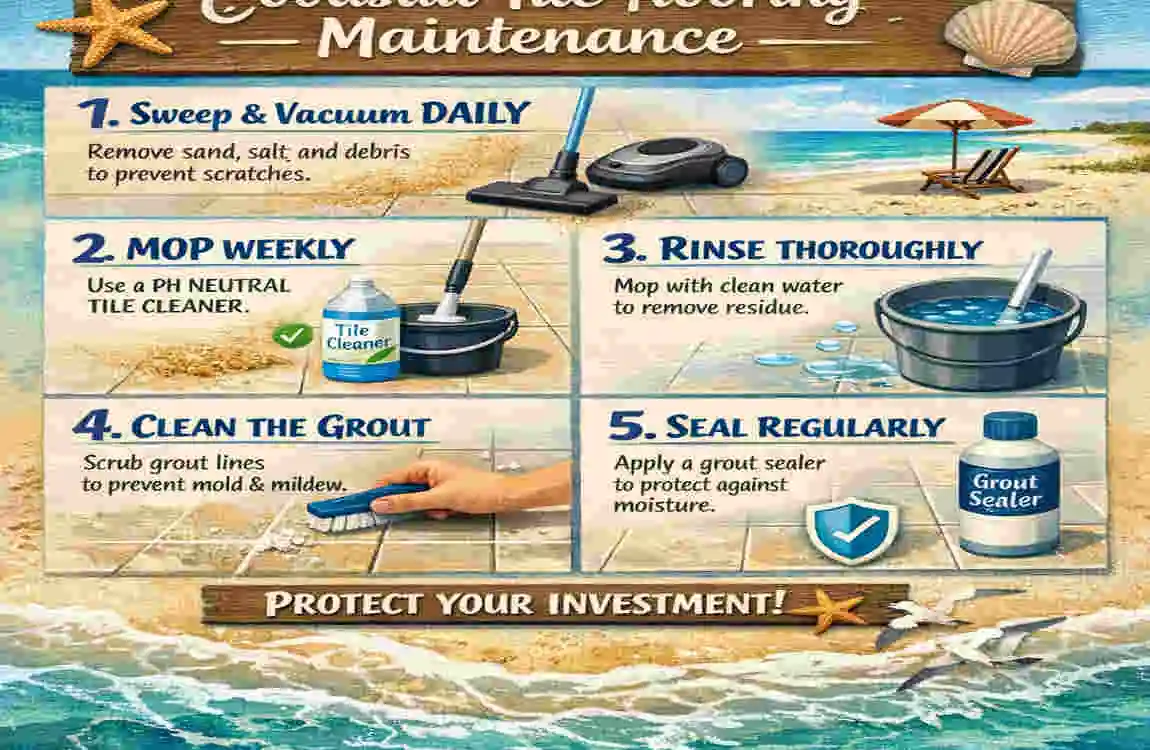
Good tile care is usually straightforward. A simple routine can keep the floor looking fresh.
- Sweep or vacuum regularly to remove sand
- Mop with a tile-safe cleaner
- Clean spills as soon as possible
- Follow sealing instructions when needed
Common Mistakes to Avoid
Some flooring mistakes can hurt both appearance and safety. Try to avoid these:
- Choosing a slippery finish in wet areas
- Picking flooring that is too dark for a small room
- Ignoring grout care
- Using a style that does not match the home’s architecture
A beach house should feel relaxed, not difficult to maintain.
FAQ: Coastal Tile Flooring Ideas for Beach House
Is tile flooring good for a beach house?
Yes. Tile is a popular choice because it is durable, moisture-resistant, and easy to clean.
What is the best tile for a coastal beach house?
Porcelain tile is often one of the best choices, especially wood-look and stone-look styles.
What colour tile is best for a coastal home?
Popular colours include white, cream, sand, beige, light grey, seafoam, and muted blue.
Is porcelain or ceramic tile better for a beach house?
Porcelain is usually more moisture-resistant and durable, while ceramic can be a more affordable option.
What tile looks like wood but is better for a beach house?
Wood-look porcelain tile gives you the warm look of wood with better durability and easier maintenance.
Are large tiles good for coastal homes?
Yes. Large tiles can make a room feel more open and help reduce visible grout lines.
| Tile Flooring Idea | Best For | Key Benefit |
|---|---|---|
| Light Wood-Look Tile | Living rooms & bedrooms | Adds a warm coastal feel |
| White Porcelain Tile | Whole-house flooring | Bright, clean, and easy to maintain |
| Sandy Beige Tile | Beach-inspired interiors | Creates a natural, relaxed look |
| Blue Patterned Tile | Bathrooms & entryways | Adds a fresh ocean-inspired touch |
| Natural Stone-Look Tile | Open-plan spaces | Gives an earthy coastal appearance |
| Terracotta-Style Tile | Rustic beach houses | Adds warmth and character |
| Large-Format Tile | Modern beach homes | Makes rooms feel spacious |
