

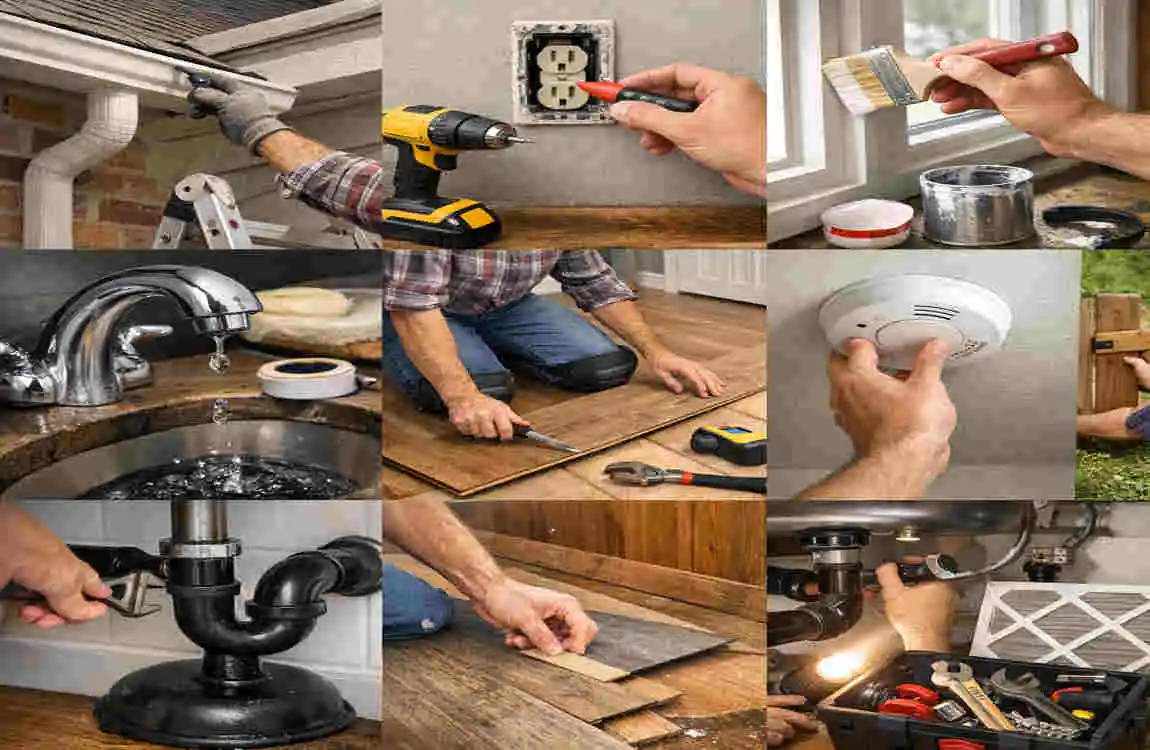
House DIY maintenance means the small repairs and upkeep tasks you do yourself to keep your home in good shape. This can include cleaning, fixing minor problems, replacing worn parts, and handling regular home maintenance.
So, how hard is DIY maintenance for the house? The honest answer is this: DIY maintenance for the house is usually manageable when tasks are small, planned, and matched to your skill level.
That is good news for homeowners. Many routine jobs are simple enough to learn, and doing them early can help you avoid bigger and more expensive repairs later.
Understanding the Difficulty of House DIY Maintenance
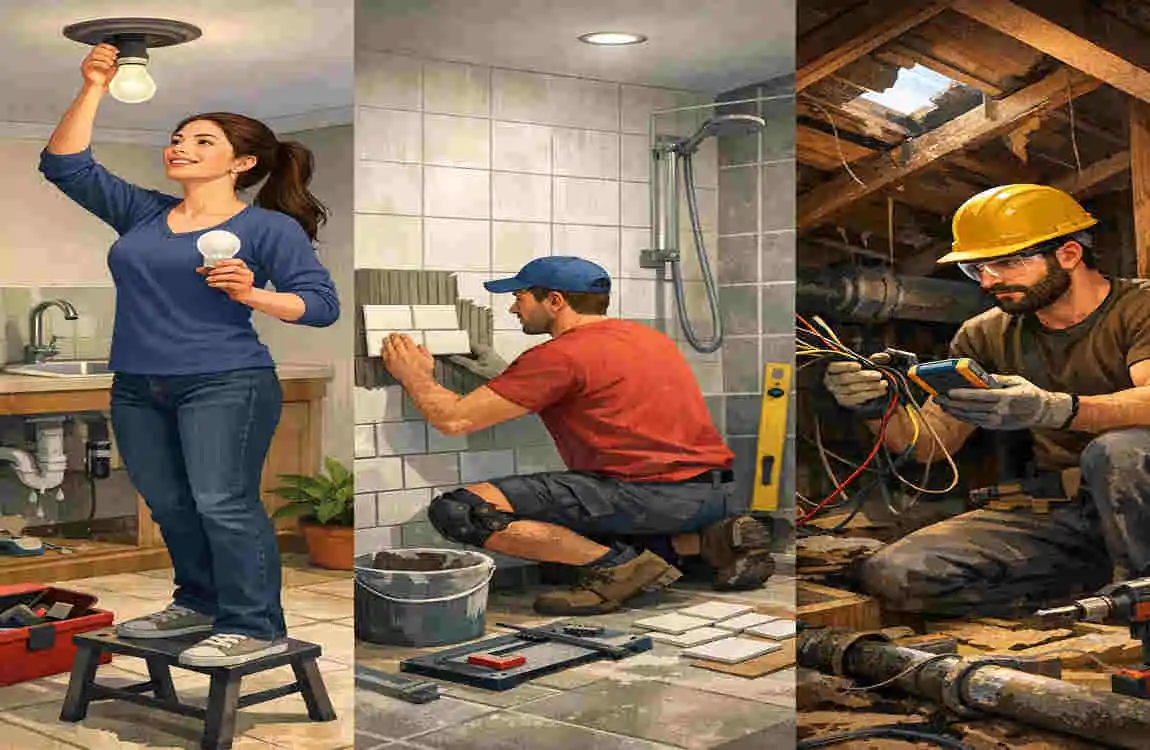
What makes DIY home maintenance easy or hard?
A home repair feels easy or hard depending on a few simple things.
Your experience matters first. If you have done a task before, you will usually feel more comfortable. If it is your first time, it may take longer and feel more stressful.
Your tools also matter. A small repair can become frustrating if you do not have the right screwdriver, drill bit, wrench, or ladder.
Time is another factor. Some jobs are simple, but they still need patience. If you are rushing, even an easy task can become messy.
The age and condition of the house also play a role. Older homes may have old wiring, old pipes, or hidden wear that makes simple repairs harder.
Finally, the complexity of the repair matters. Replacing a cabinet handle is much easier than fixing a leaking pipe behind a wall.
Beginner-friendly maintenance tasks
Some tasks are usually safe and simple for beginners. These are great places to start if you want to learn.
- Replacing air filters
- Cleaning gutters
- Touching up paint
- Replacing cabinet hardware
- Cleaning drains
- Sealing small gaps around windows and doors
These jobs are often low-risk and useful. They help you gain confidence without having to deal with dangerous systems.
Tasks that may be more challenging
Homeowners can do other jobs, but they usually need more care and basic know-how.
- Repairing drywall
- Fixing leaking faucets
- Replacing flooring
- Basic plumbing repairs
- Minor electrical work where legally permitted
These tasks are not impossible, but mistakes can create bigger problems. If you are unsure, it is better to slow down and learn first.
Essential Tools for Simple House DIY Maintenance
Basic tools every homeowner should have
You do not need a huge workshop to handle simple home care. A few basic tools can cover many common jobs.
- Screwdriver set
- Hammer
- Adjustable wrench
- Pliers
- Tape measure
- Utility knife
- Level
- Drill and bits
These tools are useful for everything from tightening loose parts to hanging shelves and making small repairs.
Safety equipment to keep nearby
Safety matters even with small projects. Even a simple job can cause injury if you are not careful.
Keep these items nearby:
- Work gloves
- Safety glasses
- Dust mask or respirator when appropriate
- Ladder with proper footing
- Hearing protection for noisy tools
The goal is not to make the job complicated. The goal is to protect yourself while working.
Why the right tools matter
The right tools make a big difference. They help you work with more accuracy, save time, and avoid damaging the surface you are repairing.
They also make simple projects feel less intimidating. When the tool fits the job, the task usually feels much easier.
Common House DIY Maintenance Projects and Their Difficulty
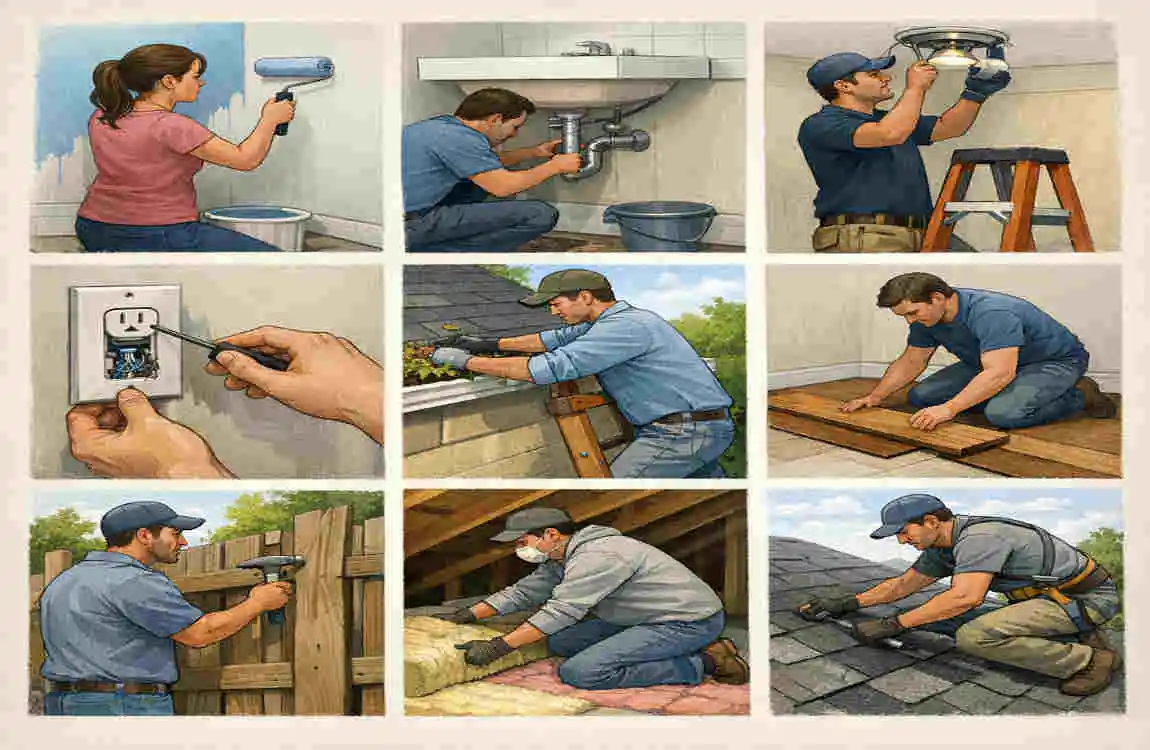
Easy DIY maintenance
Some repairs are simple enough that most homeowners can handle them with a little attention.
These include:
- Changing filters
- Cleaning vents
- Replacing light bulbs
- Lubricating hinges
- Replacing weatherstripping
- Cleaning gutters safely from the ground where possible
These jobs are great for beginners because they teach you to work carefully with minimal risk.
Moderate DIY projects
These tasks take a little more effort, but many homeowners can still learn them.
- Patching small wall holes
- Painting a room
- Fixing a running toilet
- Replacing a faucet
- Installing shelves
- Repairing minor caulking problems
These jobs often require patience and some reading before you begin. They are still manageable, but you should work step by step.
Advanced or professional-level work
Some jobs are better left to trained professionals. These projects can affect safety, structure, or major home systems.
- Major electrical repairs
- Gas-line work
- Roof repairs
- Structural changes
- Major plumbing problems
- HVAC system repairs
- Mold remediation
- Foundation repairs
If you are asking whether a project might be risky, that is often a sign to stop and call a professional.
Difficulty at a Glance
Task TypeExamplesDifficulty LevelBest For
Easy Changing filters, cleaning vents, replacing bulbs Low Beginners
Moderate Painting, patching holes, fixing a faucet Medium Confident DIYers
Advanced Electrical, plumbing, roofing, structural work High Professionals
How to Make House DIY Maintenance Easier
Start with small projects.
If you are new to home maintenance, do not begin with the hardest job in the house. Start with something simple and low-risk.
A small win helps you build confidence. Once you complete one task successfully, the next one feels less scary.
Follow the instructions carefully. If the product or repair has a guide, read it first. That step alone can save you time and mistakes.
Make a home maintenance schedule.
One of the best ways to stay on top of your home is to create a simple schedule. That way, you are not only fixing problems after they grow.
You can break tasks into:
- Monthly tasks
- Seasonal tasks
- Yearly tasks
For example, you might check filters monthly, clean gutters seasonally, and inspect smoke alarms once a year.
A schedule keeps small problems from turning into expensive repairs.
Know when to stop
This is an important skill. Sometimes the smartest DIY move is to stop and get help.
Stop if you discover hidden damage, strange wiring, water inside a wall, or any situation you do not understand. You should also stop if the repair affects a system you are not trained to handle.
Knowing your limits protects both your home and your safety.
Benefits and Risks of DIY House Maintenance
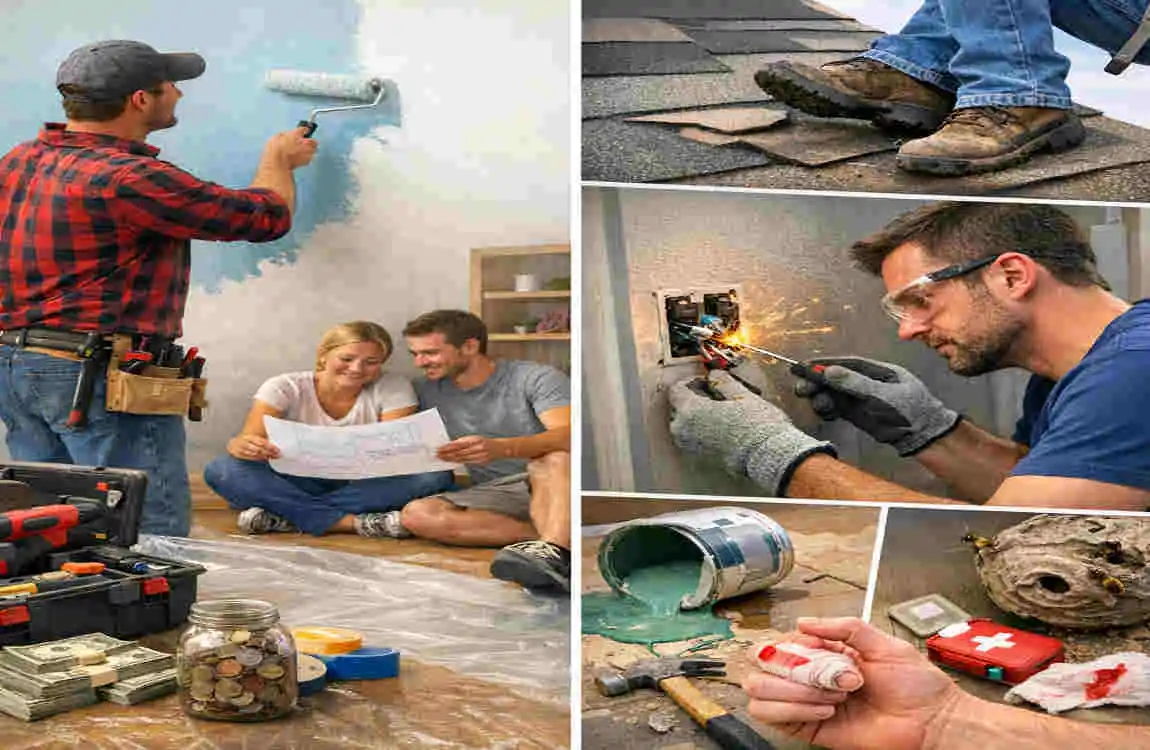
Benefits of doing maintenance yourself
There are many good reasons to learn basic maintenance.
- It can reduce labour costs
- It builds practical skills
- It gives you more control
- It helps you spot problems early
- It can be more convenient for small jobs
Even if you only handle simple tasks, those savings and skills can add up over time.
Common DIY mistakes to avoid
DIY is helpful, but mistakes can be costly. Watch out for these common problems:
- Using the wrong tools
- Skipping safety precautions
- Ignoring manufacturer instructions
- Taking on projects beyond your skill level
- Covering up the problem instead of fixing it
- Forgetting to check local codes or permit requirements
A careful homeowner can avoid most of these issues by slowing down and planning.
DIY vs hiring a professional
DIY is not always the cheaper choice. A small repair may be affordable to do yourself, but a mistake on a major system can cost far more later.
Think about:
- Cost
- Time
- Skill
- Safety
- Project complexity
If a mistake could lead to injury or major damage, professional help is worth it.
FAQ: How Hard Is House DIY Maintenance?
Is house DIY maintenance hard for beginners?
Not always. Many routine tasks are beginner-friendly, such as changing filters, tightening hardware, or applying caulk. But electrical, gas, roofing, structural, and major plumbing work can be much harder.
What is the easiest DIY home maintenance task?
Simple jobs like replacing air filters, tightening loose handles, cleaning vents, or swapping light bulbs are often the easiest for beginners.
How can I learn basic home maintenance skills?
Start small. Read instructions, watch reliable demonstrations, and practice on low-risk tasks first. Over time, you will feel more confident.
Is DIY home maintenance cheaper than hiring a professional?
For simple jobs, yes, it can save money. But if you make a mistake on a complex project, the repair may end up costing more.
When should I hire a professional for home maintenance?
Hire a professional for dangerous, major, structural, gas-related, electrical, or large plumbing work.
How often should a house be maintained?
Maintenance should happen all year long. Some tasks are monthly, some seasonal, and some yearly. Regular checks are easier than big repairs later.
| Maintenance Task | Difficulty | DIY-Friendly? | Key Tip |
|---|---|---|---|
| Changing air filters | Easy | Yes | Replace filters regularly |
| Cleaning gutters | Easy–Moderate | Yes | Use a stable ladder safely |
| Fixing small leaks | Moderate | Usually | Shut off water first |
| Painting walls | Easy | Yes | Prepare surfaces before painting |
| Sealing windows/doors | Easy | Yes | Use quality caulk |
