

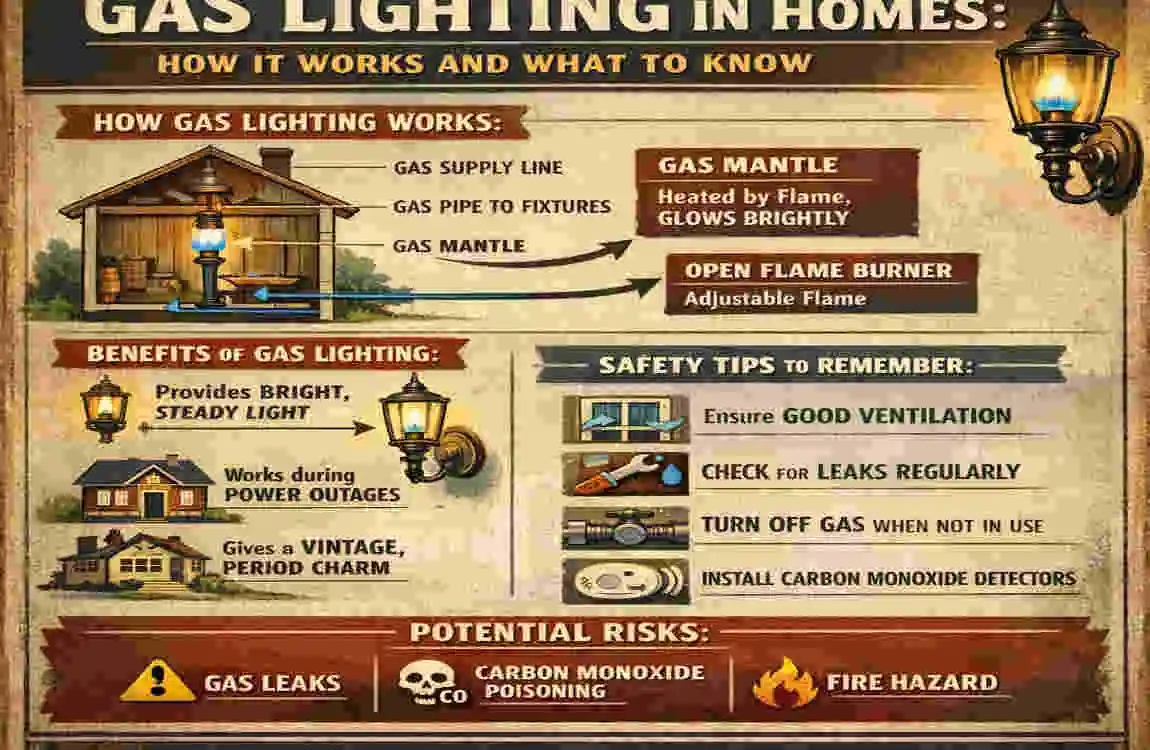
Yes, gas can give a house lights when a home uses special gas-lighting fixtures designed to burn natural gas or propane safely. This is not the same as using a normal gas appliance as a lamp. It only works with the right fixture, gas supply, and safety setup.
Gas lighting was once common in homes before electricity became the standard. Today, it still appears in historic homes, decorative outdoor lanterns, and specialty designs where homeowners want a warm flame look.
How Gas Lighting Works in a Home
The Basic Principle Behind Gas Lighting
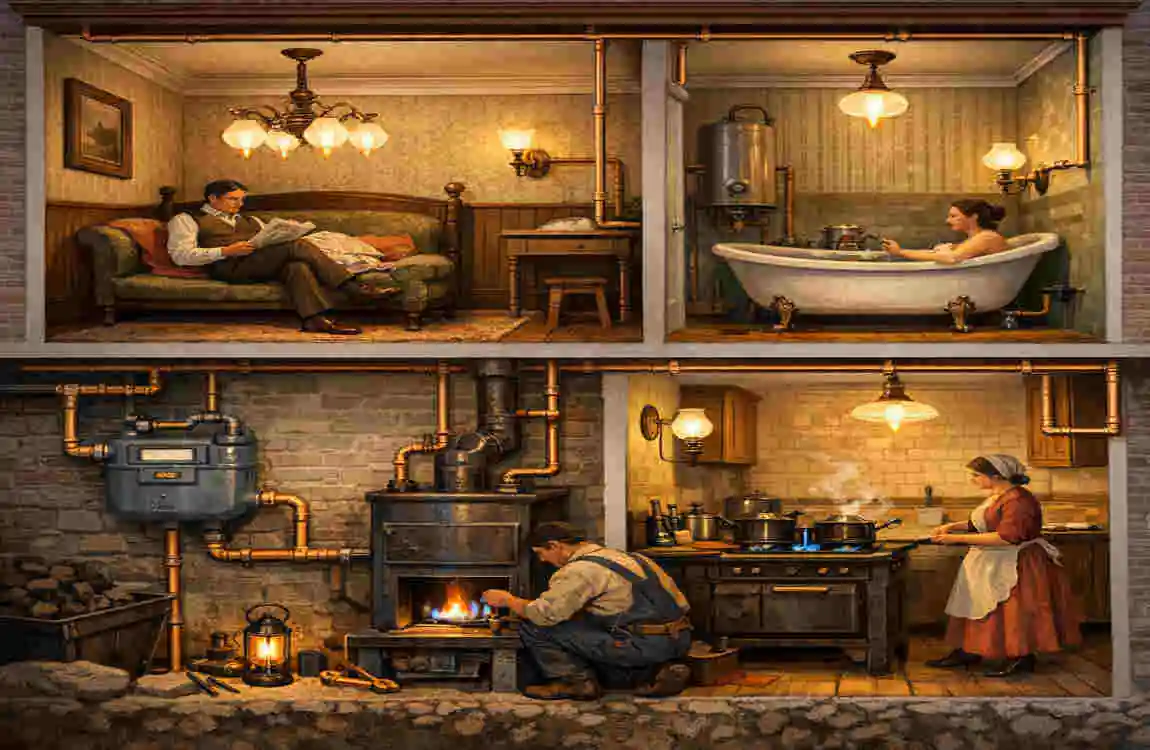
Gas lighting works by sending fuel, such as natural gas or propane, to a fixture where it is burned in a controlled flame.
That flame creates light and heat. In older systems, the flame itself was the main source of light. In some newer designs, a mantle or special burner helps make the light brighter.
The basic process is simple:
- Gas flows through a line.
- A valve controls the flow.
- The burner mixes gas with air.
- The flame burns and gives off light.
Main Components of a Gas Light
A gas light usually includes:
- Gas supply line
- Shutoff valve
- Burner
- Mantle or light-producing part
- Ignition system
- Protective glass or housing
- Ventilation parts
Each part has a job. If one part is missing or damaged, the light may not work safely.
Can Gas Give a House Lights Without Electricity?
Yes, some gas lights can work without electricity if they use manual ignition.
That can be useful during a power outage. However, not every modern gas-lighting system is fully independent. Some still use electric controls or ignition parts.
So while gas can provide light off-grid, the system must be designed for that purpose.
Where Gas Lighting Is Used in Homes
Indoor Gas Lighting
Historically, gas lights were used in living rooms, hallways, kitchens, and bedrooms. Before electric lighting became common, many homes depended on gas for evening light.
Today, indoor gas lighting is rare. It needs proper ventilation and careful safety planning because it creates combustion byproducts.
If an older home still has original gas fixtures, they should be inspected before anyone uses them.
Outdoor Gas Lighting
Outdoor gas lights are more common than indoor ones in modern homes.
You may see them near:
- front entrances
- porches
- patios
- walkways
- garages
- garden areas
These lights often add a classic, elegant look. They are popular in traditional homes and upscale exterior designs.
Gas Lighting in Historic and Period Homes
Many homeowners restore gas lighting to preserve the home’s original style.
That makes sense in older properties where the goal is to preserve a historic look. Still, old gas systems should always be checked by a professional before reuse.
Benefits and Drawbacks of Gas Lighting
Advantages of Gas Lighting
Gas lighting has a few clear strengths:
- It can work without grid power in suitable systems
- It gives a warm, natural flame look
- It adds character to historic and traditional homes
- Outdoor gas lanterns can make entryways feel more elegant
- It can serve as backup lighting in some cases
Disadvantages to Consider
Gas lighting is not right for every home.
Some downsides include:
- It needs a gas supply and special fixtures
- It creates heat and combustion byproducts
- It requires regular care and inspection
- It can be more complex to install than electric lights
- Indoor use needs good ventilation
- Running costs depend on fuel price and usage
Gas Lighting vs. Electric Lighting
FeatureGas LightingElectric Lighting
Energy source Natural gas or propane Electricity
Light production Flame/combustion Electrical
Installation Specialized gas fixture and supply Electrical wiring and fixture
Heat output Usually higher Usually lower at the fixture
Appearance Warm and traditional Wide range of styles
Maintenance Regular burner and fixture care Usually lower
Backup potential Can work without grid power in some systems Depends on electrical backup
Gas Lighting Safety, Installation, and Maintenance
Important Gas Lighting Safety Rules
Gas lighting must be treated as a fuel-burning system, not a normal lamp.
Keep these safety basics in mind:
- Never turn a regular gas appliance into a light source
- Use only fixtures made for gas lighting
- Have gas piping checked by qualified professionals
- Keep flammable materials away from open flame
- Provide proper indoor ventilation
- Install carbon monoxide detection where needed
- Know where the gas shutoff valve is
- Take gas odors or hissing sounds seriously
If you smell gas, do not ignore it.
Professional Installation Matters
Gas lines and gas fixtures are not DIY-friendly for everyone. Local rules may require approved installation, inspection, or both.
That matters because gas lighting involves fire safety, ventilation, and fuel handling. A professional can ensure the setup complies with local code and meets the fixture’s needs.
Routine Maintenance
A gas light should be checked regularly.
Look for:
- burner problems
- dirty glass covers
- soot buildup
- weak or odd flames
- loose connections
If anything looks unusual, stop using the fixture and have it inspected.
Is Gas Lighting Right for a Modern Home?
When Gas Lighting Makes Sense
Gas lighting may be a good fit if you want:
- a historic restoration
- a traditional home style
- decorative outdoor lanterns
- an authentic flame look
- a special backup lighting option
When Electric Lighting May Be Better
Electric lighting is often the better choice for:
- energy efficiency
- bright task lighting
- smart-home features
- safer everyday use
- homes without a gas supply
Modern Alternatives to Traditional Gas Lights
If you like the look but not the fuel system, consider:
- LED lanterns
- battery-powered lights
- solar outdoor lights
- low-voltage landscape lighting
- smart LED fixtures
- gas-look electric lanterns
These can give you a similar style with less maintenance.
Cost, Efficiency, and Practical Considerations
What Affects Gas Lighting Cost?
The cost depends on several things:
- fixture quality
- gas supply availability
- installation complexity
- piping work
- labor costs
- ventilation requirements
- maintenance needs
- local fuel prices
Is Gas Lighting Energy Efficient?
Traditional gas lighting is usually not the most efficient option. It burns fuel continuously while operating, which uses more energy than modern LED lighting.
That does not mean it has no value. Many homeowners choose gas lighting for ambiance, character, and style rather than energy savings.
How Long Can a Gas Light Run?
There is no single answer.
Run time depends on:
- fixture type
- burner size
- gas pressure
- fuel source
- how the light is used
Always check the manufacturer’s details for the specific fixture.
Frequently Asked Questions About Gas Lighting
Can gas give a house light?
Yes. Special gas-lighting fixtures can use natural gas or propane to produce light through controlled combustion.
Can a gas light work when the power goes out?
Sometimes, yes. Manually ignited gas lights can continue working during a power outage if they do not depend on electricity.
Is gas lighting safe inside a house?
It can be safe when installed correctly and ventilated properly. Indoor gas lighting needs careful attention to combustion and air quality.
Do gas lights use a lot of gas?
Fuel use depends on the fixture, burner size, and runtime. Compared with LED lighting, gas lights usually use more energy.
Are gas lights better than electric lights?
Neither is always better. Gas lighting offers a classic flame look, while electric lighting is usually more efficient and easier to control.
Can I install a gas light myself?
It is usually best to use a qualified professional. Gas systems involve safety risks, local code rules, and proper venting requirements.
| Aspect | Quick Information |
|---|---|
| What Is Gas Lighting? | A lighting system that burns gas to produce light inside or outside a home. |
| How It Works | Gas flows through a pipe to a burner, where it is ignited to create light. |
| Common Gas Used | Historically, coal gas was common; modern systems may use natural gas or propane. |
| Where It Was Used | Gas lighting was widely used in older homes, hallways, porches, streets, and historic buildings. |
| Main Advantage | It can provide warm, attractive lighting and may continue working during some electrical outages. |
| Main Drawback | Open flames and gas lines create fire, carbon monoxide, and gas-leak risks. |
| Maintenance | Burners, connections, vents, and gas lines should be inspected regularly by a qualified professional. |
| Modern Use | Today, gas lighting is mostly decorative or used in historic homes and outdoor spaces. |
| Safety Tip | Never install, repair, or modify gas lighting without following local codes and using a qualified gas professional. |
