

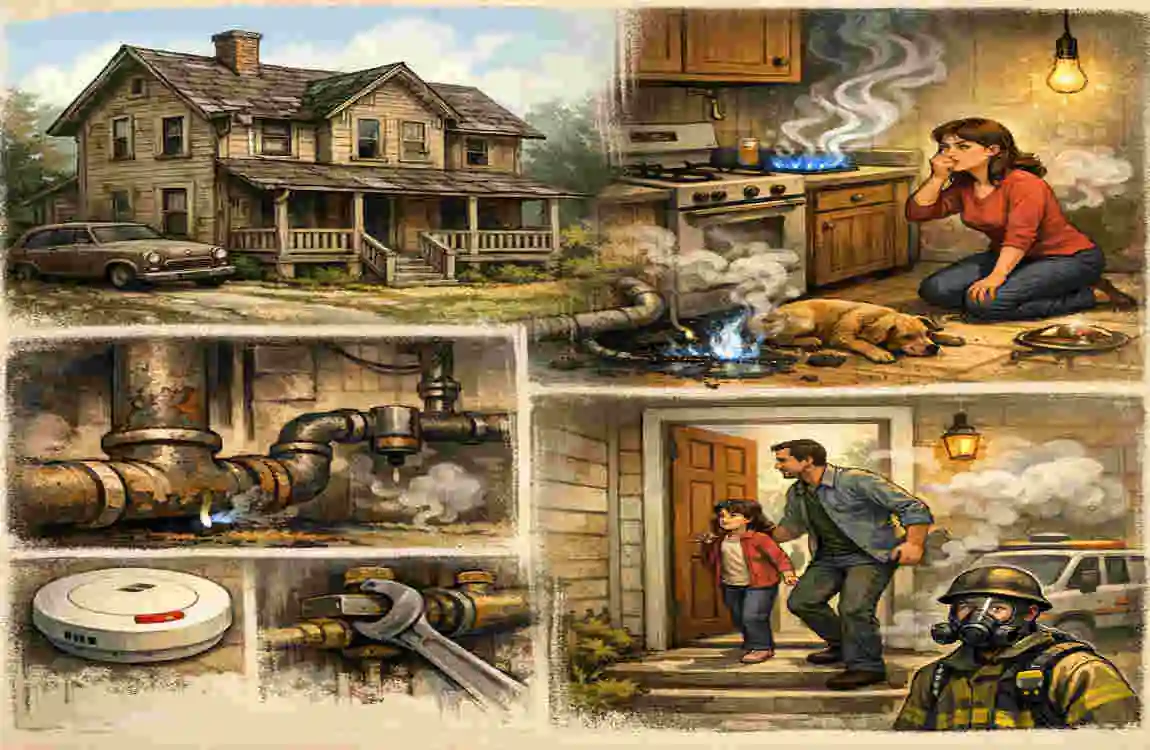
What usually matters more is the condition of the gas system. Older pipes, worn fittings, aging appliances, weak seals, and outdated installation methods can all raise the chance of problems over time.
If you own or are buying an older house, this is not a reason to panic. It is a reason to pay attention. A careful inspection, regular maintenance, and quick action when something seems wrong can make a big difference.
Why Older Houses May Have a Higher Risk of Gas Leaks
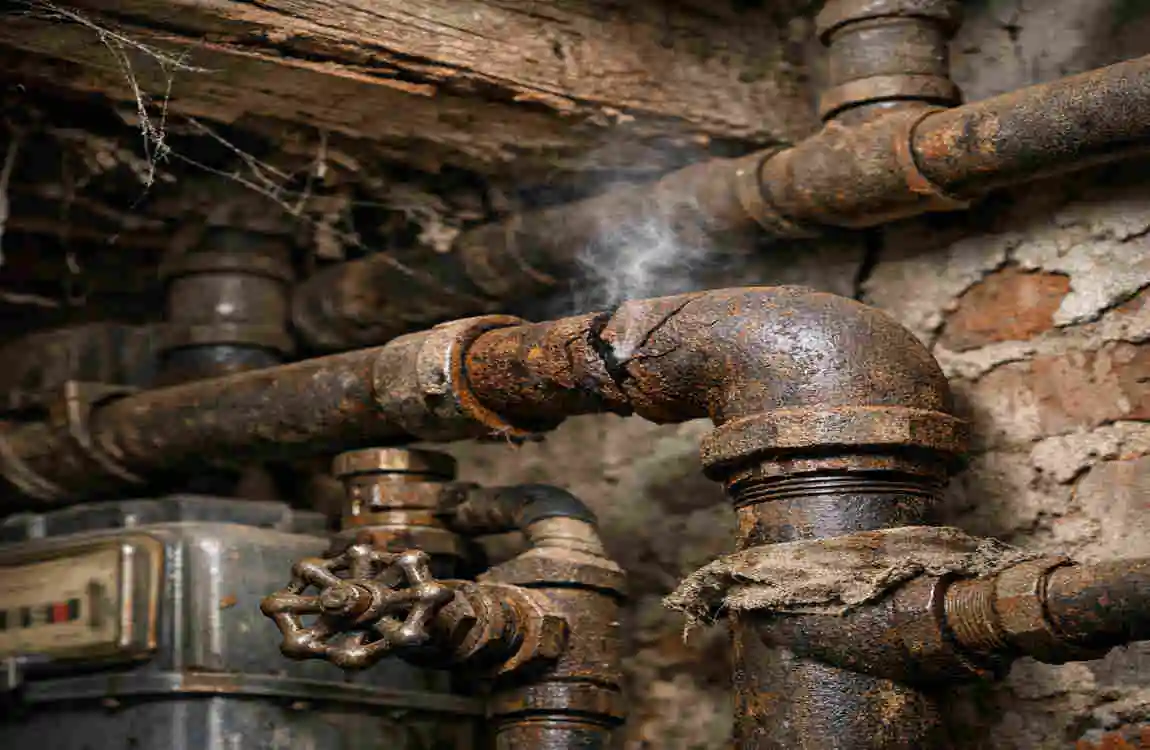
Aging Gas Pipes and Connections
Gas pipes do not last forever. Over time, they can wear down, corrode, or loosen at the joints.
The biggest trouble spots are often the connections and fittings. These are the places where small weaknesses can turn into bigger safety issues. Even if the pipe itself looks fine, a joint may be failing.
In older homes, hidden damage can build up slowly. That is why a system that has worked for years can still become risky if no one checks it properly.
Older Gas Appliances
Furnaces, water heaters, stoves, fireplaces, and other gas appliances also age. Their internal parts can wear out, seals can weaken, and performance can decline.
When appliances are not serviced regularly, they can cause multiple problems. A unit may burn fuel poorly, smell unusual, or stop working the way it should.
That is why a qualified professional should always look at older appliances. A simple visual check is not always enough.
Outdated Installation Standards
Many older houses were built under different rules and safety standards. That does not automatically make them unsafe, but it does mean they may need updates.
Over the years, homeowners may have added rooms, changed layouts, or replaced appliances. These changes can affect the gas system in ways that are not always visible.
If the system has been altered many times, it is smart to have it reviewed by someone who knows gas work well. That helps you understand what is current, what is outdated, and what may need attention.
Poor Ventilation
Gas appliances need proper ventilation to work safely. Without enough airflow, problems can build up.
Poor ventilation does not only affect gas leaks. It can also increase the risk of carbon monoxide exposure, which is a separate but very serious hazard.
So while a gas leak and carbon monoxide exposure are not the same thing, they can both occur around fuel-burning appliances if the system is not properly maintained.
Common Signs of a Gas Leak in an Older Home
The Smell of Gas
Natural gas is usually given a strong smell so people can detect leaks more easily. Many people describe it as a rotten egg or sulfur-like odor.
If you smell that in your home, do not ignore it. Even a weak smell should be taken seriously, especially in an older house.
Do not try to find the source by yourself if the smell is strong. Leave the area and get help.
Hissing or Whistling Sounds
A gas leak can sometimes make a soft hissing or whistling sound. This may happen near a pipe, meter, or appliance.
If you hear that kind of sound, move away right away. Do not stay close to investigate, and do not use anything that could create a spark.
Dead or Discolored Vegetation
Sometimes buried gas lines can affect nearby plants. You may notice grass, shrubs, or plants dying in one area for no clear reason.
That can be a clue, but it is not proof of a gas leak on its own. Many other factors can kill plants, such as water issues or soil problems.
Still, unusual changes in vegetation near gas lines should be checked.
Physical Symptoms
Exposure to gases or combustion byproducts can pose health risks. If people in the home feel unwell and there is also a gas odor or an appliance problem, take it seriously.
Do not try to diagnose the cause yourself. The safest move is to get fresh air and seek emergency help if you suspect exposure.
Unusual Appliance Behavior
Old appliances can sometimes show warning signs before a major problem appears.
Watch for:
- Strange odors
- Pilot light problems
- Weak or uneven flames
- Poor heating performance
- Appliances that keep shutting off
These signs do not always mean there is a leak, but they do mean something is wrong and should be inspected.
How to Stay Safe From Gas Leaks in an Older House
Schedule Professional Inspections
Older properties benefit a lot from regular inspections. A professional can check gas appliances, visible piping, and connections for signs of wear or damage.
This is especially helpful if:
- The home is very old
- The gas system has not been checked in years
- You have recently bought the property
- You have made renovations
- Appliances seem to be acting strangely
There is no single rule for how often every home should be inspected. The right timing depends on the system, the property, and professional advice.
Maintain Gas Appliances
Gas appliances should be serviced before small issues become bigger ones. That includes furnaces, water heaters, fireplaces, and ranges.
Keep vents and exhaust paths clear. If a vent is blocked, the appliance may not work safely.
Do not try complex gas appliance repairs on your own. Gas work should be handled by someone properly qualified.
Know Where the Gas Shutoff Is Located
Every homeowner should know where the main gas shutoff valve is. If you do not know, ask a qualified professional to show you.
You should understand the layout of your own system before an emergency happens. That can help you respond faster if something goes wrong.
Do not experiment with valves during a leak unless you have been told exactly what to do by emergency responders or the gas utility.
Install Appropriate Safety Devices
If your home has fuel-burning appliances, carbon monoxide alarms are very important.
Just remember that carbon monoxide alarms do not detect natural gas leaks. They serve a different purpose.
You may also want gas-detection equipment if it is appropriate for your property, but always follow manufacturer instructions and local guidance.
Keep Records of Repairs and Upgrades
A simple record of inspections, repairs, and appliance replacements can be very useful. It helps you track what is old, what has been fixed, and what may still need attention.
This is especially helpful in older homes where several owners may have made changes over the years.
What to Do If You Suspect a Gas Leak
Leave the Area Safely
Your first step is simple: get out safely.
Do not stay inside to search for the source. Safety matters more than finding the exact problem right away.
If the smell is strong or you strongly suspect a leak, leave the building and move to a safe location.
Avoid Ignition Sources
Gas can be dangerous around flames or sparks. That means you should avoid:
- Matches
- Cigarettes
- Candles
- Lighters
Also avoid using electrical switches or devices if that could create a spark.
Contact the Right Emergency Help
Once you are safely away, contact the gas utility or emergency services according to local guidance.
Do not try to test the leak yourself. Do not patch a pipe. Do not turn the situation into a home repair project.
Do Not Re-enter Until It Is Safe
Even if the smell fades, that does not mean the danger is gone. Only return when qualified responders say it is safe.
That rule matters. Gas can linger or reappear if the source was not fully controlled.
Preventive Maintenance for Older Homes
Check the Age and Condition of the Gas System
If you live in an older home, try to learn as much as you can about the gas system. Old records, past repairs, and appliance ages can tell you a lot.
If anything seems unclear, have it reviewed by a professional. That is better than guessing.
Inspect After Major Renovations
Renovation work can affect gas lines and appliance placement. Kitchens, basements, bathrooms, and structural changes are especially important to review.
If gas-related work was part of the project, make sure qualified people handled it.
Watch for Corrosion and Physical Damage
Visible rust, damaged piping, or loose fittings should not be ignored. These are warning signs that need professional attention.
Never use improvised materials or quick fixes on gas piping.
Keep Combustion Areas Clear
Furnaces, boilers, and water heaters need space and airflow. Do not store boxes, chemicals, or other materials too close to them.
A crowded utility area can make it harder for equipment to work safely and harder for problems to be noticed early.
Understand Natural Gas vs Carbon Monoxide
These are different hazards, and it helps to know the difference.
- Natural gas is the fuel used by the appliance.
- Carbon monoxide is a dangerous gas that can be produced when fuel does not burn correctly.
A carbon monoxide alarm is important, but it is not a gas leak detector. You need to treat both risks seriously.
Older Homes, Gas Leaks, and Long-Term Home Safety
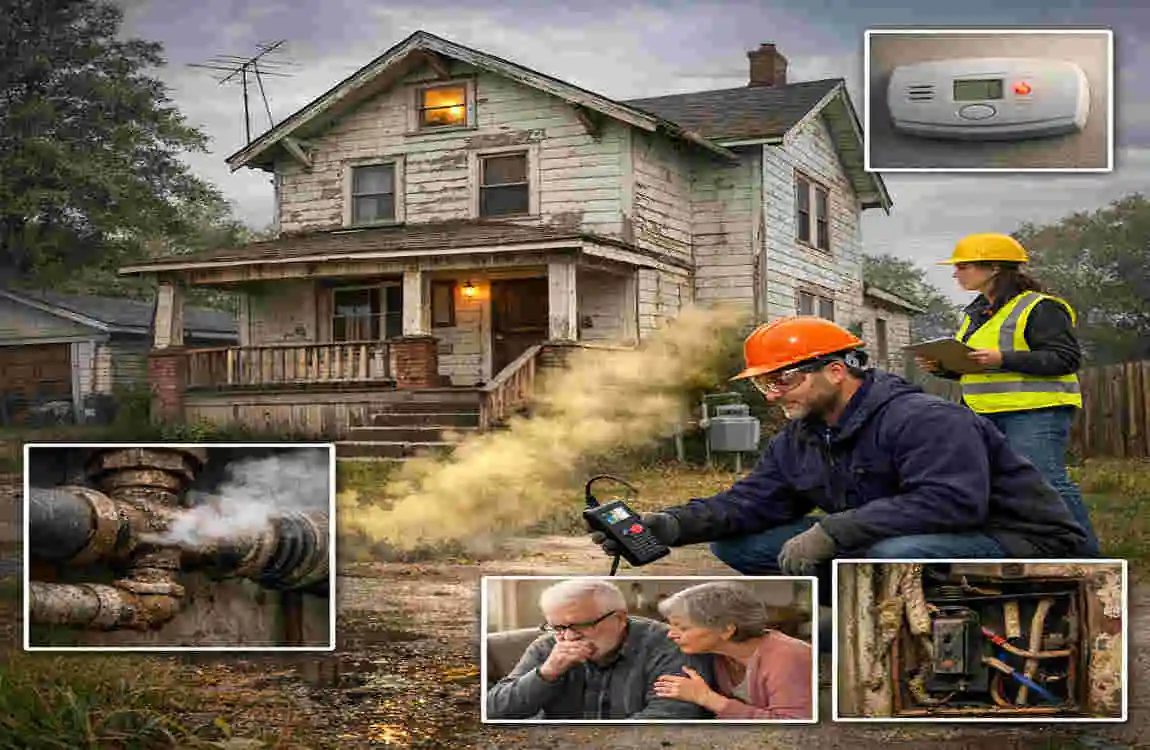
Older houses are not automatically unsafe. But they do deserve closer attention.
As gas systems age, the risk of wear, corrosion, and outdated parts increases. That is why maintenance matters so much in older properties.
The good news is that many risks can be reduced with the right care. Professional inspections, appliance servicing, ventilation checks, and timely repairs all help keep the home safer.
If you notice a strange smell, an odd sound, or an appliance that is not working properly, do not wait. Acting early is one of the best ways to protect your home and the people in it.
If you are buying an older home, make the condition of the gas system part of your home inspection and planning. That small step can prevent bigger problems later.
FAQ About Older Houses and Gas Leaks
Are older houses more prone to gas leaks?
They may be more prone to gas system problems, but age alone does not indicate a leak. The real issue is the condition of the pipes, appliances, fittings, and ventilation.
How old is a house considered an older home?
There is no single age that defines an older home. In practice, the age and condition of the gas system matter more than the house’s construction date.
What are the most common signs of a gas leak?
The most common signs are a gas odor, hissing sounds, unusual appliance behavior, and other sudden warnings. If you suspect a leak, act immediately.
Can old gas pipes leak?
Yes. Old gas pipes can leak if they have corrosion, damage, loose connections, or worn-out fittings. That is why inspections matter.
Should an older house have a gas inspection?
Yes, especially before buying, after renovations, or if the system has not been checked for a long time. A professional inspection can spot issues early.
Can you fix a gas leak yourself?
No. A suspected gas leak should never be treated as a DIY repair. Leave the area and contact the appropriate emergency service or gas utility.
Do carbon monoxide detectors detect natural gas leaks?
No. Carbon monoxide detectors detect carbon monoxide, not natural gas. They are important, but they do a different job.
| Topic | Key Information |
|---|---|
| Older Homes | Aging homes may have outdated gas pipes, fittings, or appliances. |
| Common Causes | Corrosion, loose connections, damaged pipes, and worn appliances can cause leaks. |
| Warning Signs | A rotten-egg smell, hissing sounds, or unexplained gas bills may indicate a leak. |
| Safety First | If you suspect a leak, avoid flames, switches, and electrical devices. Leave the home immediately. |
| Professional Inspection | Have older gas systems inspected regularly by a qualified professional. |
| Prevention | Replace damaged components and keep gas appliances properly maintained. |
