


A well house is more than just a shed; it’s a vital structure that safeguards your well, pump, and water storage system. Whether you’re a homeowner, a DIY enthusiast, or a small contractor, understanding how to build a well house can save you time and money in the long run. In this comprehensive guide, we’ll walk you through the steps to construct a durable well house that stands the test of time.
Building a well house isn’t just about putting up walls and a roof. It’s about creating a protective environment that keeps your water safe and your equipment in top condition. By following this guide, you’ll learn how to make smart choices about site selection, materials, and design to ensure your well house lasts for decades.
Planning and Permits Well House
Site Selection Criteria
Before you start building, you need to choose the perfect spot for your well house. Here are some key factors to consider:
- Accessibility: Make sure the site is easily accessible for maintenance and repairs.
- Drainage and Grading: Choose a location with good drainage to prevent water from pooling around the well house.
- Distance from Septic Systems, Wells, and Watercourses: Follow local regulations regarding the distance between your well house and other structures or water sources.
- Sun Exposure and Wind Protection: Consider the site’s exposure to sunlight and wind, as these can affect the well house’s temperature and durability.
Code Compliance and Permits
Building a well house isn’t just about hammering nails; it’s also about following local building codes and obtaining the necessary permits. Here’s what you need to know:
- Local Building Codes for Accessory Structures: Check with your local building department to understand the codes and regulations that apply to well houses.
- Required Permits and Inspections: Determine which permits you need and schedule any required inspections throughout the building process.
- Setbacks and Utility Access: Ensure that your well house complies with setback requirements and allows for easy access to utilities like electricity and water.
Budgeting and Timeline
Building a well house requires careful planning, including budgeting and setting a realistic timeline. Consider these factors:
- Rough Material Costs, Labor Considerations, and Contingency: Estimate the costs of materials, labor, and any unexpected expenses that may arise during the project.
- Phased Approach vs. All-at-Once Build: Decide whether to build the well house in phases or complete it all at once, based on your budget and timeline.
Design Considerations for Durability
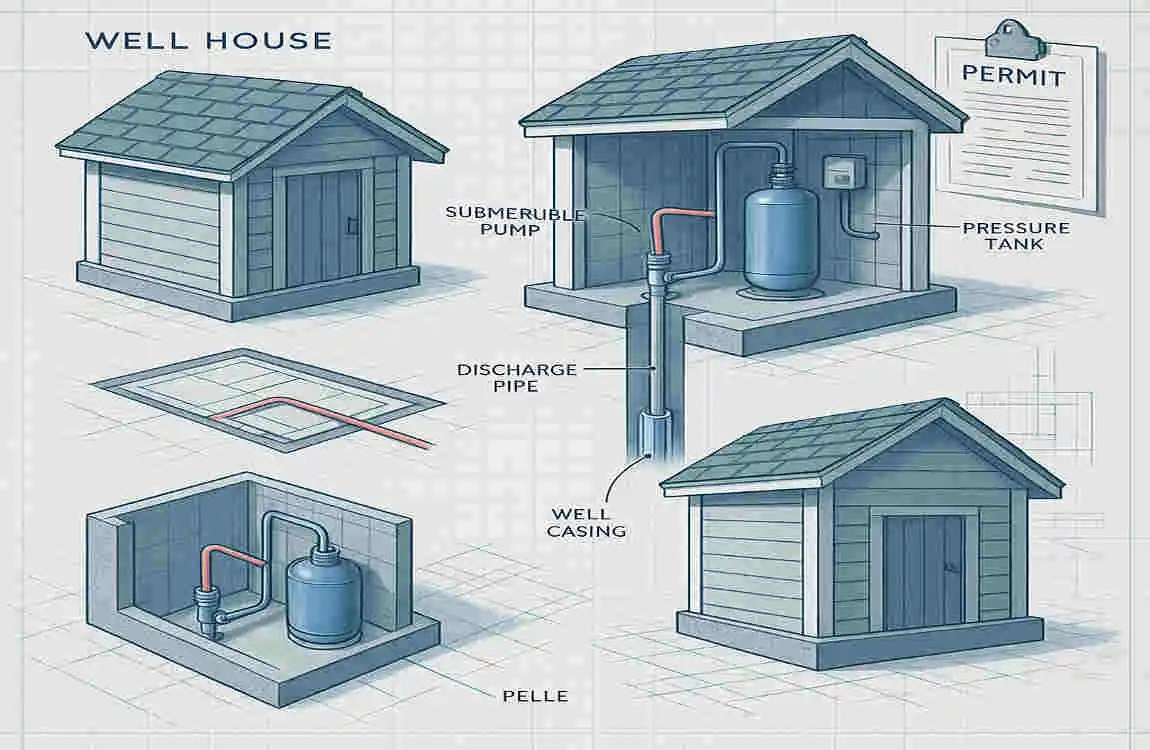
Structural Design
A well-designed well house is essential for protecting your well and equipment. Here are some key aspects to consider:
- Load-Bearing Considerations and Foundation Options (Slab vs. Pier): Determine the best foundation type for your well house based on the soil conditions and the structure’s weight.
- Roof Slope for Weather Protection: home Design the roof with an appropriate slope to shed water and prevent leaks.
Material Selection
Choosing the right materials is crucial for ensuring your well house’s longevity. Keep these factors in mind:
- Resistant to Moisture, Pests, and Temperature Swings: Select materials that can withstand the elements and protect against moisture, pests, and extreme temperatures.
- Corrosion-Resistant Hardware and Fasteners: Use hardware and fasteners that are resistant to corrosion, especially in humid environments.
- Sustainable, Low-Maintenance Options: Consider eco-friendly and low-maintenance materials to reduce the well house’s environmental impact and ongoing upkeep.
Size and Layout
The size and layout of your well house should be tailored to your specific needs. Consider these points:
- Ideal Interior Dimensions for a Typical Residential Well with Pump Housing: Determine the appropriate size based on the dimensions of your well and pump system.
- Clearances for Maintenance, Filter Systems, and Storage: Ensure there’s enough space inside the well house for easy maintenance, filter systems, and storage of tools and equipment.
Ventilation and Moisture Control
Proper ventilation and moisture control are essential for maintaining a healthy environment within your well house. Here’s what you need to know:
- Importance of Passive vs. Active Ventilation: Understand the difference between passive and active ventilation systems and choose the best option for your climate.
- Vapor Barriers and Dehumidification Strategies: Implement vapor barriers and dehumidification techniques to prevent moisture buildup and protect your well and equipment.
Weatherproofing and Protection
To ensure your well house withstands the elements, consider these weatherproofing and protection measures:
- Sealing, Flashing, and Exterior Cladding Choices: Use high-quality sealants, flashing, and exterior cladding to prevent water intrusion and protect against the elements.
- Flood and Wind Considerations: Design the well house to withstand floods and high winds, especially if you live in an area prone to these conditions.
Foundations and Structure
Foundation Options
The foundation is the backbone of your well house. Here are some options to consider:
- Concrete Slab, Concrete Crawl, or Concrete Piers: Choose the best foundation type based on your soil conditions, budget, and local building codes.
- Drainage Around the Foundation and Grading Slopes: Ensure proper drainage around the foundation and grade the surrounding area to prevent water from pooling near the well house.
Framing and Walls
The framing and walls of your well house should be sturdy and well-insulated. Here’s what you need to know:
- Stud Spacing, Insulation Needs, and Vapor Barriers: Determine the appropriate stud spacing, insulation R-value, and vapor barrier requirements for your climate.
- Wall Finishes Resistant to Humidity and Pests: Choose wall finishes that can withstand humidity and resist pest damage, such as moisture-resistant drywall or cement board.
Roofing Solutions
A well-designed roof is essential for protecting your well house from the elements. Consider these factors:
- Roof Materials with Longevity and Low Maintenance: Select roofing materials that are durable, long-lasting, and require minimal maintenance, such as metal or asphalt shingles.
- Gutter Design and Downspouts Directing Water Away from the Base: Install gutters and downspouts to direct water away from the well house’s foundation and prevent erosion.
Enclosures for Equipment and Storage
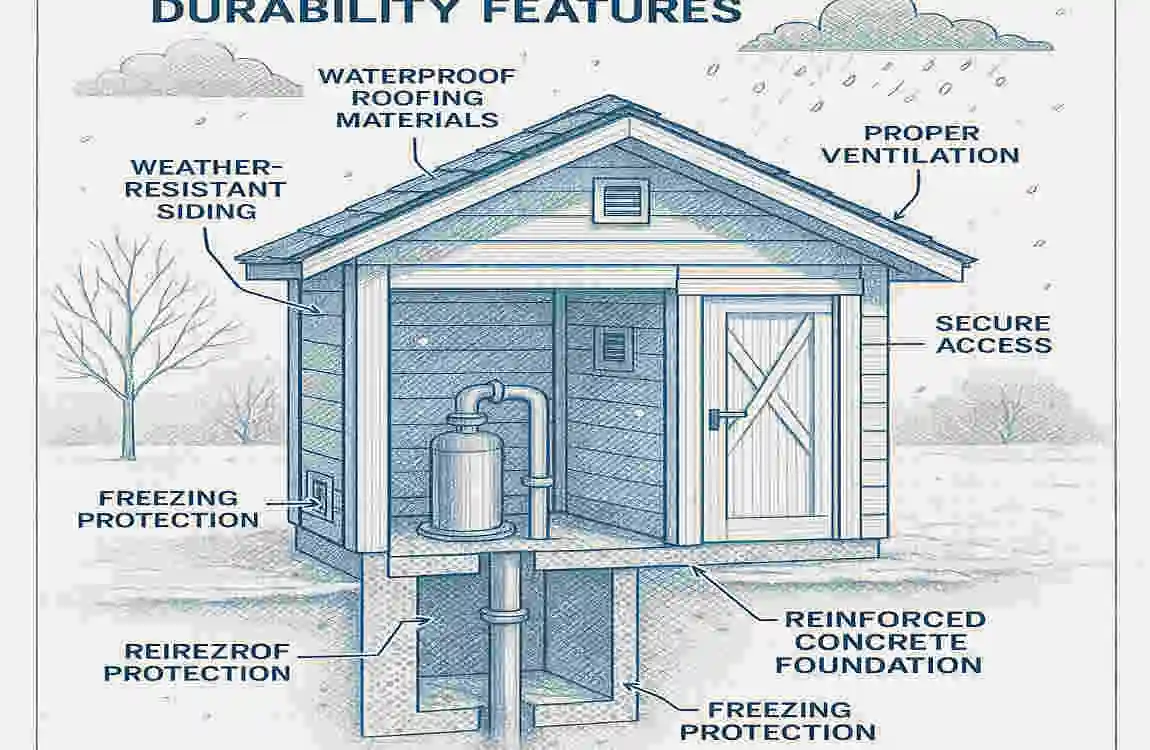
Pump and Electrical Components
Your well pump and electrical components need a safe and accessible enclosure. Here’s what to consider:
- Safe Enclosure Requirements, Access Panels, and Lockable Doors: Ensure the enclosure meets safety standards, has easy access for maintenance, and features lockable doors for security.
- Electrical Safety Considerations and Surge Protection: Implement proper electrical safety measures, including surge protection, to safeguard your well pump and other equipment.
Filtration and Water Treatment Equipment
If you have filtration or water treatment equipment, you’ll need to plan for its placement and accessibility. Keep these points in mind:
- Placement, Accessibility, and Ventilation for Filtration Units: Choose a location that allows for easy access and proper ventilation for your filtration and water treatment equipment.
- Storage Solutions: Incorporate shelving, tool hooks, and weatherproof cabinets to keep your well house organized and store essential tools and supplies.
Cable and Pipe Management
Proper cable and pipe management is essential for maintaining a safe and organized well house. Here’s what to consider:
- Conduits, Insulation, and Secure Fittings: Use conduits, insulation, and secure fittings to protect cables and pipes from damage and prevent leaks.
Utilities, Safety, and Compliance
Electrical Wiring and Panel Placement
Proper electrical wiring and panel placement are crucial for the safety and functionality of your well house. Here’s what you need to know:
- Use of Weatherproof Outlets and GFCI Protection: Install weatherproof outlets and GFCI protection to prevent electrical hazards in a damp environment.
- Safe Routing of Power to the Well Pump: Ensure the power supply to the well pump is routed safely and in compliance with local electrical codes.
Plumbing Considerations
Plumbing is a critical aspect of your well house, and it’s essential to get it right. Consider these factors:
- Water-Tight Connections and Anti-Freeze Measures for Cold Climates: Use water-tight connections and implement anti-freeze measures to prevent pipes from freezing in cold weather.
- Pressure Tank Placement and Drainage: Properly position the pressure tank and ensure adequate drainage to prevent water damage and maintain the system’s efficiency.
Safety Features
Safety should always be a top priority when building a well house. Here are some essential safety features to include:
- Non-Slip Flooring, Adequate Lighting, and Emergency Egress: Install non-slip flooring, provide adequate lighting, and ensure there’s an emergency egress route for safety.
- Environmental and Health Considerations: Take steps to prevent contamination and
