

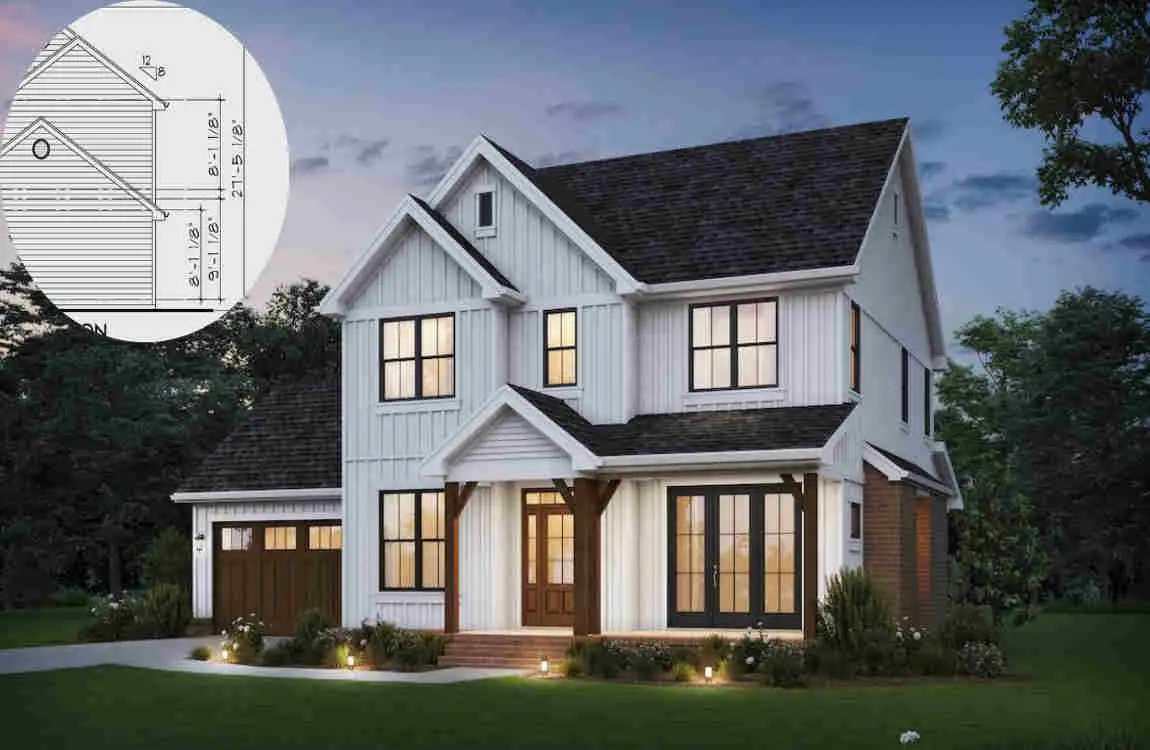
When it comes to choosing a home or planning a build, one question many people ask is, “How tall is a 2-story modren house?” Understanding the standard height of a two-story home isn’t just a matter of curiosity—it’s essential for homeowners, builders, and buyers alike. Height influences everything from the architectural style and interior space to zoning rules and construction costs.
What Is a 2-Story House?
Definition and Basic Characteristics
A 2-story house is a residential building with two full floors stacked vertically. This means there are two distinct levels of living space, typically connected by an interior staircase.
Unlike single-story homes that spread out horizontally, 2-story houses make better use of vertical space, allowing more rooms without needing a bigger plot of land.
Comparison with Single-Story and Multi-Story Homes
- Single-story homes: Only one floor, often with a larger footprint. Easier accessibility but less space on small lots.
- 2-story homes: Two floors, offering more space on less land.
- Multi-story homes (3+ stories): These homes have three or more floors, often found in urban areas or for larger families.
Popularity and Typical Uses
2-story houses remain one of the most popular residential choices in suburban and rural areas because they balance space, cost, and design flexibility. Families appreciate the separation of bedrooms upstairs and common areas downstairs, which adds privacy and comfort.
Standard Height of a 2-Story House
Understanding how tall a two-story house stands requires breaking down the components that make up its total height.
Average Height Range
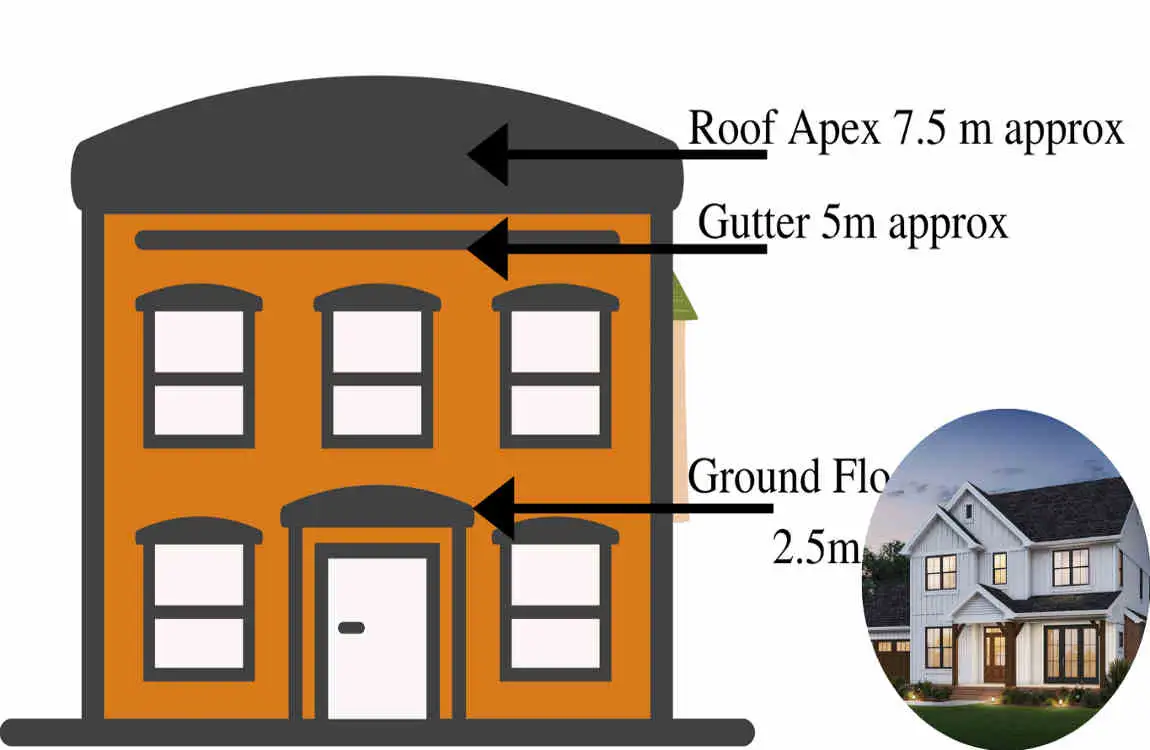
Generally, the total height of a 2-story house ranges from 18 to 28 feet (approximately 5.5 to 8.5 meters). This height includes:
- The two floors themselves
- The floor and ceiling structures
- The roof, which can add significant height depending on its style
Height per Story
Each floor or story in a 2-story home usually measures between 8 and 10 feet from floor to ceiling. Here’s why:
- Standard floor-to-ceiling height: About 8 feet, offering comfortable headroom.
- Luxury or custom homes: May have ceilings up to 10 feet or higher for a more spacious feel.
Flooring and Ceiling Structure Height
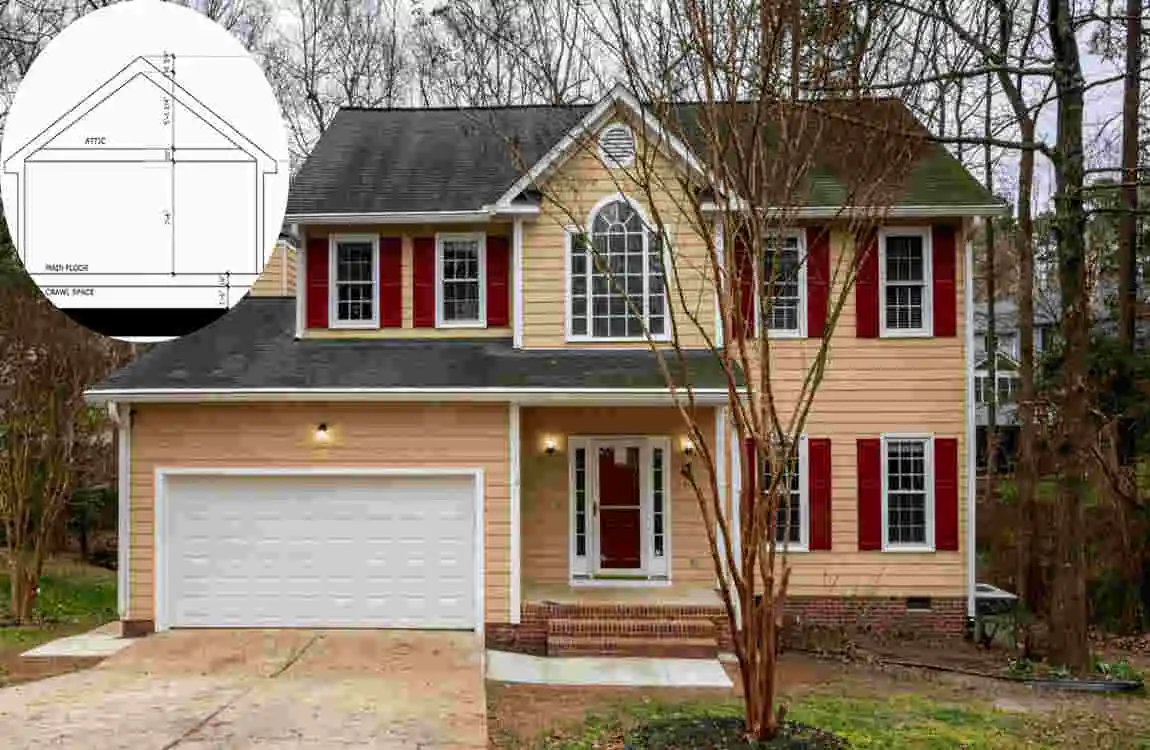
Between the two floors, there’s more than just open space:
- Floor joists and subflooring: These structural elements add roughly 1 to 1.5 feet.
- Ceiling finishes: Drywall, plaster, or other materials add minor thickness.
Roof Height and Style Impact
The roof style has a significant impact on the overall height. Common roof types include:
- Gable roof: Peaks in the centre, adding height—usually 3 to 6 feet above the second floor.
- Hip roof: Slopes on all sides, sometimes a bit lower than a gable, but still adds similar height.
- Flat roof: Adds minimal height, often only a few feet.
Typical Total Heights in Feet and Meters
Component Height Range (Feet)Height Range (Meters)
First story (floor to ceiling) 8 – 10 2.4 – 3.0
Flooring structure 1 – 1.5 0.3 – 0.45
Second story (floor to ceiling) 8 – 10 2.4 – 3.0
Roof height 3 – 6 0.9 – 1.8
Total Height 20 – 27.5 6.1 – 8.4
Visual Example
Imagine a house where each floor is 9 feet, the flooring structure adds 1.2 feet, and the roof is a gable, adding 5 feet. The total height would be:
9 + 1.2 + 9 + 5 = 24.2 feet (about 7.4 meters)
Factors That Affect the Height of a 2-Story House
Not all 2-story houses are created equal. Several factors influence their final height.
Floor-to-Ceiling Height Variations
- Standard homes: Usually 8 feet per floor.
- Luxury homes: May have 9 to 10-foot ceilings or even higher in living rooms.
- Taller ceilings add a sense of space but increase overall height.
Foundation Height and Types
The type of foundation can add to the house’s total height:
- Slab foundation: Minimal height increase, house sits close to the ground.
- Crawl space: Adds 1 to 3 feet of height.
- Basement: Can add 7 feet or more below ground level, sometimes partially above ground.
Roof Type and Pitch
- Steep roofs: Taller and more dramatic, increasing height considerably.
- Shallow roofs: Lower overall height, but may reduce attic space.
- Pitch is the slope angle of the roof. A higher pitch means a taller roof.
Attic, Loft, or Bonus Room Additions
- Some 2-story homes include usable attic or loft spaces that add height internally.
- Bonus rooms above garages or porches can add height externally.
Geographic and Building Code Influences
- Local building codes may limit maximum height.
- In some regions, homes are built taller to allow for snow load or ventilation.
- Coastal or mountainous areas might have specific design mandates.
Architectural Style Variations
Different Architectural styles have signature heights:
- Colonial: Often symmetrical with moderate roof height.
- Victorian: May have steep, tall roofs and decorative turrets.
- Modern: Flat or low-slope roofs, sometimes taller ceilings, but less roof height.
How to Measure the Height of Your 2-Story House
Measuring your home’s height can be straightforward if you follow these steps.
Step-by-Step Guide
Start at the ground level: Measure from the lowest point of the foundation or ground.
Measure to the bottom of the roof: This gives the height of the main living structure.
Measure the roof height separately: From the base of the house roof to the peak.
Add measurements for total height.
Tools Needed
- Tape measure: For smaller heights or accessible areas.
- Laser distance measurer: More accurate and easier for high points.
- Smartphone apps: Some apps use augmented reality (AR) to estimate height.
Tips for DIY Measuring
- Use a ladder safely if you need to reach higher spots.
- Mark measurements clearly.
- If unsure or for official purposes, hire a professional surveyor to get precise data.
Comparing 2-Story House Heights with Other Home Types
Understanding how a 2-story house height stacks up against other homes can give you perspective.
Single-Story Houses vs 2-Story Houses
- Single-story homes: Typically 8 to 12 feet tall.
- 2-story homes: Usually double the height plus roof, around 20 to 28 feet.
- Single-story homes spread out horizontally, while 2-story homes grow vertically.
3-Story and Taller Homes
- 3-story homes range from 28 to 40 feet or more.
- Taller homes are typical in cities where land is limited.
Tiny Homes and Modular Homes
- Tiny homes: Usually 12 to 16 feet tall, maximising vertical space efficiently.
- Modular homes: Vary widely; 2-story modular homes may match standard house heights.
Why Height Matters
- Construction: Taller homes may need stronger structures.
- Aesthetics: Height impacts curb appeal and neighbourhood harmony.
- Home value: Sometimes taller homes offer better views and are more desirable.
Benefits and Challenges of 2-Story Houses in Terms of Height
Benefits
- Space efficiency: More rooms on less land.
- Views: Upper floors provide better views and natural light.
- Privacy: Bedrooms upstairs offer separation from living areas.
- Curb appeal: Height adds presence and often enhances design.
Challenges
- Stairs: Can be a barrier for older adults or those with mobility issues.
- Higher construction costs: Due to extra materials and labour.
- Height restrictions: Some areas limit how tall homes can be.
Building or Buying a 2-Story Home: What You Should Know About Height
Planning Considerations
- Understand local zoning and height restrictions before planning.
- Consider how height affects heating, cooling, and energy efficiency.
Building Permits and Zoning
- Most municipalities require permits that consider house design height.
- Setbacks and height limits ensure neighbourhood consistency.
Energy Efficiency and HVAC
- Taller homes may need more powerful HVAC systems.
- Proper insulation in upper floors is crucial to maintain comfort.
Tips for Buyers
- Ask about ceiling heights during viewings.
- Consider how height will affect maintenance and future renovations.
